Interlaken itself is a small resort town on a flat strip of land between two lakes, Lake Thun and Lake Brienz. Its appeal is what surrounds it: the Eiger, Mönch and Jungfrau, the cliff-lined Lauterbrunnen Valley, cogwheel railways, turquoise lake boats and some of the most scenic hiking in the Alps, all within an hour by train.
The catch is cost and weather. Mountain excursions are expensive and only worth it with a clear view, so the best plan is a flexible one. Here’s what to prioritise, what to do when the peaks are in cloud and where a tour genuinely helps.
Disclosure: this page contains links to GetYourGuide. If you book through them, People & Media may earn a small commission at no extra cost to you.
Our honest attraction reviews
Mountain tickets around Interlaken are a big expense, so we’ve reviewed the major excursions in depth: real prices, discounts, the weather rule and cheaper alternatives.
12 best things to do in Interlaken
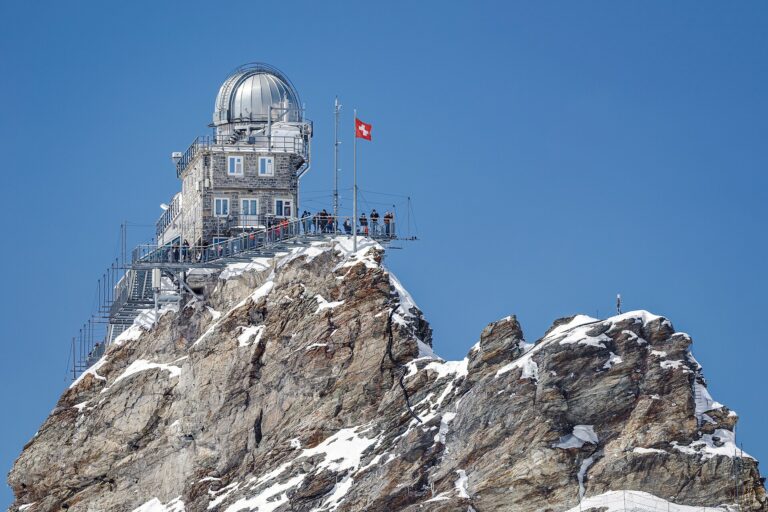
1. Jungfraujoch, the Top of Europe
Europe’s highest railway station, at 3,454 metres, puts you on a glacier landscape with a view down the Aletsch Glacier, the longest in the Alps. The journey, via the Eiger Express gondola and a railway tunnelled through the Eiger and Mönch, is half the experience. It’s also one of the most expensive excursions in Europe, and pointless in thick cloud. Read our full review: Is Jungfraujoch worth it?
Time: 6–8 hours from Interlaken. Cost: paid, with big discounts for rail pass holders. Tip: check the summit webcams on jungfrau.ch the evening before, not the Interlaken forecast. If you want the connections handled, a guided Jungfraujoch day trip from Interlaken takes care of it.
2. Harder Kulm
Interlaken’s own mountain is only ten minutes up by funicular from town. At 1,322 metres, the Two-Lakes Bridge viewing platform looks down on Lake Thun and Lake Brienz on either side of Interlaken, with the Eiger, Mönch and Jungfrau straight ahead.
Time: about an hour including the ride. Cost: paid, and one of the cheapest viewpoints in the region; the Interlaken Guest Card gives a discount. Tip: go up for sunset. Jungfrau Railways runs evening trips that bring you back down to town shortly after.
3. Lauterbrunnen Valley and Staubbach Falls
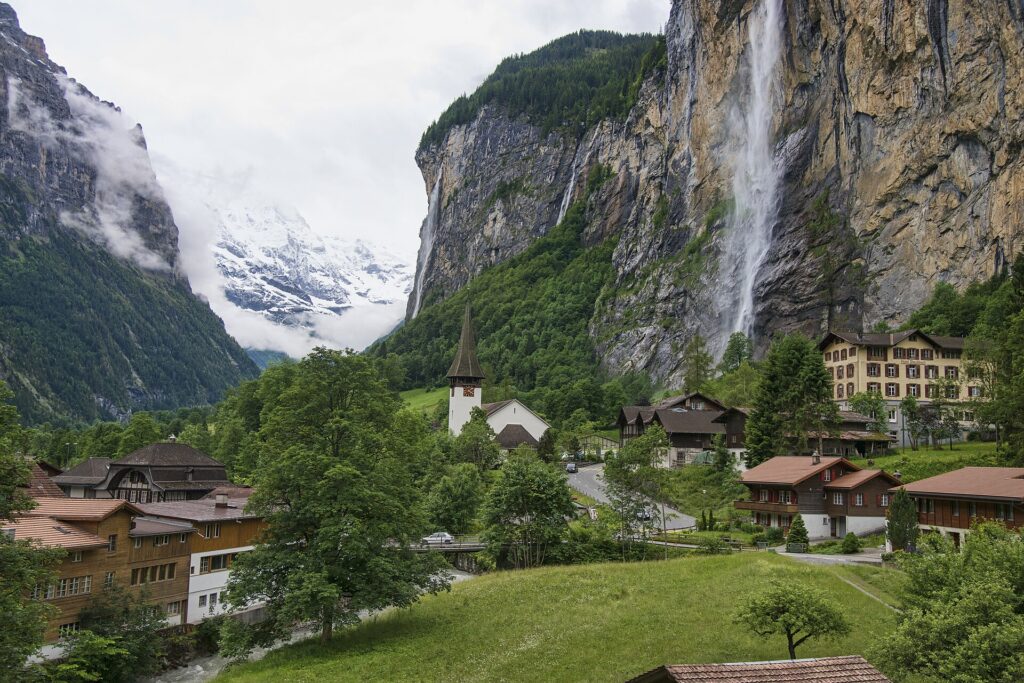
A 20-minute train ride from Interlaken takes you into a deep U-shaped valley lined with sheer rock walls and dozens of waterfalls. Staubbach Falls drops almost straight onto the village of Lauterbrunnen, and the flat valley floor is perfect for an easy walk towards Stechelberg.
Time: 2–4 hours. Cost: free apart from the train. Tip: the classic photo of the church with the waterfall behind is taken from the road at the southern end of the village; go early before the day-trippers.
4. Trümmelbach Falls
Further up the Lauterbrunnen Valley, the meltwater of the Eiger, Mönch and Jungfrau thunders through a series of glacier waterfalls inside the mountain. A lift and walkways take you up through the spray-filled gorge. It’s loud, wet and unlike any other waterfall in the valley.
Time: 1–1.5 hours. Cost: paid. Tip: it only opens in the warmer part of the year and is most powerful in early summer when the snow melts; bring a waterproof jacket and check the opening season before you go.
5. Mürren and the Schilthorn
Car-free Mürren sits on a cliff ledge high above Lauterbrunnen, facing the Eiger, Mönch and Jungfrau across the valley. From here, cable cars continue to the Schilthorn summit and its revolving restaurant, famous from the James Bond film On Her Majesty’s Secret Service. On a budget, Mürren alone is well worth the trip.
Time: half a day to a full day. Cost: paid (cable cars and trains). Tip: go up to Mürren via the cable car to Grütschalp and the little mountain train, and come back down via Gimmelwald and Stechelberg. A small-group tour to Lauterbrunnen and Mürren is an easy alternative if you’d rather not plan the connections.
6. Grindelwald-First
Above the village of Grindelwald, the gondola to First leads to a cliff walk bolted to the rock face, adventure rides such as a zip line and mountain carts, and the easy, popular hike to the Bachalpsee lake with the Schreckhorn and Wetterhorn reflected in it.
Time: half a day to a full day. Cost: paid. Tip: the hike to Bachalpsee takes about an hour each way on a wide path; start early in summer, when it gets busy by late morning.
7. A boat trip on Lake Brienz to Iseltwald
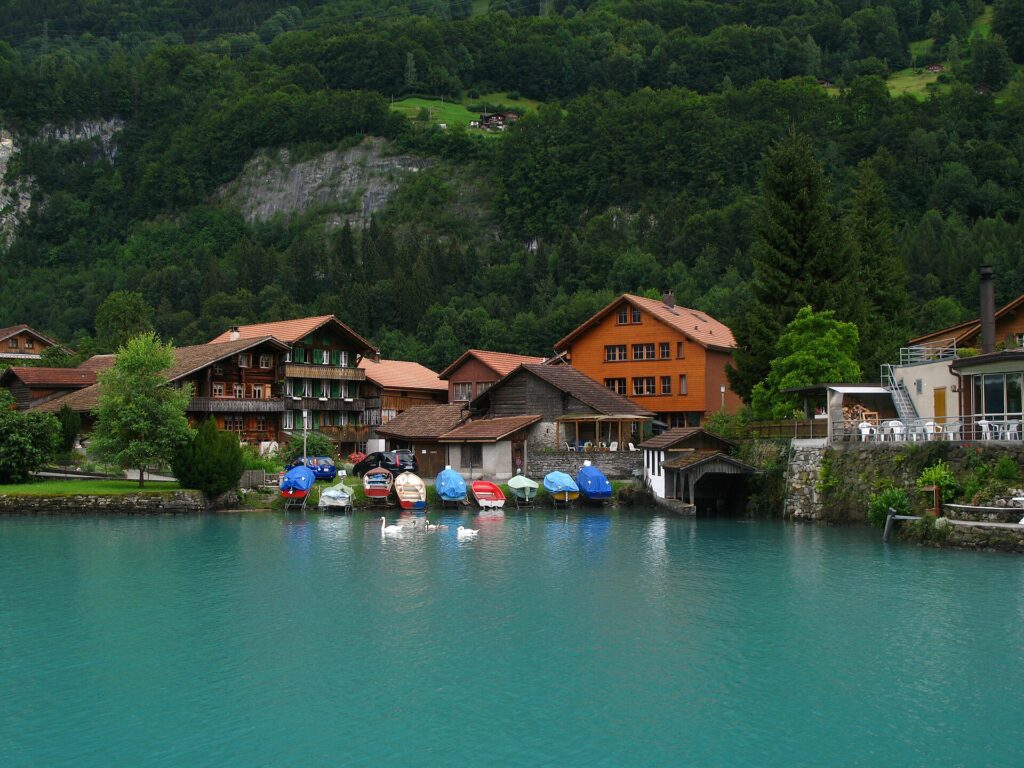
Lake Brienz is famous for its turquoise water, and the BLS boats from Interlaken Ost glide past wooded shores to villages such as Iseltwald, on a small peninsula, and Brienz, known for woodcarving. You can also take the Giessbach Falls detour, where a historic funicular climbs to a grand hotel beside the waterfall.
Time: 2 hours to a full day. Cost: paid; the Interlaken Guest Card gives a discount on the BLS day pass for both lakes. Tip: Iseltwald’s small jetty became a social media hotspot, so expect queues for the photo and be considerate of residents.
8. Lake Thun, Spiez and Oberhofen Castle
Lake Thun is broader and gentler than Lake Brienz, with castles along its shores. Oberhofen Castle, with its turret standing in the water, has period rooms and a lakeside garden; Spiez has a castle and vineyards above a pretty bay; and the town of Thun at the far end has a covered bridge and old town.
Time: a full day. Cost: paid for boats and castle entry. Tip: take the boat one way and the train back from Spiez or Thun to save time.
9. St. Beatus Caves
High above Lake Thun, a forest path with bridges over a waterfall leads to a limestone cave system. About a kilometre of it is open to visitors on a self-guided route with lit walkways, past stalactites, grottos and underground streams. Legend says Saint Beatus drove a dragon out of the caves.
Time: 1.5–2 hours. Cost: paid. Tip: this is the best rainy-day option near Interlaken; bring a warm layer, as it’s cool inside even in summer.
10. Schynige Platte
A historic cogwheel railway climbs from Wilderswil, just outside Interlaken, to Schynige Platte, where an alpine botanical garden and walking trails face the Eiger, Mönch and Jungfrau. It’s a slower, more old-fashioned and much cheaper alternative to the big summits.
Time: half a day. Cost: paid; the Interlaken Guest Card gives a discount. Tip: the railway runs in the summer season only; fit hikers can walk the ridge trail to Faulhorn and on to First.
11. Tandem paragliding over Interlaken
Interlaken is one of Europe’s best-known paragliding spots. Tandem flights typically launch from the slopes above town and land on the Höhematte meadow in the centre, with the lakes on either side and the Jungfrau massif ahead. No experience is needed; the pilot handles everything.
Time: about 1.5 hours including transport, with 10–20 minutes in the air. Cost: paid. Tip: book with flexible cancellation, as flights depend on wind and weather. This tandem paragliding flight launches from Beatenberg and lands in Interlaken.
12. Ballenberg Swiss Open-Air Museum
Near Brienz, the Ballenberg open-air museum brings together more than a hundred historic buildings from all over Switzerland, set out in a large area of meadows and woods, with farm animals, traditional crafts and demonstrations. It’s a good choice for families and for a day when the mountains are hidden.
Time: half a day to a full day. Cost: paid. Tip: the site is large and hilly, so wear comfortable shoes and use the entrances at either end to plan a one-way walk.
- Hour-by-hour itinerary for 3 days
- Google Maps list with every stop
- What to book in advance (and when)
- Works offline on your phone
Planning your trip: when to go, how long and getting around
Best time to visit
June to September is the main season for hiking, lake boats and all mountain railways, but it’s also the busiest and most expensive time. Late May and early October can be lovely and quieter, though some higher lifts and trails may be closed. Winter (December to March) is for skiing and snowy scenery around Grindelwald, Wengen and Mürren. Whatever the season, keep your plans flexible and use the live webcams to pick the clearest day for the big summits.
How many days do you need?
Three to four days is ideal: one day for Jungfraujoch (on the clearest day), one for Lauterbrunnen and Mürren, one for Grindelwald-First, and a lake or cave day as a bad-weather backup. With only two days, pick one big summit and one valley.
Getting around
Trains connect Interlaken with Bern, Zürich, Basel and Geneva every half hour, according to Interlaken Tourism. Interlaken has two stations: Ost (East) for mountain railways and Lake Brienz boats, and West for the town centre and Lake Thun boats. If you stay overnight in Interlaken or neighbouring villages, your host gives you the Interlaken Guest Card, which includes free local public transport within its zone and discounts such as 20% off the BLS lake day pass and Schynige Platte, and 15% off Harder Kulm. Mountain railways are pricey, so compare the Swiss Travel Pass, the Half Fare Card and the multi-day Jungfrau Travel Pass with your plans; the regional pass usually wins if you spend several days in the Jungfrau Region.
Where to stay
Interlaken is the practical base, with the widest range of accommodation and direct trains in every direction; stay near Interlaken Ost if you plan several mountain days. Lauterbrunnen suits hikers and budget travellers, car-free Wengen and Mürren offer mountain views from your window at higher prices, and Grindelwald is best for the Eiger and First.
Frequently asked questions
How many days do you need in Interlaken?
At least three days, so you have a buffer for the weather. With four or five, you can add lake days and longer hikes without rushing.
Is Jungfraujoch worth it, or is there a cheaper alternative?
It’s worth it on a clear day if the price fits your budget. Harder Kulm, Schynige Platte, Grindelwald-First and Mürren all give views of the Eiger, Mönch and Jungfrau for much less, though none puts you on a glacier.
What can you do in Interlaken when it rains?
Visit the St. Beatus Caves, Trümmelbach Falls (in season), the Ballenberg open-air museum or take a lake boat. Save the summits for a clearer day.
Is the Swiss Travel Pass worth it for Interlaken?
It covers trains to Interlaken and to villages such as Grindelwald, Wengen and Mürren and gives discounts on higher mountain railways. If you spend most of your time in the region, compare it with a Half Fare Card and the Jungfrau Travel Pass before buying.
Do you need a car in Interlaken?
No. Trains, lake boats, cable cars and local buses reach almost everything, and villages like Wengen and Mürren are car-free anyway.
Featured image: Photo: Andrew Bossi, CC BY-SA 2.5, via Wikimedia Commons