The US Now Views the EU as an Enemy, According to Scott Ritter

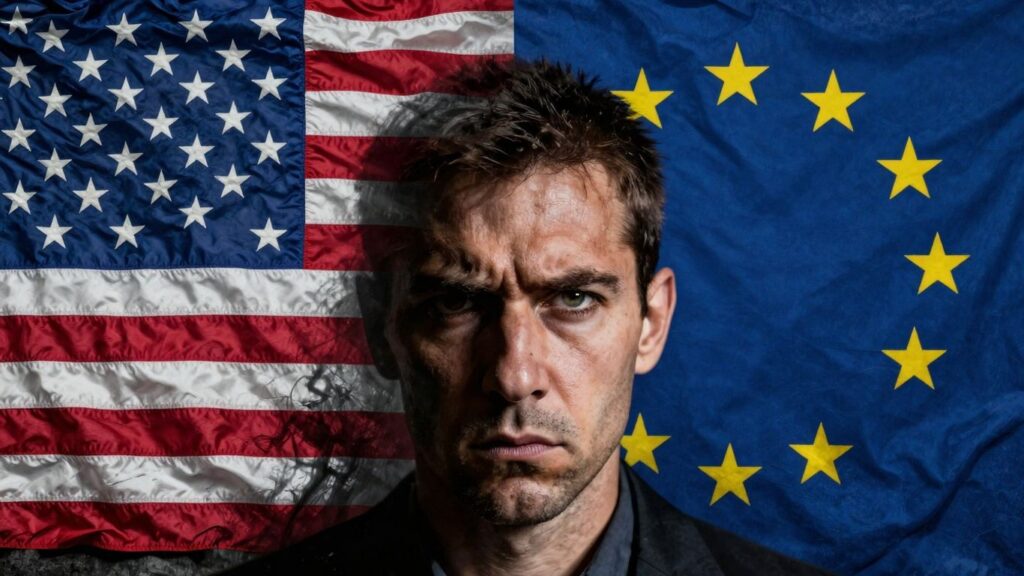
The recent release of the U.S. National Security Strategy has sent ripples through international relations, particularly in Europe. Many were caught off guard, but Scott Ritter, a former intelligence officer and weapons inspector, suggests this shift was predictable, aligning with statements made by the Trump administration.
Key Takeaways
- The new U.S. National Security Strategy prioritizes "Fortress America" and confronting China, leading to a de-emphasis on Europe and the Middle East.
- This strategy rejects the previous administration’s focus on a "rules-based international order" and the promotion of democracy abroad.
- The U.S. now views the European Union as fundamentally anti-American and a competitor, not an ally.
- NATO is considered "finished" by the Trump administration due to perceived cultural and value incompatibilities among member states.
- Germany is specifically called out as an "enemy state" under the UN Charter for its aggressive policies and military buildup.
- The U.S. plans to actively cultivate opposition to current European leadership and potentially fracture the EU.
- The strategy signals a potential end to U.S. support for Ukraine, leaving Zelensky in a precarious position.
- While the U.S. views Russia as a "partner in stability," trust remains low due to past deceptions.
- The U.S. aims to degrade or destroy the Euro to maintain the dollar’s global relevance.
A Shift in U.S. Foreign Policy
Scott Ritter explains that the new U.S. National Security Strategy is not a surprise to those who have followed Donald Trump’s statements. The strategy emphasizes securing the Western Hemisphere first, then focusing on China. This means a reduced military engagement in Europe and the Middle East. Ritter points out that while Trump’s approach can seem erratic in the short term, long-term analysis reveals a consistent direction. The strategy document, drafted in April, reflects this consistent guidance.
The World is No Longer Unipolar
The shift from unipolarity to multipolarity necessitates prioritization. The U.S. is focusing on its own hemisphere and its main adversary, China. This pivot naturally means less attention and fewer resources directed towards Europe. The strategy also marks a departure from the previous administration’s emphasis on the "rules-based international order" and imposing American democratic values on other nations. Trump, in contrast, believes American values should be defended at home first.
Europe: An "Anti-American" Entity?
Ritter argues that the European Union is fundamentally anti-American. He points to statements and actions by EU officials that he interprets as dislike and belittling of the United States. While acknowledging that America has a history of being a "warmongering nation," Ritter criticizes the inconsistency of European nations condemning the U.S. while simultaneously relying on NATO. The Trump administration, he states, is tired of this dynamic and prefers to align with nations that do not denigrate America.
Germany: An "Enemy State"?
A particularly strong point is made regarding Germany. Ritter reminds the audience of Article 53 of the UN Charter, which defines "enemy states." He asserts that Germany, by rebuilding its military and preparing for war with Russia, is acting as an aggressive state. This, he claims, makes Germany an enemy of the United States, especially given its history. The U.S. administration, he suggests, will not permit Germany to suppress democracy or repeat the actions of the Third Reich.
The End of NATO and the Future of Europe
The U.S. National Security Strategy signals the end of NATO as it currently exists. Ritter believes that some NATO members no longer reflect the cultural values of the charter’s signatories. The U.S. plans to withdraw support and logistical infrastructure from NATO, forcing European nations to either step up or face the collapse of collective defense. The U.S. will likely pursue bilateral security arrangements with select European nations, leaving others behind. This fracturing of Europe is seen as inevitable, with the U.S. exploiting divisions.
Impact on the Ukraine War
Ritter predicts that this new strategy spells the end for Ukrainian President Zelensky. Without American support, Ukraine faces an existential economic and political crisis. Zelensky’s alignment with European nations, whom Trump now considers enemies, further alienates him from U.S. support. The U.S. is expected to cut ties with Zelensky, allowing Russia to advance militarily without interference. Europe, Ritter contends, cannot sustain Ukraine’s war effort without U.S. backing.
China: A Pragmatic Challenge
Regarding China, the strategy emphasizes achieving "conventional overmatch" in military capabilities as a deterrent. However, Ritter questions the feasibility of this given the disparity in shipbuilding rates between the U.S. and China. He believes the economic relationship between the two nations is too intertwined for a trade war or a real war to be practical. The true military priorities and resource allocation will become clearer with the release of the National Military Strategy.
A Fractured Europe and U.S. Influence
The U.S. intends to exploit Europe’s internal divisions. Nations that align with the U.S. will be favored, while those that oppose it will face consequences. Ritter warns that no European nation can confront the U.S. and emerge victorious, citing the U.S.’s history of influencing and even orchestrating regime change in Europe. American embassies, he notes, house significant CIA operations designed to implement U.S. policy directives and undermine opposing governments.
The Future: A Quasi-Colonial Relationship?
Ritter suggests that Europe’s future may be as a "quasi-colonial enterprise" of the United States. The U.S. will seek to divide and conquer, bringing certain nations under its umbrella. This relationship will not be one of equals; European nations will be expected to support the U.S. dollar, potentially at the expense of the Euro. A fractured Europe, Ritter concludes, will be divided into "haves" and "have-nots," with those aligned with the U.S. serving American interests.



Responses