The Shifting Global Order: Is America Ready for a Multipolar World?

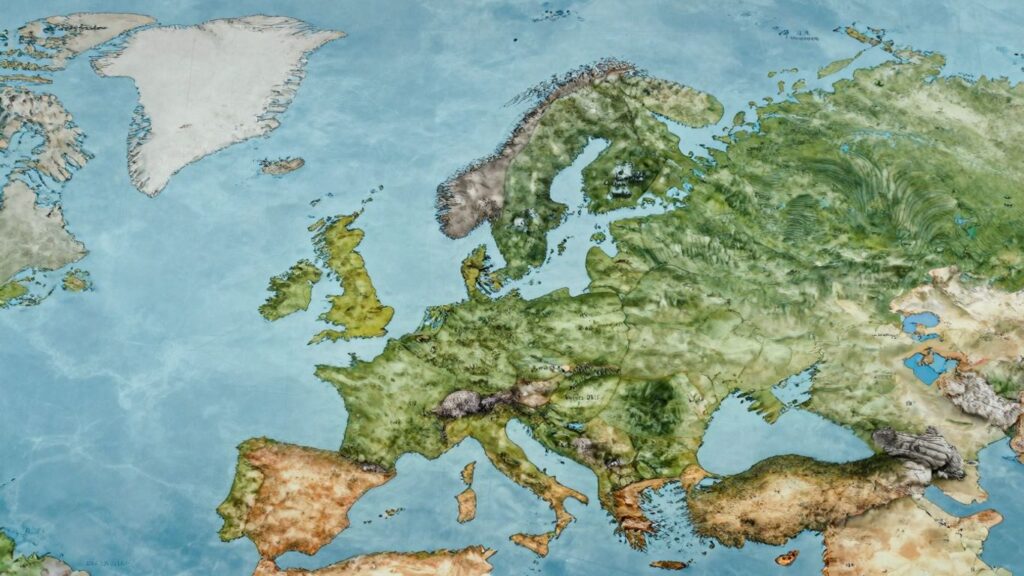
Ambassador Chas Freeman joins Glenn Diesen to discuss the complex transition from a unipolar world to a more multipolar, or as Freeman prefers, multinodal, international system. The conversation highlights America’s struggles to adapt to China’s rise and the potential consequences for global stability.
Key Takeaways
- The US is struggling to adapt to the end of its unipolar moment, engaging in self-defeating actions that weaken its standing.
- China, by contrast, is largely doing things right, leading to a significant shift in the global balance of power.
- The term "multinodal" better describes the current complex international environment than "multipolar."
- Europe faces significant internal strains and is not effectively responding to new global realities.
- US policy towards China is driven by "hawks" who often lack deep knowledge of the country.
- Historical and cultural contexts are crucial for understanding international relations, and applying European models like the Thucydides Trap universally may be flawed.
- China’s rise is a threat to American primacy, but it doesn’t necessarily signal an intent to pursue hegemony in the same way past powers have.
- The West’s credibility is damaged by its inconsistent application of values and its handling of various international crises.
- Europe’s current strategy of uniting through "Russophobia" is unsustainable and may lead to further division.
- The US faces internal divisions that could impact its global role and stability.
America's Ineffective Response to a Changing World
Ambassador Chas Freeman paints a stark picture of the United States’ current approach to the shifting global landscape. He argues that America is responding "very ineffectually," engaging in a form of "self-cannibalization." The very elements that once made America strong – the rule of law, freedom of speech, academic freedom, and a focus on science and objectivity – are seen as eroding. Freeman likens the situation to a "great leap backwards," with a dismantling of governmental functions and a severe demoralization within the diplomatic corps. This internal weakening, he suggests, contrasts sharply with China’s more effective approach, leading to a significant shift in national strength and capacity against the US.
Freeman also prefers the term "multinodal" over "multipolar" to describe the current international environment. He explains that a node is a three-dimensional connector, allowing for complex relationships where countries might be economically intertwined but politically at odds, or vice versa. This complexity, he believes, is more accurate than a simple "multi-pole" model.
Europe's Strains and Miscalculations
Europe, according to Freeman, is also under immense strain. He notes that the European Union and NATO are facing significant challenges, potentially more so than Russia. Europe’s response to the conflict in Ukraine and the rise of China is described as ineffective. President Macron’s engagement with China, while framed as bilateral, hints at broader European interactions, but Freeman views these efforts as "goalless."
He questions Europe’s strategy of cutting off Russian energy, suggesting it’s unsustainable and potentially more damaging to European industry than continued dependence on Russia. The sabotage of the Nord Stream pipelines is also mentioned, with an implication that the US benefited from increased gas sales.
Understanding China: Beyond the Thucydides Trap
Freeman expresses skepticism about the US policy towards China, noting that it’s often driven by "China hawks" who lack deep knowledge of the country. He questions the applicability of historical models like the Thucydides Trap, which draws from the fractious history of Europe, to China’s long history of unification and civilization.
He contrasts China’s historical approach with that of Europe, noting that while China experienced internal conflict, it has largely been a united state since the first Qin Emperor. India, on the other hand, remained fragmented until British rule. Freeman suggests that applying European-centric theories to China might miss crucial cultural and historical nuances.
The Question of Hegemony and China's Role
The discussion touches on whether China will follow a path of hegemonic pursuit, similar to historical powers. While acknowledging that "we can’t know" for sure, Freeman points out that China has consistently stated it would not seek hegemony. He questions why this denial is so persistent, wondering if it stems from a fear of eventually seeking it.
Historically, China has been a central power in its region but not interventionist. Freeman suggests that China’s agricultural system and way of life are not suited for expansionism, and they are not seeking colonies or imposing their will on neighbors. The "threat" from China, he argues, is primarily a threat to American primacy due to its economic and technological progress.
A World Without American Primacy?
Freeman observes a global dissatisfaction with the US withdrawing from world affairs. While the US pulls back, China is not stepping up to fill the leadership vacuum in areas like climate change or foreign assistance. This leaves a void where no one is currently leading.
He also notes that the world is not necessarily aligning against the US in a Cold War-like fashion. Instead, middle-ranking powers are seeking greater freedom of maneuver in a "multinodal" world. China, unlike the US or the former Soviet Union, does not appear to have a messianic vision or seek to export its system or ideology.
Internal Challenges for the US and Europe
The conversation turns to the internal state of the US, with Freeman suggesting a potential move towards "disunity" due to deep cultural and value differences across regions. He raises concerns about the current administration’s actions potentially exacerbating these divisions.
For Europe, the reliance on "Russophobia" to unite is seen as unsustainable, especially if Russia achieves a victory in Ukraine. Freeman questions whether Europe can hold together under such circumstances, pointing to existing dissension among member states. He concludes that Europe’s inability to unite and make rational decisions, coupled with its "magical thinking" and "moral posturing," hinders its ability to adapt to the new global realities and play a significant geopolitical role.
The Future of Global Order
Freeman expresses concern about the potential for a "law of the jungle" emerging, where international rules are disregarded. He notes that the US seems to be following Israel’s example of violating international norms and sovereignty. The idea of restoring a "rules-based order" without American hegemony is discussed, with the hope that it will be based on consensus rather than dictation.
Ultimately, Freeman suggests that the US might be withdrawing from its hegemonic role, forcing other regions to manage their own affairs. This withdrawal, coupled with domestic incapacitation, could lead to a diminished American role on the global stage. The conversation ends on a somber note, acknowledging the complex and uncertain path ahead in a rapidly changing world.

Responses