The Propaganda Press: How War Narratives Are Distorting Reality

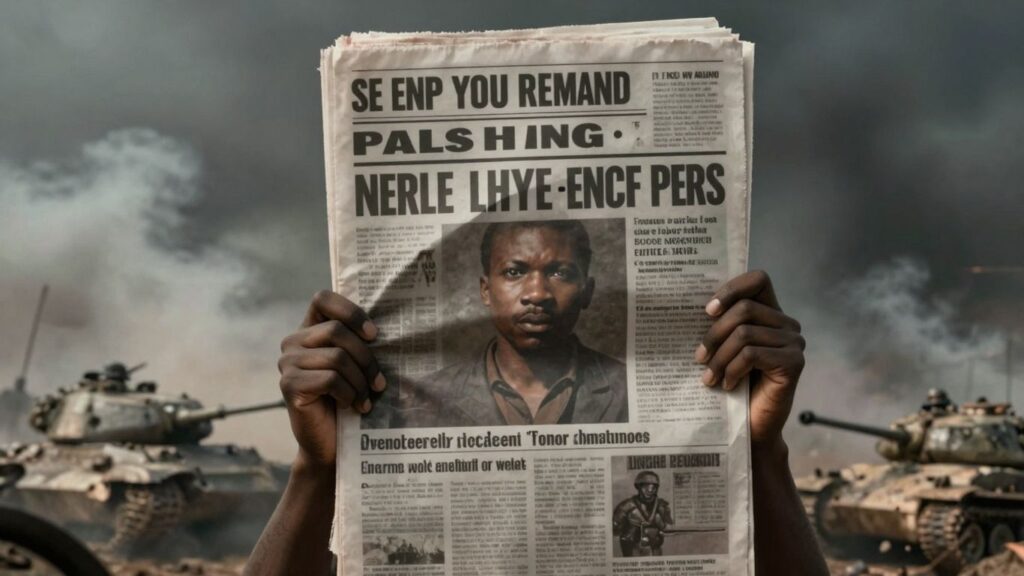
German journalist and author Patrik Baab joins Glenn Diesen to discuss how war propaganda has fundamentally altered media and freedom of speech. Baab, who has reported from conflict zones like Ukraine, argues that Western media no longer reflects reality, instead pushing narratives that serve specific agendas.
Key Takeaways
- Western media outlets have abandoned objective reporting, prioritizing war narratives over factual accuracy.
- The risk of nuclear warfare and the living conditions of ordinary people in Ukraine are largely ignored.
- The historical context and pre-war events leading to the conflict are omitted from mainstream coverage.
- Media outlets often fail to adhere to their own reporting standards, such as hearing both sides of a story.
- Ownership structures, working conditions for journalists, and the influence of NATO propaganda contribute to this shift.
- Digitalization and the nature of online consumption have led to more emotional and less in-depth reporting.
The Propaganda Press Explained
Baab defines the "propaganda press" as media that no longer covers reality. He points to several examples from his reporting in Ukraine. The media, he says, suffers from an "apocalyptic blindness," failing to represent significant risks like nuclear warfare in Central Europe. Furthermore, the daily lives and struggles of ordinary Ukrainians are absent from Western news cycles. The historical background of the war, which stretches back to the 2014 Maidan coup according to NATO’s former Secretary General, is also largely ignored. This selective reporting creates a distorted picture, where war narratives are elevated above actual events.
Reasons for the Shift
Baab outlines five main reasons for this decline in objective reporting:
- Ownership: Private ownership of media allows owners to dictate editorial lines. Management is often closely tied to politicians, influencing career paths.
- Working Conditions: Many journalists are freelancers or on limited contracts, making them dependent on their employers. They are often paid by the minute or by the line, incentivizing them to produce content that aligns with the editorial board’s views, which are frequently linked to transatlantic political lines.
- Education and Social Background: In countries like Germany, internships are often unpaid and require living in expensive cities. This leads to a social selection, where journalists from upper-class backgrounds often dominate, bringing their perspectives to the editorial boards. These perspectives can be influenced by financial interests in industries that profit from war.
- NATO Propaganda: The sheer scale of NATO’s public relations efforts, with massive budgets and personnel, creates an overwhelming propaganda sphere. This propaganda aims to change the way people think, often by appealing to emotions like "russophobia" rather than reason.
- Digitalization: The digital age has changed how information is consumed. The market for information is now controlled by private companies, which act as gatekeepers. This means that only information that passes their filters, or those of secret services, becomes widely available. Additionally, the fast-paced nature of online consumption, often on smartphones, encourages shorter, more emotional, and personalized content, sacrificing depth and background information.
The Role of Academia and NGOs
Academics and non-governmental organizations (NGOs) also play a role in this propaganda ecosystem. Baab notes that academics are often pressured to align their conclusions with official narratives. Similarly, many NGOs, particularly those funded by governments or transatlantic organizations, act as "government-organized non-government organizations" (GONGOs). Their role is to frame reality and promote government narratives, often by attacking anyone who deviates from the approved story. This creates a broad ideological apparatus involving schools, universities, churches, think tanks, and media, all working towards a common goal: ensuring the population adheres to the market economy and state rules.
The Academic Precariat
Young academics, often employed on short-term, project-based contracts, form an "academic precariat." This precarious working situation makes them more likely to conform to the expectations of their employers to secure future contracts. These academics then contribute to framing reality and spreading propaganda, often driven by corrupted transatlantic elites who have established career paths linked to organizations like the German Marshall Fund or George Soros’s foundations.
The Crisis of Legitimacy and the Path Forward
Baab argues that the current media landscape is characterized by a "censorship industry" and a "propaganda complex." He believes that the mainstream media in Germany, for instance, no longer represents public opinion but instead creates a "fake opinion" led by the government. This is particularly evident in the coverage of the Ukraine war, where narratives of Ukrainian victory and Russian weakness are pushed, while the immense human cost and the potential for diplomatic solutions are ignored. The elites, he suggests, are deeply invested in these lies and will continue to create new propaganda narratives to avoid a crisis of legitimacy when the war eventually ends and the truth begins to surface.
He advises people to stop consuming mainstream media and seek out alternative sources of information. By doing so, individuals can begin to form their own understanding of reality, free from the influence of what he describes as a willingly and knowingly lying press. The goal, he concludes, is to build a new information sphere that prioritizes truth over propaganda.


Responses