The EU’s Ukraine Funding Fiasco: A Loan That’s Not a Loan?

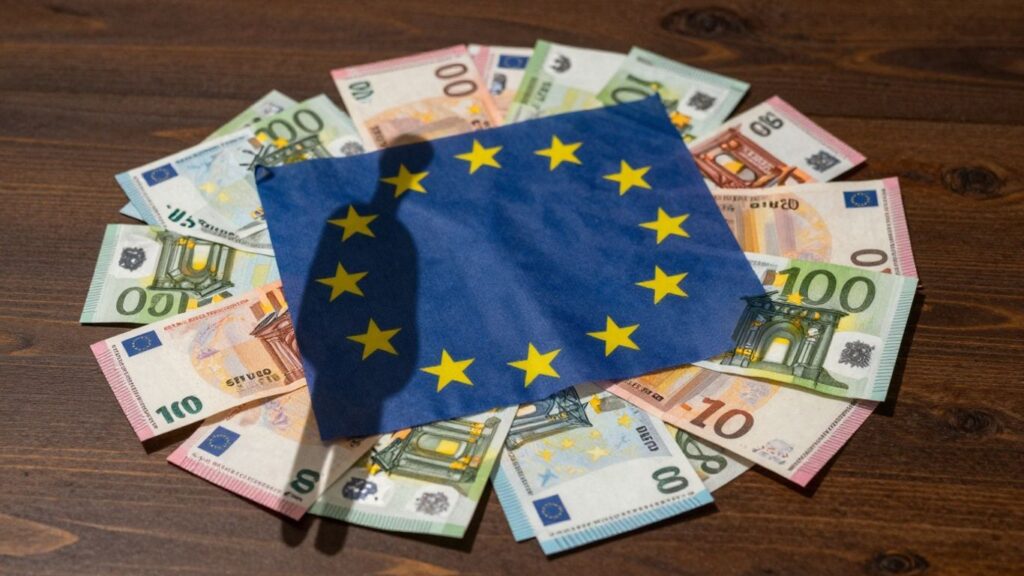
This week, the European Union grappled with a major decision on funding Ukraine, ultimately landing on a complex loan agreement that has raised more questions than answers. The debate was intense, highlighting deep divisions among member states.
Key Takeaways
- The EU agreed to provide Ukraine with 90 billion euros over two years through borrowing on capital markets.
- This funding is structured as a loan, but Ukraine would only need to repay it upon receiving reparations from Russia.
- Several EU countries, including Hungary and Slovakia, did not agree to the plan, leading to an "enhanced cooperation" among 24 member states.
- The decision comes amid ongoing concerns about Ukraine’s corruption levels and the war’s trajectory.
A Compromise That Feels Like a Shell Game
After a marathon 15-hour debate, EU leaders decided against directly seizing frozen Russian assets. Instead, they opted for a loan mechanism. However, this isn’t a straightforward loan. Ukraine is only expected to pay it back if and when it receives reparations from Russia. Essentially, it’s a way to get money to Ukraine without directly admitting it’s a grant, despite the country facing significant corruption issues. Reports suggest that hundreds of millions, and potentially up to 48 billion dollars, have already been mismanaged or lost.
The Illusion of Unity and the Specter of a New Cold War
The fact that not all EU members agreed to this funding plan highlights a growing disunity within Europe. Some analysts suggest that certain European elites might actually prefer a new Cold War. This could serve to keep the United States involved in European security and provide a common enemy to unite the EU, especially as economic incentives for unity seem to be fading. The argument is that a manufactured threat from Russia can keep European nations aligned, even if the economic benefits of sticking together are diminishing.
A World That's Not 1949 Anymore
There’s a strong push from some Western figures to reignite a Cold War mentality, drawing parallels to the post-World War II era. However, the current geopolitical landscape is vastly different. The Soviet Union is gone, and Russia’s current military capacity and intent to invade Western Europe are questionable. Russia’s military is organized for border defense, not continental conquest. The idea that Russia poses an existential threat to Western Europe, requiring a massive military buildup and a new Cold War, is seen by some as a manufactured narrative.
Media Manipulation and Distorted Narratives
Concerns have been raised about how Western media outlets are presenting the conflict. Reports from NBC News and The Wall Street Journal have been scrutinized for selectively presenting information and omitting crucial context. For instance, when President Putin stated that Russia did not start the war, media reports often framed this as him being detached from reality. However, a closer look at the unedited exchange reveals that Putin was referring to the 2014 coup in Ukraine as the start of the conflict, not the 2022 invasion. This distinction is vital for understanding Russia’s perspective, but it’s often left out of mainstream reporting.
The Historical Context: NATO Expansion and Russian Concerns
Many reports fail to mention the historical context that led to the current situation. Russia has repeatedly expressed concerns about NATO’s eastward expansion, viewing it as a direct threat to its security. The 2008 declaration that Ukraine and Georgia would join NATO was seen as a red line. Furthermore, the events of 2014, including the Maidan Revolution and subsequent civil unrest in eastern Ukraine, are often glossed over. Russia argues that the 2022 invasion was a continuation of a conflict that began in 2014, stemming from the West’s support for the overthrow of a democratically elected government and subsequent actions against ethnic Russians in Ukraine.
The Danger of Provocation and Misinformation
Drawing parallels to the Cuban Missile Crisis, the argument is made that provoking a powerful nation by moving military alliances to its borders is foolish and dangerous. Just as the US would not tolerate a Russian military alliance in Mexico, Russia views NATO expansion to its borders as an existential threat. The media’s role in distorting these facts, focusing only on a manufactured narrative of Russian aggression, prevents a clear understanding of the situation. This misinformation fuels the desire for a new Cold War, potentially at great cost to Western populations.
Calls for Sacrifice and a Lack of Realism
Some Western officials are calling for increased sacrifice, even suggesting that British families should be prepared to fight and die against Russia. This rhetoric is seen as detached from reality, given Russia’s limited capacity for large-scale invasion of Western Europe. The focus on a manufactured threat distracts from the real issues, such as the ongoing corruption in Ukraine and the lack of viable paths to victory. Instead of seeking negotiated settlements, the push continues for a prolonged conflict, driven by a desire for a new Cold War rather than a genuine assessment of the situation.
The Importance of Truth and Uncompromised Reporting
In this environment, channels that provide uncompromised and truthful reporting are more important than ever. By exposing the intentional distortions and omissions in mainstream media, the aim is to provide a clearer picture of the complex geopolitical realities. The goal is not to defend Russia’s actions but to present the facts, allowing individuals to form their own informed opinions. The current path, driven by misinformation and a desire for a new Cold War, is seen as irrational and potentially disastrous.




Responses