The American Empire’s Reckoning: Fiscal Crisis, Overstretch, and a New World Order

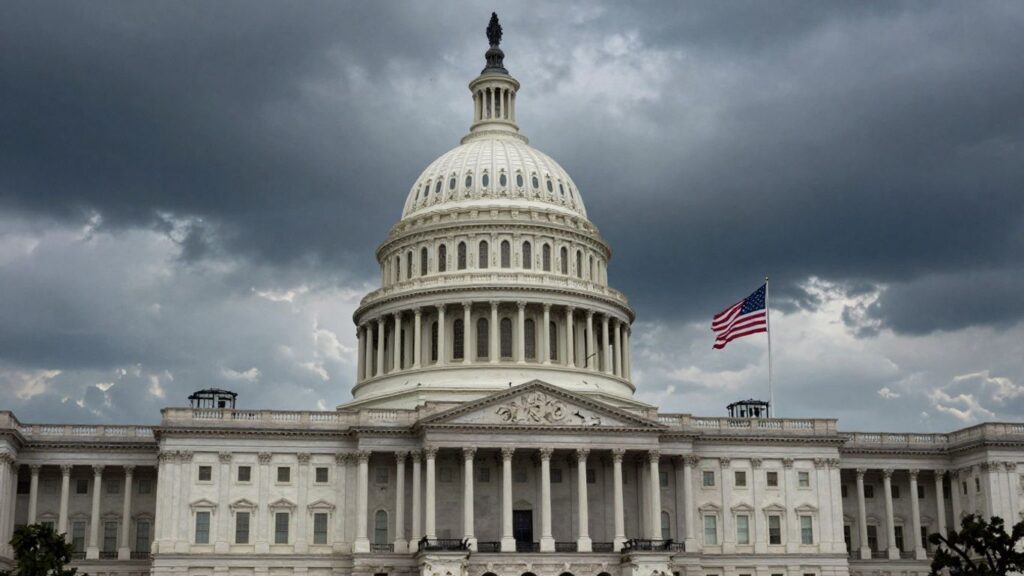
Empires end. This is one of the most reliable regularities in political history: no hegemonic power has maintained its dominant position indefinitely. The British Empire, the Spanish Empire, the Ottoman Empire, the Roman Empire — all reached a peak, entered a period of managed decline, and eventually ceded their position. The question analysts have been asking about the United States since at least the 1980s is not whether it will decline from its post-war peak, but how far, how fast, and whether the decline can be managed in a way that avoids the catastrophic transitions that have accompanied previous hegemonic shifts. In 2026, with fiscal deficits at historic highs, military overextension visible across three theatres, and economic competitors rising simultaneously on multiple dimensions, the reckoning is becoming harder to defer.
- → Imperial overstretch: the US is simultaneously maintaining military commitments in Europe (Ukraine), the Middle East (Iran strikes, Gulf presence), and Asia (Taiwan, South China Sea) — a combination that strains both financial and political resources
- → Fiscal trajectory: US government debt is on a path that the Congressional Budget Office projects will reach 160%+ of GDP by 2050 without policy change — a trajectory that historically precedes either inflation or default
- → The exorbitant privilege: the dollar’s reserve currency status allows the US to borrow cheaply and run deficits that would be unsustainable for any other country — and this privilege is being gradually eroded by the very policies used to maintain it
- → Domestic fracture: the political polarisation, institutional erosion, and social inequality visible in contemporary America are historically associated with the late stages of hegemonic cycles, not their early stages
- → The managed decline scenario: the optimistic case is that the US, like Britain before it, successfully transfers leadership while maintaining a privileged position in the successor order — the pessimistic case is that it resists decline in ways that make the transition more disruptive
The Anatomy of Imperial Overstretch
The historian Paul Kennedy coined the term “imperial overstretch” in his 1987 book The Rise and Fall of the Great Powers to describe the condition in which a hegemon’s military and political commitments exceed its economic capacity to sustain them. His diagnosis of America’s situation in 1987 — that it was beginning to show signs of this condition — was controversial at the time. The Cold War’s end and the 1990s economic boom seemed to refute it. In retrospect, the unipolar moment may have simply deferred the reckoning rather than resolved the underlying dynamic.
In 2026, the overstretch argument is more compelling than at any point since Kennedy wrote. The US is simultaneously providing military and financial support to Ukraine, conducting strikes in the Middle East following the Iran operation, maintaining naval presence in the South China Sea, and managing domestic political divisions that have compromised its capacity for coherent long-term strategy. Each of these commitments is individually defensible; together they represent a level of global engagement that the current fiscal position cannot sustain indefinitely. Defence spending, already over $900 billion annually, is facing pressure to increase further — while the fiscal deficit runs at $1.8 trillion and interest payments on the national debt have become the fastest-growing item in the federal budget.
“The question is not whether America declines from its post-war peak — all hegemonic powers do. The question is whether it declines the way Britain did — gradually, managing the transition — or the way Rome did — rapidly, through internal fracture and external pressure converging.”
The Fiscal Reckoning
The US fiscal position is the most important long-term constraint on American power. Federal debt has crossed $36 trillion. The Congressional Budget Office’s baseline projection — which assumes no policy change and no recession — puts debt at over 160% of GDP by 2050. Interest payments on this debt have already exceeded defence spending. The “exorbitant privilege” — France’s term for the US ability to borrow in its own currency at low rates because of dollar reserve status — allows this trajectory to continue longer than it could for any other country. But it does not make it sustainable indefinitely. At some point, either fiscal consolidation (politically very difficult), inflation (which erodes the real value of debt but imposes costs on savers and foreign holders), or a more disruptive adjustment becomes unavoidable. See: The US National Debt: Is America Heading for a Fiscal Crisis?
The Managed Decline Scenario
The historical precedent for a managed hegemonic transition is the British case. Britain’s decline from its 19th-century peak was gradual, spanning roughly 1870–1956, and culminated in a transition to US leadership that preserved most of Britain’s economic relationships, alliance structures, and cultural influence. The US remains embedded in the successor order rather than excluded from it. The optimistic case for America is that it follows a similar path: gradually ceding primacy while retaining a privileged position in a multipolar order — as the largest economy, the dominant military power in its hemisphere, and the issuer of the world’s most important currency even if no longer the exclusive reserve. The pessimistic case is that domestic political dysfunction, external military overreach, and fiscal deterioration make the transition less managed and more disruptive — for America and for the world order it has underwritten. For the geopolitical framework, see: Geopolitics 2026 and the Multipolar World Order analysis.
The American empire reckoning thesis has direct portfolio implications: US dollar overweight in global portfolios may be excessive given the long-term fiscal trajectory; international diversification — including European, Asian, and emerging market exposure — is a natural hedge against US-specific risk; real assets (gold, commodities, infrastructure) perform well in late-hegemonic inflationary environments. Our Index Funds for European Investors guide covers the practical implementation.
The American empire’s reckoning is not a fringe argument — it is increasingly the mainstream assessment of serious historians, economists, and strategic analysts. The US faces a convergence of fiscal unsustainability, military overextension, domestic political fracture, and external competitive pressure that is historically associated with hegemonic transitions. This does not mean collapse is imminent — Britain’s managed decline took eight decades. It means that the post-war American order is entering a new phase, and that individuals, businesses, and governments that plan on its indefinite continuation are building on an assumption that the evidence no longer supports.


Responses