Russia and India: A New Era of Global Trade and Partnership

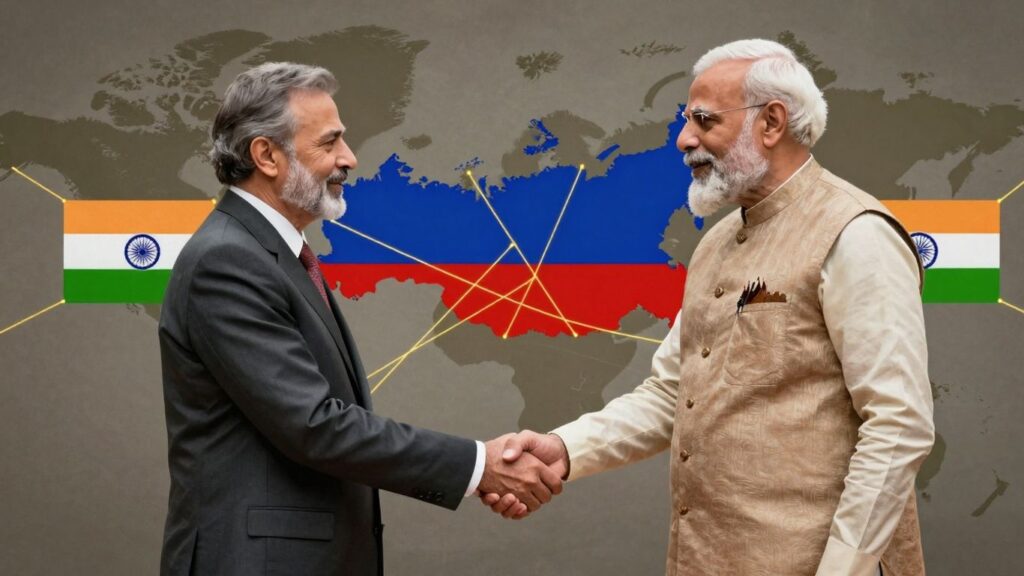
The recent visit of Russian President Putin to India marked a significant moment, not just for bilateral relations but for the evolving global landscape. While the international community viewed it through a geopolitical lens, the focus from both Indian and Russian leadership was firmly on strengthening their economic ties.
Key Takeaways
- Economic Cooperation as the Locomotive: Both leaders emphasized economic partnership as the driving force for the future of India-Russia relations.
- Shifting Global Dynamics: The visit occurred amidst significant shifts in global power, with the US National Security Strategy highlighting improved relations with Russia and India as core interests.
- Diversification of Trade: India and Russia are actively seeking to expand their trade beyond traditional sectors like energy and defense, exploring areas like fertilizers, pharmaceuticals, and manpower transfer.
- Strategic Autonomy: India is demonstrating a firm stance on maintaining its strategic autonomy, pushing back against external pressures and seeking relationships based on mutual respect.
- Arctic Engagement: Both nations are exploring deeper cooperation in the Arctic region, particularly in shipping and resource development, with India seeking a greater presence.
A Focus on Bilateral Economic Ties
While geopolitical analysis is easy given India’s role as a swing state and its complex relationships with the US and China, President Putin made it clear that his priority was the economic relationship. This was subtly signaled by the composition of his delegation, led by the First Deputy Prime Minister, who also co-chairs the India-Russia joint economic commission. This focus on economic cooperation is seen as the locomotive that will drive the relationship forward.
Geopolitical Undercurrents and US Strategy
Any economic relationship involving Russia inevitably carries geopolitical weight due to Western scrutiny. However, the context of this summit was unique. President Putin’s visit followed intense negotiations with a high-powered American team. This meeting might be remembered by historians as a defining moment, showcasing the US distancing itself from the "collective West" and showing a willingness to exert pressure on European powers. The release of the new US National Security Strategy during Putin’s visit further underscored this shift, favorably mentioning Russia and India not as adversaries but as countries with whom improved relations are in the US’s core interest. This formulation was notably different even from the Soviet era.
India's Assertive Stance
Despite the US administration’s policies, including trade disputes and tariffs, India has been projected as a key interlocutor in the Asia-Pacific. The joint statement from the summit, while not overtly anti-American, clearly articulated India’s refusal to be "pushed around." This was further evidenced by the Indian Ministry of External Affairs publicly rebuking Western ambassadors for criticizing the India-Russia relationship. India is demonstrating its capacity for strategic autonomy, learned from past experiences, and insists on relationships built on mutual respect and interest.
Expanding Economic Horizons
The economic agenda between India and Russia is ambitious. The target for bilateral trade is set at $100 billion, with concrete steps being taken to achieve this. Sberbank, a major Russian bank, has opened a branch in Mumbai to facilitate trade. Key areas of focus include:
- Fertilizer Production: A joint venture to produce fertilizers in India is being explored, capitalizing on India’s large agricultural sector and Russia’s export capacity.
- Pharmaceuticals: Discussions are underway to establish Indian manufacturing units for pharmaceuticals in Russia.
- Energy Cooperation: While Indian private companies have reduced oil imports due to US dealings, discussions continue on upstream investments in Russia’s LNG, oil, and gas sectors.
- Manpower Transfer: A significant agreement has been reached to facilitate the transfer of up to 100,000 Indian workers to Russia for industrial and agricultural projects. This addresses Russia’s labor needs and provides opportunities for Indian workers.
Arctic Opportunities and Shipping
Both nations are keen to deepen cooperation in the Arctic. Russia’s dominance in icebreakers and its development of the Northern Sea Route present significant opportunities. India is interested in this route for trade and to counter China’s growing influence in the region. Russia has pledged expertise and training for Indian personnel in operating icebreakers and utilizing the Arctic route. This collaboration also highlights India’s renewed focus on its shipping industry, recognizing its strategic importance in global trade and its role in circumventing Western sanctions.
Nuclear Energy and Future Ambitions
Discussions also covered nuclear energy, with plans to expand nuclear power plants in India using Russian technology. Furthermore, Russia is assisting in building India’s own nuclear industry, with the long-term vision of developing an export capability.
A Shifting Power Dynamic
The recent developments suggest a fundamental shift in global power dynamics. The US National Security Strategy’s acknowledgment of improved relations with Russia and India, coupled with India’s firm stance on its strategic autonomy, indicates a move away from a unipolar world. The relationship between India and Russia is evolving qualitatively, moving beyond traditional areas to encompass a broader range of economic, technological, and strategic collaborations. This partnership is not about being anti-American but about fostering a multipolar world based on mutual interests and respect.

Responses