Rewriting History: Stalin, Soviet Policy, and Today’s Geopolitics

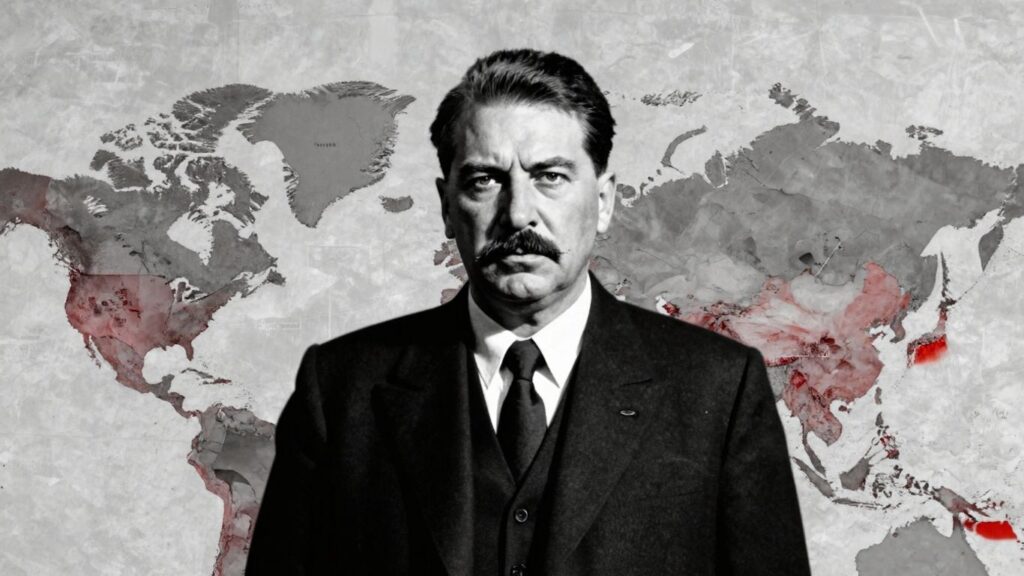
Professor Michael Carley, a noted scholar on Stalin and the Soviet Union, recently shared his insights on how historical interpretations, particularly concerning Stalin and Soviet foreign policy, are often twisted to fit current geopolitical narratives. He argues that this historical revisionism prevents us from learning the right lessons from the past.
Key Takeaways
- The West often misinterprets Soviet foreign policy, viewing it as solely driven by world socialist revolution rather than national interest.
- Stalin, despite his controversial legacy, was a realist leader focused on Soviet national interests and border security.
- There’s a significant continuity between Tsarist, Soviet, and modern Russian foreign policy, emphasizing self-reliance and security.
- Western narratives about World War II often downplay the Soviet Union’s massive contribution to defeating Nazi Germany.
- Historical events like the Holodomor are frequently politicized, turning into anti-Russian propaganda rather than objective historical analysis.
Stalin: A Realist Leader in Soviet Foreign Policy
Professor Carley challenges the common Western view that the Soviet Union lacked a traditional foreign policy, instead pursuing only world socialist revolution. Drawing from archival evidence, he asserts that national interest was a primary driver of Soviet foreign policy, a point often overlooked. Stalin, he explains, was a "Russian great man" and a realist who prioritized the security of the Soviet Union’s borders and its "near abroad." This focus on national interest and security, Carley notes, shows a remarkable continuity from Tsarist Russia, with Tsar Alexander III’s sentiment that Russia’s only friends were its army and navy still echoing today.
The West's Historical Revisionism and World War II
A significant part of the discussion revolved around how Western countries, and specific figures like Madame Kalas, often misrepresent or downplay the Soviet Union’s role in defeating Nazi Germany. Carley points out that this revisionism is not new and deeply angers Russians. He highlights that the Soviet Union bore the brunt of the fighting on the Eastern Front, with the Red Army responsible for destroying about 80% of Nazi ground forces. This immense contribution is often ignored, with polls showing a drastic decline in Western recognition of the Soviet effort over time. Carley contrasts this with the Western allies’ involvement, stating that while important, their contribution was more of a "helping hand" to the Soviet effort, not the other way around.
The Molotov-Ribbentrop Pact: Context is Key
The narrative surrounding the Molotov-Ribbentrop Pact is another area where Carley sees significant historical distortion. He argues that the Western campaign to condemn the pact began immediately in 1939, portraying Hitler and Stalin as allies. However, Carley stresses that this pact was a defensive measure taken after six years of Soviet attempts to form an alliance with France and Britain against Nazi Germany, which were consistently rebuffed. The West’s negative reaction to Soviet overtures, including a formal alliance offer in April 1939, is often ignored. When these efforts failed, and with war imminent, the Soviet Union opted for the non-aggression pact to keep itself out of the conflict.
Poland's Role and the Road to War
Carley also sheds light on Poland’s role in the lead-up to World War II. While often portrayed as a victim, he argues that Poland acted as a "spoiler" by refusing collective security arrangements with the Soviet Union and even collaborating with Germany in the dismemberment of Czechoslovakia. Poland’s non-aggression pact with Germany in 1934 and its continued hostility towards the Soviet Union, even weeks before the German invasion, demonstrated a clear preference for aligning with Germany over the USSR. This stance, Carley suggests, contributed to the failure to form a united front against Nazi aggression.
The Holodomor: Politicization of Tragedy
The famine of 1932-1933, known as the Holodomor, is another historical event that Carley believes has been heavily politicized. He cites historian Steven Kotkin, who argues that while a devastating famine occurred, it was not a deliberate act of genocide by the Soviet government against Ukraine. The famine resulted from a complex mix of factors, including Stalin’s rapid industrialization and collectivization policies, widespread peasant resistance (including the slaughter of livestock), and adverse weather conditions. The hardest-hit areas were actually in Kazakhstan, not solely Ukraine. Carley concludes that labeling it a genocide against Ukraine is a "political myth" and a form of Western propaganda against Russia.
The Winter War: A Miscalculated Move?
Discussing the Winter War between the Soviet Union and Finland, Carley explains that Stalin’s motivation was to secure the border near Leningrad, which was only about 30 kilometers away and within artillery range. He offered Finland larger territories in exchange for moving the border further west. Finland, encouraged by the British, refused these terms. Carley suggests Stalin, riding a wave of perceived success, miscalculated Finland’s resistance. The war, which went poorly for the Red Army initially, ultimately resulted in the Soviet Union achieving its territorial goals but also revealed weaknesses in the Red Army, potentially emboldening Germany. Carley also notes that the French government attempted to sabotage peace negotiations, wanting the war to continue.
Professor Carley’s analysis underscores the importance of understanding historical events within their proper context, free from the distortions of current geopolitical agendas. He emphasizes that a clear-eyed view of history, especially concerning Soviet and Russian policy, is vital for learning the correct lessons and avoiding repeating past mistakes.

Responses