Ray McGovern: The Shifting Sands of Global Power and the Fate of NATO and the EU


Ray McGovern, a former CIA officer with extensive experience briefing presidents, recently sat down with Glenn Diesen to discuss the evolving global landscape, particularly the potential decline of NATO and the European Union. Their conversation, marked by a candid and direct tone, explored the implications of shifting geopolitical strategies and the realities of international power dynamics.
Key Takeaways
- The US National Security Strategy shows a significant shift in priorities, moving away from a global hegemonic stance towards a more regional focus.
- Russia’s strategic objectives, particularly regarding Ukraine’s NATO membership, have been clearly articulated and, according to McGovern, have been achieved.
- The current global order is experiencing a tectonic shift from West to East, with China and Russia forming a closer alliance.
- There’s a growing sentiment that the war in Ukraine is unwinnable for Ukraine and that a diplomatic solution, potentially brokered by figures like Trump, is more realistic.
- The EU faces internal challenges and potential collapse due to its handling of the Ukraine conflict and its financial decisions regarding Russian assets.
A New US National Security Strategy
McGovern highlighted a striking change in the latest US National Security Strategy, noting its focus on the Western Hemisphere and Asia, with Russia relegated to a subsection of Europe. This, he argued, is a stark departure from the post-World War II era, particularly from the "Wolfowitz Doctrine" of 1991, which posited that the US could act unilaterally without fear of being stopped by others. McGovern pointed to instances like the 2003 invasion of Iraq and the 2015 intervention in Syria, where Russia’s influence became more apparent. The 2022 events, where Russia effectively stopped Ukraine’s NATO accession, marked a significant shift. McGovern speculated that this new strategy might reflect a more pragmatic approach, possibly influenced by figures like Tulsi Gabbard, acknowledging the rise of China and the US’s diminishing capacity to maintain global primacy.
The Ukraine Conflict: A Russian Success?
The discussion heavily focused on the Ukraine war, with McGovern asserting that Russia has, in essence, won. He cited Russia’s core principle of preventing Ukraine from joining NATO, a goal they have achieved. He contrasted this with the US’s stated interest in "hastening resolution" of the crisis to prevent escalation. McGovern, aligning with the "realist school" of international relations, echoed John Mearsheimer’s earlier warnings that Western policies, particularly the push for NATO expansion, would lead to Ukraine’s destruction. He argued that Russian President Putin made considerable efforts to avoid the invasion, citing the Minsk and Istanbul agreements. McGovern believes that the West, by pushing Ukraine towards NATO, ignored Russia’s core security interests, a move he likens to the US not wanting Russian military presence in Mexico.
The Future of NATO and the EU
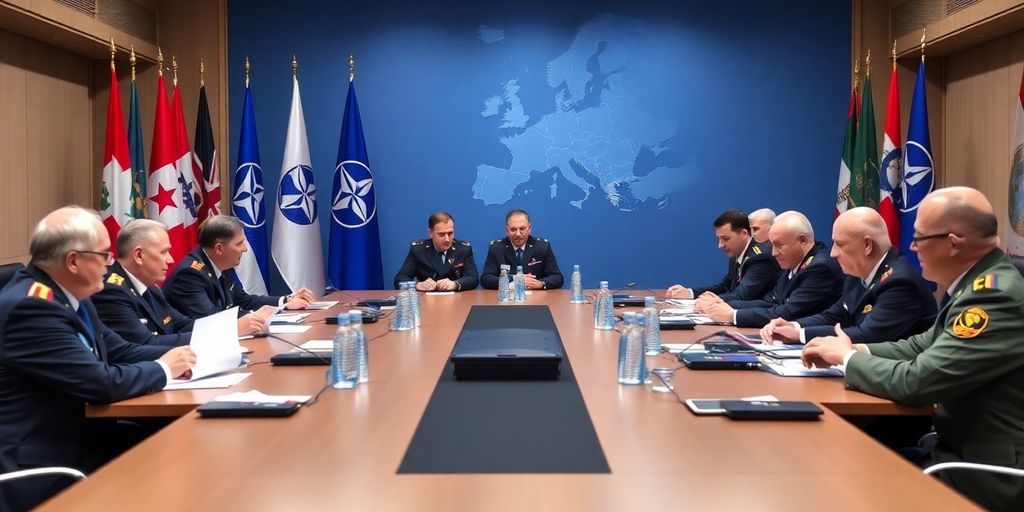
McGovern expressed skepticism about the future of both NATO and the EU. He noted that the US strategy’s pivot away from Europe suggests a weakening of the transatlantic alliance. The EU’s recent attempts to seize Russian assets to fund the Ukraine war were described as a "devious plan" that could lead to the bloc’s unraveling, violating its own foundational laws. McGovern suggested that European leaders are acting out of self-preservation, seeking to prolong their political careers rather than genuinely supporting Ukraine. He predicted a "massive divorce" between the US and Europe, and fragmentation within Europe itself, leading to a less stable global environment.
Strategic Arms Control and Diplomatic Efforts
The conversation also touched upon strategic arms control, specifically the New START treaty. McGovern highlighted Russia’s offer to extend the treaty’s limits for another year and expressed concern over the lack of a clear commitment from Donald Trump on this matter. He sees this as a crucial litmus test for future US-Russia relations. McGovern believes that Trump, more than other US politicians, recognizes the shift in global power and Russia’s strategic interests. He suggested that Trump might be the most viable figure to broker a peace deal in Ukraine, even if it means acknowledging Russian gains and ensuring Ukraine’s neutrality. McGovern concluded that while the path forward is uncertain, the current trajectory suggests a significant realignment of global power, with Russia in a strong position and the Western alliances facing considerable challenges.



Responses