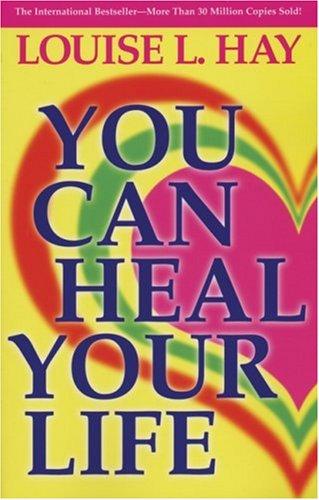
You can heal your life

By Louise L. Hay (1984)

Specs

Category: Tag:

Additional information

Author

Louise L. Hay

Reviews

There are no reviews yet.

Be the first to review “You can heal your life”

Your email address will not be published. Required fields are marked *

Summary

What the internet says

Aggregated insights from reviews and discussions across the web.

Overall reception: Mixed reception

Louise Hay's 'You Can Heal Your Life' (1984) receives deeply polarized reception online. With over 35 million copies sold and 4.7 stars on Amazon (17,679 ratings) and 4.2 stars on Goodreads (86,000+ ratings), the book has a massive following who credit it with transformative insights about self-love, forgiveness, and the mind-body connection. Many readers describe it as life-changing, particularly praising Hay's affirmations and her emphasis on releasing limiting beliefs. However, the book faces substantial criticism for its central premise that negative thinking causes all illness, including cancer and AIDS, which critics call dangerous victim-blaming pseudoscience.

The most contentious aspect is Hay's claim that diseases can be cured through positive thinking and self-love alone, with specific passages linking conditions like migraines purely to mental states and birth defects to karma. Critics, including those who lost loved ones to AIDS during the epidemic when Hay rose to prominence, argue she profited from vulnerable populations by dismissing medical science. Multiple reviewers note the book contains useful concepts about self-compassion and cognitive patterns borrowed from legitimate psychology, but these are overshadowed by medically inaccurate claims. The book's disclaimer states the author takes no responsibility for readers' success or failure with the techniques, which critics find particularly troubling given the medical advice offered.
What readers loved

  • Introduces powerful concepts of self-love and self-acceptance that many readers find transformative
  • Affirmations and mirror work exercises provide practical tools for changing negative self-talk
  • Emphasizes the importance of forgiveness and releasing resentment from past trauma
  • Highlights the legitimate mind-body connection and how mental health affects physical wellbeing
  • Accessible, easy-to-read writing style that makes complex emotional concepts understandable
  • The reference section linking emotions to physical conditions prompts self-reflection for some readers
  • Has helped readers develop more compassionate inner dialogue and reduce self-criticism

Common critiques

  • Claims all illnesses including cancer and AIDS are caused by negative thinking, which is medically inaccurate and dangerous
  • Promotes victim-blaming by suggesting people with serious diseases or birth defects chose their conditions or attracted them through bad energy
  • States that birth defects are due to karma and children 'chose to come that way,' which reviewers call odious
  • Encourages readers to potentially avoid necessary medical treatment in favor of affirmations alone
  • Author has no medical, mental health, or scientific credentials despite making sweeping health claims
  • Rose to fame during AIDS crisis by telling dying gay men their illness was their fault for not loving themselves enough
Last updated April 28, 2026 Summary based on publicly available reviews. May not reflect every reader's experience.