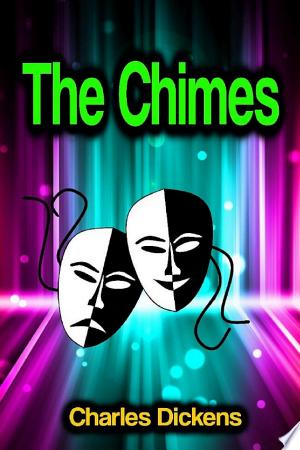
The Chimes

4.49

-
+

Specs

Categories: ,

Description

The Chimes Charles Dickens – The second in Dickens Christmas novels, The Chimes is the story of a poor ticket porter, whose outlook is changed from despair to hope by the spirits of the chimes on New Year’s Eve. In the second of his series of Christmas books, Charles Dickens wrote The Chimes one year after A Christmas Carol. Tackling familiar themes of redemption, social injustice and family, it is a story of hope and contemplation and is a moving festive read well worth discovering. As Trottys working day as a lowly messenger draws to a close, his daughter, Meg, arrives with her fiancé Richard in tow, and they proudly announce their wedding for the following day. This is cause for celebration of course, although their happiness is tempered by the comments of an alderman and other well-off citizens on the rights of the poor to marry. During the night, Trotty hears the chimes of a church bell and ventures out to climb the belltower. At the top he is greeted by goblins that tell him that he died during the climb and must now spend his time watching his friends and family live out their lives. What he witnesses makes for grim viewing: Richard turns to drink and dies penniless, leaving a widowed Meg to cope with bringing up their child; Trottys friend Will is in and out of prison, and Wills daughter Lilian ends up falling into prostitution. But the worst is yet to come. Destitute and desperate, Meg contemplates drowning herself and her young child. Wild with fear, Trotty cries out that he has learnt his lesson and suddenly his daughter is able to see him. At the last second, he rescues her from the brink of destruction. Trotty wakes as if from a dream to the bells chiming out the beginning of a new year, and finds that no time has passed and it is New Years Day. But as he sees his daughter cheerfully preparing for her wedding day, he is baffled as to whether this is just a dream within a dream.

  • Author: Charles Dickens
  • Publisher: Phoemixx Classics Ebooks
  • Published: 2021-09-12
  • Pages: 88
  • ISBN-13: 9783986470418

Additional information

Author

Charles Dickens

Reviews

There are no reviews yet.

Be the first to review “The Chimes”

Your email address will not be published. Required fields are marked *

Summary

What the internet says

Aggregated insights from reviews and discussions across the web.

Overall reception: Mixed reception

The Chimes, Charles Dickens' second Christmas book published in 1844, receives mixed reception from modern readers, particularly when compared to its predecessor A Christmas Carol. While it was an immediate commercial success in its time—selling nearly 20,000 copies in the first three months and spawning five stage productions within weeks—contemporary readers find it less compelling and more heavy-handed in its social messaging. Reviewers consistently praise Dickens' sumptuous language and descriptive power, with many noting the story's darkness and compelling horror elements that feel more Halloween-like than Christmas-themed. However, the consensus is that the novella suffers from being overly preachy and politically obvious in its critique of Victorian class structure.

The story follows Trotty Veck, a poor day laborer who, like Scrooge, is guided by supernatural forces—in this case, goblins emanating from church bells rather than Christmas ghosts—through visions of possible futures. Readers appreciate the social commentary on issues like poverty, debtors' prison, prostitution, and class divisions, with some noting that the upper-class characters still resonate as recognizable types today. However, many feel the narrative is rushed, particularly in its conclusion, and that characters lack the depth and nuance of Dickens' other works, functioning more as cardboard cut-outs representing political ideas rather than fully realized individuals. The story's New Year's Eve setting and bleak tone also contribute to its lack of enduring popularity compared to A Christmas Carol.

What readers loved

  • Dickens' language and descriptive writing are sumptuous and powerful, showcasing his undeniable literary skill
  • The dark, compelling tone creates genuine horror and suspense that keeps readers engaged late into the night
  • Strong social commentary on Victorian class divisions, poverty, debtors' prison, and the treatment of the poor remains politically relevant
  • Upper-class characters effectively represent recognizable political attitudes that still exist today, making the critique timeless
  • Specific scenes are beautifully rendered, particularly the tripe scene and Trotty hosting Will and his daughter
  • Richard Armitage's audio narration brings the story and characters to life exceptionally well
  • Successfully achieved Dickens' aim of sparking debate about social issues in its time

Common critiques

  • Characters lack depth and nuance, functioning as cardboard cut-outs or ciphers for political ideas rather than fully realized people
  • The social message is too obviously preachy and heavy-handed, with obtrusive sermonizing that stifles character development
  • The ending feels rushed and confusing, with unclear resolution about what actually happened in reality versus the vision
  • Dickens tried to cram too many elements (infanticide, alcoholism, prostitution, rick-burning, political theories) into barely 100 pages
  • The 'blow for the poor' misses its mark—the bleak future is shown for no apparent reason and the main character Trotty doesn't actually change

Based on reviews from

  • Goodreads - Main Review
  • Goodreads - Discussion Thread
  • Goodreads - Extended Review
  • Victorian Web
Last updated May 18, 2026 Summary based on publicly available reviews. May not reflect every reader's experience.