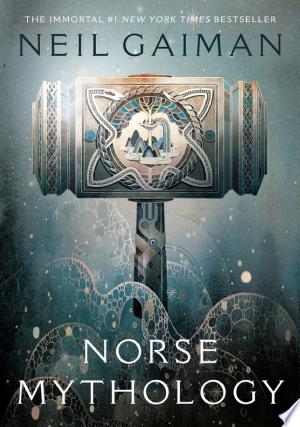
Norse Mythology

10.10

-
+

Specs

Categories: ,

Description

From the #1 New York Times bestselling author and “one of the modern masters of fantasy writing,” (Huffington Post) a dazzling, witty telling of the Norse myths. “A lively, funny, and very human rendition of Thor the thunder god, his father Odin, and the dark-hearted trickster Loki (plus countless other gods and monsters).” — Petra Mayer, NPR Neil Gaiman, long inspired by ancient mythology in creating the fantastical realms of his fiction, presents a bravura rendition of the Norse gods and their world from their origin though their upheaval in Ragnarok. In Norse Mythology, Gaiman stays true to the myths in envisioning the major Norse pantheon: Odin, the highest of the high, wise, daring, and cunning; Thor, Odin’s son, incredibly strong yet not the wisest of gods; and Loki—son of a giant—blood brother to Odin and a trickster and unsurpassable manipulator. Gaiman fashions these primeval stories into a novelistic arc that begins with the genesis of the legendary nine worlds and delves into the exploits of deities, dwarfs, and giants. Through Gaiman’s deft and witty prose, these gods emerge with their fiercely competitive natures, their susceptibility to being duped and to duping others, and their tendency to let passion ignite their actions, making these long-ago myths breathe pungent life again.

  • Author: Neil Gaiman
  • Publisher: W. W. Norton & Company
  • Published: 2017-02-07
  • Pages: 250
  • ISBN-13: 9780393609103

Additional information

Author

Neil Gaiman

Reviews

There are no reviews yet.

Be the first to review “Norse Mythology”

Your email address will not be published. Required fields are marked *

Summary

What the internet says

Aggregated insights from reviews and discussions across the web.

Overall reception: Mostly positive

Neil Gaiman's Norse Mythology is generally well-received as an accessible and engaging retelling of classic Norse myths, with readers praising Gaiman's distinctive narrative voice and his ability to make ancient stories feel fresh and relevant. The book holds a strong rating on Goodreads (averaging around 4+ stars based on nearly 30,000 reviews) and is frequently recommended as an excellent introduction to Norse mythology for newcomers while still being enjoyable for those already familiar with the tales. Gaiman draws primarily from Snorri Sturluson's Prose Edda and Poetic Edda, shaping individual myths into a coherent narrative arc that moves from creation through to Ragnarok, the apocalyptic end of the gods.

Reviewers consistently highlight Gaiman's skill in giving the gods distinct, relatable personalities—particularly Loki, who emerges as the chaotic star of the collection—while maintaining the tragic inevitability that drives toward Ragnarok. The tone is described as grounded, wry, and conversational, creating what multiple reviewers call a 'cozy' or 'fireside tale' atmosphere despite the often violent and dark subject matter. However, some readers express disappointment that the book is shorter than expected and note inconsistencies inherent to the source material. A recurring debate centers on whether the book is intended for children or adults, with some readers finding the simplified language and family-friendly content unexpected, while others appreciate its accessibility across age groups.

What readers loved

  • Gaiman's distinctive narrative voice makes ancient myths feel immediate and engaging, with grounded, conversational prose and wry humor
  • Loki is a standout character, portrayed as a compelling trickster whose chaos drives the narrative and whose complexity makes him simultaneously lovable and hateable
  • Gods are given consistent, relatable personalities with human flaws and motivations, making them feel like tragic heroes rather than distant deities
  • The structure creates a coherent narrative arc from creation to Ragnarok, giving shape and purpose to what could be random tales
  • Highly accessible introduction to Norse mythology that works for both newcomers and those already familiar with the stories
  • Maintains respect for source material while adding entertaining dialogue and character moments
  • The inevitability of Ragnarok gives the stories emotional weight and makes the gods' petty conflicts feel tragically meaningful

Common critiques

  • The book is shorter than many readers expected, with some wishing for more substantial content and additional myths
  • Contains inherent inconsistencies from the original source material (such as multiple characters being called 'wisest of the gods')
  • Some readers found the language and tone surprisingly simple or child-oriented when expecting a more adult retelling
  • Certain characters and significant objects disappear without explanation, reflecting the fragmentary nature of the original myths
  • Limited scholarly analysis or deeper exploration of the mythology's cultural context

Based on reviews from

  • Goodreads Reviews
  • Vox Review
  • Fantasy Literature Review
  • Goodreads Q&A
Last updated May 18, 2026 Summary based on publicly available reviews. May not reflect every reader's experience.