Description
Born six months after his father’s death, David faces many hardships growing up in nineteenth-century England
- Author: Charles Dickens
- Publisher: Penguin
- Published: 1996
- Pages: 916
- ISBN-13: 9780140434941
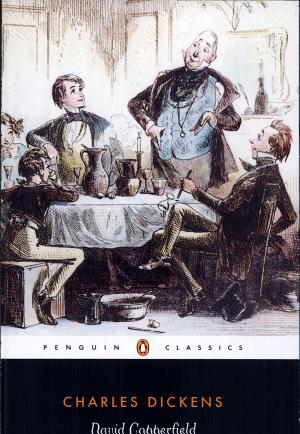
€29.95
Born six months after his father’s death, David faces many hardships growing up in nineteenth-century England
| Author | Charles Dickens |
|---|
Aggregated insights from reviews and discussions across the web.
David Copperfield is overwhelmingly celebrated as one of Charles Dickens' finest works, with readers praising it as his 'favourite child' and a masterpiece of characterization. Across Goodreads reviews, the novel receives consistent acclaim for its memorable cast of characters including Uriah Heep, Betsey Trotwood, Mr. Micawber, and Steerforth, with reviewers noting that despite the large number of characters, each remains vivid and distinct throughout the 800+ page narrative. The autobiographical elements resonate deeply with readers, who report both laughing and crying while following David's journey from a tormented childhood through self-discovery to his vocation as a writer. The book's exploration of themes like kindness, love, family, and social class in 19th century England is praised for being moving without being preachy.
However, readers consistently acknowledge significant barriers to enjoyment. The novel's considerable length is frequently mentioned as daunting, with some reviewers noting irrelevant tangents and outdated elements that slow the narrative. Several readers express discomfort with dated social attitudes, including misogynistic comments, offensive portrayals of characters with disabilities, and the tendency to equate physical appearance with moral virtue. The first-person narrative receives mixed reactions, with some finding David an unreliable and passive narrator whose naivety frustrates, particularly in his relationships with Steerforth and Dora. Despite these criticisms, the overwhelming consensus positions David Copperfield as essential reading, with many considering it among the greatest works in English literature.
Reviewers frequently recommend the audiobook version for navigating the novel's length, with narrators bringing the diverse cast to life through distinct voices and accents. The book appears on numerous 'must-read' lists including the BBC's 100 Books to Read Before You Die, cementing its status as a literary cornerstone that continues to move readers nearly 175 years after its 1850 publication.
Reviews
There are no reviews yet.