New Ideas for Peace? Why Zelensky’s Latest Plan Might Not Be Enough

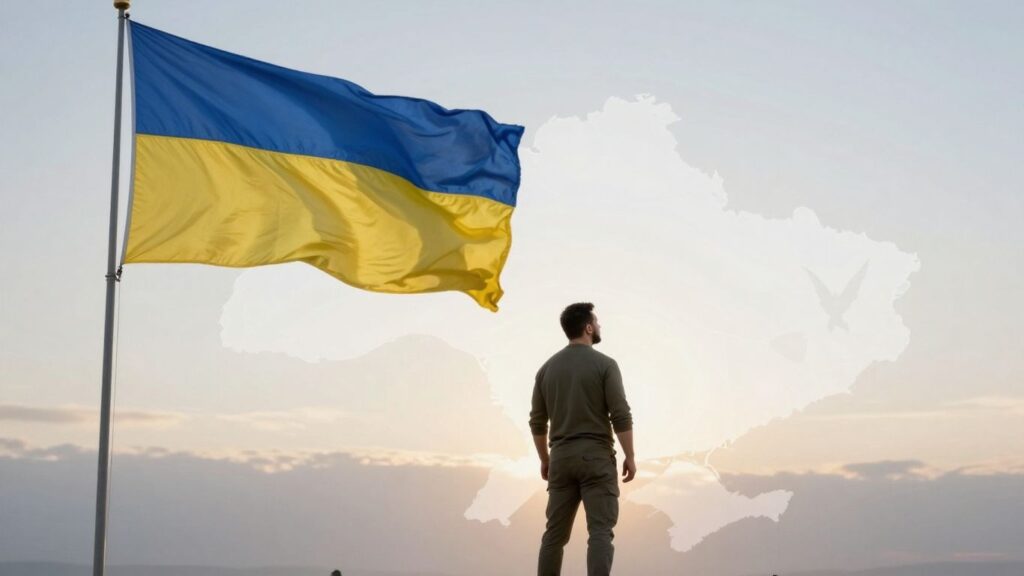
It’s been nearly four years since the Russia-Ukraine war began, and almost a year into the current administration’s efforts to find a resolution. Now, President Zelensky is presenting what he calls "new ideas" for ending the conflict, focusing on meetings and formats. However, the reality on the ground is starkly different, with lives lost daily.
European leaders are often criticized for avoiding the hard truths of the battlefield, preferring to operate in a world of fantasy. Zelensky, on the other hand, actually holds the power to make decisions that could end the war. Yet, his recent push for high-level meetings, including with former President Trump and his advisors, seems to offer no new substance that would change Russia’s stance.
Key Takeaways
- Zelensky’s "new ideas" focus on meetings and formats, not battlefield realities.
- European leaders are accused of dealing in fantasy rather than acknowledging the war’s brutal facts.
- Zelensky’s 20-point peace plan, while a diplomatic step, contains "poison pills" and omits key Russian demands.
- Russia’s core demands include Ukrainian neutrality, demilitarization, and control of four contested territories.
- Proposals like Western security guarantees are seen as unrealistic by Russia.
- There’s been no movement on core issues from Ukraine, Europe, or Russia.
- Trump is portrayed as wanting the war to end for political credit, not necessarily for a principled settlement.
- Without the power to compel concessions, new meetings and plans are viewed as mere theatrics.
Zelensky's 20-Point Peace Plan: A Closer Look
Zelensky recently unveiled a 20-point peace plan, a reduction from an earlier 28 points. While this shows some diplomatic progress and includes areas where Ukraine and Russia might find common ground, it’s still considered a non-starter by some. The plan reportedly contains four "poison pills" – elements unacceptable to Russia – and omits three core demands that Russia considers essential.
This comes after previous claims that a peace agreement was "90% of the way there." The new plan, numerically less than 90% of the original points, still faces significant hurdles. The "poison pills" include proposals like security guarantees from European states and the United States for a military of 800,000, which Russia is highly unlikely to accept.
Russia's Unchanged Demands
Russia’s core, non-negotiable demands have remained consistent. These include:
- Ukrainian Neutrality: No NATO membership for Ukraine.
- Demilitarization: A reduction in Ukraine’s military capabilities.
- Constitutional Protections: Guarantees for Russian speakers within Ukraine.
- Control of Territories: Full control over the four contested territories (Crimea, Donbas, and parts of Zaporizhzhia and Kherson).
These demands are rooted in historical agreements and perceived grievances, such as the alleged oppression of Russian speakers and the eastward expansion of NATO. Proposals like demilitarized zones or security guarantees are viewed as unrealistic because Russia sees no incentive to agree to them, especially after constitutionally incorporating territories like Crimea and Donbas.
The Trump Factor and Unrealistic Expectations
There’s a perception that former President Trump is primarily interested in ending the war for political gain, rather than through a principled settlement. He’s seen as unwilling to use U.S. leverage to force concessions from either side. Without a clear set of core principles guiding his approach, his involvement is viewed by some as lacking a firm foundation.
Furthermore, the idea of a demilitarized zone, as proposed by Zelensky, comes with conditions. For instance, Russia would have to pull its forces back from an equivalent stretch of land in the Donbas. However, Russia has shown no indication of accepting anything less than full control over the region, making such proposals unlikely to succeed.
The Reality of Attrition Warfare
The conflict is increasingly characterized as a war of attrition. While Ukraine has achieved tactical successes, such as pushing Russian forces back in certain areas, Russia possesses the manpower and resources to sustain a prolonged conflict. Reports suggest Russia has hundreds of thousands of troops not yet engaged, allowing for rotations and reinforcements.
Some analyses suggest that many in the West, despite their rhetoric, understand that Ukraine may be losing the war of attrition. They are accused of prolonging the conflict, using Ukraine as a pawn, as long as Russian soldiers are killed, regardless of the cost to Ukrainian lives. This perspective paints a grim picture, where the war is dragged out to the "last Ukrainian."
Misinformation and the Path Forward
There’s a concern that certain media narratives, particularly in the U.S., misrepresent the situation on the ground. Claims that Putin has never shown interest in a peace deal are disputed, with references to past meetings and diplomatic efforts. The argument is that many people rely on short, sensationalized news segments rather than in-depth analysis.
The speaker emphasizes the importance of truth and reality, even when it’s uncomfortable. The current approach, characterized by "new ideas" that lack substance and a failure to acknowledge Russia’s core demands, is seen as delaying the inevitable and increasing the cost of failure. Without a willingness to compel concessions on fundamental issues, new meetings and plans are dismissed as mere theatrics, not genuine steps toward peace.


Responses