Nassim Taleb Net Worth: How the Black Swan Author Built a Multimillion-Dollar Empire

Finance · Philosophy · Risk · Black Swan Theory
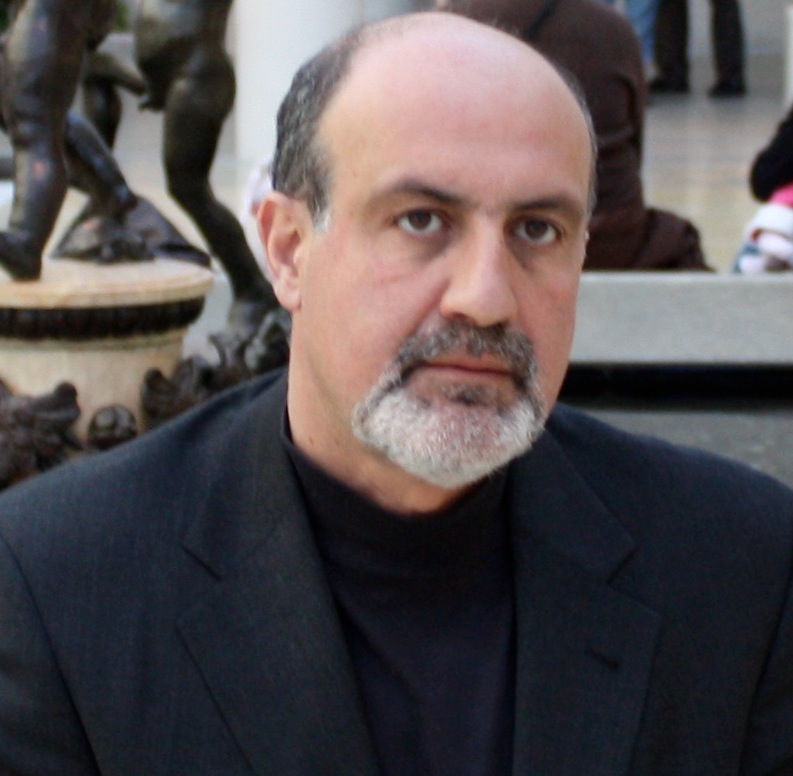
Nassim Nicholas Taleb has built one of the most intellectually formidable — and financially lucrative — careers of the 21st century by doing the one thing Wall Street, academia, and media elites all hate: being right about the things nobody wanted to hear. His estimated net worth of $20–50 million is built on trading floors, publishing houses, and a combative intellectual brand that has made him both celebrated and despised in equal measure.
1. Origins: Born Into Uncertainty
Nassim Nicholas Taleb was born in 1960 in Amioun, a small town in northern Lebanon, into a Greek Orthodox family with a tradition of political and intellectual prominence. His grandfather and great-grandfather were both senior government officials. His childhood was marked by relative privilege — until it wasn’t.
The Lebanese Civil War erupted in 1975 when Taleb was 15. Within two years, his family’s world — their social standing, their certainty, their narrative of progress — collapsed entirely. The conflict killed over 100,000 people and devastated an economy that had been called “the Switzerland of the Middle East.” Taleb watched adults who believed they had life figured out get completely blindsided by an event nobody had modeled, predicted, or prepared for.
This experience became the intellectual seed of everything he would later write. The civil war was his first Black Swan — a low-probability, high-impact event that restructured reality and exposed the fragility of confident predictions. He didn’t need to invent the concept of radical uncertainty. He lived it at 15.
Taleb left Lebanon and pursued education in France and then the United States. He earned an MBA from the Wharton School at the University of Pennsylvania and later a PhD in Management Science from the University of Paris (Dauphine), with a focus on the mathematics of derivatives pricing under conditions of uncertainty.
2. The Trading Career: Making Money from Chaos
Before he was a philosopher, Taleb was a trader. And an unusual one. Over a career spanning roughly two decades — from the mid-1980s through the early 2000s — he worked at a series of trading firms including UBS, Credit Suisse First Boston, and his own Empirica Capital, founded in 1999.
Taleb specialized in derivatives trading, particularly options and complex financial instruments. His edge was not conventional forecasting — he explicitly disavowed the ability to predict market directions. Instead, his strategy was asymmetric payoff design: he positioned his portfolios to lose small amounts consistently in normal conditions while being set up to gain enormous amounts during rare, catastrophic market dislocations.
This strategy is brutally difficult psychologically. Most years, you are losing or breaking even while watching conventional funds post gains. You look wrong. You look stupid. Clients leave. Colleagues mock you. And then a Black Swan arrives — the 1987 crash, the 1998 LTCM collapse, the dot-com implosion — and your position pays off by orders of magnitude.
Taleb reportedly made significant fortunes from the 1987 Black Monday crash and the broader market turbulence of the late 1990s. His firm Empirica Capital was eventually wound down, but not before demonstrating the real-world validity of his ideas.
Dark Takeaway: Taleb’s trading strategy is only viable if you can psychologically survive being wrong for years at a stretch. Most people — including most professional traders — cannot. The strategy is a filter for a specific type of mind: one that can tolerate social humiliation and paper losses while maintaining conviction in a model that the entire industry says is broken. Very few people have this. Taleb did.
3. The Books: An Incendiary Intellectual Catalog
Taleb’s first major book, Fooled by Randomness (2001), was originally self-published and sold through trading circles before being picked up by Random House. It argued that human beings are systematically fooled by luck — attributing skill to outcomes that were determined by chance — and that financial professionals are among the worst offenders. It sold modestly at first but built a cult following.
The Black Swan: The Impact of the Highly Improbable (2007) changed everything. Published just one year before the 2008 global financial crisis, it predicted with remarkable precision the exact type of catastrophic, unforeseen tail-risk event that would shortly destroy Lehman Brothers and nearly collapse the global banking system. When the crisis hit, Taleb went from fringe intellectual to the most talked-about thinker on the planet overnight.
The Black Swan has sold over 3 million copies worldwide, been translated into 36 languages, and been named one of the most influential books of the last two decades by multiple publications. At standard royalty rates, cumulative earnings from this single book likely exceed $8–12 million.
His subsequent books continued the intellectual arc:
- The Bed of Procrustes (2010) — philosophical aphorisms; cult favorite
- Antifragile: Things That Gain from Disorder (2012) — 1M+ copies, extends Black Swan framework
- Skin in the Game: Hidden Asymmetries in Daily Life (2018) — political and philosophical provocation
- Statistical Consequences of Fat Tails (2020) — technical treatise; academic market
Combined, Taleb’s books have sold well over 6 million copies globally. Annual royalty income across the entire catalog is estimated at $1.5–3 million per year.
4. Universa Investments: The 2020 Payday
Taleb’s most significant ongoing financial relationship is with Universa Investments, a hedge fund founded in 2007 by Mark Spitznagel with Taleb serving as Distinguished Scientific Advisor. Universa employs a tail-risk hedging strategy directly derived from Taleb’s Black Swan philosophy.
The strategy works exactly as designed and spectacularly vindicated by history: in March 2020, when COVID-19 triggered one of the fastest market crashes in history, Universa reportedly returned +3,612% in a single month — generating billions in returns for clients. This single event cemented both the fund’s reputation and Taleb’s status as the most credible risk philosopher alive.
While Taleb’s exact compensation from Universa is not public, advisory relationships of this nature typically involve base retainers plus performance-linked compensation. Given the fund’s assets under management and performance history, Taleb’s Universa-related income could be $500,000–$3 million annually, with significant bonuses in years like 2020.
Dark Takeaway: Universa’s 2020 returns are mathematically extraordinary, but they need to be contextualized. A strategy that loses money every year but gains 3,600% in one year is still a difficult client proposition — most allocators will have left before the payout arrives. The clients who stayed made generational returns. The ones who left missed history. This is Taleb’s point about antifragility made concrete in dollar terms.
5. The Academic and Speaking Career
Beyond trading and publishing, Taleb holds academic appointments as Distinguished Professor of Risk Engineering at New York University’s Tandon School of Engineering. His academic work focuses on the mathematical properties of fat-tailed distributions and the epistemological limits of statistical inference.
His speaking fees are substantial. Taleb commands estimated rates of $75,000–$150,000 per keynote, speaking at forums including the World Economic Forum in Davos, TED, major banking conferences, and government policy bodies worldwide. With 10–20 engagements per year, speaking alone generates an estimated $1–3 million annually.
Taleb is famous for being a difficult but electrifying speaker. He insults his audiences, challenges their assumptions, and frequently walks off stage early if he decides the questions aren’t intelligent enough. This behavior has become part of his brand — paradoxically making him more sought-after, not less.
6. The Philosophical Framework: Incerto as Life’s Work
Taleb’s five major books form a unified philosophical system he calls Incerto — a meditation on uncertainty, probability, and how humans and systems should be designed to cope with the unknowable. The core concepts span multiple disciplines:
- Black Swans: Rare, high-impact events that are unknowable in advance but appear obvious in retrospect
- Antifragility: The property of systems that benefit, rather than merely survive, from volatility and disorder
- Skin in the Game: The ethical requirement that those who make decisions bear the consequences of those decisions
- Ludic Fallacy: The error of using artificial, bounded models (like dice games) to understand real-world uncertainty
- Via Negativa: Progress through removal and subtraction, rather than addition
These ideas have penetrated medicine, economics, military strategy, engineering, urban planning, and political philosophy. Taleb’s influence operates at a scale few intellectuals achieve — not through institutional channels, but through the viral spread of concepts that feel immediately, viscerally true.
7. Controversy, Combat, and the Social Media Gladiator
Taleb is one of the most combative public intellectuals alive. He has publicly and viciously attacked colleagues, journalists, economists, and politicians who he believes are intellectually dishonest or dangerously wrong. His Twitter/X presence — where he has millions of followers — is a running war room of intellectual combat, personal insults, mathematical arguments, and philosophical provocations.
Notable feuds include attacks on Nobel laureate economists he considers frauds, behavioral economists like Richard Thaler, political commentators, epidemiologists during COVID-19, and various financial journalists. These feuds generate enormous attention, keep his books relevant, and reinforce his identity as the man who refuses to be respectable.
The combativeness is not accidental or uncontrolled. It is a precisely calibrated brand strategy. In a world of polite intellectual discourse, Taleb’s willingness to be brutal, specific, and ruthless makes him impossible to ignore — and guarantees that his ideas stay in circulation.
Dark Takeaway: Taleb’s academic and media antagonism isn’t passion or arrogance — it’s product differentiation. The person willing to say “your methodology is fraudulent” in a field of polite consensus is automatically memorable, quotable, and shareable. His aggression is inseparable from his market position. He would be a minor figure if he were merely smart and nice.
8. Net Worth, Lifestyle, and the Stoic Paradox
Taleb’s net worth by 2026 is estimated at $20–50 million, though some estimates range higher given the opacity around his Universa compensation and personal investments. His income streams include:
- Book royalties: ~$1.5–3M/year from a 6M+ copy catalog
- Speaking engagements: ~$1–3M/year
- Universa advisory income: ~$500K–$3M/year (with exceptional years far higher)
- Academic salary (NYU): ~$200–400K/year
- Personal trading and investments: estimated $3–10M in assets
Taleb’s lifestyle is deliberately eclectic. He splits time between New York, the Mediterranean, and various academic appointments. He is known for his love of deadlifting and weightlifting — he is an avid strength athlete — and his affection for Mediterranean food culture. He lives well but not ostentatiously, and he appears to derive satisfaction less from consumption than from intellectual dominance.
He has called himself a Stoic, but practices something more aggressive: not passive acceptance of fate, but active confrontation of it. His philosophy of antifragility is ultimately a life prescription: don’t just survive disorder — structure your finances, your relationships, your body, and your career to get stronger from it.
Final Dark Takeaway: Taleb built his entire fortune on a single, unfashionable idea: that the future is more uncertain than anyone admits, and that most of human institutions are designed to pretend otherwise. He was right in 1987. He was right in 2001. He was right in 2008. He was right in 2020. At some point, being right about catastrophe stops being lucky and starts being a business model. Nassim Taleb’s business model is being the person who profits when everyone else’s model breaks.


Responses