Japan’s Economic Tightrope: Navigating Decline and Geopolitical Shifts

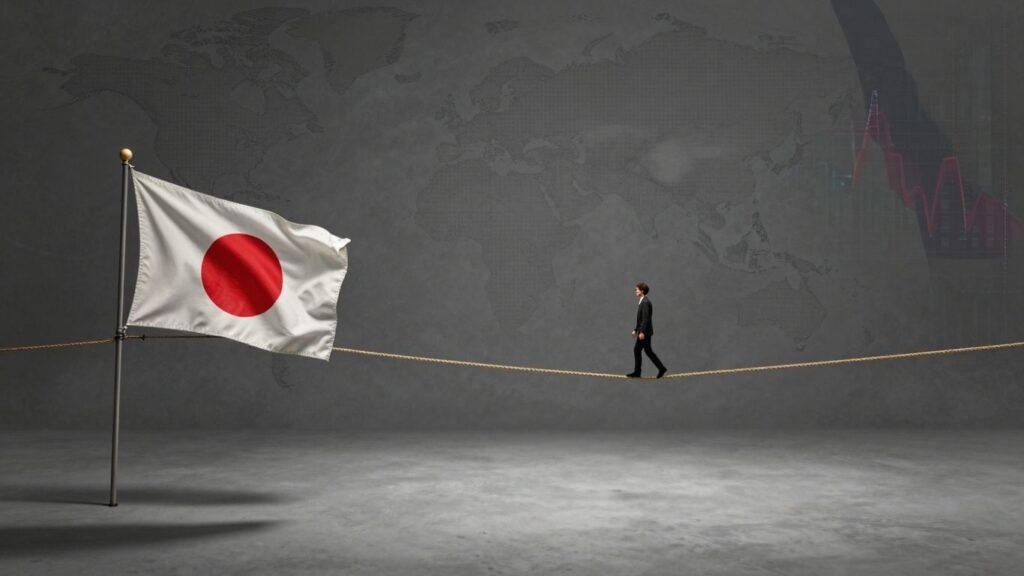
Japan is currently facing a complex period of economic readjustment, moving from a dependent relationship within a unipolar world to a more independent stance in a multipolar global landscape. This transition is marked by significant structural economic problems and ongoing geopolitical tensions, particularly with China.
Key Takeaways
- Japan’s economy is heavily reliant on energy imports, making it vulnerable to rising energy prices and currency depreciation.
- The country faces demographic challenges, including an aging population and a shrinking workforce, necessitating advancements in automation and technology.
- Geopolitical shifts, especially the changing balance of power in Asia, require Japan to reconsider its long-standing security arrangements.
- There’s a growing need for Japan to pursue greater strategic autonomy and redefine its relationship with the United States.
- Economic interdependence within Asia, particularly with China, presents both opportunities and risks that Japan must carefully manage.
Economic Headwinds and Structural Challenges
Japan’s economy is grappling with several deep-seated issues. A major concern is its heavy dependence on energy imports. As global energy prices climb and the Japanese currency weakens, the nation finds itself in a precarious economic trap. This situation is compounded by a massive national debt, further straining the economy.
Beyond immediate economic pressures, Japan faces long-term structural challenges. Its demographic profile, characterized by an aging society and a declining birthrate, leads to a shrinking workforce. This necessitates a significant push towards automation and technological innovation to maintain productivity and support the elderly population.
Furthermore, Japan’s limited natural resources, particularly in terms of food and energy, make it inherently vulnerable. The country has had to seek special dispensations, even from allies, to continue purchasing Russian energy following sanctions, highlighting its critical need for stable and affordable energy supplies.
Geopolitical Realignment and Security Concerns
The geopolitical landscape in Northeast Asia is increasingly complex. Recent remarks by a Japanese prime minister regarding Taiwan triggered a strong reaction from China, signaling a departure from post-World War II arrangements that emphasized a pacifist constitution and limited military expansion. These comments touched upon historical agreements and sovereignty issues, creating significant friction.
The instability in Japan’s leadership, with frequent changes in prime ministers, further complicates its ability to forge long-term foreign policy strategies. This domestic political flux occurs against a backdrop of regional security challenges, including the situation on the Korean Peninsula and the evolving relationship between major powers.
There’s a growing recognition in Japan, as well as in other nations like South Korea and Australia, that over-reliance on the United States for security may no longer be a viable long-term strategy. The perception is that the US may not always be willing to commit its own security to defend allies, prompting a need for greater regional self-reliance and strategic autonomy.
Redefining Relationships in a Multipolar World
Japan is at a crossroads, needing to balance its relationship with the United States while also engaging with its Asian neighbors. The idea of redefining the Japan-US relationship from one of dependency to one of equality is gaining traction. However, this shift is complicated by historical sensitivities and regional power dynamics.
Economically, Japan is deeply integrated within the Asian region, particularly with China. The Regional Comprehensive Economic Partnership (RCEP), a free trade agreement involving 15 Asia-Pacific nations including China, Japan, and South Korea, underscores this interdependence. Japan’s significant trade and investment ties with China, along with regional financial cooperation mechanisms like currency swaps, highlight the intricate economic web.
The European experience with geopolitical tensions and economic disruption serves as a cautionary tale. The potential for economic interests to be jeopardized by political factors emphasizes the need for Asia to consolidate economic relationships as a foundation for regional stability.
The Path Forward: Autonomy and Regional Cooperation
Japan faces a dilemma: it needs to secure its own future, potentially through remilitarization, but this raises concerns in neighboring countries with whom it shares a complex history. The key may lie in reframing security as a regional, indivisible issue, rather than a zero-sum game.
This approach would involve fostering inclusive security architectures where Japan’s legitimate security interests are respected, and in turn, Japan addresses the historical concerns of its neighbors. Open dialogue and a national debate within Japan are necessary to build confidence and ensure its participation in a stable regional security framework.
The global order is shifting, and Japan, like other nations, must confront the reality of a multipolar world. Its economic strength, technological capabilities, and strategic location offer agency. However, this agency must be exercised through a clear-eyed assessment of its national interests, prioritizing regional stability and economic prosperity over external dependencies.

Responses