Is the West Headed for Civil War? A Professor’s Stark Warning

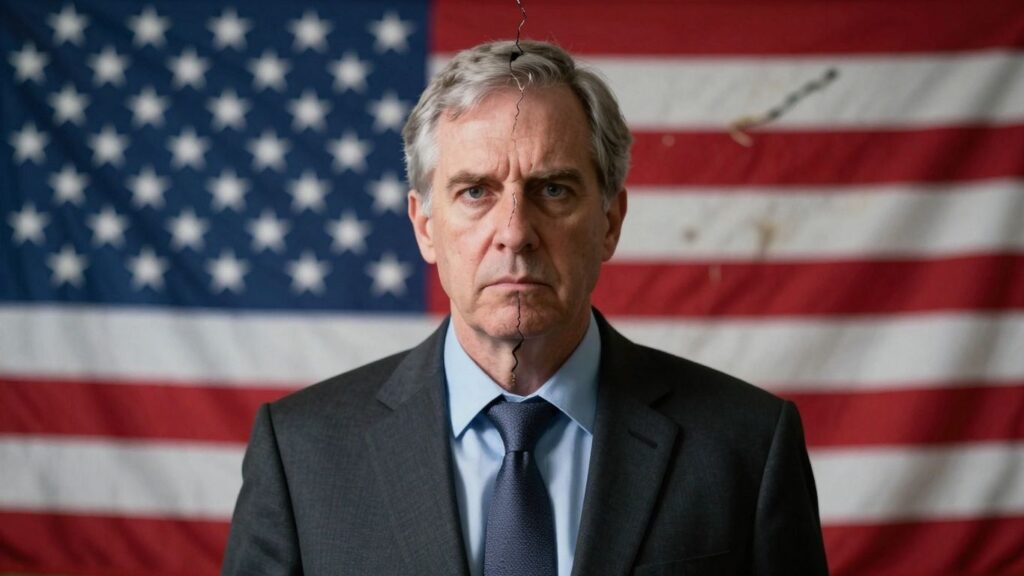
Professor David Betz from King’s College London joined a recent discussion to explore a deeply unsettling possibility: that Western countries might be on an irreversible path toward civil war. This isn’t a topic academics often tackle lightly, as it questions the very foundations of the liberal project that has shaped modern societies. The fear is that by even discussing civil war, we might inadvertently encourage it, creating expectations of violence. However, Professor Betz argues that ignoring these signs is far more dangerous.
Key Takeaways
- Western societies exhibit three key indicators strongly associated with the risk of civil conflict: factionalism, a sense of downgrading among dominant groups, and a loss of faith in political institutions.
- The academic literature on civil wars is not exclusive to non-Western contexts; the West is not immune to internal conflict.
- The current form of factionalism is described as "polar factionalism," where individuals align with their group’s consensus view out of fear, rather than engaging in reasoned debate.
- "Downgrading" refers to the fear of a dominant group losing its status, often linked to demographic changes and perceived cultural or economic decline, sometimes termed "the great replacement."
- A crisis of legitimacy in political systems is evident, with a widespread belief that voting doesn’t matter and elites consistently override public will.
- Trust in institutions, including government, media, police, and the judiciary, has been in a long-term decline across the West.
- Potential future conflicts could manifest as a "peasant revolt" against elites or as inter-ethnic/inter-tribal clashes, possibly involving attacks on urban infrastructure.
- Professor Betz believes the point of no return has likely been passed, and the focus should now be on mitigating the effects and shortening the duration of any potential conflict.
The Academic Dilemma
Professor Betz acknowledged the awkwardness of researching societal divisions. In Europe, there’s a strong belief that words can create reality, leading to a fear that discussing civil war might normalize it or even incite it. This creates a dilemma: how to address a potential problem without causing it? Betz notes that this is a common reaction to his thesis, stemming from a deep-seated Western belief in the power of speech. Ironically, Western societies once countered ideas through argument but have seemingly abandoned this, perhaps because they lack compelling counter-arguments. Economically, strategically, and otherwise, they may be at the end of their rope.
Indicators of Conflict
While some might assume civil war is a problem for "hot and dusty places abroad," Betz argues that academic literature on civil wars does not exclude the West. He identifies three primary indicators that reflect a consensus in the existing literature on the causes of civil wars:
- Factionalism: Western societies are highly factionalized. Betz specifies a particularly toxic form called "polar factionalism." This isn’t about disagreeing on policy issues where reasonable people can hold different views; instead, individuals suppress their own opinions to conform to their group’s perceived consensus. This often arises from a sense of insecurity, leading people to seek allies and adopt group norms.
- Downgrading: This refers to a dominant, but declining, majority group feeling it faces a permanent loss of status. This can involve fears about the loss of their language’s primacy, cultural traditions, or cherished symbols. In common terms, this is often discussed as "replacement" or, using the phrase of philosopher Renard Camu, "the great replacement." Statistics show a significant portion of the population believes this is occurring, driven by demographic changes through migration, often perceived as an elite-driven project against public will.
- Loss of Faith in Politics: This is a crisis of legitimacy, where the political system is seen as unable to solve collective action problems justly or fairly. The most common political sentiment across the West today isn’t left or right, but the belief that "voting doesn’t matter." This "uni-party" idea suggests that regardless of who is elected, elites’ preferences will prevail. Research indicates that elite opinion almost always wins out over mass opinion. This erosion of faith is mirrored in declining trust levels across various institutions, including the legal system, journalism, and even historically trusted professions like the police and clergy.
Potential Scenarios
If civil conflict were to erupt, Betz outlines a likely scenario involving three primary groups: the post-nationalist, cosmopolitan elite; recent non-native immigrant communities (particularly Muslim populations seen as unassimilable); and the native population, often referred to as the "somewheres" – those rooted in place and tradition.
The conflict could play out in two main ways, with the native population as the central actor:
- Peasant Revolt: A conservative revolt aimed at punishing the elite for changing societal rules in ways detrimental to the majority. In a 21st-century context, this might resemble a "dirty war," characterized by chronic, low-level violence like assassinations, kidnappings, and harassment targeting elites, aiming to force them to serve the national interest.
- Rural vs. Urban Conflict: This could involve the formation of ethnic enclaves, particularly in urban centers, being besieged through attacks on their life-support systems. This includes infrastructure like electrical power, gas, and transportation networks crucial for food logistics. Such attacks are strategically logical in a contemporary urban setting, where cities are dependent on external inputs that are difficult to guard and fragile.
The Point of No Return?
Professor Betz expressed a grim outlook, stating he doesn’t believe the situation can be reversed. The possibility of completely avoiding civil war has likely passed. He points to research, like Paul Collier’s work on the negative effects of mass migration on social capital, and Robert Putnam’s findings on how diversity can erode trust and community bonds. Betz argues that the consequences of policies like mass migration and multiculturalism are now "baked in." While complete avoidance may not be possible, he urges governments and security services to prepare for mitigation, focusing on reducing the duration of any conflict, likening it to the swift removal of an abscessed tooth rather than a prolonged, damaging process. The political "offramps" have been missed, and people should brace for a "wild ride."




Responses