Is the US Pushing Japan and China Towards Conflict?

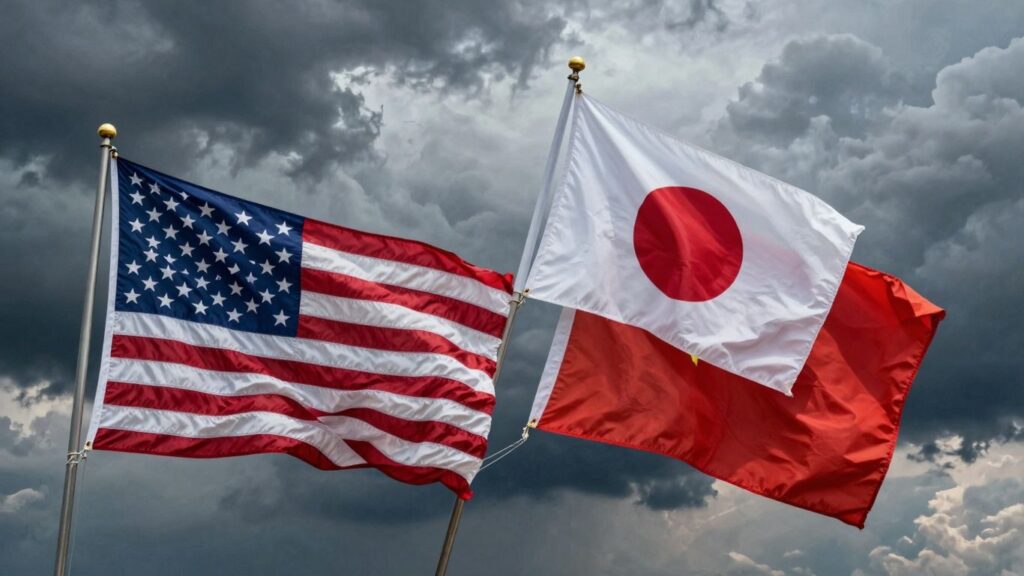
Tensions are rising between China and Japan, with a real threat of war looming. This surprising turn of events was initiated by Japan’s new prime minister, who announced plans to deploy missiles in Taiwan. This move is seen as an attempt to undermine China’s sovereignty over Taiwan and signals Japan’s potential military involvement in any secessionist actions. This is a significant red line for China, and Japan is crossing it.
Key Takeaways
- The US, particularly under Donald Trump’s approach, seems to be instigating conflict between Japan and China.
- This strategy appears to be a response to the US’s perceived failures in its economic war against China.
- Japan’s recent actions, like deploying missiles in Taiwan, are seen as a "green light" from Trump to create mischief.
- Economic factors, including rare earth control and supply chains, are central to these geopolitical maneuvers.
- There’s a significant risk of accidental escalation into a wider conflict due to miscalculation and aggressive posturing.
The Rare Earths Gambit
To understand the current situation, we need to look back at Donald Trump’s focus on rare earths. He realized that China controls a vast majority of these critical materials, essential for things like magnets and gyroscopes. This dependency worried him, especially as he pursued tariffs against China. He didn’t like being backed down, so he started a campaign to build alternative supply chains.
This involved meetings with leaders from Vietnam, Malaysia, and Australia, all centered around rare earths. When he met with Japan’s Prime Minister Kishida, it’s highly probable he gave her the go-ahead to stir up trouble with China. This is a classic Trump tactic: if he can’t achieve something directly, he’ll try to do it indirectly.
Japan's Ambitions and Economic Woes
Prime Minister Kishida is an ambitious figure, aiming to be the "Margaret Thatcher of Japan." Her tough stance on China has boosted her domestic popularity, with a 74% approval rating. However, China retaliated by discouraging tourism, which is a significant part of Japan’s economy. This move will likely hurt Japan in the long run.
Economically, Kishida’s plan seems to be a version of "Abenomics" without structural change. She believes the government needs to control the message and encourage spending, hoping to convince people everything is fine. But with Japan already facing demographic issues and economic stagnation since the mid-1980s, this approach might not be enough. The country is already showing signs of heading towards a recession.
The Danger of Accidental War
The current situation is incredibly dangerous. Trump is playing a high-stakes game, pushing across red lines. This could easily lead to a direct encounter between Chinese and Japanese warships, potentially resulting in casualties and escalating retaliation. It’s not necessarily a planned war, but a war that could start by accident, much like the lead-up to World War II.
Using Japan as a proxy is risky because the US could get pulled into any conflict. If Trump backs down, American credibility is damaged. If he goes ahead, the world risks destruction. Japan is playing along, partly because Kishida lacks a solid economic plan. China, meanwhile, seems to be playing for time, given the unpredictable nature of Trump’s pronouncements.
Historical Grievances and Economic Realities
The tensions are amplified by historical grievances. This year marks the 80th anniversary of the Nanjing Massacre, a deeply painful event in Sino-Japanese history. The public in China feels strongly about these past atrocities, making any perceived aggression from Japan highly inflammatory.
Economically, the US is struggling to re-industrialize, while China is projected to dominate global production. Reports suggest the US cannot even produce enough weapons for the conflict in Ukraine. The idea that the US can simultaneously fight Russia and China is seen as absurd, especially given past failures against groups like the Taliban.
The Shifting Global Order
The underlying issue is a fear in the West of losing its dominant global position. There’s a reluctance to accept a multipolar world where China is a leading economy. This mindset drives policies that create conflict rather than cooperation. The US, in particular, seems to be pushing for a return to a past order that no longer exists.
This is evident in how the US pressures allies like the Netherlands to restrict technology exports to China. While this might seem like a strategic move, China is finding ways to adapt. The US also played a role in cutting off Europe’s access to cheap Russian energy, preventing a strong European-Russian economic partnership that could rival the US.
A Perfect Storm Brewing?
We seem to be heading towards a perfect storm. Japan, a major holder of US treasuries, is in a precarious economic position. The US is increasing its debt, and its economic policies are becoming increasingly questionable. The dollar’s stability is at risk, and the potential for significant economic turmoil is high.
The current geopolitical landscape, fueled by economic pressures and historical animosities, creates a volatile situation. The risk of a conflict, whether by design or accident, is a serious concern, especially with the current lack of clear strategy and the potential for miscalculation.

Responses