How Andrew Tate Made His First Million (In His Own Words)

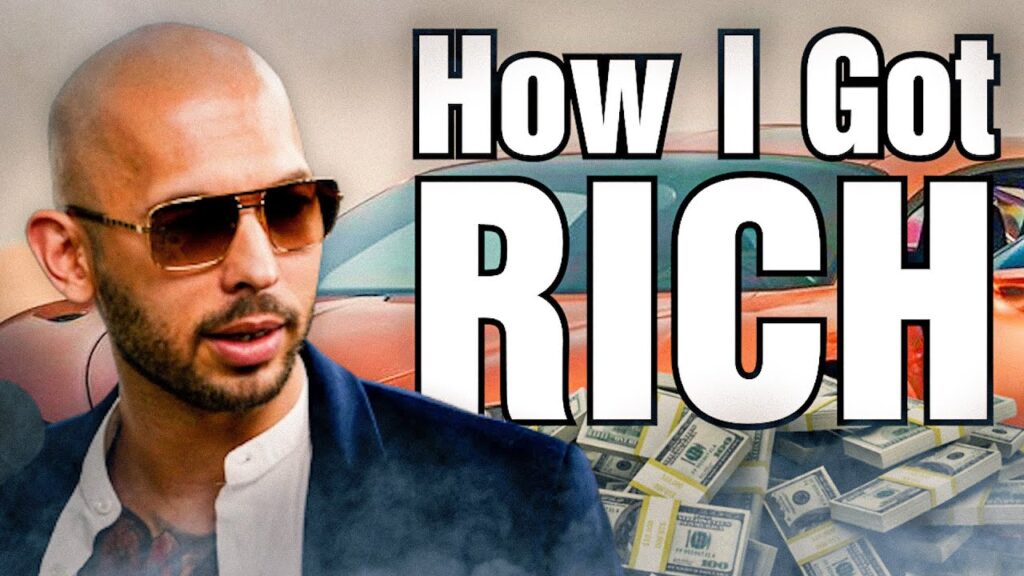
Andrew Tate is one of the most talked-about figures on the internet, but long before the fame he was a professional kickboxer figuring out how to build real wealth. In a widely shared interview with investor Anthony Pompliano, he explained — in his own words — exactly how he made his first million. Here’s the story he tells.
From the ring to a rethink
Before the online empire, Tate was a professional kickboxer — a world champion, by his own account. But he’s quick to point out that kickboxing is not boxing, and the money reflected that. A big fight might pay around $100,000, but after his manager’s cut and taxes, and fighting only two or three times a year, he says he took home roughly a third of it. Living in London, paying rent, running a car — by his own description, he “wasn’t rich in any way.”
The turning point came not from a loss but from a calculation. At 28, having broken his hand eight times and his ribs more than once, he felt he’d reached the ceiling of his sport. Switching to MMA or the UFC would mean starting over for money that, at the time, still wasn’t life-changing. So he made a decision: stop fighting, and get “rich rich.”
Defining the number
One of the most useful moments in the interview is how concretely Tate defined his goal. Not “a million bucks,” not “a billion” — he wanted $30,000 to $40,000 every month. Around half a million dollars a year. In his words, that was the number that would let him “do whatever I wanted.”
It’s a smart principle: a specific, quantified target is far easier to reverse-engineer than a vague wish to “be rich.” It’s a habit shared by plenty of serious entrepreneurs and investors.
Getting obsessive about how money works
Tate describes himself as a chess player, and says he approached wealth the same way — logically. He spent days researching what money actually is: how banks work, how credit works, fractional-reserve banking, the relationship between money and gold. The more he learned, he says, the more motivated he became to build something of his own.
Then came the inventory. Inspired by advice about the difference between assets and liabilities, he wrote down what he actually had and what he was good at: an apartment, a car, chess, being in shape — and the network of people he’d met while travelling the world as a fighter.
The business he built: a webcam studio
This is the part that surprises most viewers. Tate’s first fortune didn’t come from crypto, trading, or coaching. It came from a webcam studio business — a legitimate online industry that thousands of people run and work in around the world.
The idea started, he says, when he came across an ad for a camming site and realised it matched something he could organise. He set up the technology himself, brought in a small team, and launched. From there he describes scaling it into what he calls a small “empire” — at its peak, around 75 people working across four locations, with clients paying by the minute or hour to chat on webcam.
Tate says he took roughly 50% of the earnings, and argues that cut was actually low value-for-money in the workers’ favour: in his telling, people on his team earned far more with his structure, scheduling and coaching than they typically did working alone. He frames the whole thing as a classic entrepreneurial move — spotting an underused opportunity and building an organised system around it.
How he thinks about it
Throughout the interview, Tate keeps returning to a few ideas he clearly believes drove his success:
- Competence attracts people. He argues workers wanted to join him because he demonstrated he could make the operation profitable — structure and leadership, in his view, were the real product.
- Systems beat solo effort. His point about people earning more inside an organised operation than on their own is really a point about the leverage of good systems.
- Money mindset matters. He talks a lot about how differently people think about earning — some see one good hour and stop, others see it and scale it up. That gap, he says, is the difference between staying comfortable and getting rich.
From that first business to a global platform
The webcam studio was Tate’s first taste of building an organised, scalable operation — and that template stuck. In the years since, he shifted his focus from running a business himself to teaching others how to make money online.
In 2021 he launched Hustlers University, an online membership community where subscribers pay a monthly fee for courses on subjects like e-commerce, copywriting, freelancing, and stock and crypto trading, alongside a large private community. After he was removed from several major social-media platforms in 2022, the program was rebranded as The Real World (therealworld.co), a subscription platform that has since grown into one of the biggest paid online communities of its kind, with a global membership.
The through-line from the webcam days is clear: spot demand, package it into an organised system, and sell access at scale. It’s the same instinct that made his first million — just aimed at a much larger audience.
The takeaways worth keeping
Whatever you make of Tate, the way he approached the problem contains a few genuinely useful lessons:
- Set a specific number. “$30k a month” beats “get rich” because you can actually build a plan toward it.
- Understand the system before you play in it. His weeks spent learning how money, banking and credit really work is advice any investor would endorse.
- Take an honest inventory of your skills and assets. Knowing what you have to work with is the starting point of any real plan.
- Build systems, don’t just hustle. His fortune came from organising and scaling, not from doing everything himself.
It’s a reminder that the path to a first fortune is rarely the obvious one — and that a clear target, a bit of research, and a willingness to build a system around an opportunity can go a long way.
This article summarises statements made by Andrew Tate in a publicly available interview with Anthony Pompliano, embedded above.
Responses