Shinrin-yoku: The Japanese Art of Forest Bathing and Why It Works

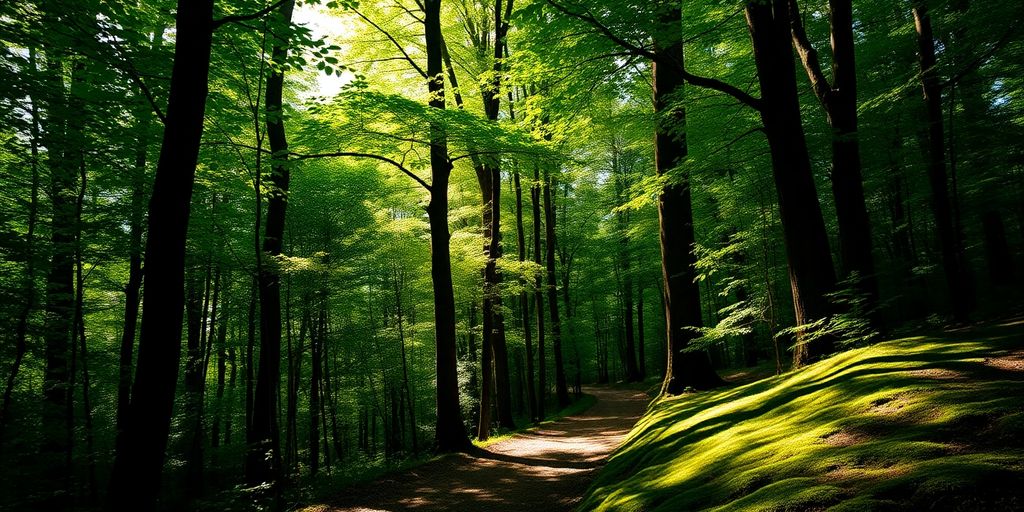
Shinrin-yoku — literally “forest bathing” — is a Japanese practice of slow, sensory immersion in a natural environment. It was formalised in Japan in 1982 as part of a national public health programme, and has since become one of the most rigorously studied forms of nature-based therapy in the world. It is not hiking. It is not exercise. It is the deliberate act of being present among trees, engaging all five senses, and allowing the physiological effects of the forest environment to do their work. The research behind it is more substantial than most people realise.
- → Shinrin-yoku was developed in Japan in 1982 as a public health response to rising urban stress — the term means “taking in the forest atmosphere”
- → Studies show measurable reductions in cortisol, blood pressure, and heart rate after as little as 20 minutes in a forest environment
- → Trees release phytoncides — airborne antimicrobial compounds — that measurably increase natural killer (NK) cell activity in the human immune system
- → Unlike mindfulness or meditation, Shinrin-yoku requires no technique — it is passive, sensory, and works whether or not you are paying deliberate attention
- → You do not need a forest — urban parks, botanical gardens, and tree-lined streets produce similar, if reduced, effects
Origins and Cultural Roots
Shinrin-yoku was coined in 1982 by the Japanese Ministry of Agriculture, Forestry and Fisheries as a deliberate public health intervention. Japan was experiencing a sharp rise in urban stress, overwork, and lifestyle disease — and the government saw its vast forest coverage (67% of Japan’s land area) as an underutilised health asset. The term combines shinrin (forest) and yoku (bathing or taking in), describing the practice of immersing yourself in the forest atmosphere through all five senses.
The practice is also deeply rooted in Shinto and Buddhist traditions, both of which treat natural spaces — particularly old-growth forests and mountainous landscapes — as inherently sacred and restorative. This cultural framing matters: Shinrin-yoku is not a wellness trend but a continuation of a relationship between Japanese people and their forested landscape that predates the formalisation of the practice by centuries.
Spending time in nature isn’t just about feeling good in the moment — it is about building a foundation for long-term health. When you make forest bathing a regular part of your routine, you are investing in physiological systems that govern your stress response, immune function, and cardiovascular health simultaneously.
The Science: What the Forest Actually Does to Your Body
Scientific research into Shinrin-yoku began in earnest in the 1990s under Dr Qing Li at Nippon Medical School, Tokyo, whose field experiments across 24 forests in Japan established the physiological baseline for the practice. The findings are specific and replicable.
Cortisol and the stress response. Salivary cortisol levels — the primary biological marker of acute stress — fall measurably after time in a forest environment compared to urban settings. The reduction is consistent across study populations, ages, and types of forest. Even brief exposures of 20–30 minutes produce statistically significant effects.
Cardiovascular effects. Blood pressure and heart rate both decrease in forest settings relative to urban controls. The autonomic nervous system shifts toward parasympathetic (“rest and digest”) dominance, reducing the physiological arousal associated with chronic stress. These effects are observed even in studies controlling for exercise level — the forest environment itself, not just the physical activity, is the active ingredient.
Trees release phytoncides — volatile organic compounds including alpha-pinene and limonene — as a natural defence against insects and pathogens. When humans inhale these compounds, they stimulate the production and activity of natural killer (NK) cells: the immune system’s primary defence against virally infected and cancerous cells. Studies by Dr Qing Li documented NK cell activity increases of 40–50% after a two-day forest stay, with effects persisting for up to 30 days. This is not a placebo mechanism — the compounds are measurable in blood and urine, and the NK cell response is a well-understood immunological pathway.
Mood and cognitive effects. Self-reported anxiety, depression, and fatigue all decline after forest bathing in clinical studies. Attention restoration theory — developed by Rachel and Stephen Kaplan — provides a partial explanation: natural environments engage effortless, involuntary attention rather than the directed attention required in urban and work contexts, allowing the cognitive systems governing focus and executive function to recover.
How to Practice Shinrin-yoku
The core practice requires no equipment, no training, and no particular technique. The research suggests that the physiological effects occur regardless of whether participants are consciously “practising” — simply being in the environment is sufficient. That said, the following approach maximises the experience.
Leave the phone in your pocket. The goal is sensory engagement with the environment, not documentation of it. Notifications and screens shift attention back into the directed, effortful mode that Shinrin-yoku is intended to relieve.
Move slowly. This is not a walk for exercise or destination. The Japanese guideline is a pace that allows you to engage all five senses: what you can see, hear, smell, feel under your feet, and — where relevant — taste (wild herbs, forest air). Typical sessions last 2–4 hours but shorter exposures produce measurable effects.
Choose your location deliberately. A mature forest with diverse plant life and some water presence (stream, pond) produces the most robust effects. Urban parks work — particularly those with significant tree canopy. A single large tree in a quiet space is better than nothing. The key variable appears to be the presence of trees and the reduction of urban noise and visual complexity.
Certified forest therapy guides (trained through programmes like the Association of Nature and Forest Therapy) can deepen the experience through structured sensory invitations and group reflection. For first-time practitioners, a guided session removes the uncertainty about “doing it right.” For regular practice, solo sessions are more accessible and equally effective physiologically — the guide adds qualitative depth, not biological efficacy.
Shinrin-yoku Beyond Japan
Forest therapy has been formalised in South Korea, where the Korea Forest Service operates a national network of certified healing forests and funds ongoing research. In the United States, the Association of Nature and Forest Therapy has trained hundreds of guides and established a credentialing framework. European countries — particularly Germany, Finland, and the Netherlands — have integrated green space prescriptions into some primary care pathways.
Cultural adaptations vary. Nordic practitioners often incorporate elements of friluftsliv (outdoor life philosophy) and wild food foraging. Some American programmes emphasise mindfulness and journalling alongside the sensory practice. The underlying biology is the same regardless of framing — the phytoncides, the attention restoration, and the autonomic nervous system effects operate independently of cultural context.
Forest bathing isn’t just about the individual experience — it builds the kind of relationship with natural spaces that naturally leads to their protection. People who practise Shinrin-yoku regularly become advocates for forest conservation in a way that information campaigns rarely achieve.
Challenges and Common Misconceptions
The most common misconception is that Shinrin-yoku requires a dramatic natural setting — a cathedral forest, a remote mountain trail, a pristine wilderness. The research does not support this. Urban parks with mature tree canopy, botanical gardens, and even tree-lined streets produce measurable, if smaller, physiological effects. Dr Li’s research suggests that a minimum of 20 minutes of exposure to a green environment with tree presence is sufficient to shift cortisol levels.
A second misconception is that it requires dedicated, unoccupied time. While longer sessions produce stronger effects, the practice can be embedded in existing routines — a slower walk to work through a park, a lunch break in a tree-filled garden, a longer route home that passes through green space. The cumulative effect of regular short exposures may be comparable to occasional long ones.
Accessibility is a genuine challenge. Not all urban areas have adequate green space, and mobility limitations make some natural environments inaccessible. Urban planning responses — rooftop gardens, pocket parks, urban forest corridors — are increasingly being designed with therapeutic access in mind, but the gap between who needs this kind of nature access most (high-density, low-income urban populations) and who currently has it is significant.
Shinrin-yoku is one of the rare wellness practices where the scientific evidence is genuinely strong and the barrier to entry is genuinely low. The biological mechanisms — phytoncide inhalation, autonomic nervous system regulation, attention restoration — are well-documented and do not require belief or technique to function. What they require is time in the presence of trees. In a world of optimised routines, monitored sleep, and quantified health metrics, the simplest instruction may be the most countercultural: go to the woods, put your phone away, and do nothing in particular for an hour. The research suggests your cortisol will handle the rest.








Responses