Daniel Ek Net Worth: How the Spotify Co-Founder Built a Billion Streaming Empire

Streaming · Spotify · Sweden
Key Takeaways
- Estimated net worth in the $7–9 billion range as of 2025–2026 according to Forbes’ Billionaires List, anchored primarily by his Spotify co-founding equity through the company’s April 2018 NYSE direct listing and the substantial post-listing equity position appreciation
- Co-founder of Spotify (2006) alongside Martin Lorentzon — the global music-and-audio streaming platform that has subsequently scaled into the dominant audio-streaming service globally with hundreds of millions of monthly active users
- Born Daniel Georg Ek on 21 February 1983 in Stockholm, Sweden; graduated from IT-Gymnasiet in 2002 and briefly studied engineering at KTH Royal Institute of Technology for eight weeks before dropping out to pursue full-time entrepreneurship
- Founded Advertigo (the online-advertising company subsequently acquired by Tradedoubler) before co-founding Spotify; established Prima Materia in February 2021 as an investment company pledging $1 billion in European technology investments
- Stepped down as CEO of Spotify at the end of 2025 while remaining Executive Chairman, formalizing his transition into substantive capital-allocation-and-long-term-strategy work alongside the broader Prima Materia and adjacent investment commitments

Who Is Daniel Ek?
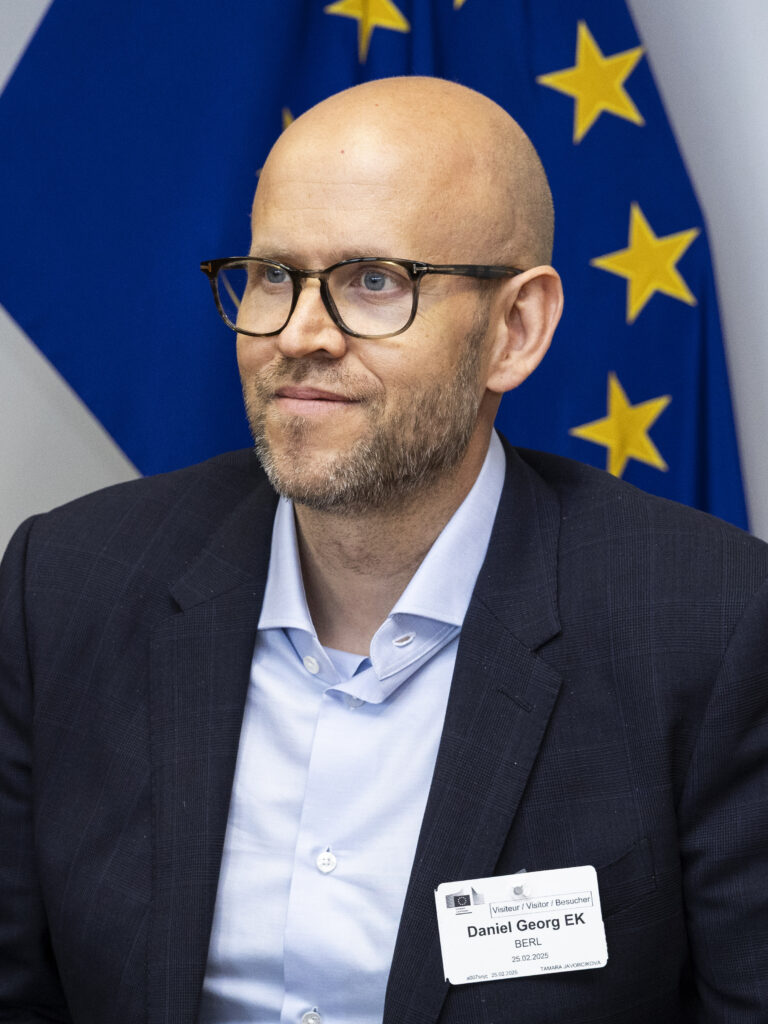
Daniel Ek is one of the most economically and culturally consequential individual technology founders of the modern era. Through his co-founding of Spotify in 2006 alongside Martin Lorentzon and his subsequent more-than-19-year tenure as CEO across the company’s substantial transition from small Stockholm-based music-streaming startup into the dominant global music-and-audio streaming platform with hundreds of millions of monthly active users worldwide, alongside his Prima Materia investment company (founded February 2021 with a $1 billion European-technology investment pledge), he has built one of the more substantively-built contemporary worked examples of how a Swedish founder-CEO can scale a streaming-and-media business into substantial billionaire-tier wealth across multiple decades. His broader career — Stockholm native turned IT-Gymnasiet graduate turned KTH dropout turned Advertigo founder turned Spotify co-founder and CEO — has scaled into one of the most distinctive contemporary careers in the broader streaming-media-and-technology category.
Born Daniel Georg Ek on 21 February 1983 in Stockholm, Sweden, Ek grew up in a substantive Swedish family environment that subsequently anchored both his personal identity and the broader cultural orientation that has defined his work. He graduated from IT-Gymnasiet in 2002 and briefly studied engineering at KTH Royal Institute of Technology for eight weeks before dropping out to pursue full-time entrepreneurship — a substantive early-career decision that subsequently anchored the broader operating-and-investment career.
What distinguishes Ek is the combination of substantive Swedish technology-entrepreneurship credentials, distinctive long-tenure Spotify CEO leadership across more than 19 years, and the operational discipline of building Spotify from a Stockholm-based music-streaming startup into a substantial public streaming company with hundreds of millions of monthly active users alongside the substantive Prima Materia investment work. Most successful technology founders at his economic tier have substantive computer-science or business credentials accumulated through completed academic programs. Ek has consistently combined direct CEO operating, substantial European-technology investment work through Prima Materia, substantive cultural-and-strategic commentary, and the kind of substantive long-tenure operating that few other contemporary streaming-and-media founders have replicated at comparable depth.
Today, Ek continues to serve as Executive Chairman of Spotify following his end-of-2025 CEO step-down, focus substantially on European-technology investments through Prima Materia, and contribute to broader cultural-and-strategic commentary across multiple platforms. He has been transparent about both the operating mechanics of running a substantial public streaming-and-media company alongside substantial investment commitments and the personal commitments — particularly around his marriage to Sofia Levander since 2016 and their two daughters — that have shaped both the professional work and the broader cultural position.
Career and Rise to Fame
Ek’s professional career began with substantive early-stage entrepreneurship work following his 2002 IT-Gymnasiet graduation and brief KTH attendance. The early-career period — during which Ek worked across multiple Swedish technology startups including Stardoll and Tradera — provided foundational technology-operating credentials that subsequently informed the broader entrepreneurship career.
The founding of Advertigo (the online-advertising company subsequently acquired by Tradedoubler) was the chapter that defined the early phase of Ek’s broader career. The Advertigo acquisition produced substantive early-career liquidity event for Ek and the foundational operating credentials that subsequently anchored the Spotify founding alongside the substantive Tradedoubler-derived network access.
The 2006 co-founding of Spotify alongside Martin Lorentzon was the chapter that defined the rest of Ek’s career as a substantive operator-founder. Spotify — initially focused on legal music-streaming as an alternative to the substantial peer-to-peer file-sharing piracy environment of the mid-2000s — subsequently scaled across multiple successive operating cycles into the dominant global music-and-audio streaming platform. The combination of substantive product positioning and the disciplined operating approach produced one of the more substantive contemporary worked examples of European technology-entrepreneurship building.
The substantial Spotify scaling across the late 2000s and 2010s was anchored by deliberate substantive product-development work, durable music-industry-partnership building (across the substantial licensing arrangements with major and independent record labels), and the kind of patient brand-building that compounds across multiple competitive cycles in the music-streaming category. By 2014, Spotify had reached substantial subscriber base and substantial venture-capital funding from leading firms.
The substantive European-and-American expansion across the early-to-mid 2010s was anchored by the deliberate go-global approach that has subsequently positioned Spotify as the dominant global audio-streaming platform across multiple regions. The 2014 launch of Spotify in adjacent international markets formalized the company’s transition into substantive global operating.
The April 2018 Spotify direct listing on the New York Stock Exchange (rather than a traditional IPO) at a reported approximately $26.5 billion initial valuation was the substantive liquidity-and-validation event that anchored Ek’s broader wealth profile. The direct listing — which formalized Spotify’s growth across the prior twelve operating years — produced substantial wealth-creation effects for Ek as the founding CEO and substantial shareholder. The direct-listing approach (rather than a traditional underwritten IPO) represented one of the more substantive contemporary worked examples of alternative-listing structures.
The post-listing operating period saw Spotify scale across multiple successive product launches, substantial subscriber-base expansion, and the broader transition into substantive podcasting-and-audio investments (including the substantial 2019 acquisitions of Gimlet Media, Anchor, and Parcast, the 2020 acquisition of The Ringer for approximately $200 million, and the substantial Joe Rogan Experience exclusive licensing deal at approximately $200 million). The cumulative product-and-strategy work has produced substantial company growth alongside the broader competitive dynamics in the global-audio-streaming category.
The February 2021 founding of Prima Materia as a $1 billion European-technology investment company represented the substantive next chapter of Ek’s adjacent investment work alongside the continued Spotify operating. The end-of-2025 transition from CEO to Executive Chairman of Spotify formalized Ek’s broader transition into substantive capital-allocation-and-long-term-strategy work alongside the continued Prima Materia investment commitments.
How Daniel Ek Makes Money
Ek’s wealth flows from four primary categories: Spotify equity (which represents the substantial majority of the underlying wealth profile), ongoing Spotify Executive Chairman compensation, Prima Materia investment economics, and substantial private investment positions across the broader investment portfolio.
Spotify equity: The largest single component of Ek’s wealth is his equity stake in Spotify. As a co-founder and substantial early shareholder, Ek holds substantial Spotify equity that has compounded across the post-2018 direct-listing period. With Spotify’s substantial NYSE market capitalization (typically in the range of $80–130 billion across recent reporting periods) and continued growth, the underlying equity position represents the foundational asset base of Ek’s substantial billionaire-tier wealth profile.
Executive Chairman compensation: The ongoing Executive Chairman compensation at Spotify following the end-of-2025 CEO transition represents another meaningful annual income stream alongside the equity-position economics. Senior Executive Chairman roles at substantial public streaming-and-media companies typically include base compensation, performance-based equity grants, and adjacent compensation that scales with company performance.
Prima Materia investment economics: The February 2021 founding of Prima Materia as a $1 billion European-technology investment company produces ongoing investment-management economics and cumulative investment-return economics alongside the Spotify-related wealth. The combination of substantive long-horizon European-technology investment commitments and the disciplined long-term-investment approach represents another meaningful component of the broader wealth profile.
Investment positions: Across the broader career, Ek has built substantial private investment positions across European technology equities, real estate, and adjacent asset classes. The cumulative diversification across multiple substantive investment positions represents another meaningful component of the broader wealth profile.
Daniel Ek’s Net Worth
Estimating Ek’s net worth involves substantially less methodology disagreement than is typical for private operator profiles, because Forbes’ Billionaires List provides a substantively-validated estimate based on the public Spotify equity position. Forbes places Ek’s net worth in the approximately $7–9 billion range as of 2025–2026, with the underlying valuation tracking reasonably tightly with Spotify’s NYSE market capitalization.
The lower end of credible recent estimates — around $5 billion — likely reflects a calculation that focuses primarily on conservatively-valued Spotify equity at lower market-capitalization assumptions, with relatively conservative valuations of the Prima Materia investments and adjacent positions.
Mid-range estimates — around $7–8 billion — reflect a more balanced calculation that incorporates Spotify equity at moderate market-capitalization assumptions, ongoing Executive Chairman compensation, Prima Materia investment economics, and a reasonable estimate of adjacent investment positions. This level is consistent with what billionaire-tier streaming-and-media founder-CEO profiles at his cumulative tenure typically retain.
The upper end — $9 billion or higher — reflects estimates that more aggressively incorporate Spotify equity at substantial market-capitalization assumptions during periods of strong Spotify share-price performance, the substantial Prima Materia investment position growth, and any meaningful retained income from adjacent ventures. Forbes’ designation of Ek at the upper end of these estimates validates the substantial wealth position.
The honest answer is that Ek’s net worth tracks reasonably tightly with Spotify’s market capitalization, with adjacent investment positions producing meaningful but secondary variation against the larger public-equity foundation. What can be said with confidence is that his career has produced one of the more substantive contemporary streaming-and-media founder-CEO wealth positions, with cumulative wealth comfortably into the multi-billion-dollar range.
Investments and Business Philosophy
Ek’s business philosophy is informed by his combination of substantive Swedish technology-entrepreneurship credentials, the disciplined Advertigo operating experience, and the multi-decade Spotify CEO work that has anchored the broader career. He has emphasized publicly the importance of substantive music-industry-partnership building, durable streaming-platform operating, and the long-horizon orientation required to compound a multi-decade streaming-and-media business across multiple substantive market transitions.
Inside Spotify, the philosophy emphasizes substantive product-design-and-personalization work, durable subscriber-experience operating, and the kind of patient long-tenure operating that compounds across multiple competitive cycles. The combination of substantive operator credentials and the disciplined customer-centric approach has produced one of the more substantive contemporary worked examples of how Swedish founders can scale streaming-and-media businesses into dominant global platforms.
The deeper professional philosophy is the case for combining authentic technology-founder credentials with substantive long-tenure operating work and the kind of substantive European-technology-investment work that produces both economic-and-cultural outcomes. Ek’s career — Stockholm native turned IT-Gymnasiet graduate turned KTH dropout turned Advertigo founder turned Spotify co-founder and CEO — represents one of the cleaner contemporary worked examples of how patient credentials-and-multi-business building scales into substantial cultural-and-economic position.
Lifestyle and Spending
Ek’s lifestyle, by his own description and substantial public reporting, has been deliberately substantive relative to billionaires at his cumulative-wealth tier. He has lived primarily in Stockholm and substantial European cities across most of his career, alongside his marriage to Sofia Levander since 2016 and their two daughters. The combination of substantial real estate, the substantial Spotify involvement, and the broader family commitments anchors both the professional and personal dimensions of his career.
Where he spends meaningfully is on substantial real estate, on substantive Prima Materia investment work in European technology, on the operational infrastructure that supports Spotify, and on the kinds of long-horizon experiences he has explicitly identified as producing satisfaction. The implicit operating philosophy is consistent with the rest of the work: optimize for what compounds across the long arc of substantive operating-and-investment work, deploy capital deliberately into experiences and operating positions that reinforce the underlying career position.
His public commentary on lifestyle has been deliberately measured and notably European-technology-investment-oriented relative to many of his peer technology-billionaire cohort. He has spoken publicly about specific personal-finance choices, family commitments, and the broader balance between commercial work and substantive European-technology-investment commitments in a way that is consistent with the broader long-tenure career.
What Can We Learn from Daniel Ek?
- Long-tenure CEO leadership compounds. Ek’s more-than-19-year Spotify CEO tenure (through end-of-2025) represents substantive worked example of how patient long-tenure operator-leadership produces durable returns. Most streaming-and-media founders fail to sustain comparable tenure at comparable scale.
- Co-founder partnerships matter. Ek’s substantive long-term partnership with Martin Lorentzon (Spotify co-founder) — beginning in 2006 and continuing through more than 19 years of Spotify operating — represents substantive worked example of how durable co-founder partnerships compound across multiple operating cycles.
- European technology entrepreneurship can scale. Spotify’s substantial Stockholm origins and subsequent global expansion represent substantive worked example of how European technology entrepreneurship can scale into dominant global platforms. Most European technology startups fail to scale into comparable global positions; Ek’s worked example is one of the more substantive contemporary cases.
- Substantive direct-listing alternatives matter. The April 2018 Spotify direct listing on the NYSE (rather than a traditional underwritten IPO) at a reported approximately $26.5 billion initial valuation represents substantive worked example of how operators can pursue alternative-listing structures rather than traditional IPO approaches.
- Substantive podcasting investments compound. The substantial 2019 acquisitions of Gimlet Media, Anchor, and Parcast, the 2020 acquisition of The Ringer, and the substantial Joe Rogan Experience exclusive licensing deal represent substantive worked examples of how operators can navigate substantive content-investment-and-acquisition strategies alongside the underlying platform operating.
- Build substantive investment vehicles alongside operating. The February 2021 founding of Prima Materia as a $1 billion European-technology investment company represents substantive worked example of how technology founders can build substantial adjacent investment vehicles alongside their underlying operating leadership.
Frequently Asked Questions
What is Daniel Ek’s estimated net worth?
Daniel Ek’s net worth is estimated at between $7 billion and $9 billion as of 2025–2026 according to Forbes’ Billionaires List, anchored primarily by his Spotify co-founding equity through the company’s April 2018 NYSE direct listing and the substantial post-listing equity position appreciation, alongside ongoing Executive Chairman compensation and Prima Materia investment economics.
What is Spotify?
Spotify is the global music-and-audio streaming platform Daniel Ek co-founded in 2006 alongside Martin Lorentzon. The company — which Ek led as CEO across more than 19 years — has subsequently scaled across multiple successive operating cycles into the dominant global audio-streaming service with hundreds of millions of monthly active users worldwide. Spotify went public via direct listing on the NYSE in April 2018 at a reported approximately $26.5 billion initial valuation.
What is Prima Materia?
Prima Materia is the investment company Daniel Ek established in February 2021 with a $1 billion pledge to invest in European technology companies. The company — which Ek operates alongside his Spotify Executive Chairman role — represents one of the more substantive contemporary worked examples of how successful technology founders can build substantive adjacent investment vehicles focused on European technology innovation.
When did Daniel Ek step down as Spotify CEO?
Daniel Ek stepped down as CEO of Spotify at the end of 2025 while remaining Executive Chairman, formalizing his transition into substantive capital-allocation-and-long-term-strategy work alongside the broader Prima Materia and adjacent investment commitments. The transition represents one of the more substantive contemporary worked examples of operator-led CEO-to-Chairman transitions in long-tenure technology operating.
Where is Daniel Ek from?
Daniel Ek was born Daniel Georg Ek on 21 February 1983 in Stockholm, Sweden. He graduated from IT-Gymnasiet in 2002 and briefly studied engineering at KTH Royal Institute of Technology for eight weeks before dropping out to pursue full-time entrepreneurship. He is married to Sofia Levander since 2016 and has two daughters.
The Impact of European-Founded Streaming Platforms
The argument that contemporary streaming-and-media benefits from substantive European-technology-entrepreneurship leadership — particularly when grounded in foundational Swedish technology credentials and combined with substantive long-tenure CEO work and substantial European-technology-investment commitments — has been advanced by relatively few founders at Ek’s level of consistency and operational depth. The cumulative effect of his work, across Advertigo, Spotify, Prima Materia, and the substantive content-acquisition strategy across podcasting, has been to redefine what serious European-founded streaming-platform operating can produce both economically and culturally at multi-billion-dollar scale.
The downstream effect on the broader streaming-media-and-technology industry is visible. The number of substantial European technology founders who have explicitly built dominant global streaming platforms alongside substantive European-technology-investment work has continued to grow across recent years, and many of the most operationally serious contemporary European technology founders cite Ek’s career as part of their early thinking about the relationship between substantive operator credentials, long-tenure leadership, and durable cross-discipline empire construction.
What makes the impact durable is that the underlying economics of European-founded streaming platforms continue to favor founders who can sustain disciplined operating-and-investment work across multiple decades. As streaming markets continue to evolve and as the underlying competitive dynamics in audio-streaming continue to favor substantive customer-centric operating, the relative position of long-tenure European streaming-platform founders tends to compound rather than decay. Ek’s career — Stockholm native turned IT-Gymnasiet graduate turned KTH dropout turned Advertigo founder turned Spotify co-founder and CEO — is one of the cleaner contemporary worked examples of how patient credentials-and-multi-business building scales into category-defining position.


Responses