China’s Strategic Shift: Understanding De-Americanization

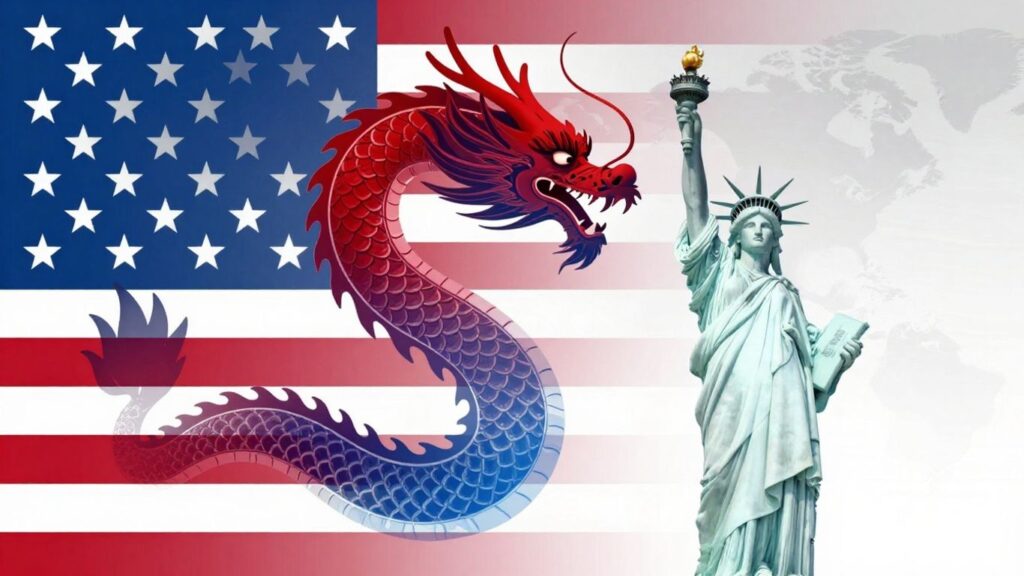
Professor Wang Wen, a prominent figure from Renmin University of China, recently shared insights into what he terms China’s "de-Americanization strategy." This isn’t about a complete break, but rather a move towards a more balanced and independent global presence, driven by shifts in global power and, as Wang Wen argues, by US policy itself.
Key Takeaways
- US Policy as a Catalyst: Professor Wang Wen suggests that China’s de-Americanization is largely a response to US actions, particularly policies enacted during the Trump administration, which created a sense of threat and necessity for China to adjust its strategies.
- Diversification of Global Ties: China is actively reducing its reliance on the US across various sectors, including trade, finance, technology, and education, by strengthening relationships with other countries and developing its own systems.
- A More Balanced World Order: This shift is seen as contributing to a more multipolar world, where developing nations can benefit from access to high-quality, affordable goods and a more diversified international financial system.
- Focus on Autonomy: The strategy emphasizes China’s pursuit of greater autonomy in political, economic, technological, and ideological spheres, aiming to secure its national interests and development path.
- Normalizing Relations: De-Americanization is framed not as decoupling, but as establishing a normal, less dependent relationship with the US, akin to that between good neighbors rather than overly close partners.
The Roots of De-Americanization
For decades, the relationship between the US and China was characterized by mutual dependence. However, as China grew stronger and the US faced various challenges, this dynamic shifted, leading to increased suspicion and fear. The global financial crisis of 2008-2009 further destabilized the relationship, highlighting cracks in the US-led financial system.
This led to discussions of decoupling and de-risking from the US side. In response, China began to explore ways to reduce its own dependence on this complex relationship. Professor Wang Wen’s article, "China’s De-Americanization Strategy," delves into this phenomenon, exploring the motivations behind China’s strategic adjustments.
Six Pillars of China's De-Americanization
Professor Wang Wen identifies six key areas where China is pursuing de-Americanization:
- Trade: Shifting trade focus away from the US towards regions like Russia, Central Asia, Latin America, Africa, and Southeast Asia. This has led to a more balanced global trade structure for China.
- Finance: Reducing reliance on the US dollar and US financial systems, partly in response to US financial sanctions imposed on numerous Chinese companies.
- Security: Ensuring the security of its political system and preventing external interference, learning from the experiences of other nations.
- Ideology: Developing its own knowledge and ideological systems to avoid being dominated by American thought.
- High-Tech: Pursuing technological self-sufficiency and innovation, moving from a follower to a competitor in key high-tech fields.
- Education: Rebalancing educational ties with the US, reducing over-reliance on American textbooks and institutions, and fostering domestic knowledge creation.
Trade Diversification and Global Impact
Since China proposed the Belt and Road Initiative in 2013, its trade with countries globally has grown significantly. Bilateral trade with Russia, for instance, has surged, and trade with Latin America is rapidly increasing, potentially surpassing US-China trade in the coming years. This diversification makes China’s global trade structure more secure and balanced.
This rebalancing also benefits developing countries. China is exporting more high-quality, affordable goods, leading to what Professor Wang calls an "international price revolution." This allows Global South countries to access better products at competitive prices, aiding their development. The past perception of "Made in China" goods as low-quality is changing, with advancements in areas like electric vehicles and solar energy.
Technological Competition and Innovation
In the high-tech sector, China has moved from being a follower to a competitor. Professor Wang argues that high-tech products are not exclusive to the US and that China’s advancements are a result of increased investment in research and development. He likens China’s innovation to historical instances where inventions from China, like paper and gunpowder, propelled technological revolutions elsewhere.
He believes that high-tech competition should be fair and market-based. Instead of using political means like sanctions, the US should embrace this competition with an open mindset. The results of this competition, he suggests, will ultimately benefit all of humanity by accelerating technological spread and fostering greater global equality.
Financial Autonomy and the Dollar's Role
US financial sanctions against Chinese companies have fueled China’s drive for financial autonomy. Professor Wang points out that the US dollar’s global dominance, while having historical contributions, is now seen as an obstacle to reforming the international financial system. Many countries, like Russia, have been compelled to reduce their reliance on the dollar due to its weaponization.
Professor Wang predicts a further crumbling of dollar hegemony by 2035, with increased internationalization of the RMB and other currencies. This diversification of the international monetary system is seen as more conducive to global economic development and stability.
Building a China Model
De-Americanization also involves building alternative development models. For decades, many countries have followed the US model. However, events like the 2008 financial crisis and subsequent US policies have led nations to re-evaluate their paths.
China aims to ensure the security of its political system, economic autonomy, and technological and military independence. This includes addressing issues like the Taiwan question and developing its own knowledge and ideological systems. The goal is not complete decoupling but a normalization of relations, where China and the US can interact as neighbors, cooperating on common challenges while managing disagreements.
Education and Knowledge Autonomy
In education, China is working to reduce its past over-reliance on US textbooks and academic frameworks. Terms like "democracy" and "civil society," while admired, are now viewed through a lens that recognizes their specific American context. China is now developing its own textbooks and knowledge systems in fields like economics, political science, and international relations.
The significant number of Chinese students studying in the US has also been a point of focus. While exchanges are welcomed, excessive dependence is seen as problematic. Professor Wang notes that restrictions on Chinese students in the US may lead to more talent staying in China, serving its development. The aim is for China’s education system to follow its own path, cultivating talent that serves China’s interests.

Responses