Bessel van der Kolk Net Worth: How the Body Keeps the Score Author Built His Multi-Million Dollar Trauma Research Empire

PSYCHOLOGY | AUTHOR | NET WORTH
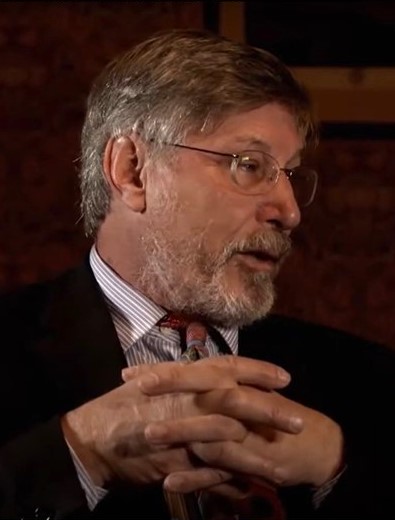
Bessel van der Kolk is one of the most influential trauma researchers of the modern era — the Dutch-American psychiatrist whose 2014 book The Body Keeps the Score: Brain, Mind, and Body in the Healing of Trauma became one of the longest-running New York Times bestsellers in modern non-fiction publishing, with over 3 million copies sold and translations into 43 languages. As Professor of Psychiatry at Boston University School of Medicine and President of the Trauma Research Foundation in Brookline, Massachusetts, he has spent more than 50 years researching post-traumatic stress and pioneering treatment approaches including EMDR and yoga-for-trauma. As of 2026, Bessel van der Kolk’s estimated net worth is approximately $10 million to $30 million, derived from book royalties (particularly the global phenomenon of The Body Keeps the Score), decades of academic compensation, premium speaking fees, training program revenue, and his personal investments.
His career stands as one of the cleanest examples of how a credentialed academic psychiatrist can build both a serious clinical-research legacy and a globally-influential popular book — and how a single bestselling book can produce substantial wealth that arrives unusually late in a long academic career.
Key Takeaways
- Bessel van der Kolk’s 2026 estimated net worth is approximately $10 million to $30 million.
- His book The Body Keeps the Score (2014) has sold over 3 million copies in 43 languages.
- He is Professor of Psychiatry at Boston University School of Medicine.
- He is the founder and President of the Trauma Research Foundation in Brookline, Massachusetts.
- He served as president of the International Society for Traumatic Stress Studies.
- He has been researching post-traumatic stress since the 1970s — over 50 years.

Who Is Bessel van der Kolk?
Bessel van der Kolk was born in July 1943 in the Netherlands, making him approximately 82 years old as of 2026. He is a Dutch-American psychiatrist, author, researcher, and educator. He earned his Bachelor of Arts from the University of Hawaii in 1965 and his Doctor of Medicine from the University of Chicago in 1970. He has been based in the Boston, Massachusetts area for most of his professional career.
What distinguishes van der Kolk from many trauma researchers is the combination of his decades-long research career, his foundational position in the development of modern trauma treatment, and his remarkable late-career commercial success with The Body Keeps the Score. Most academic researchers never produce a popular bestseller; van der Kolk produced one of the most-discussed mental-health books of the past 15 years — translated into 43 languages and continuously on bestseller lists for years after publication.
Career Timeline
Bessel van der Kolk’s career has unfolded across several distinct phases:
Early Education and Medical Training (1960s-1970s)
Van der Kolk earned his BA from the University of Hawaii in 1965, then his MD from the University of Chicago in 1970. After completing his medical training, he began work in psychiatry at a time when post-traumatic stress was not yet a formally-recognized clinical category — particularly in the context of Vietnam War veterans returning to the United States with significant psychological distress.
Boston VA and Early Trauma Research (1970s-1980s)
In the 1970s, van der Kolk began work with Vietnam veterans at a Boston VA facility. The clinical experiences during this period were foundational to his subsequent trauma research career. He was part of the broader generation of researchers and clinicians who pushed for post-traumatic stress to be formally recognized as a clinical category — work that culminated in PTSD’s inclusion in the DSM-III in 1980.
Boston University School of Medicine (Multi-Decade Tenure)
Van der Kolk has spent the bulk of his academic career at Boston University School of Medicine, where he serves as Professor of Psychiatry. The decades of academic appointment have provided the institutional foundation for his clinical research, training of psychiatry residents, and the broader development of his trauma-treatment frameworks.
Trauma Research Foundation (Late 1990s/2000s)
Van der Kolk founded the Trauma Research Foundation (formerly the Trauma Center, then the Justice Resource Institute) in Brookline, Massachusetts. The organization became the institutional home for his research, clinical training programs for trauma therapists, and the broader development of innovative trauma-treatment approaches including EMDR (Eye Movement Desensitization and Reprocessing), yoga-for-trauma, neurofeedback, and theater-based therapy.
The Body Keeps the Score Publication and Phenomenon (2014-Present)
The career-defining commercial moment came with the 2014 publication of The Body Keeps the Score: Brain, Mind, and Body in the Healing of Trauma. Initially the book had a quiet release. But over the subsequent years, the book gained extraordinary commercial momentum — particularly during the COVID-19 pandemic period, when interest in mental health, trauma, and somatic approaches to healing surged dramatically. By 2021-2022, The Body Keeps the Score was consistently in the top of the New York Times bestseller list (often #1 in the Paperback Nonfiction category) — an unusual achievement for a book that had been published 7+ years earlier.
By 2026, the book has sold over 3 million copies and has been translated into 43 languages — making it one of the most globally-distributed popular psychology books of the past 15 years.
Contested Academic Reception
While The Body Keeps the Score has been an enormous popular success, the book has been criticized by some scientists for what they characterize as pseudoscientific claims about trauma, memory, the brain, and development. The contested academic reception is part of the book’s broader public profile — though the popular reception has been overwhelmingly positive across global readership.
The Body Keeps the Score: A Publishing Phenomenon
The Body Keeps the Score represents one of the most distinctive popular publishing stories of the past decade. Key features of the phenomenon:
Slow-Burn Bestseller Trajectory
Unlike most bestsellers that peak in their first 6-12 months, The Body Keeps the Score followed a slow-burn pattern — gaining momentum across years rather than months. The book’s commercial peak came roughly 6-8 years after publication, an extremely unusual trajectory in modern trade publishing.
43 Languages Globally
The book’s translation into 43 languages reflects exceptional global publishing reach for a clinical-trauma book. The international royalty stream from these translations has produced substantial cumulative income across the book’s lifetime.
3+ Million Copies Sold
The cumulative sales of over 3 million copies place The Body Keeps the Score among the bestselling popular psychology books of the past 25 years.
COVID-Era Cultural Moment
The book’s commercial peak coincided with the COVID-19 pandemic period, when interest in mental health, trauma, and somatic approaches to healing surged dramatically. The cultural timing — combined with the book’s accessible writing — produced an unusually large spike in sales velocity that sustained for several years.
Continued Backlist Strength
The book continues to sell at meaningful velocity in 2026, more than a decade after publication. The continuing strong backlist trajectory suggests ongoing royalty income for many years to come.
How Bessel van der Kolk Makes Money
Van der Kolk’s wealth flows through several layered streams accumulated over more than 50 years: book royalties (with The Body Keeps the Score as the dominant contributor), decades of Boston University academic compensation, Trauma Research Foundation training program revenue, premium speaking fees, his other books and publications, and personal investments.
The Body Keeps the Score Royalties
The dominant component of van der Kolk’s net worth — particularly the post-2020 wealth accumulation — is the cumulative royalty income from The Body Keeps the Score. With over 3 million copies sold globally across 43 language editions, the book has produced substantial multi-year royalty income. At standard hardcover and paperback royalty rates, the cumulative royalties on this scale of sales easily reach into the multi-million-dollar range.
Trauma Research Foundation Programs
The Trauma Research Foundation operates training programs for trauma therapists, professional development workshops, and continuing-education programs that generate ongoing institutional revenue. As founder and President, van der Kolk captures meaningful institutional benefits from this work.
Premium Speaking Fees
Van der Kolk has been one of the most-booked trauma-and-mental-health speakers in the world for decades, with demand surging dramatically post-2020. Speaker fees at his level — particularly for therapy conferences, university programs, and broader mental-health events — typically range from $30,000 to $80,000+ per major engagement.
Boston University Academic Compensation
Decades of senior academic compensation at Boston University School of Medicine has provided steady income across his career. Senior medical-school faculty compensation typically reaches into the high six-figure range annually.
Earlier Books and Publications
His earlier book Psychological Trauma (1987) and academic publications continue to generate smaller royalty and licensing income.
Personal Investment Portfolio
His personal investment portfolio compounded across more than 50 years of professional income — and dramatically expanded by the post-2020 Body Keeps the Score royalty surge — represents another component of his wealth.
Net Worth Estimate
Bessel van der Kolk’s exact net worth has not been publicly disclosed by mainstream wealth-tracking outlets — partly because his wealth has accumulated primarily through book royalties and academic income that are not publicly reported in detail.
The realistic 2026 range for Bessel van der Kolk’s net worth is approximately $10 million to $30 million. That estimate reflects:
- Cumulative royalties from over 3 million copies of The Body Keeps the Score across 43 languages — likely the largest single contributor
- Multi-decade Boston University academic compensation
- Trauma Research Foundation training program economics
- Multi-year premium-priced speaking fees, particularly post-2020
- Earlier book royalties and academic publications
- Personal investment portfolio compounded over a long career
The wide spread reflects substantial uncertainty about the exact royalty arrangement on The Body Keeps the Score (which would be highly variable based on royalty rate, advance, foreign-rights structure, and audio rights) and the privately-held nature of the broader trauma-research ecosystem. Van der Kolk does not appear on any wealth-ranking lists tracking the ultra-wealthy.
Common Misconceptions About Bessel van der Kolk’s Wealth
Several common misconceptions appear in discussions of van der Kolk’s wealth:
Misconception 1: He’s been wealthy his whole career. The vast majority of van der Kolk’s wealth has accumulated post-2020, when The Body Keeps the Score reached its commercial peak — more than 50 years into his career. Before the book’s popular success, he was a successful but conventionally-paid academic psychiatrist, not a wealthy figure.
Misconception 2: All his wealth is from one book. While The Body Keeps the Score is the dominant contributor, the cumulative effect of decades of academic compensation, Trauma Research Foundation institutional benefits, speaking fees, and other income streams contributes meaningfully to his overall wealth.
Misconception 3: He owns the broader trauma-therapy industry. While van der Kolk has been enormously influential in modern trauma-therapy theory and practice, he does not own or commercialize the broader industry. EMDR, yoga-for-trauma, neurofeedback, and other approaches he has championed are practiced by countless therapists worldwide without licensing or revenue arrangements with him personally.
Misconception 4: He’s a billionaire. Despite the substantial commercial success of The Body Keeps the Score, van der Kolk has not appeared on the Forbes Billionaires list. The realistic estimate places him in the $10-30 million range — meaningful eight-figure wealth but well below true billionaire territory.
Investment and Career Philosophy
Van der Kolk’s intellectual philosophy is built around understanding trauma as a body-based, neurobiological phenomenon rather than purely as a psychological or cognitive event. His core insight — articulated across decades of research and most fully in The Body Keeps the Score — is that traumatic experiences are encoded in the body’s neurobiological systems in ways that conventional talk-therapy approaches cannot fully address. The shift toward somatic, body-based, and integrative trauma treatments has been one of the most consequential clinical-paradigm shifts of the past 50 years, and van der Kolk has been one of its central architects.
His career strategy has been notably principled. The Trauma Research Foundation, his clinical training programs, and his ongoing research at Boston University all reflect a deeply institutional approach to advancing trauma understanding. The discipline of building academic-clinical infrastructure — rather than purely commercializing his frameworks — has preserved his scientific credibility and produced more durable cultural impact than purely-commercial alternatives could have.
His writing approach has been similarly disciplined. The Body Keeps the Score is dense, rigorous, and emotionally challenging — the opposite of the typical popular psychology book. The book’s commercial success despite (and partially because of) its seriousness reflects an audience appetite for deeper trauma engagement that lighter popular psychology cannot satisfy.
Lifestyle and Personal Life
Van der Kolk has been based in the Boston, Massachusetts area for most of his career, where Boston University School of Medicine is located. As of recent reporting, he lives in rural Massachusetts. He is married (his second marriage). His public lifestyle is characteristically academic and grounded — he is not a fixture in luxury or celebrity coverage and his content emphasis is overwhelmingly on the substance of trauma research and clinical treatment.
His public persona — measured, thoughtful, occasionally controversial in his clinical claims — applies to van der Kolk himself as much as to his teaching style. The combination of his Dutch background, decades of American academic career, and post-2020 cultural prominence has placed him at an unusual intersection of European clinical sensibility and American mainstream mental-health culture.
What Can We Learn from Bessel van der Kolk?
Van der Kolk’s career offers some of the cleanest lessons in modern academic-research-to-popular-author careers:
1. Late-career commercial success is possible. Most authors achieve their commercial peak in their 40s and 50s. Van der Kolk’s The Body Keeps the Score commercial peak came in his late 70s and 80s. The willingness to keep working — and to write books that may take years to find their audience — is what enables this kind of late-career outcome.
2. Slow-burn bestsellers can outperform quick hits. The Body Keeps the Score took 6-8 years to reach its commercial peak. The slow-burn trajectory has produced more cumulative sales than most quick-hit bestsellers achieve, while also building deeper cultural influence over time.
3. Decades of credibility unlock late-career commercial success. The book’s success depended on van der Kolk’s 50+ years of trauma research credibility. Authors trying to write similar books without that foundation cannot replicate the trust that genuine clinical expertise provides.
4. COVID-era cultural moments can elevate evergreen topics. The book’s commercial peak coincided with the COVID-era surge in mental-health interest. Authors writing on durable topics that intersect with major cultural moments can capture exceptional momentum when those moments arrive.
5. Institutional infrastructure protects scientific credibility. Van der Kolk’s Boston University and Trauma Research Foundation institutional positions have anchored his work in academic credibility. Pure-commercial popular psychology lacks this institutional protection and ages worse over time.
6. Body-based frameworks resonate broadly. The shift from purely-cognitive to body-and-somatic frameworks for understanding mental health represents one of the largest cultural shifts of the past 20 years. Authors who articulated this shift — including van der Kolk, Gabor Maté, and others — have captured exceptional commercial success.
Frequently Asked Questions
What is Bessel van der Kolk’s net worth in 2026?
Bessel van der Kolk’s exact net worth has not been publicly disclosed. The realistic 2026 range — accounting for cumulative royalties from over 3 million copies of The Body Keeps the Score across 43 languages, decades of Boston University academic compensation, Trauma Research Foundation institutional revenue, premium speaking fees, and personal investments — is approximately $10 million to $30 million.
What is The Body Keeps the Score?
The Body Keeps the Score: Brain, Mind, and Body in the Healing of Trauma, published in 2014, is Bessel van der Kolk’s bestselling book on trauma. It has sold over 3 million copies, has been translated into 43 languages, and is widely considered one of the most influential popular psychology books of the past 15 years.
How many copies has The Body Keeps the Score sold?
The Body Keeps the Score has sold over 3 million copies globally as of 2026, with translations into 43 languages. It reached its commercial peak roughly 6-8 years after publication — an unusually slow-burn bestseller trajectory.
What is the Trauma Research Foundation?
The Trauma Research Foundation is the organization Bessel van der Kolk founded in Brookline, Massachusetts. It serves as the institutional home for his research, clinical training programs for trauma therapists, and the development of innovative trauma-treatment approaches including EMDR, yoga-for-trauma, and neurofeedback.
Where does Bessel van der Kolk teach?
Bessel van der Kolk is Professor of Psychiatry at Boston University School of Medicine. He has been on the Boston University faculty for decades and has spent the bulk of his academic career at the institution.
How old is Bessel van der Kolk?
Bessel van der Kolk was born in July 1943, making him approximately 82 years old as of 2026.
Is Bessel van der Kolk Dutch?
Yes. Bessel van der Kolk is a Dutch-American psychiatrist, born in the Netherlands in 1943. He has been based in the United States — primarily the Boston area — for most of his professional career.
Where did Bessel van der Kolk study?
Bessel van der Kolk earned his Bachelor of Arts from the University of Hawaii in 1965 and his Doctor of Medicine from the University of Chicago in 1970.
What other books has Bessel van der Kolk written?
In addition to The Body Keeps the Score (2014), Bessel van der Kolk has authored several earlier academic books including Psychological Trauma (1987) and contributed to numerous edited volumes and academic publications across his decades of trauma research.
Has The Body Keeps the Score been criticized?
Yes. While The Body Keeps the Score has been an enormous popular success, the book has been criticized by some scientists for what they characterize as pseudoscientific claims about trauma, memory, the brain, and development. The contested academic reception is part of the book’s broader public profile alongside its commercial success.
Sources and References
Information for this profile was drawn from publicly available sources including:
- Wikipedia: Bessel van der Kolk article
- Boston University School of Medicine faculty profile
- Trauma Research Foundation public materials
- Public coverage of The Body Keeps the Score‘s bestseller trajectory
- Academic publications and citations of van der Kolk’s research
Net worth estimates are based on industry-standard methodology for valuing long-running bestselling-author careers combined with academic compensation, institutional founder benefits, speaking fees, and other layered income streams. Specific personal financial details are private and the figures presented are good-faith estimates rather than confirmed disclosures.
The Bessel van der Kolk Impact
Bessel van der Kolk’s $10-30 million estimated net worth in 2026 is the financial result of one of the most distinctive late-career commercial successes in modern academic publishing — built on top of more than 50 years of trauma research and clinical practice. From a Dutch-trained psychiatrist working with Vietnam veterans in 1970s Boston, to Professor of Psychiatry at Boston University, to founder of the Trauma Research Foundation, to author of one of the most globally-distributed popular psychology books of the past 15 years, van der Kolk has demonstrated that combining deep clinical-research credibility with the willingness to write rigorous, body-based popular books can compound into both meaningful late-career wealth and lasting cultural influence on how millions of people understand trauma and healing.
For aspiring academic-clinical authors, mental-health researchers, and writers committed to producing serious work that may take years to find its audience, Bessel van der Kolk’s career stands as one of the most informative blueprints in modern popular psychology — proof that decades of institutional credibility, body-based theoretical frameworks, slow-burn commercial bestseller trajectories, and the patience to keep working into your 70s and 80s can compound into a multi-million-dollar career and a permanent place in how the modern world understands the intersection of body, mind, and healing.
Responses