A New U.S. National Security Strategy: Signaling a Shift in Global Order


The recent release of the U.S. National Security Strategy has sparked considerable discussion, with various interpretations ranging from a realist reset to strategic retrenchment. This document signals a significant departure from post-World War II global norms, suggesting a move towards a multipolar world order.
Key Takeaways
- Rejection of Globalist Agenda: The strategy explicitly moves away from the "globalist agenda" and embraces a multipolar world.
- Acknowledgement of Natural Rights: It recognizes "people’s god-given natural rights," contrasting with the "new world order" view of rights granted by the state.
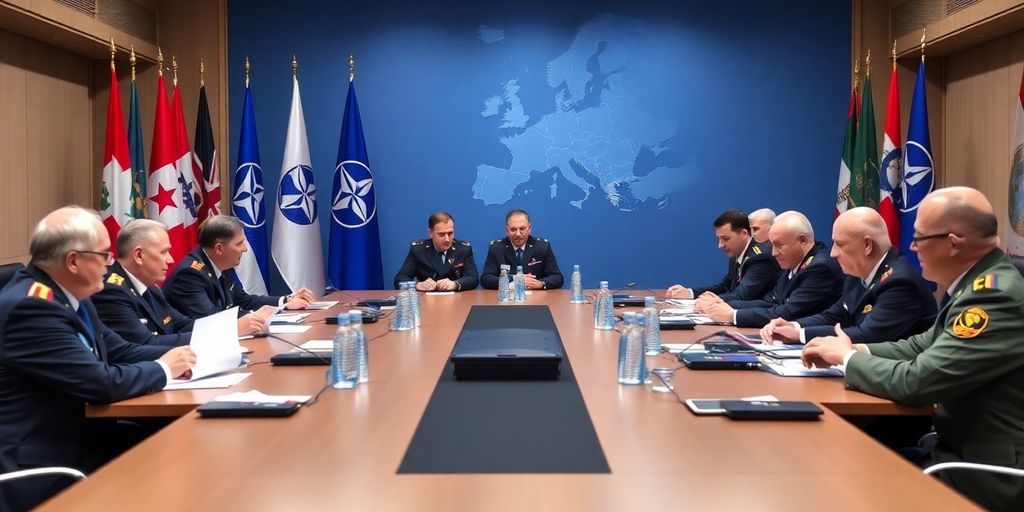
- Shift in NATO Policy: Perpetual NATO expansion is deemed a "bad idea," and the strategy suggests Russia should be part of the European security architecture.
- Focus on Sovereign Nations: The U.S. will support "sovereigntist movements" in Europe over the consolidation of power in entities like the European Union.
- Economic Reorientation: There’s a move towards economic autonomy and re-industrialization, echoing Hamiltonian economics.
- Multipolarity as Core: The strategy fundamentally accepts and adapts to a multipolar world, acknowledging other major powers as peers.
A Departure from the Past
This new strategy is not just a minor tweak; it represents a substantial shift. It acknowledges that the old post-World War II order is "obsolete" and has, in some ways, been "weaponized against the United States." Instead of continuing the old policies of global dominance, the U.S. appears to be charting a new course. This includes a rejection of the "current globalist agenda" and an embrace of a multipolar global order, though the U.S. still aims for a dominant role within it. The document explicitly states that the path the U.S. has been on was "misguided and unsustainable."
Recognizing Natural Rights
One of the most striking aspects of the strategy is its acknowledgment of "people’s god-given natural rights." This stands in stark contrast to what is described as the "Davos-centered new world order," which has been perceived as construing human rights as state-granted and therefore revocable. The implication of the old approach was that states could withhold rights based on compliance, leading to potential restrictions on freedoms like speech and prayer. The new strategy’s emphasis on natural rights offers a glimmer of hope for a different future.
Rethinking Alliances and NATO
The strategy also signals a significant change in how the U.S. views its alliances, particularly with Europe. While European allies are still considered important, the U.S. now supports "sovereigntist movements" rather than the further integration of the European Union. This is a direct critique of the EU’s current trajectory, which is seen by some as undemocratic and authoritarian. The document explicitly states that perpetual NATO expansion is a "very bad idea" and that the U.S. no longer supports it. Furthermore, it suggests that the war in Ukraine needs to end and that Russia should become part of the new European security architecture. This is a clear departure from the current agenda pushed by many European leaders.
Economic Realignment and Re-industrialization
The strategy also touches upon economic policy, with a notable reference to Alexander Hamilton. This suggests a move towards economic autonomy and a focus on re-industrialization, echoing the "American system" that aimed to build the U.S. as an industrial power. The idea is that economic autonomy is necessary for political autonomy. The document implies a shift away from pure "free trade" towards a model that prioritizes building technological and economic sovereignty. This is seen as a necessary adjustment, especially given the rise of China as a major economic competitor.
Embracing Multipolarity
At its core, this new U.S. National Security Strategy is an adaptation to a multipolar world. It explicitly rejects the idea of the U.S. as a global hegemon, deeming it unsustainable and too costly. The strategy acknowledges that the U.S. cannot be "everywhere at once" and must adjust its approach. This involves recognizing other major powers, like China, as peers rather than vassals. The U.S. aims to be the "boss in its own neighborhood" – the Western Hemisphere – while engaging with China primarily on economic and technological terms, rather than ideological ones. This shift towards acknowledging and working within a multipolar framework is seen as a significant and encouraging development.



Responses