Venice is a city of about 120 islands with no cars, where the bus is a boat and the quickest route is often the one you get lost on. Most visitors see only the stretch between the Rialto Bridge and St. Mark’s Square in the middle of the day, when it’s at its most crowded. Stay a night, get up early and wander into Cannaregio or Castello, and you’ll see a very different city.
Disclosure: this page contains links to GetYourGuide. If you book through them, People & Media may earn a small commission at no extra cost to you.
Our honest attraction reviews
Venice is expensive, and not every famous experience is worth the price. Our honest reviews tell you where your money is well spent and where it isn’t.
13 best things to do in Venice
From the big sights on St. Mark’s Square to quiet neighbourhoods and the lagoon islands, these are the things we’d make time for. Each one comes with an idea of how long it takes and whether it costs anything.
1. St. Mark’s Basilica
Nothing prepares you for the interior: domes and walls covered in more than 8,000 square metres of gold mosaics, glowing in the half-light. The basilica mixes Byzantine, Romanesque and Gothic styles and was the doges’ private chapel before it became the cathedral.
Time needed: 30 minutes for the basilica, 1.5 hours with the extras. Paid: at the time of writing the official ticket office lists €10 for the basilica and €30 for the full ticket with the Pala d’Oro altarpiece, the museum and the Loggia dei Cavalli terrace; children under 11 go free. Tip: the terrace, with the bronze horses and a view over the square, is the best add-on. On Sunday mornings until 14:00 only the museum and loggia are open to visitors. You can also compare basilica tickets and guided tours.
2. The Doge’s Palace
For almost a thousand years, the Venetian Republic was run from this pink-and-white Gothic palace. The route takes you through gilded council chambers, including the vast Great Council Hall with Tintoretto’s enormous Paradise, then across the Bridge of Sighs into the old prisons.
Time needed: 2 to 3 hours. Paid: there’s no palace-only ticket; the St. Mark’s Square Museums ticket also covers the Museo Correr. Tip: the Bridge of Sighs is on the standard route, so you don’t need a special tour to cross it. Our review Is the Doge’s Palace worth it? explains how to get the cheaper advance price, or see Doge’s Palace tickets and Secret Itineraries tours.
3. A gondola ride
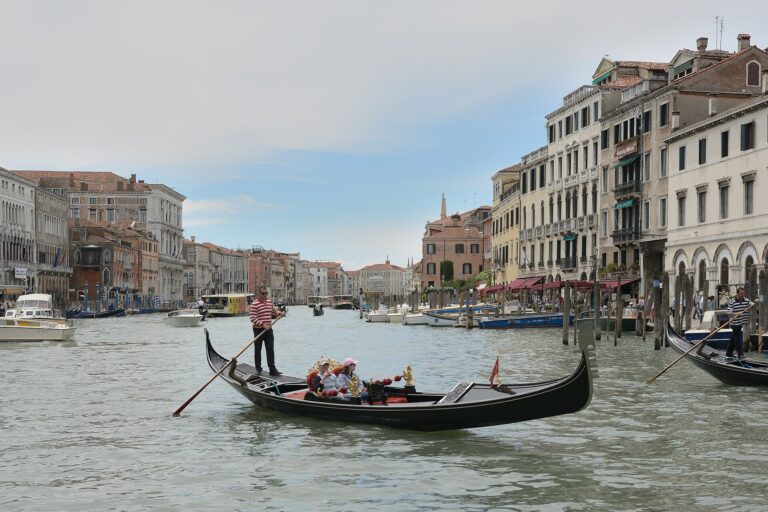
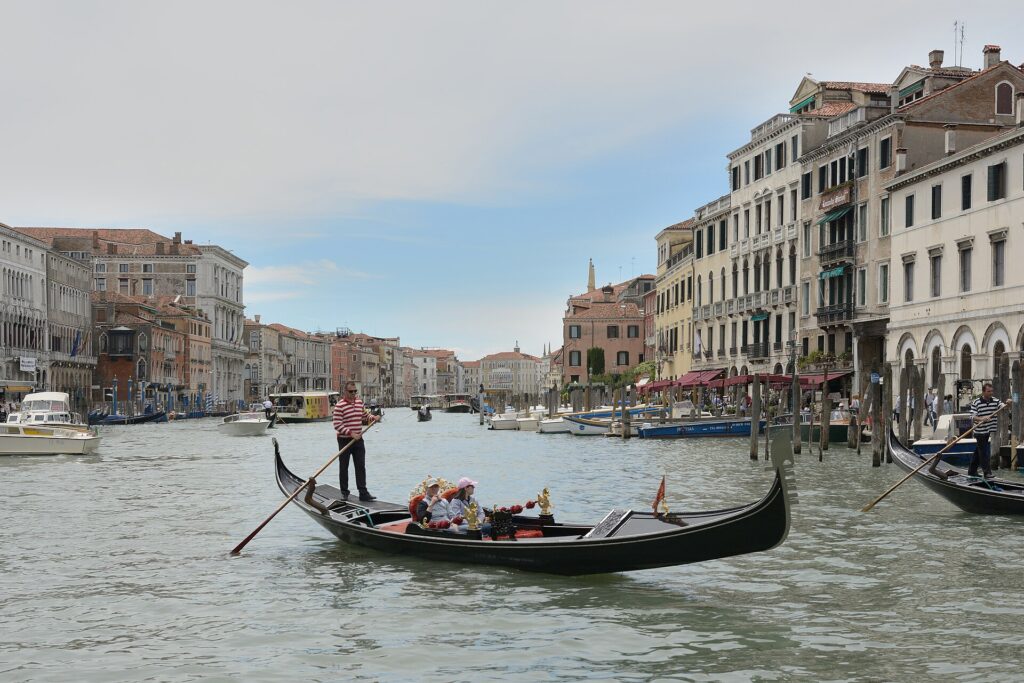
Yes, it’s a cliché, and yes, it’s expensive. But gliding silently through a narrow side canal, with the gondolier calling out at the corners, shows you a Venice you can’t see from the pavements. Official fares are fixed per gondola, not per person, so it’s much better value if you share with a few people.
Time needed: about 30 minutes. Paid: rates are higher in the evening. Tip: choose a station away from St. Mark’s Square and ask to go through the small canals rather than along the Grand Canal. Read Is a gondola ride worth it? before you hand over the cash, or book a shared or private gondola ride with the price agreed in advance. For a two-minute taste, the traghetto gondola ferries cross the Grand Canal at a few points for a few euros.
4. The Grand Canal by vaporetto
Venice’s main street is best seen from the water. Vaporetto line 1 stops at almost every landing along the whole length of the Grand Canal, passing hundreds of palaces, the Rialto Bridge and the church of Santa Maria della Salute. It’s the cheapest sightseeing cruise in the city.
Time needed: about 45 minutes end to end. Paid: a regular ACTV public transport ticket. Tip: try to get one of the outside seats at the front or back of the boat, and ride it once in daylight and once after dark, when the palaces are lit from inside.
5. The Rialto Bridge and Rialto Market
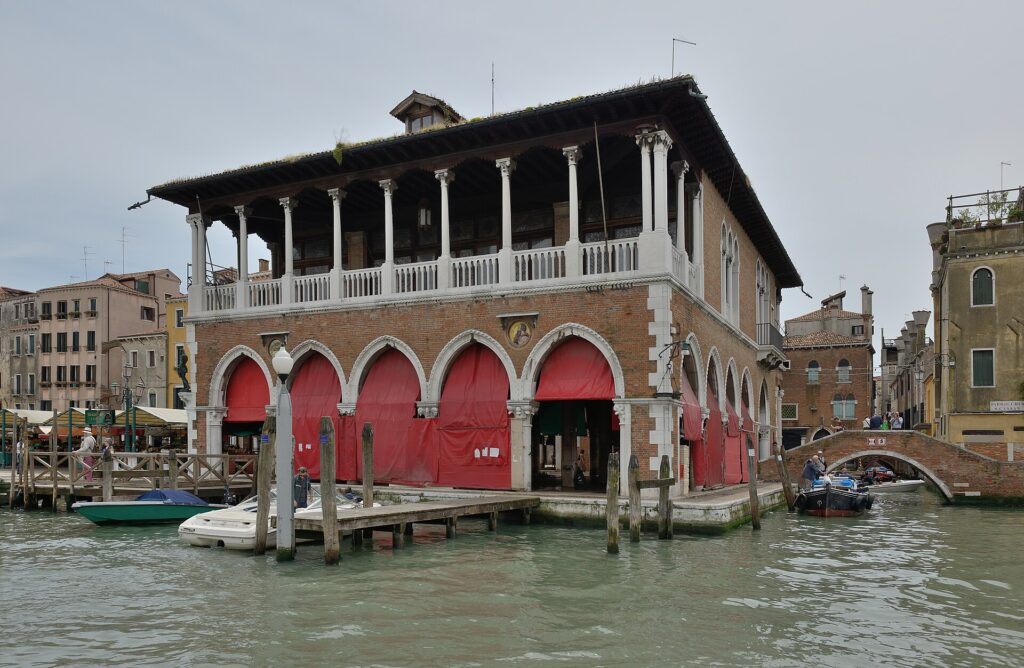
The stone Rialto Bridge was for centuries the only way to cross the Grand Canal on foot, and the market beside it has been Venice’s food market for about as long. Early in the morning the fish market is full of lagoon seafood and locals shopping for lunch.
Time needed: 1 hour. Free. Tip: come before 9:00 for the market and the bridge without the crowds. For the classic photo of the bridge, stand on the Riva del Vin or the Riva del Ferro.
6. St. Mark’s Campanile
The bell tower on St. Mark’s Square is actually a 20th-century copy: the original collapsed in 1902 and was rebuilt as it had been. A lift takes you to the top for a view across the rooftops, the domes of St. Mark’s and the lagoon.
Time needed: 30 to 45 minutes including the queue. Paid (the official price for individual bookings is €15 at the time of writing). Tip: if the bells ring while you’re at the top, it’s very loud. Go early or just before sunset.
7. San Giorgio Maggiore
The white Palladian church on its own island across from St. Mark’s Square has two big draws: paintings by Tintoretto inside, and a bell tower with arguably a better view than the Campanile, because St. Mark’s Square is in it.
Time needed: 1 to 1.5 hours including the boat. Church free; bell tower paid. Tip: take the vaporetto one stop from San Zaccaria. The queue for the lift is usually far shorter than at the Campanile.
8. Gallerie dell’Accademia
The best collection of Venetian painting anywhere, from Giovanni Bellini to Titian, Tintoretto and Veronese, whose huge Feast in the House of Levi fills an entire wall. It’s rarely overcrowded, which makes it a welcome escape from the San Marco area.
Time needed: 1.5 to 2 hours. Paid. Tip: the wooden Accademia Bridge outside has one of the loveliest views down the Grand Canal towards the Salute church.
9. The Peggy Guggenheim Collection
Peggy Guggenheim’s unfinished palazzo on the Grand Canal holds her personal collection of 20th-century art: Picasso, Kandinsky, Magritte, Dalí, Pollock and more. The sculpture garden and the canal-side terrace are just as memorable as the art.
Time needed: 1.5 hours. Paid. Tip: combine it with the Accademia, a five-minute walk away, and finish with a walk along the Zattere waterfront at sunset.
10. Scuola Grande di San Rocco
Tintoretto spent more than twenty years covering the walls and ceilings of this confraternity building with over 60 paintings. It’s one of the great artistic ensembles of Italy, and most visitors to Venice never hear of it.
Time needed: 1 hour. Paid. Tip: pick up one of the hand mirrors in the upper hall so you can study the ceiling paintings without straining your neck.
11. Murano and Burano
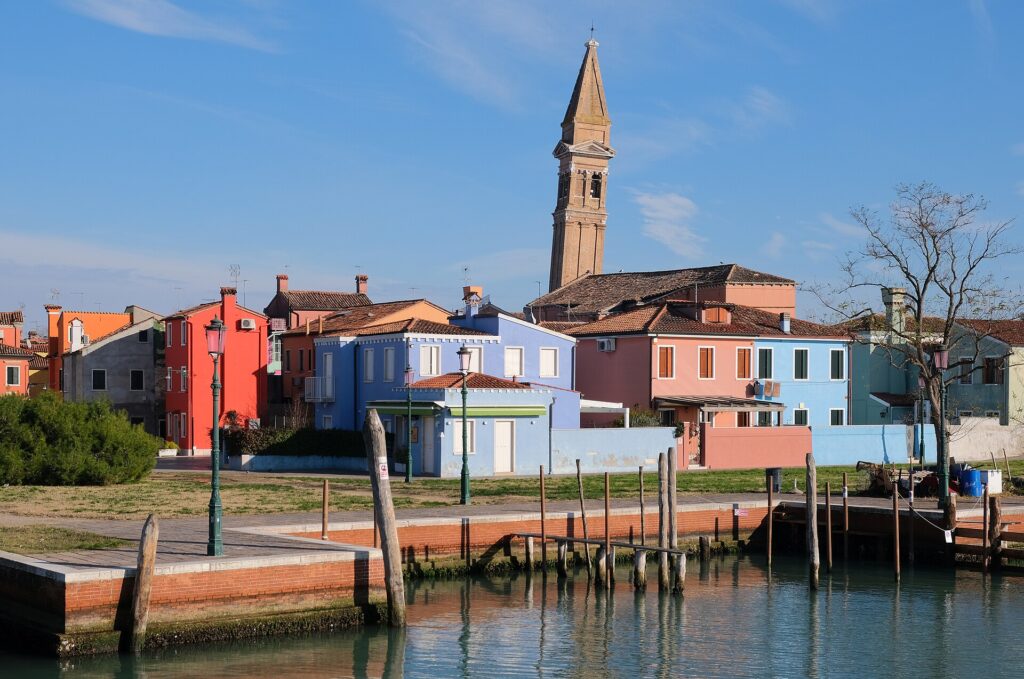
Murano is the island of glassmaking, with furnaces where you can watch a glassblower at work. Further out in the lagoon, Burano is the fishing island with brightly painted houses and a long tradition of lacemaking. Both make a good half-day or day trip from the centre.
Time needed: half a day to a full day. Getting there is paid (vaporetto or tour); walking around is free. Tip: by public vaporetto, add a stop at quiet Torcello, with its ancient cathedral mosaics. If you’d rather not work out the boat connections, look at Murano and Burano boat tours.
12. Cannaregio and the Jewish Ghetto
Cannaregio is where most remaining Venetians live, with long canal-side walks and far fewer tour groups. In its heart lies the Ghetto, established in 1516 and the origin of the word “ghetto” itself. It still has synagogues, a Jewish museum and kosher bakeries.
Time needed: 2 hours. Free to wander; the museum and synagogue visits are paid. Tip: in the evening, the Fondamenta della Misericordia and Fondamenta degli Ormesini fill with locals having drinks by the water.
13. A cicchetti crawl through the bàcari
Cicchetti are Venice’s answer to tapas: small snacks such as creamed salt cod on bread, sardines in saor or meatballs, eaten standing up in traditional wine bars called bàcari, with a small glass of wine (an ombra) or a spritz.
Time needed: an evening. Pay as you go, and usually cheaper than a sit-down dinner. Tip: the streets around the Rialto Market and the Cannaregio canals are the best areas. Go early in the evening, before the best cicchetti are gone.
- Hour-by-hour itinerary for 3 days
- Google Maps list with every stop
- What to book in advance (and when)
- Works offline on your phone
Practical tips for visiting Venice
Best time to visit
April to June and September to October bring pleasant weather, but also plenty of visitors, especially at weekends. July and August are hot, humid and crowded. November to February is quiet and atmospheric, sometimes foggy, and occasional high water (acqua alta) can flood low-lying areas such as St. Mark’s Square. Carnival in February is spectacular but very busy and expensive.
Access fee: Venice has introduced an access fee for day-trippers on selected peak days, while overnight guests are exempt. The days, hours and rates change from year to year, so check the City of Venice’s official access fee website (cda.ve.it) before your trip.
How many days do you need?
Two full days is a good minimum: one for St. Mark’s Square, the basilica and the Doge’s Palace, and one for the Accademia, Dorsoduro and Cannaregio. Add a third day for Murano, Burano and Torcello. If you can, stay at least one night. Venice is at its best in the early morning and evening, when day-trippers have gone.
Getting around
Walking is the main way to get around, and signs pointing “Per Rialto” and “Per S. Marco” on building corners help when your map app gets confused. Vaporetti (water buses) run by ACTV cover the Grand Canal, the outer edges of the city and the islands. Single tickets are expensive, so if you’ll use the boats more than a couple of times a day, a multi-day ACTV travel card is usually better value. Water taxis are fast but very expensive.
Where to stay
- San Marco: central for the main sights, but the busiest and most expensive area.
- Dorsoduro: near the Accademia and the Guggenheim, with a more relaxed, student feel.
- Cannaregio: authentic and good value, close to the train station and the Rialto.
- Castello: quiet and residential, especially towards the Arsenale and the Giardini.
- Mestre (on the mainland): much cheaper and a short train or bus ride away, but you’ll miss Venice in the evening.
Frequently asked questions
Is a gondola ride in Venice worth the money?
For many people, yes, once. The price is per gondola, so sharing makes a big difference. Ask for a route through quiet side canals and agree on the duration before you set off. If the price feels too high, a traghetto crossing or a ride on vaporetto line 1 gives you a taste of Venice from the water for much less.
Do I have to pay to enter Venice?
Only on certain days and only if you’re a day-tripper. Overnight guests are exempt. The access fee calendar is set by the city and published on its official website, so check it before you go.
What are the best free things to do in Venice?
Walking the backstreets of Cannaregio and Castello, the Rialto Market, the church of San Giorgio Maggiore, the view from the Accademia Bridge and sunset along the Zattere are all free. Many churches also hold paintings by Titian, Tintoretto or Bellini, though some charge a small entrance fee.
Can you see Venice in one day?
You can see St. Mark’s Square, the basilica, the Rialto Bridge and ride the Grand Canal, but it will be rushed and at the busiest time of day. Start as early as possible, book the basilica or the Doge’s Palace in advance, and head for Cannaregio in the afternoon to escape the crowds.
How do you get from the airport or station into Venice?
From Santa Lucia train station you’re already in the city, with vaporetto stops right outside. From Marco Polo Airport you can take a bus to Piazzale Roma, the Alilaguna water bus, or an expensive private water taxi.
Featured image: Photo: kallerna, CC BY-SA 4.0, via Wikimedia Commons