Rome crams almost three thousand years into a centre you can cross on foot in about an hour: an ancient arena, a Renaissance chapel ceiling and a concrete dome built almost 1,900 years ago are all within walking distance of each other. The catch is that the headline sights run on timed tickets and long queues, so a little planning decides whether you spend your days inside monuments or outside them.
Disclosure: this page contains links to GetYourGuide. If you book through them, People & Media may earn a small commission at no extra cost to you.
Our honest attraction reviews
Before you pay for a ticket, read our no-nonsense verdicts on Rome’s big-ticket sights: what’s worth your money, what’s overrated and how to avoid the worst queues.
12 best things to do in Rome
This list mixes the famous sights with a few places that most first-time visitors walk straight past. We’ve noted roughly how long each one takes and whether you need a ticket.
1. The Colosseum, Roman Forum and Palatine Hill
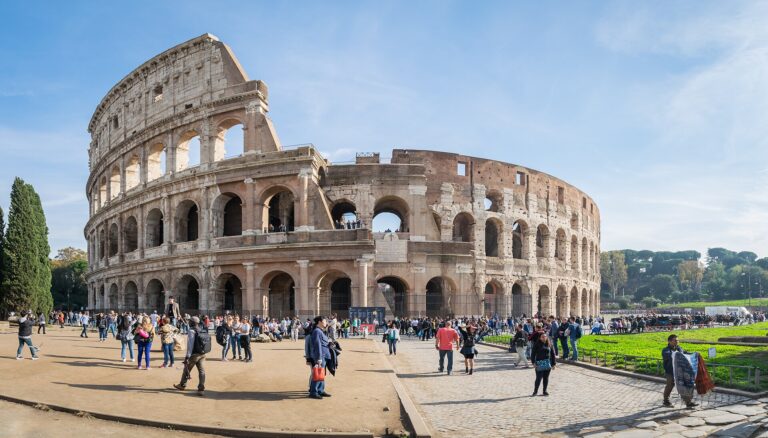
The Colosseum is the one sight nobody skips, and rightly so: standing inside the 50,000-seat amphitheatre explains the Roman Empire better than any museum. Your ticket also covers the Roman Forum, the political heart of ancient Rome, and the Palatine Hill, where the emperors built their palaces. Many visitors rush these two, which is a mistake: they’re half the value of the ticket and much less crowded.
Time needed: half a day for all three. Paid: tickets are named and time-slotted, and the standard ticket doesn’t include the underground or arena floor. Tip: do the Forum and Palatine first thing in the morning while it’s cool, and save the Colosseum for your booked slot. Read Is the Colosseum worth it? for the ticket types, or compare Colosseum tickets and tours if official slots are gone.
2. The Vatican Museums and the Sistine Chapel
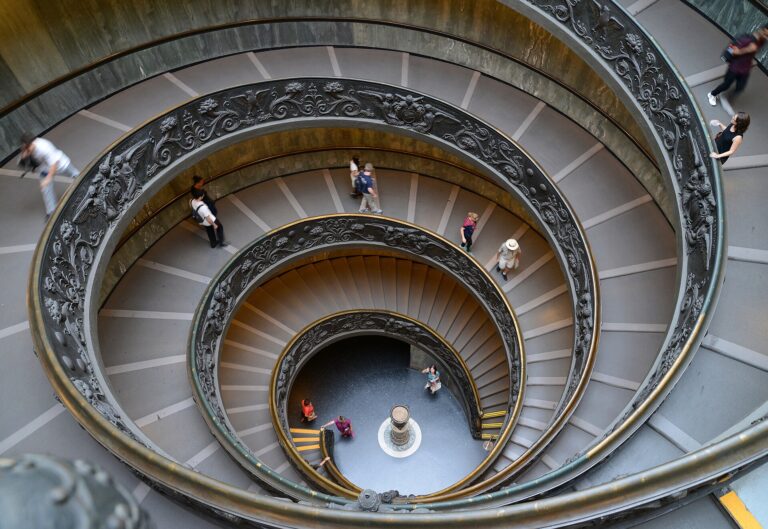
One of the world’s great art collections: the Raphael Rooms, the Gallery of Maps, the Laocoön and, at the very end of a long one-way route, Michelangelo’s Sistine Chapel ceiling. It’s overwhelming in both good and bad ways. Without a plan you’ll shuffle through corridors in a crowd and arrive at the Sistine Chapel too tired to look up.
Time needed: 3 to 4 hours. Paid: book ahead. Tip: the dress code (covered shoulders and knees) is enforced, and photos are not allowed in the Sistine Chapel. See Are the Vatican Museums worth it? for how to plan your route, or check Vatican Museums tickets and early-entry tours.
3. St. Peter’s Basilica and the dome
The largest church in Christendom is free to enter, and the interior is staggering in scale: Michelangelo’s Pietà sits just inside the door on the right, and Bernini’s bronze canopy rises over the main altar. For the best view in Rome, climb Michelangelo’s dome. A lift takes you part of the way, but the last stretch is a narrow, leaning staircase that’s not for the claustrophobic.
Time needed: 1 to 2 hours, including the dome. Free (the dome climb is paid). Tip: the security line in St. Peter’s Square is shortest early in the morning. The same dress code as the Vatican Museums applies.
4. The Pantheon
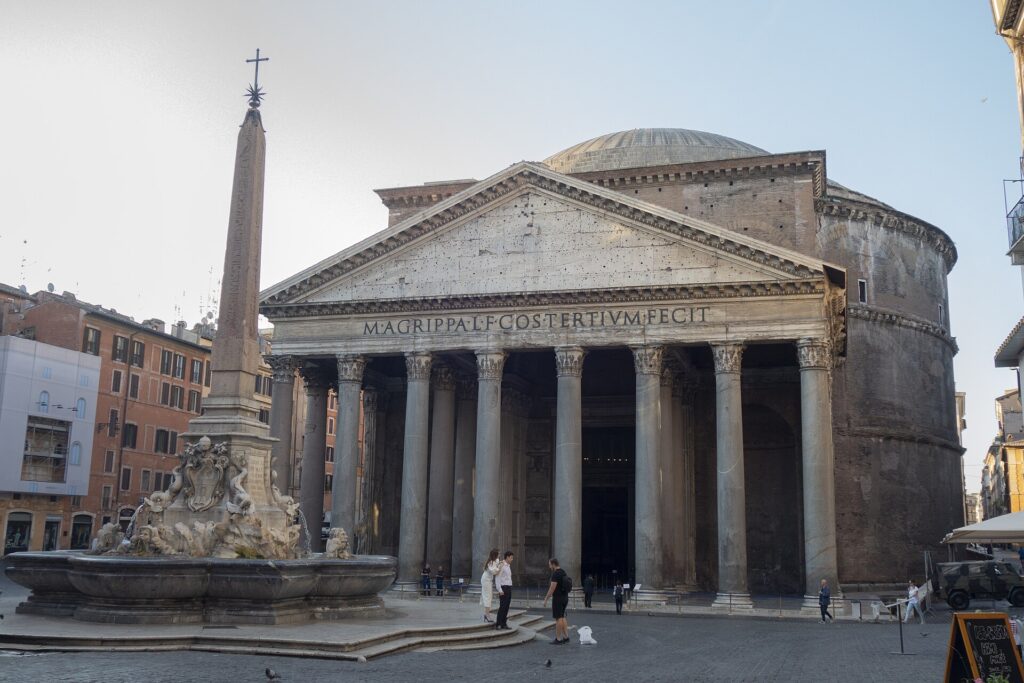
Built under Emperor Hadrian almost 1,900 years ago, the Pantheon still has the largest unreinforced concrete dome in the world, with a hole almost nine metres wide at the top open to the sky. It’s still a consecrated church, and the painter Raphael is buried inside. When it rains, the water falls straight through the oculus and drains through holes in the marble floor.
Time needed: 30 to 45 minutes. Paid: the Pantheon has charged a modest admission fee since 2023. Tip: the piazza outside is at its best early in the morning or after dark. If you don’t want to queue at the machines, book a timed Pantheon entry.
5. The Trevi Fountain
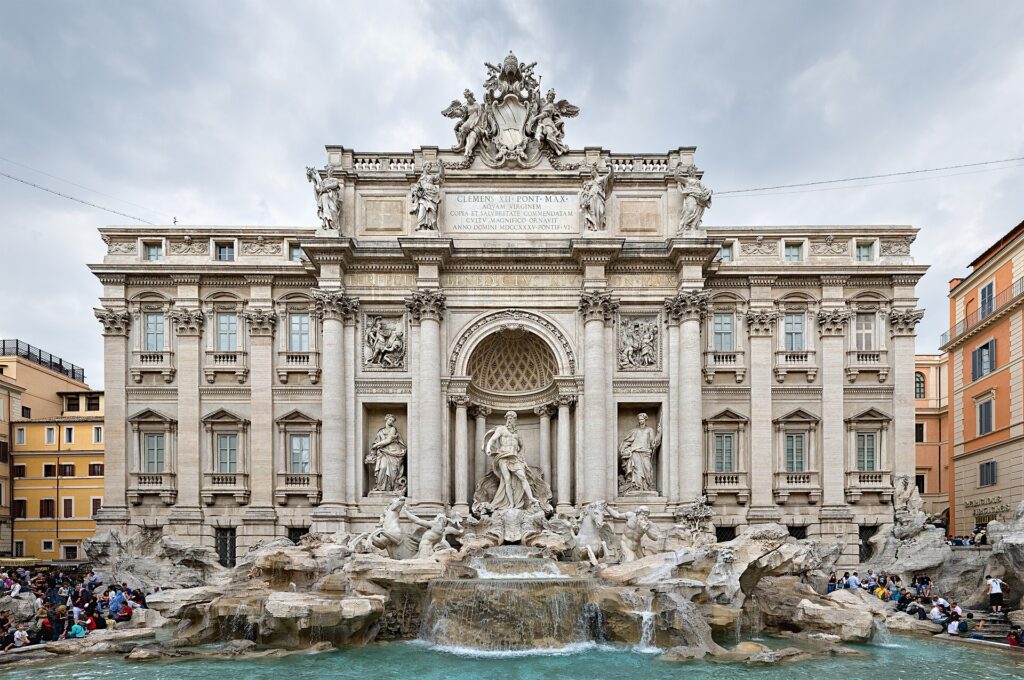
Nicola Salvi’s Baroque fountain fills an entire small square, which is why it’s so much more impressive in person than in photos. Tradition says throwing a coin over your shoulder means you’ll return to Rome. The coins are collected and go to charity.
Time needed: 15 to 30 minutes. Free from the square; small fee for the basin area: since 2 February 2026, Rome’s official tourism site says a €2 ticket is required to go down to the steps right by the water between 9:00 and 22:00. Outside those hours access is free, and so is the view from above. Tip: go before 8:00 or late at night, when the crowds thin out and you don’t need a ticket.
6. The Borghese Gallery
A former cardinal’s villa packed with Bernini sculptures (Apollo and Daphne, The Rape of Proserpina) and a room full of Caravaggios. It’s small enough to enjoy without museum fatigue, which makes it the favourite museum of many Rome regulars.
Time needed: about 2 hours. Paid, reservation compulsory: there are no walk-in tickets, and visits run in timed slots. Tip: slots sell out days or weeks ahead in high season, so book as soon as your dates are fixed, then walk it off in the Villa Borghese park afterwards. You can also find Borghese Gallery tickets and guided visits when the official slots are full.
7. Piazza Navona and Campo de’ Fiori
Piazza Navona keeps the oval shape of the Roman stadium it was built on, with Bernini’s Fountain of the Four Rivers in the middle. Five minutes away, Campo de’ Fiori has a morning market that is touristy but lively, and in the evening turns into a busy spot for drinks.
Time needed: 1 hour. Free. Tip: have a look but eat elsewhere. The restaurants facing the square charge for the view, while the side streets towards Via dei Coronari are better value.
8. An evening in Trastevere
Across the Tiber, Trastevere is a tangle of ivy-covered lanes, small trattorias and wine bars. It’s where Romans go out, too. Duck into the Basilica of Santa Maria in Trastevere for its gold 12th-century mosaics before dinner.
Time needed: an evening. Free. Tip: walk up the Janiculum Hill (Gianicolo) from Trastevere around sunset for a panoramic view over the domes of the historic centre.
9. Castel Sant’Angelo
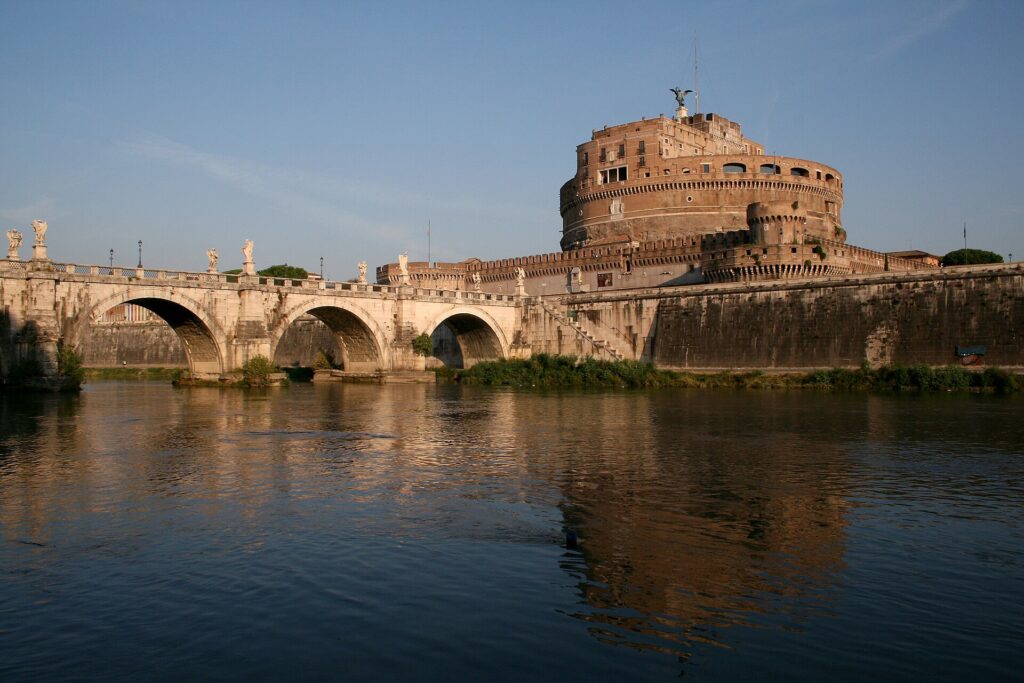
Built as Emperor Hadrian’s mausoleum, later a papal fortress and prison, and connected to the Vatican by an elevated escape corridor. Inside you climb a spiral ramp through almost two thousand years of history, ending on a terrace with one of the best views of St. Peter’s.
Time needed: 1.5 hours. Paid. Tip: pair it with St. Peter’s, a 10-minute walk away, and cross the angel-lined Ponte Sant’Angelo at dusk.
10. The Appian Way and the catacombs
The Via Appia Antica, one of Rome’s first great roads, still has long stretches of original paving lined with tombs and umbrella pines. Beneath it lie early Christian catacombs, kilometres of burial tunnels you can visit with a guide.
Time needed: half a day. The road is free; the catacombs are paid and visited on guided tours. Tip: rent a bike near the start of the road. The old paving stones are hard on the feet, and cycling lets you get beyond the busiest first stretch.
11. The Capitoline Museums and the view over the Forum
On top of the Capitoline Hill, Michelangelo’s Piazza del Campidoglio is flanked by the Capitoline Museums, home to the original bronze statue of Marcus Aurelius and the Capitoline She-Wolf. Walk round the back of the square for a free view straight down over the Roman Forum.
Time needed: 2 hours for the museums, 10 minutes for the view. Museums paid; square and viewpoint free. Tip: the museums’ café terrace has a view over the rooftops that most people don’t know about.
12. The Aventine Hill: the keyhole and the Orange Garden
A quiet, leafy residential hill with two small surprises. Look through the keyhole of the door of the Knights of Malta and you’ll see the dome of St. Peter’s framed perfectly at the end of a garden path. Around the corner, the Giardino degli Aranci (Orange Garden) has a view over the Tiber that’s especially good at sunset.
Time needed: 1 hour. Free. Tip: expect a short queue at the keyhole around sunset; come in the morning if you just want the view.
- Hour-by-hour itinerary for 3 days
- Google Maps list with every stop
- What to book in advance (and when)
- Works offline on your phone
Practical tips for visiting Rome
Best time to visit
April to early June and mid-September to October are the sweet spots: warm enough for long days outside, without the intense heat of July and August. August is hot, and around the mid-August holiday (Ferragosto) some locally run restaurants close. Winter is quieter and mild, but days are short. Easter and major Vatican events draw huge crowds, so check the calendar before you book.
How many days do you need?
Three full days is the minimum to see the Colosseum area, the Vatican and the historic centre without rushing. With four or five days you can add the Borghese Gallery, the Appian Way and a day trip, for example to Pompeii. It’s a long day by fast train and bus, so read Is Pompeii worth it? first.
Getting around
The historic centre is best explored on foot. The metro is handy for longer hops: line A for the Vatican (Ottaviano) and the Spanish Steps, line B for the Colosseum (Colosseo). Buses and trams fill the gaps.
The official Roma Pass is available as a 48-hour card (€38) or a 72-hour card (€62.90), according to Rome’s official tourism website. It includes public transport, free entry to one (48h) or two (72h) museums or archaeological sites, and discounts after that. It only pays off if you use the free entries on expensive sites and actually take public transport. The Vatican Museums aren’t part of it, because the Vatican isn’t in Italy.
Where to stay
- Centro Storico (around the Pantheon and Piazza Navona): walk everywhere, but it’s the most expensive and busiest area.
- Monti: close to the Colosseum, with a village feel, independent shops and good restaurants.
- Trastevere: atmospheric and lively at night; can be noisy.
- Prati: calm, elegant and handy for the Vatican, with a metro connection.
- Around Termini station: practical for airport and day-trip trains and often cheaper, but less charming.
Frequently asked questions
What are the best free things to do in Rome?
St. Peter’s Basilica, the Trevi Fountain seen from the square, Piazza Navona, Trastevere, the Aventine keyhole and Orange Garden, the Appian Way and the view over the Forum from the Capitoline Hill are all free. Many churches, including Santa Maria in Trastevere, also contain world-class art and cost nothing to enter.
Can you see the Colosseum and the Vatican on the same day?
You can, but we wouldn’t. Both involve a lot of walking and standing, and the Vatican alone takes most of a morning. Give each its own half day and fill the rest with lighter sights nearby: the Capitoline Hill and Monti after the Colosseum, Castel Sant’Angelo or Prati after the Vatican.
Do you need to book Rome attractions in advance?
For the big three, yes. The Colosseum runs on named, timed tickets, the Borghese Gallery only accepts reservations, and walking up to the Vatican Museums without a booking in high season often means a long wait. Churches, squares and fountains need no booking.
Is there a dress code in Rome?
In churches and at the Vatican, yes: shoulders and knees should be covered. Carry a light scarf or shawl in summer so you’re not turned away at St. Peter’s or the Pantheon.
Is Rome walkable?
Very. Most of the main sights are 15 to 30 minutes’ walk apart. Wear comfortable shoes, because cobblestones and hills add up. Rome’s public drinking fountains (nasoni) give you free, safe water all over the centre.
Featured image: Photo: Bert Kaufmann from Roermond, Netherlands, CC BY-SA 2.0, via Wikimedia Commons