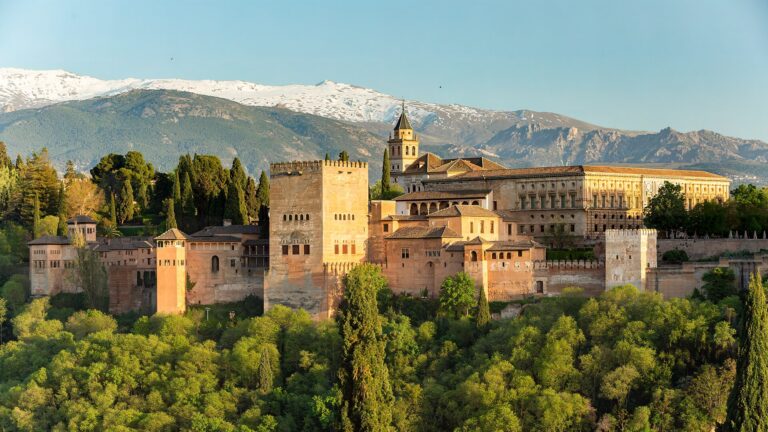
Granada is a small city with one of the greatest monuments in Europe: the Alhambra, the palace-fortress of the last Muslim kingdom in Spain, set against the snow-capped Sierra Nevada. Around it you’ll find the whitewashed hillside lanes of the Albaicín, cave homes and flamenco in Sacromonte, and bars where a tapa still often comes free with your drink. The one thing you can’t improvise is the Alhambra ticket, so plan your trip around that first.
Disclosure: this page contains links to GetYourGuide. If you book through them, People & Media may earn a small commission at no extra cost to you.
Our honest attraction reviews
We’ve reviewed the Alhambra in depth, including ticket types, the Nasrid Palaces time-slot rule and what to do if official tickets are sold out.
12 best things to do in Granada
1. The Alhambra
The reason most people come to Granada. The Nasrid Palaces are covered floor to ceiling in carved stucco, tiles and cedarwood, with the reflecting pool of the Court of the Myrtles and the fountain of the Court of the Lions as highlights. A general ticket also covers the Alcazaba fortress and the Generalife gardens.
- Time needed: about 3 hours, according to the official website.
- Cost: the general ticket was €22.27 on the official website at the time of writing. Children under 12 are free but must be booked.
- Tip: your ticket has a fixed entry time for the Nasrid Palaces. Miss it and you can’t go in, and official tickets can’t be changed or refunded. Book as early as you can and bring your ID.
Read our full review: Is the Alhambra worth it? Official tickets gone? An Alhambra and Nasrid Palaces guided tour with tickets may still have space.
2. Mirador de San Nicolás
The most famous viewpoint in Granada looks straight across the valley at the Alhambra, with the Sierra Nevada behind it. At sunset the walls turn red and gold, and the square fills with travellers, locals and the occasional guitarist.
- Time needed: 30 minutes to an hour.
- Cost: free.
- Tip: it’s packed at sunset. The nearby Mirador de San Cristóbal and the viewpoints higher up in Sacromonte are quieter alternatives.
3. Wander the Albaicín
The old Moorish quarter on the hill opposite the palace is part of the same UNESCO World Heritage Site. Its steep, cobbled lanes wind past whitewashed houses, hidden walled gardens known as cármenes and small churches built on the sites of former mosques.
- Time needed: 2 to 3 hours.
- Cost: free.
- Tip: the hills are steep, so wear good shoes, walk up in the cooler hours and come down towards sunset. A guide brings the history to life: see this Albaicín and Sacromonte sunset walking tour.
4. Sacromonte and the Cave Museum
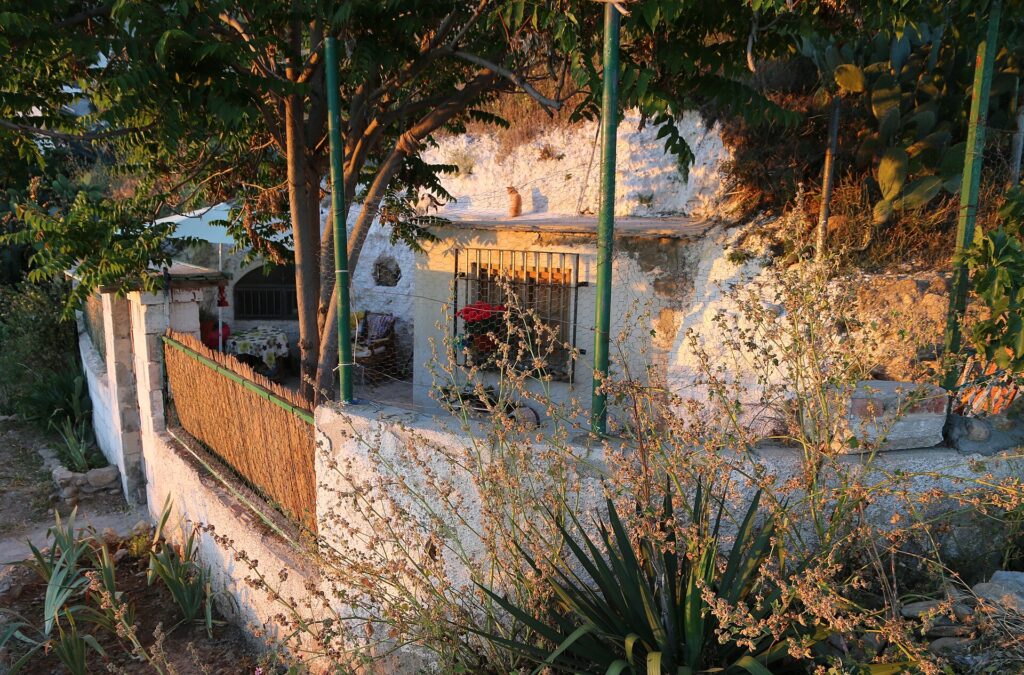
Beyond the Albaicín, the Sacromonte hillside is dotted with cave homes dug into the rock, for centuries home to Granada’s Gitano (Roma) community. The Sacromonte Caves Museum recreates cave life across a series of restored caves, with information on the people who lived there, flamenco and the landscape.
- Time needed: 1.5 to 2 hours including the walk.
- Cost: the neighbourhood is free; the museum is paid.
- Tip: the walk up to the museum is steep with many steps. Go when it opens in the morning in summer, and enjoy the views of the Alhambra on the way.
5. Flamenco in a Sacromonte cave
Granada’s flamenco tradition is the zambra, performed in the whitewashed caves of Sacromonte with the audience seated just a few metres from the dancers. It’s more intimate and raw than a theatre show.
- Time needed: about an hour, plus getting there.
- Cost: paid, usually with a drink included.
- Tip: the lanes up to Sacromonte are dark and steep at night, so consider a taxi back. See tickets for a flamenco show at Cuevas Los Tarantos.
6. Granada Cathedral and the Royal Chapel
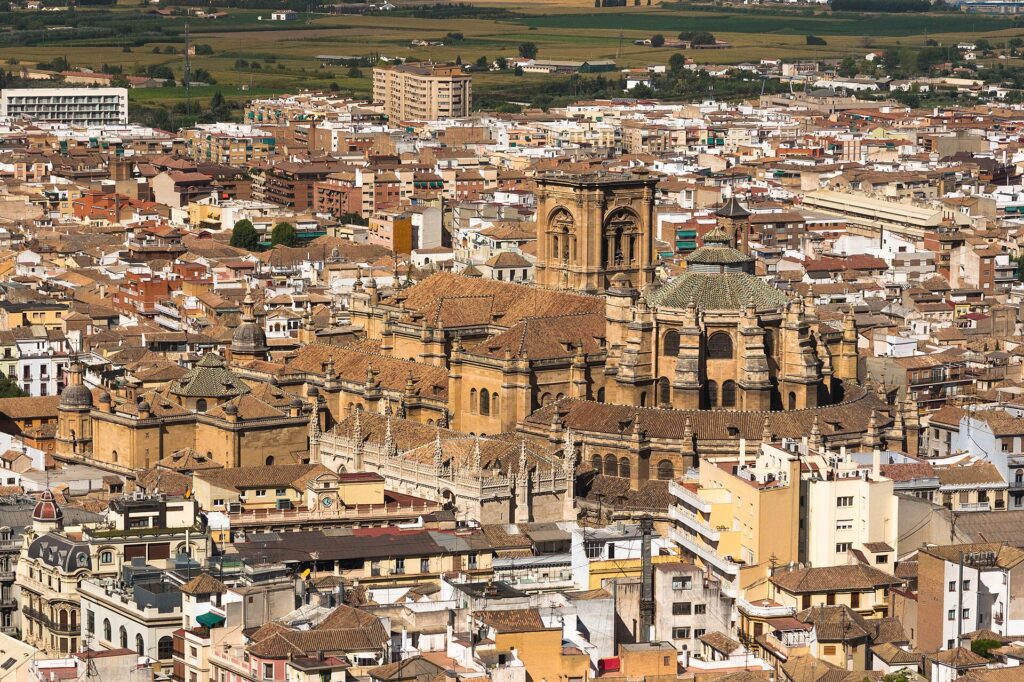
Isabella and Ferdinand, the Catholic Monarchs who conquered Granada in 1492, chose to be buried here. Their tombs lie in the Royal Chapel, a late Gothic jewel attached to the much larger Renaissance cathedral. Together they tell the other half of the Alhambra’s story.
- Time needed: about 1.5 hours for both.
- Cost: paid; the cathedral and the Royal Chapel are visited separately.
- Tip: the market streets of the Alcaicería are right next door, so combine them.
7. Carrera del Darro and Paseo de los Tristes
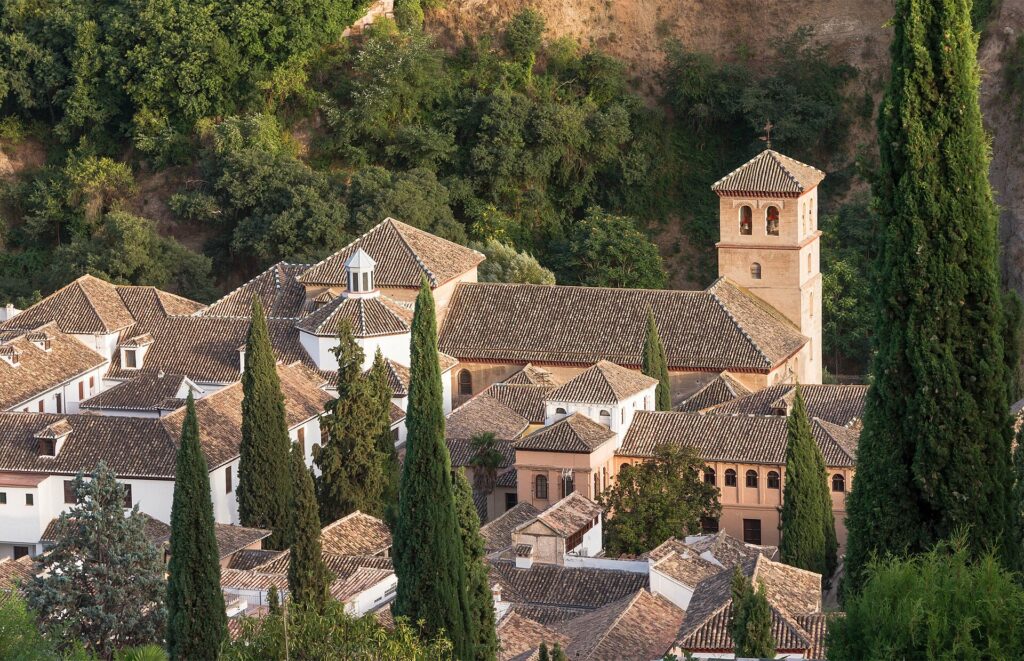
Arguably the prettiest street in Granada follows the little Darro river below the walls of the Alhambra, past stone bridges, old convents and the Church of San Pedro y San Pablo. It ends at the Paseo de los Tristes, a terrace-lined square with a superb view up to the Alhambra’s towers.
- Time needed: an hour.
- Cost: free.
- Tip: come in the evening, when the Alhambra is lit up above you, and have a drink on one of the terraces.
8. A free-tapas crawl
Granada is one of the last cities in Spain where many bars still serve a tapa free with every drink, and each round tends to bring something different. It’s the most enjoyable (and cheapest) way to have dinner here.
- Time needed: an evening.
- Cost: you pay for the drinks; the tapas often come free.
- Tip: try the bars around Calle Navas, Plaza Nueva and the Realejo quarter. Move on after one or two drinks to try more places.
9. Arab baths (hammam)
Modern hammams inspired by the Moorish tradition let you move between warm, hot and cold pools under tiled arches, with optional massages. After a day of climbing the Albaicín, it’s a genuinely restorative experience. Hammam Al Ándalus, near Plaza Nueva, is the best known.
- Time needed: about 1.5 to 2 hours.
- Cost: paid.
- Tip: sessions are timed and fill up, especially in the evening, so book ahead and bring swimwear.
10. El Bañuelo
For the real thing, visit this 11th-century Arab bathhouse on the Carrera del Darro, one of the best-preserved in Spain. Star-shaped skylights pierce the vaulted ceilings, just as they did a thousand years ago.
- Time needed: 20 to 30 minutes.
- Cost: paid; it’s also included in the official Dobla de Oro ticket together with the Alhambra.
- Tip: it’s small, so it’s easy to fit in on your way to the Paseo de los Tristes.
11. The Alcaicería and Calderería Nueva
The Alcaicería, a tangle of narrow lanes next to the cathedral, occupies the site of the old Moorish silk market and today sells lanterns, ceramics and spices. Up the hill, Calle Calderería Nueva is lined with teterías, cosy tea houses serving mint tea and pastries.
- Time needed: an hour or two.
- Cost: free to browse.
- Tip: much of what’s sold is made for tourists, so compare quality before you buy. A tea house is a good place to wait out the midday heat.
12. Sierra Nevada and the Alpujarras (day trip)
Granada’s mountains are close enough for a day out. In winter the Sierra Nevada ski resort is one of the southernmost in Europe; in the warmer months the white villages of the Alpujarras, such as Pampaneira, Bubión and Capileira, offer walks, terraced valleys and local crafts.
- Time needed: a full day.
- Cost: depends on transport and activities.
- Tip: mountain roads are winding and public transport is limited, so a rental car or an organised trip makes this much easier.
- Hour-by-hour itinerary for 3 days
- Google Maps list with every stop
- What to book in advance (and when)
- Works offline on your phone
Practical tips for visiting Granada
Best time to visit
Spring (April to June) is beautiful, with the Generalife gardens in bloom, but it’s also peak season for Alhambra tickets. Mid-September to November brings pleasant temperatures and golden light. July and August are hot, so choose an early Alhambra slot. Winter days can be crisp and sunny, with snow on the Sierra Nevada behind the palaces, but nights are cold and the Alhambra closes earlier.
How many days do you need?
- 1 day: the Alhambra in the morning, the Albaicín and Mirador de San Nicolás at sunset, and tapas.
- 2 days: add the cathedral and Royal Chapel, Carrera del Darro, Sacromonte and a flamenco show.
- 3 days: add a hammam and a day in the Alpujarras or the Sierra Nevada.
Getting around
The centre is compact and walkable, but the Alhambra, the Albaicín and Sacromonte are all uphill. Small city minibuses climb the hills: lines C30, C32 and C35 serve the Alhambra, and other minibus lines run up into the Albaicín and Sacromonte. Private cars can’t reach the Alhambra from the city centre, and driving in the old town isn’t worth the stress. There’s no need for a car unless you plan mountain day trips.
Where to stay
- Centro and Plaza Nueva: flat, central and close to the cathedral, tapas bars and the Alhambra buses. The easiest base.
- Albaicín: atmospheric, with Alhambra views from some rooms, but steep and awkward with luggage.
- Realejo: the old Jewish quarter, with good bars and street art, and a walking route up to the Alhambra.
Frequently asked questions
What is the number one thing to do in Granada?
The Alhambra, without question. Book a ticket that includes the Nasrid Palaces as soon as your dates are fixed, then plan the rest of your trip around your time slot.
How many days do you need in Granada?
Two days is ideal: one for the Alhambra and one for the Albaicín, Sacromonte and the cathedral. With a single day you can see the Alhambra and a sunset from San Nicolás, but it’ll feel rushed.
What can you do in Granada if the Alhambra is sold out?
Check guided tours, which have their own allocation of tickets, or the night visit to the Nasrid Palaces. Otherwise, enjoy the free view from the Mirador de San Nicolás, visit the Royal Chapel, El Bañuelo and Sacromonte, and come back another time.
Are tapas really free in Granada?
In many traditional bars, yes: order a drink and a small tapa arrives with it. It’s a custom rather than a rule, so not every bar does it, especially in the most touristy spots.
Is Granada worth visiting without the Alhambra?
Yes, though you’ll miss its highlight. The Albaicín, Sacromonte, the cathedral quarter and the tapas culture make Granada a rewarding stop on any Andalusia trip.