Barcelona squeezes Gaudí’s buildings, a medieval old town, city beaches and two good viewpoint hills into a space you can mostly cross by metro in half an hour. The catch is that its most famous sights run on timed tickets that sell out, so a little planning decides whether you see the Sagrada Família from the inside or only from the pavement. Here’s what’s genuinely worth your time, what’s free, and what to book before you fly.
Disclosure: this page contains links to GetYourGuide. If you book through them, People & Media may earn a small commission at no extra cost to you.
Our honest attraction reviews
We’ve reviewed Barcelona’s big Gaudí sights in detail, with ticket tiers, time slots and the situations in which they’re not worth the money.
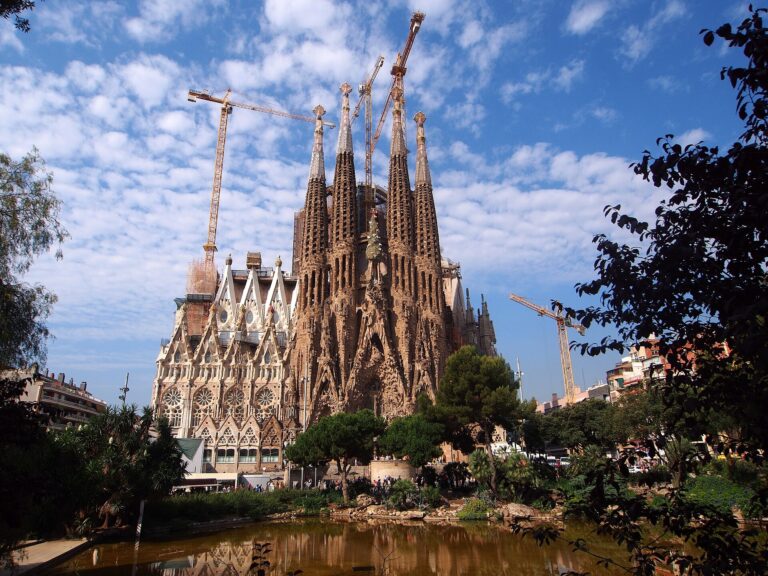
13 best things to do in Barcelona
1. Sagrada Família
Gaudí’s unfinished basilica is the one sight almost everyone should pay to enter. The façades are impressive from the street, but inside the columns branch like trees and the stained glass washes the nave in blue and green on one side and orange and red on the other. It’s one of the few famous landmarks where the interior beats the photos.
- Time needed: about 1.5 hours; 2 hours or more with a tower.
- Cost: paid. The basic ticket with the audio guide app was €26 on the official website at the time of writing. Tickets are online only, named and tied to a time slot.
- Tip: pick your slot with the light in mind: morning for the cool blue and green windows, late afternoon for the warm colours. The towers are optional.
Read our full review: Is the Sagrada Família worth it? If official slots are gone, compare Sagrada Família tickets and tours.
2. Park Güell
Gaudí’s hillside park, with its mosaic serpentine bench, the Dragon Stairway and the gingerbread-style gatehouses, is Barcelona at its most playful. The famous features sit in a ticketed area; the wider park around it is where locals walk their dogs.
- Time needed: 1 to 1.5 hours, plus 30 to 45 minutes to get there and climb up.
- Cost: paid for the monumental area (€18 general admission at the time of writing).
- Tip: you get a 30-minute window after your booked time to enter. Take metro L3 to Lesseps and use the escalator route, and avoid a midday slot in summer, as there’s little shade.
Read our full review: Is Park Güell worth it?
3. Casa Batlló
The “House of Bones” on Passeig de Gràcia has a dragon-scale roof, bone-like balconies and an interior of curved wooden doors and a light well tiled in shades of blue. The façade is free to admire; the interior is the reason to pay.
- Time needed: about 1 hour 15 minutes.
- Cost: paid, and one of the pricier sights in the city, with several ticket tiers. Children up to 12 enter free on the general visit.
- Tip: the cheapest tier doesn’t include the rooftop, which many visitors consider the highlight. Book online: the ticket office charges more.
Read our full review: Is Casa Batlló worth it?
4. Casa Milà (La Pedrera)
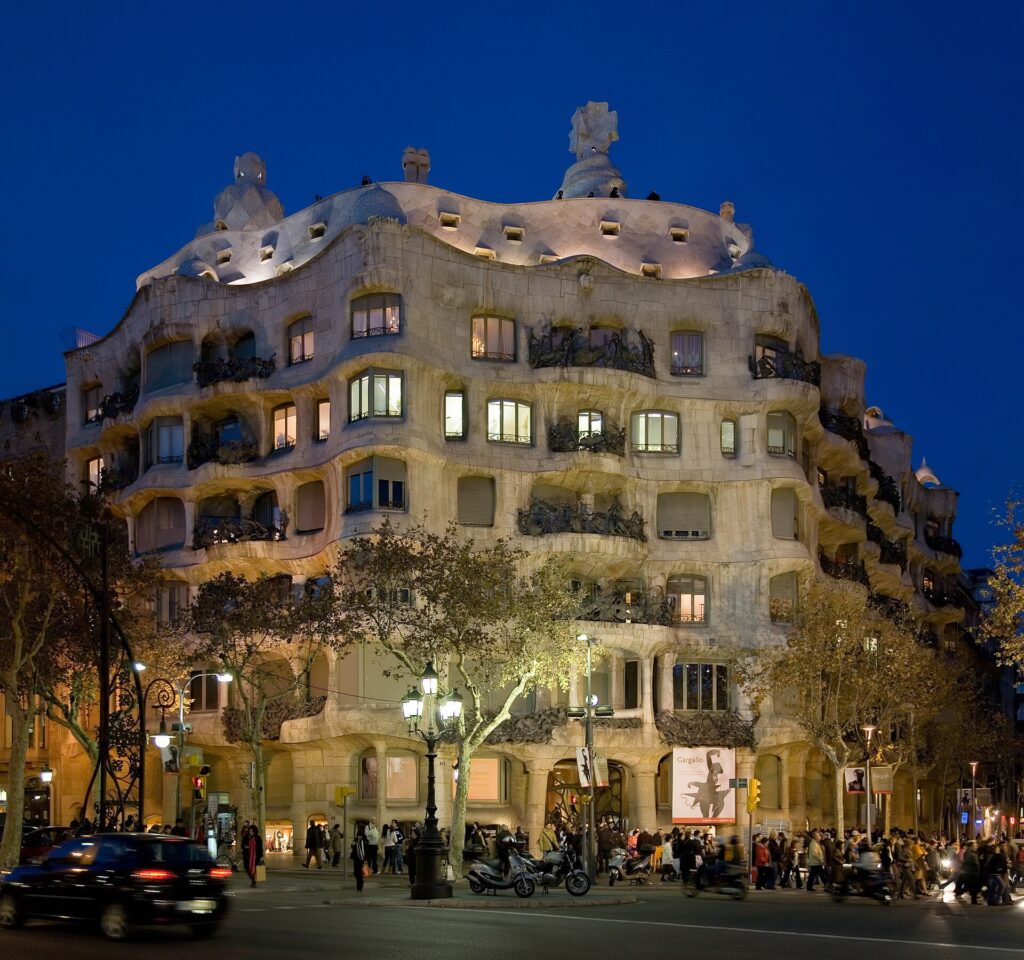
A few minutes up the same avenue, Gaudí’s wavy stone apartment block is the calmer, more architectural counterpart to Casa Batlló. The rooftop, with its warrior-like chimneys and views towards the Sagrada Família, is the highlight, and the attic explains how Gaudí actually built his ideas.
- Time needed: 1 to 1.5 hours.
- Cost: paid; there are day and night visits.
- Tip: if you only have budget for one Gaudí house, choose Batlló for the wow factor or La Pedrera for the rooftop and the story of how it was built. See Casa Milà tickets and tours.
5. The Gothic Quarter and Barcelona Cathedral
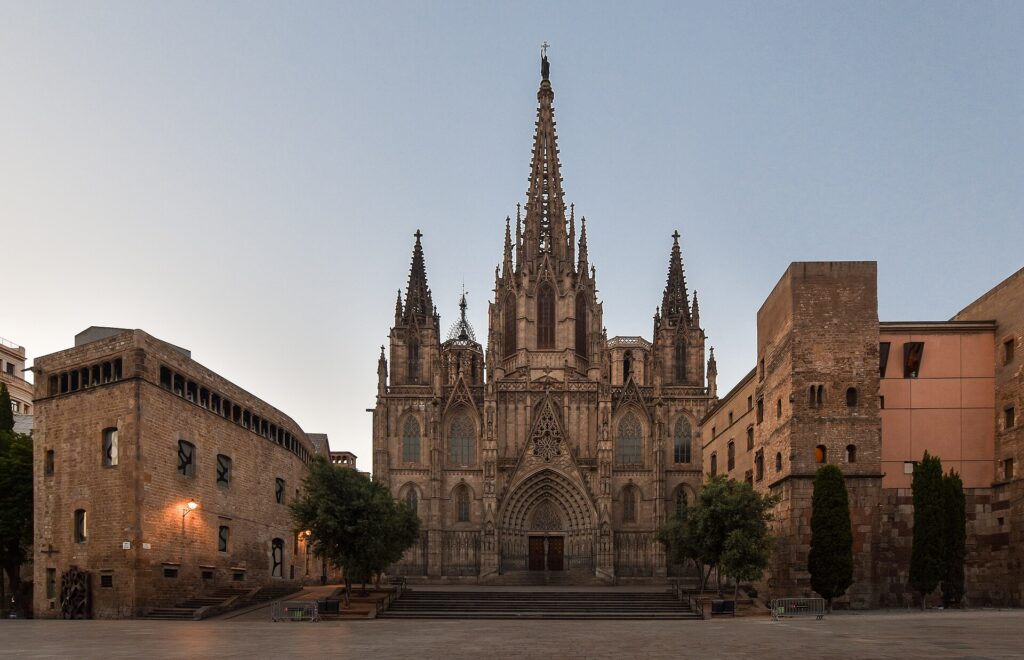
The Barri Gòtic is the medieval core of the city: narrow lanes, hidden squares like Plaça Sant Felip Neri, remains of the Roman walls and the Gothic cathedral with its cloister. It’s the best free thing to do in Barcelona, and the easiest place to get pleasantly lost.
- Time needed: 2 to 3 hours of wandering.
- Cost: free to explore; the cathedral charges for tourist visits at certain times, so check its official website.
- Tip: go early in the morning, before the tour groups, and keep an eye on your bag in crowded lanes.
6. El Born, Santa Maria del Mar and the Picasso Museum
Across Via Laietana, El Born has the soaring Gothic church of Santa Maria del Mar, independent shops, cocktail bars and the Museu Picasso, housed in a row of medieval palaces. The museum focuses on Picasso’s early years and his long connection with Barcelona, so don’t expect a room full of Cubist masterpieces.
- Time needed: half a day with the museum.
- Cost: the neighbourhood is free; the museum is paid.
- Tip: book the museum online for a set time and save El Born’s bars for the evening.
7. Palau de la Música Catalana
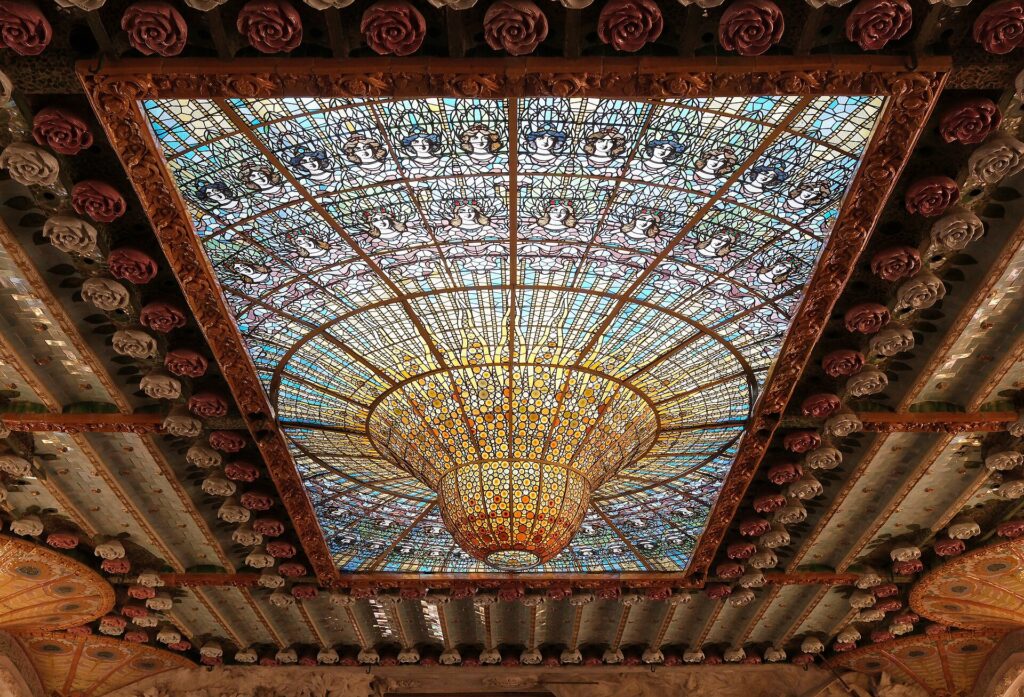
This concert hall is Catalan modernisme at full volume: mosaic columns, sculpted horses bursting out of the stage and an inverted stained-glass skylight that glows like a sun. It’s only a short walk from the cathedral but far less known than the Gaudí buildings.
- Time needed: about an hour for a guided tour.
- Cost: paid, by tour or by concert ticket.
- Tip: a concert is the most memorable way to see the hall; if your evenings are full, take a guided tour of the Palau de la Música.
8. La Boqueria and La Rambla
La Rambla is the famous tree-lined boulevard through the old town. Honestly, it’s more of a thoroughfare than a highlight these days, but the Boqueria market halfway down is still worth a look for its fruit stalls, jamón and busy tapas counters.
- Time needed: an hour.
- Cost: free to walk around.
- Tip: the Boqueria is open Monday to Saturday and closed on Sundays. Walk to the stalls at the back for better prices, and watch your pockets on La Rambla.
9. Montjuïc
The green hill above the port packs in a castle, the Olympic Stadium, the Fundació Joan Miró, the MNAC art museum and gardens with views over the harbour. At the foot of the hill, the Magic Fountain puts on sound-and-light shows on certain evenings.
- Time needed: half a day to a full day.
- Cost: the hill, gardens and viewpoints are free; the museums and cable car are paid.
- Tip: check the Magic Fountain’s show days on the city council’s website before you go, as the schedule varies by season.
10. Barceloneta and the seafront
Barcelona is one of the few big European cities with its own beaches. Barceloneta is the busiest; walk or cycle north towards Bogatell and Nova Icària for more space. The old fishermen’s quarter behind the beach is a good place for seafood rice at lunch.
- Time needed: a few hours.
- Cost: free.
- Tip: never leave your things unattended on the sand, and swim between May and October for comfortable water.
11. Bunkers del Carmel
The anti-aircraft battery on top of the Turó de la Rovira gives a free 360-degree view over the whole city, from the Sagrada Família to the sea. It’s the best free viewpoint in Barcelona and, for many visitors, better than the view from Park Güell.
- Time needed: an hour, plus a steep climb.
- Cost: free.
- Tip: it sits in a residential neighbourhood, so keep the noise down. Combine it with Park Güell, which is within walking distance.
12. Tapas and vermouth in Gràcia and Poble-sec
Some of the best eating in Barcelona happens away from the old town. Gràcia is a former village of small squares and neighbourhood bars; Poble-sec’s Carrer de Blai is lined with pintxos bars. A weekend vermouth before lunch is a local ritual worth copying.
- Time needed: an evening.
- Cost: pay as you go.
- Tip: Barcelona eats late. Restaurants fill up for dinner from around 21:00.
13. Montserrat (day trip)
The Benedictine monastery of Montserrat sits among strange, saw-toothed rock pinnacles about an hour from the city. Pilgrims come for the Black Madonna, hikers for the trails above the monastery, and nearly everyone for the views.
- Time needed: half a day to a full day.
- Cost: the monastery grounds are free; transport and some visits are paid.
- Tip: hourly trains from Barcelona connect with the rack railway and the cable car. If you’d rather not plan it, a Montserrat day trip from Barcelona handles the logistics.
- Hour-by-hour itinerary for 3 days
- Google Maps list with every stop
- What to book in advance (and when)
- Works offline on your phone
Practical tips for visiting Barcelona
Best time to visit
May, June, September and early October are the sweet spot: warm enough for the beach, without the worst heat and crowds. July and August are hot, humid and packed, and Gaudí slots sell out fastest then. Winter is mild and quieter, a good time for museums and architecture, although the Sagrada Família closes earlier from November to February.
How many days do you need?
- 2 days: Sagrada Família and one Gaudí house on day one; Gothic Quarter, El Born and the seafront on day two.
- 3 to 4 days: add Park Güell and the Bunkers del Carmel, Montjuïc and an evening in Gràcia.
- 5 days: add Montserrat and a concert at the Palau de la Música.
Getting around
The centre is walkable, and the metro covers almost everything else: the Sagrada Família (L2 and L5), Casa Batlló and Casa Milà (Passeig de Gràcia, L3 and L4) and Park Güell (Lesseps, L3). The Hola Barcelona Travel Card from the public transport operator TMB gives unlimited travel for 1 to 5 days, which pays off if you use public transport several times a day. There’s no need for a car.
Where to stay
- Eixample: central, well connected and close to the Gaudí houses. The best all-round base.
- Gothic Quarter and El Born: atmospheric and walkable, but can be noisy at night.
- Gràcia: village feel, good bars and restaurants, slightly further out.
- Poblenou: quieter, close to the less crowded beaches.
Frequently asked questions
What is the number one thing to do in Barcelona?
For most visitors it’s the inside of the Sagrada Família. Book a timed ticket well ahead, then spend the rest of the day walking through the Eixample to Casa Batlló and Casa Milà.
Do you need to book the Gaudí sights in advance?
Yes. The Sagrada Família sells tickets online only, and Park Güell and Casa Batlló work with time slots too. Book as soon as your dates are fixed, especially for spring and summer.
Which Gaudí buildings are worth paying for?
The Sagrada Família first. After that, pick one house: Casa Batlló for the most imaginative interior, or Casa Milà for the rooftop. Park Güell is a pleasant outdoor add-on, but its views can be matched for free at the Bunkers del Carmel.
Is 3 days enough for Barcelona?
Three days is enough for the main Gaudí sights, the old town and a beach afternoon. Add a day or two if you want Montserrat or a slower pace.
What can you do in Barcelona on a Sunday?
The Boqueria is closed, but the Gaudí sights, Montjuïc, the beaches and most museums are open. Sunday is also a good day for a long vermouth-and-tapas lunch like the locals.
Is Barcelona safe for tourists?
Generally, yes, but pickpocketing is common on La Rambla, in the metro and on the beach. Keep phones out of back pockets and bags closed and in front of you.
Featured image: Photo: Kallerna, CC BY-SA 4.0, via Wikimedia Commons