Is Jungfraujoch Worth It?

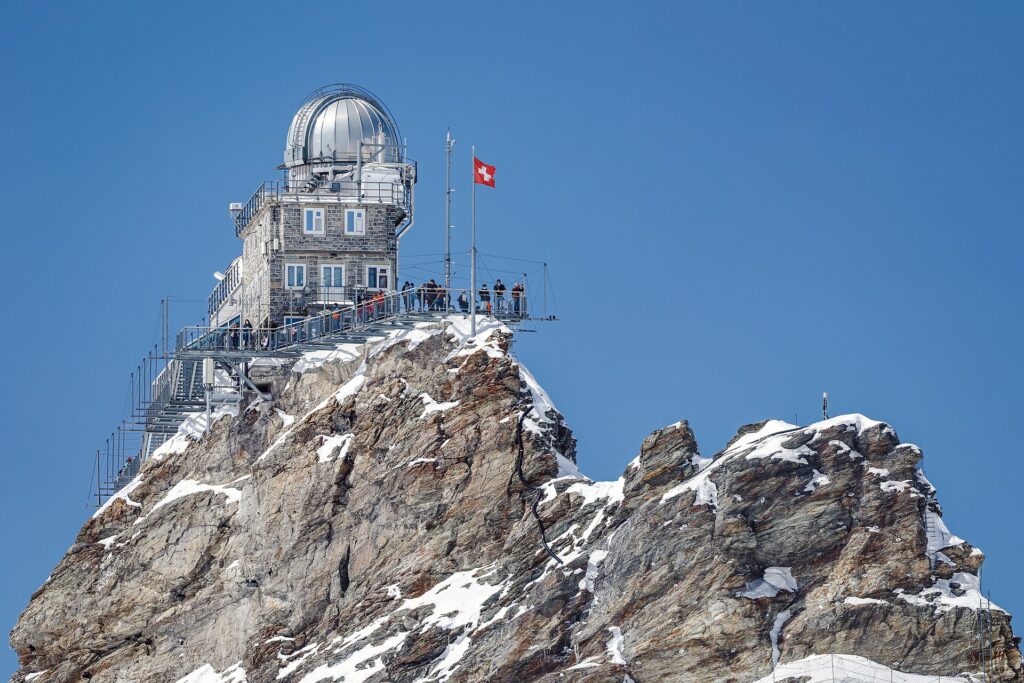
Short answer: Jungfraujoch is worth it on a clear day, if the price doesn’t wreck your budget. On a cloudy day it’s one of the most expensive disappointments in Switzerland. Standing at 3,454 metres, looking down the Aletsch Glacier with snow under your feet in July, is genuinely spectacular, and the train ride through the Eiger is part of the fun. But a full-fare return from Interlaken costs more than many people’s hotel night, so timing and discounts matter more here than almost anywhere else.
Disclosure: this article contains links to GetYourGuide. If you book through them, People & Media may earn a small commission at no extra cost to you.
Key takeaways
- Weather decides everything. Check the live webcams on jungfrau.ch the evening before, not the forecast for Interlaken.
- A standard adult return from Interlaken Ost was CHF 271.20 for a September 2026 date on the official price calculator, including the mandatory seat reservation.
- Discounts are big: Swiss Travel Pass, Half Fare Card, Eurail/Interrail and the Jungfrau Travel Pass all cut the price substantially.
- Seat reservations (CHF 10) are mandatory from 1 May to 31 October 2026.
- Plan a full day: about 1.5 hours each way from Interlaken via the Eiger Express, plus 2 to 3 hours at the top.
The verdict: when Jungfraujoch is worth the money
It’s worth it if:
- The summit webcams show blue sky or broken cloud on the day you go.
- You haven’t been high in the Alps before. A glacier landscape at this altitude, reachable without any climbing, is a rare thing.
- You have a Swiss Travel Pass, Half Fare Card or Jungfrau Travel Pass, which make the price far easier to swallow.
- You enjoy the journey itself: the cogwheel railway tunnelling through the Eiger and Mönch since 1912 is an engineering landmark.
It’s probably not worth it if:
- The top is in cloud. Inside the Ice Palace and the exhibitions you’ll be fine, but the views are the point, and the terrace can be a white wall.
- You’re paying full fare on a tight budget and have already seen big mountain panoramas elsewhere in Switzerland.
- You have heart or lung conditions that make altitude risky (see below).
What you actually do at the top
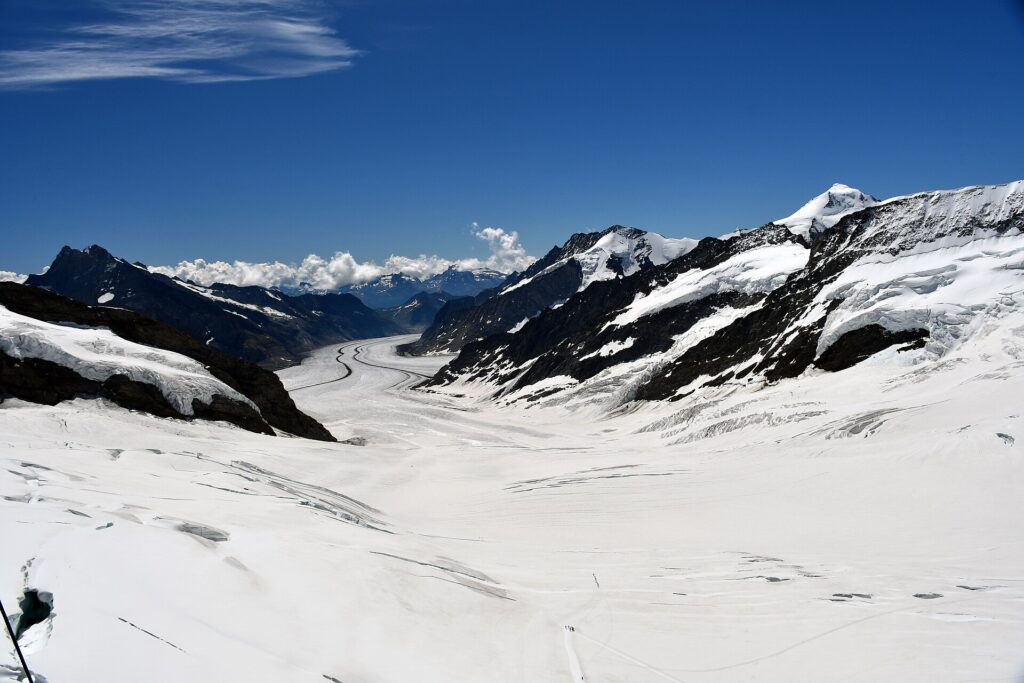
The Sphinx Terrace and the Aletsch Glacier
A fast lift takes you up inside the rock to the Sphinx observation terrace at 3,571 metres. On one side you look south along the Aletsch Glacier, the longest in the Alps at 22 km, framed by 4,000-metre peaks. On the other, on a clear day, the view stretches north over the Swiss Plateau as far as the Black Forest and the Vosges. This is the moment people remember; everything else is a bonus.
The Ice Palace and the Plateau
The Ice Palace is a set of tunnels carved into the glacier, with smooth ice floors and ice sculptures. Entry is free with your ticket. Outside, the Plateau lets you walk on snow and ice, which is guaranteed all year round. There’s also a Snow Fun Park where a zip line takes you out over the snow; check on the day whether it’s open.
Exhibitions, food and the highest Lindt shop
Alpine Sensation tells the story of the railway’s construction, and a 360° cinema shows the scenery you may or may not be getting outside. There are several restaurants, including a self-service restaurant, an à la carte restaurant and an Indian restaurant, plus the Lindt Swiss Chocolate Heaven shop. Prices at 3,454 metres are what you’d expect, so bring snacks and water.
The journey: half the experience
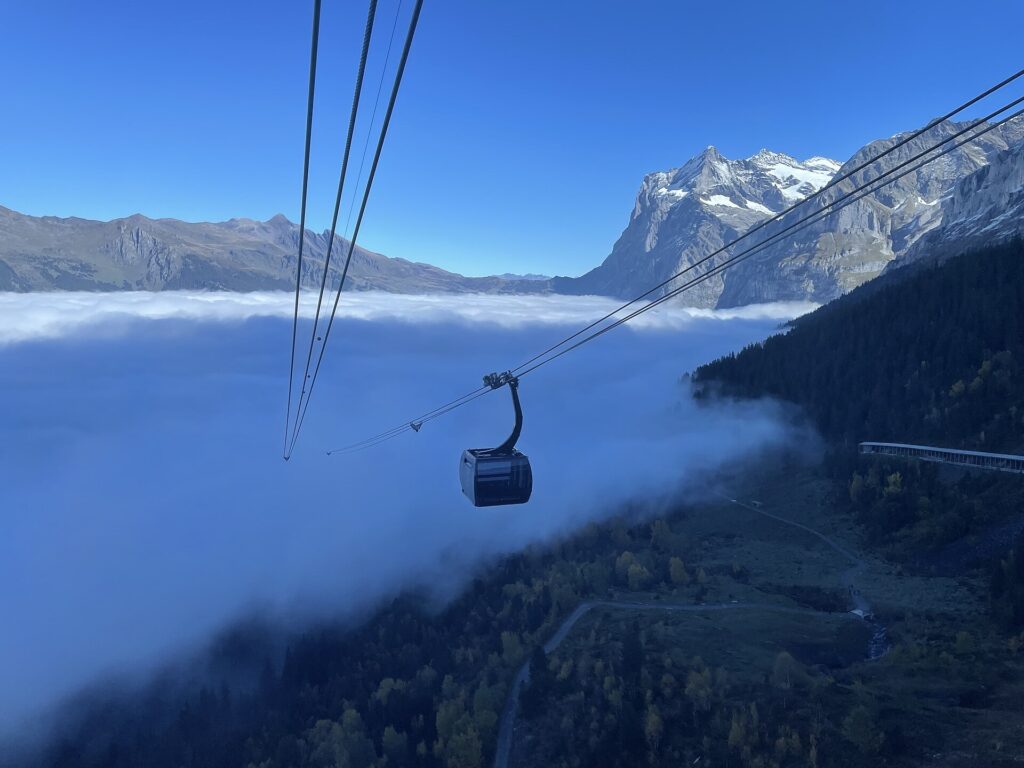
There are two main ways up from Interlaken Ost, and you can combine them to go up one way and come down the other.
- Via Grindelwald and the Eiger Express (fastest): Bernese Oberland Railway to Grindelwald Terminal, the Eiger Express tricable gondola to Eigergletscher (about 15 minutes, with close-up views of the Eiger North Face), then the Jungfrau Railway through the mountain. The official journey time from Interlaken Ost is about 1 hour 30 minutes. This is also the step-free route.
- Via Lauterbrunnen, Wengen and Kleine Scheidegg (classic): slower, but you pass the waterfalls of the Lauterbrunnen Valley and the car-free village of Wengen, and change trains at Kleine Scheidegg right below the Eiger.
On the Jungfrau Railway itself, the train stops for about five minutes at a station inside the mountain at around 3,160 metres, where windows look out onto the ice. A good plan is to go up quickly via the Eiger Express in the morning and come down slowly via Kleine Scheidegg and Wengen in the afternoon.
How much does Jungfraujoch cost?
Prices below come from the official price calculator on jungfrau.ch at the time of writing, for a second-class adult return from Interlaken Ost. The summer figures include the mandatory CHF 10 seat reservation.
| Discount card | Summer (sample date: September 2026) | Winter (sample date: November 2026) |
|---|---|---|
| No discount | CHF 271.20 | CHF 224.40 |
| Swiss Travel Pass | CHF 189.60 | CHF 151.20 |
| Eurail / Interrail | CHF 185.00 | CHF 147.40 |
| Half Fare Card | CHF 140.60 | CHF 112.20 |
| Jungfrau Travel Pass (supplement) | CHF 89.00 | CHF 63.00 |
Children up to 5 travel free. Children aged 6 to 15 pay CHF 20, or travel free with a Swiss Junior Card or Children’s Travelpass, but they also need the CHF 10 seat reservation from May to October. The multi-day Jungfrau Travel Pass started from CHF 165 and adds a reduced fare for the Jungfraujoch section, which is excellent value if you’re staying several days in the region. From May to October, a discounted Good Morning Ticket is available on the first connections of the day. Always check the calculator on jungfrau.ch for your exact date.
Is it good value? Not in absolute terms: it’s one of the most expensive excursions in Europe. With a Half Fare Card or Jungfrau Travel Pass, though, it becomes comparable to other big Swiss mountain trips, and far more memorable than most.
The weather rule (read this before booking)
Interlaken can be sunny while the summit sits in cloud, and the other way round. Use the live webcams on jungfrau.ch, not the town forecast.
- Keep your plan flexible. If you’re in the region for three or four days, pencil in Jungfraujoch for the day with the best outlook.
- Know the cancellation rule. Tickets bought in the official webshop can be cancelled free of charge until 23:59 on the day before they become valid. After that, no refund. So check the webcams and forecast the evening before and decide then.
- Go early. Mornings are often clearer, and cloud tends to build over the peaks in the afternoon, especially in summer.
Altitude and what to wear
At 3,454 metres the air is thin. Most healthy people just feel a bit breathless or light-headed, so walk slowly, drink plenty of water and go easy on alcohol. The Jungfrau Railways advise that people who have recently had a stroke, and those with serious heart or lung conditions that cause shortness of breath even with light exertion, should not travel this high. Check with your doctor if in doubt.
Even in midsummer it’s cold and windy at the top. Bring a warm layer, a hat, sunglasses and strong sunscreen; the glare off the glacier is intense even on hazy days. Wear shoes with grip for the Plateau.
Book a tour or go independently?
Jungfraujoch is easy to do on your own: buy the ticket and seat reservation on jungfrau.ch, and the trains run like clockwork. A tour makes sense if you’d like a guide to explain the region and the railway history, want everything pre-arranged, or are coming from further afield.
- Guided day trip from Interlaken to Jungfraujoch: a guide travels with you and handles the connections.
- Round trip to the Top of Europe by train: a ticket-style option if you just want the journey sorted.
How long do you need?
- Travel: about 1.5 hours each way from Interlaken Ost via the Eiger Express, longer via Kleine Scheidegg.
- At the top: the official site suggests around 15 minutes for each main highlight; realistically, allow 2 to 3 hours including a meal and photos.
- In total: 6 to 8 hours, especially if you return via Wengen and Lauterbrunnen.
Cheaper alternatives from Interlaken
- Harder Kulm: a 10-minute funicular from Interlaken with views of the Eiger, Mönch and Jungfrau and both lakes. Tickets started from CHF 22 on jungfrau.ch.
- Grindelwald-First: the Cliff Walk, adventure activities and an easy hike to the Bachalpsee lake. From CHF 38.
- Schynige Platte: a historic cogwheel railway, an alpine garden and big views of the three peaks. From CHF 34.
- Kleine Scheidegg: the mountain pass at the foot of the Eiger, with excellent hiking. You’ll see the famous trio up close without going to the top.
None of these puts you on a glacier at 3,500 metres, but on a cloudy day at altitude, any of them can be the better choice.
The bottom line
Jungfraujoch is expensive, busy in summer and entirely at the mercy of the weather, and still one of the great Alpine days out. Pick a clear day, use every discount you’re entitled to, go up early and come down the scenic way. If you’d rather have someone else sort the connections, compare Jungfraujoch day trips and tickets and keep an eye on the cancellation terms.
📍 Planning a trip? See our guide: Things to Do in Interlaken
More honest “is it worth it?” guides
Frequently asked questions
How much does it cost to go to Jungfraujoch from Interlaken?
For a September 2026 date, the official jungfrau.ch calculator showed CHF 271.20 for an adult return from Interlaken Ost without discounts, including the mandatory seat reservation. With a Half Fare Card it was CHF 140.60. Prices vary by season, so check your date.
Is Jungfraujoch worth it if it’s cloudy?
Usually not. The Ice Palace and exhibitions are indoors, but the main reason to go is the view of the Aletsch Glacier and the Alps. If the summit webcams show thick cloud, consider postponing.
Do I need a seat reservation for Jungfraujoch?
From 1 May to 31 October 2026, a CHF 10 seat reservation is mandatory, including for children. Outside that period it’s recommended on busy days.
Is the Swiss Travel Pass valid to Jungfraujoch?
Not fully. It covers travel to Grindelwald, Wengen and Mürren, and gives a discount on the mountain railway above. A Flex pass day must be validated for the discount to apply.
Jungfraujoch or Schilthorn: which is better?
Jungfraujoch gives you a glacier landscape and higher altitude; the Schilthorn offers a panoramic view of the Eiger, Mönch and Jungfrau from across the valley, run by a different operator. On a limited budget, Harder Kulm or Schynige Platte are cheaper ways to see the famous peaks.
Can you get altitude sickness at Jungfraujoch?
Mild symptoms such as headaches or breathlessness are possible at 3,454 metres. Move slowly and drink plenty of water. People with serious heart or lung conditions should seek medical advice first.
Featured image: Photo: NOTE: This image is a panorama of Jungfraujoch Sphinx-Observatory consisting of, CC BY-SA 4.0, via Wikimedia Commons
Responses