Napoleon Hill Net Worth: Estate, Foundation Royalties (2026)

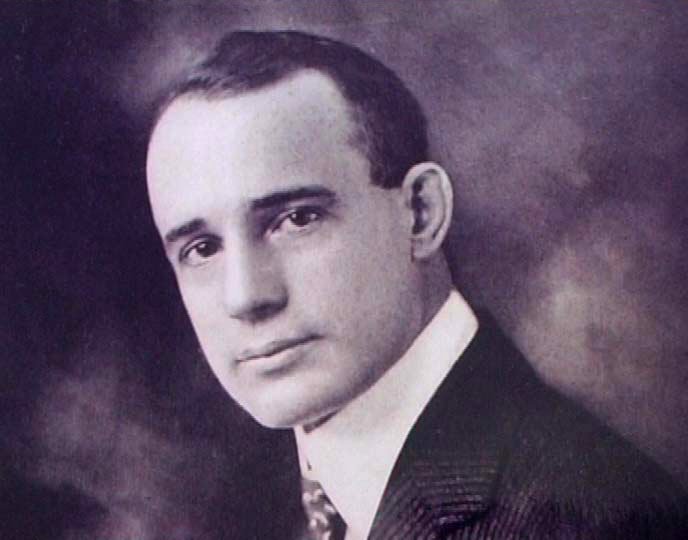
Key Takeaways
- Estate value at death (November 1970) is not publicly documented but is widely understood to have been modest — likely under $1M in 1970 dollars (roughly $7-10M in today’s dollars)
- Author of Think and Grow Rich (1937), one of the bestselling self-help books in history with estimated lifetime sales of 100+ million copies
- The Napoleon Hill Foundation continues to license his works and generates significant ongoing royalty income (estimated $5-10M annually)
- Foundational figure in modern self-help — direct intellectual ancestor to Tony Robbins, Bob Proctor, Earl Nightingale, and the entire prosperity-mindset genre
- Claimed to have spent 20+ years interviewing 500+ successful people including Andrew Carnegie, Henry Ford, and Thomas Edison (some details disputed by historians)
- Created the term “Mastermind” — adopted across the self-help and entrepreneurship industry as a standard format
Napoleon Hill — born Oliver Napoleon Hill on October 26, 1883, died November 8, 1970 — is the foundational figure of modern American success literature. His 1937 book Think and Grow Rich is one of the bestselling self-help titles in history, with cumulative sales estimated at 100+ million copies, and remains in print across nearly every language. Hill’s personal estate at death is not publicly documented but is widely understood to have been modest by today’s standards — plausibly under $1M in 1970 dollars (roughly $7-10M inflation-adjusted). Today, the bulk of the financial value associated with Hill’s name resides with the Napoleon Hill Foundation, which licenses his works globally and is estimated to generate $5-10M annually in royalty and licensing income.
Hill is one of the most-quoted authors in the modern self-help canon — more than 19 of his quotes are catalogued on this site alone, reflecting how thoroughly his vocabulary (mastermind, definite chief aim, burning desire, infinite intelligence) shaped the genre that authors like Earl Nightingale, Bob Proctor, Tony Robbins, and Wayne Dyer would later build upon.

Note: this article is independent editorial research. Napoleon Hill passed away in 1970. References to “net worth” describe his estate at the time of death and the ongoing licensing income generated by the Napoleon Hill Foundation. Several aspects of Hill’s biographical claims are disputed by historians — these are flagged in the article where relevant.

Estate value and ongoing income at a glance
| Metric | Estimate |
|---|---|
| Estate value at death (Nov 1970) | Likely under $1M in 1970 dollars (~$7-10M today) |
| Estimated annual Foundation royalty/licensing income | $5M – $10M |
| Career start (journalism) | 1898 (age 15) |
| Career start (success literature) | 1908 (commissioned by Andrew Carnegie, per Hill’s own account) |
| First major book | The Law of Success (1928) |
| Most famous work | Think and Grow Rich (1937) |
| Cumulative book sales | 100M+ copies (estimate) |
| Foundation | The Napoleon Hill Foundation (1962) |
Who was Napoleon Hill?
Oliver Napoleon Hill was born in 1883 in a small log cabin in Pound, Virginia. He had a difficult early life — his mother died when he was nine, and his stepmother is widely credited with channeling his energy into writing. He began working as a small-town newspaper reporter at age 15 to fund his way through law school, though he never completed his legal training.
According to Hill’s own often-repeated account, in 1908 he interviewed steel magnate Andrew Carnegie for a magazine article. Carnegie, allegedly impressed by Hill, supposedly commissioned him to study the principles of success by interviewing the most successful people in America over the next 20 years — without pay, with the promise that the resulting work could change the lives of millions. Whether this commission is fully accurate is disputed by historians (some have argued there is no contemporaneous documentation of the Carnegie meeting), but the framing became the central narrative of Hill’s career.
What is documented is that Hill spent decades writing, lecturing, and self-promoting. After several false starts and reportedly failed business ventures (including a magazine and a publishing house that went bankrupt during the Great Depression), Hill published Think and Grow Rich in 1937, the book that finally provided a sustained income and the cultural footprint that has lasted nearly a century.
Career timeline
| Year | Event |
|---|---|
| 1883 | Born October 26 in Pound, Virginia |
| 1898 | Begins working as a newspaper reporter at age 15 |
| 1908 | Per his own account, commissioned by Andrew Carnegie to study success principles |
| 1917–1918 | Reportedly serves on speechwriting staff for President Woodrow Wilson during WWI |
| 1928 | The Law of Success published — eight-volume work, first major commercial release |
| 1933–1936 | Reportedly serves as adviser to President Franklin D. Roosevelt during the early New Deal |
| 1937 | Think and Grow Rich published — becomes the foundational text of modern American self-help |
| 1948 | How to Sell Your Way Through Life |
| 1952 | Begins work with W. Clement Stone, who became Hill’s primary business partner; together they create PMA (Positive Mental Attitude) |
| 1960 | Success Through a Positive Mental Attitude (with W. Clement Stone) |
| 1962 | Establishes the Napoleon Hill Foundation |
| 1970 | Dies November 8 at age 87 in South Carolina |
| 1970–2026 | Foundation continues licensing the catalog; Think and Grow Rich remains in print globally |
How Napoleon Hill made his money during his lifetime
1. Books — the dominant lifetime revenue line
Hill published more than 30 books and pamphlets during his career. Think and Grow Rich alone is the financial cornerstone — published at the worst possible moment commercially (the late Great Depression) but slowly building word-of-mouth momentum that grew over decades. By the time of Hill’s death in 1970, the book had already sold tens of millions of copies. Cumulative sales since publication are commonly cited at 100 million or more.
Author royalties on Think and Grow Rich alone, even at the modest 1937–1970 royalty rates of ~10% of cover price, would have provided Hill with steady income for the second half of his life. By the 1960s the book was generating reliable five-figure annual royalty checks (significant money in the era), supplementing Hill’s other publishing and speaking income.
2. Lectures, courses, and the W. Clement Stone partnership
Hill was a relentless public speaker for decades. His most-financially-significant late-career partnership was with insurance entrepreneur W. Clement Stone (founder of Combined Insurance), who effectively underwrote Hill’s later publishing and lecturing activities and became co-author of Success Through a Positive Mental Attitude (1960). Stone’s resources allowed Hill to package his work into the structured PMA framework that influenced the entire postwar success-literature genre.
3. Failed ventures along the way
It would be misleading to characterize Hill’s lifetime income as steadily upward. By multiple historical accounts, Hill experienced several significant financial setbacks — including a publishing business that went bankrupt during the Depression and a magazine that failed. His personal finances were reportedly modest for much of his life until Think and Grow Rich finally paid off in the 1950s and 1960s.
4. The Napoleon Hill Foundation (1962–present)
Hill established the Napoleon Hill Foundation in 1962 with the explicit purpose of preserving and licensing his works after his death. Today the Foundation manages all of Hill’s intellectual property globally, licenses his catalog to publishers in dozens of countries, runs a certification program for “Napoleon Hill Certified Trainers,” and operates programs in collaboration with educational institutions. The Foundation’s annual revenue from licensing, royalties, and certification programs is plausibly in the $5-10M range — a financial footprint dramatically larger than Hill’s personal estate ever was during his lifetime.
Estate value breakdown (estimated, at death in 1970)
| Component | Estimated Value (1970 dollars) |
|---|---|
| Personal liquid assets, savings | $200K – $500K |
| Personal real estate | $100K – $300K |
| Intellectual property rights (subsequently transferred to Foundation) | Substantial future value, modest book value |
| Other assets, royalty receivables | $100K – $300K |
| Estate value (best estimate, 1970 dollars) | Likely under $1M |
| Inflation-adjusted equivalent (today’s dollars) | ~$7M – $10M |
Common misconceptions
“Napoleon Hill was a billionaire.” He was not. By all serious historical accounts, Hill’s personal lifetime wealth was modest — substantially below what some online aggregators report. The wealth ascribed to “Hill” in 2026 is largely the wealth controlled by the Napoleon Hill Foundation, not Hill personally.
“He personally interviewed Andrew Carnegie, Henry Ford, and 500 others.” Hill’s claim of a 20-year Carnegie commission to interview 500+ industrialists is the central narrative of Think and Grow Rich and his other major works. Some historians have raised serious doubts about the documentary basis for these claims — including whether Hill ever met Carnegie at all, and whether several of the named interviewees actually corresponded with him. The historical record is contested. Readers should approach the biographical narrative critically.
“Think and Grow Rich made Hill rich during his lifetime.” Sales of the book grew steadily for decades after publication, but the book launched in 1937 — the worst moment commercially possible. Significant lifetime royalty income did not begin to compound until the 1950s, by which point Hill was in his late 60s. The book made his estate and the Foundation wealthy; Hill himself lived modestly compared to the income the book ultimately generated.
“He was Roosevelt’s official adviser.” Hill claimed to have served as an adviser to FDR during the early New Deal. The extent of this role is disputed; some sources frame it as informal correspondence rather than a formal staff position.
Napoleon Hill compared to other foundational success-literature figures
| Person | Era | Estate / Estimated Net Worth | Signature Work |
|---|---|---|---|
| Napoleon Hill (d. 1970) | 1928–1970 | ~$7-10M (estate, inflation-adjusted) | Think and Grow Rich |
| Dale Carnegie (d. 1955) | 1936–1955 | Modest personal estate; large training-business franchise | How to Win Friends and Influence People |
| Norman Vincent Peale (d. 1993) | 1952–1993 | ~$15M (estate, estimate) | The Power of Positive Thinking |
| Earl Nightingale (d. 1989) | 1956–1989 | ~$30M (estate, Nightingale-Conant equity) | The Strangest Secret |
| Bob Proctor (d. 2022) | 1968–2022 | ~$20M (estate) | Proctor Gallagher Institute |
| Wayne Dyer (d. 2015) | 1976–2015 | ~$20M (estate at death) | Your Erroneous Zones |
| Tony Robbins (alive) | 1986–present | $600M – $700M | Seminars, books, portfolio |
Hill’s lifetime financial outcome looks small alongside today’s self-help operators. Two structural reasons explain this: (1) the modern speaker-and-coaching business model that Tony Robbins, Brendon Burchard, and others built simply did not exist in Hill’s era — there was no infrastructure for $5,000-per-ticket immersives, mastermind groups paying $85K/year, or branded supplement businesses; and (2) Hill operated in a publishing economy where royalty rates and effective tax rates were structurally less favorable to authors than today’s self-publishing-and-licensing models.
Frequently asked questions
What was Napoleon Hill’s net worth when he died?
Specific figures for Hill’s estate at death (November 1970) are not publicly documented, but the consensus among biographers is that his personal estate was modest by today’s standards — likely under $1 million in 1970 dollars, equivalent to roughly $7-10 million today after inflation. The much larger financial footprint associated with his name today belongs to the Napoleon Hill Foundation.
How many copies of Think and Grow Rich have been sold?
Cumulative lifetime sales of Think and Grow Rich are commonly estimated at 100 million copies or more, making it one of the bestselling non-fiction books of the 20th century. The book has been translated into nearly every major world language and has remained continuously in print since 1937.
Did Napoleon Hill really meet Andrew Carnegie?
Hill’s claim of a 1908 commission from Andrew Carnegie to study success principles is the foundational narrative of his career. Some historians have raised serious doubts about whether the meeting occurred as described or whether Hill received any formal Carnegie commission. Independent contemporaneous documentation has not been found. The historical record is contested.
Who wrote Think and Grow Rich with Napoleon Hill?
Hill is the sole credited author of Think and Grow Rich. His most prominent later collaborator was W. Clement Stone, with whom he co-authored Success Through a Positive Mental Attitude (1960).
What is the Napoleon Hill Foundation?
The Napoleon Hill Foundation is a nonprofit organization established by Hill in 1962 to preserve and license his works. It manages global rights to Hill’s catalog, runs a Certified Trainer program, and operates programs through educational institutions. Annual revenue from licensing, royalties, and certifications is estimated at $5-10M.
What is the “Mastermind” concept and did Hill invent it?
The “Mastermind” — a small group of trusted advisers who meet regularly to support each other’s success — is one of the central concepts in Think and Grow Rich. Hill is widely credited with coining the term in its modern self-help usage, although the underlying idea (peer counsel) long predates him. The format is now a standard offering across the self-help and entrepreneurship industry.
How did Napoleon Hill die?
Napoleon Hill died on November 8, 1970, in South Carolina at age 87. The cause of death was heart failure.
Was Napoleon Hill ever in legal trouble?
Several biographers have documented financial difficulties, failed businesses, and at least one alleged investment-related issue earlier in Hill’s career. The full extent of these incidents is debated. They are not part of the official Foundation narrative but are addressed in independent biographical work.
Is Think and Grow Rich still relevant in 2026?
The book continues to sell strongly nearly 90 years after publication. Modern readers often find the prose dated and the historical examples obscure, but the central themes — clarity of purpose, persistence, mastermind groups, autosuggestion — remain core to virtually every contemporary success-literature title.
What other Napoleon Hill books should I read?
Beyond Think and Grow Rich, the most-recommended Hill titles include The Law of Success (1928, the eight-volume original), How to Sell Your Way Through Life (1948), and Success Through a Positive Mental Attitude (1960, with W. Clement Stone). The Foundation has also released several posthumous compilations including Outwitting the Devil, originally written in 1938 but published in 2011.
Did Napoleon Hill have any children?
Hill had three sons. His youngest son, James Hill, became active in promoting his father’s work and was instrumental in establishing the Napoleon Hill Foundation’s licensing programs.
What was Hill’s connection to Tony Robbins, Earl Nightingale, and Bob Proctor?
None of these figures studied directly under Hill, but his work is the acknowledged intellectual foundation for all three. Earl Nightingale’s career-launching audio program The Strangest Secret (1956) opens by referencing Hill’s writing. Bob Proctor read Think and Grow Rich obsessively in his early career and built his entire teaching practice around expanding on Hill’s framework. Tony Robbins has cited Hill as one of the formative influences on his understanding of personal development.
Bottom line
Napoleon Hill is the rare self-help figure whose cultural and intellectual influence dwarfs his personal financial outcome. His lifetime estate was modest; his book sales over 90 years and the Foundation’s ongoing licensing income are anything but. The financial footprint associated with the Hill name in 2026 — concentrated almost entirely in the Napoleon Hill Foundation rather than in personal heirs’ wealth — is the more accurate measure of his enduring commercial impact.
Sources and references
- The Napoleon Hill Foundation — naphill.org
- Napoleon Hill, Think and Grow Rich (1937)
- Napoleon Hill, The Law of Success (1928)
- Wikipedia — Napoleon Hill
- Independent biographical work, including critical historical examination of the Carnegie commission claim
- Library of Congress — Hill manuscript holdings


Responses