Fabrice Grinda Net Worth 2026: OLX Founder & World’s #1 Angel Investor (FJ Labs)

Fabrice Grinda — French-American serial entrepreneur, co-founder of OLX (the global online classifieds business that scaled past 300 million monthly active users before being sold), and founding partner of FJ Labs (one of the most prolific angel investment firms in the world with more than 1,100 portfolio companies and 350+ exits) — has built one of the largest single-individual venture portfolios on the planet. Combining the proceeds from three CEO-led exits (Aucland, Zingy, and OLX), more than two decades of high-volume angel investing, and ongoing carry from FJ Labs funds, Fabrice Grinda’s net worth is estimated at $400 million to $900 million as of 2026.
Forbes ranked Grinda as the #1 angel investor in the world in 2026 and 2025, citing his portfolio breadth (early checks into Alibaba, Airbnb, Flexport, Delivery Hero, Coupang, Vinted, BlaBlaCar, Brightroll, Betterment, FanDuel, and many others) and his consistent realized returns. Grinda himself publishes detailed annual reports on FJ Labs’ performance, making him an unusually transparent figure in a notoriously opaque corner of finance.
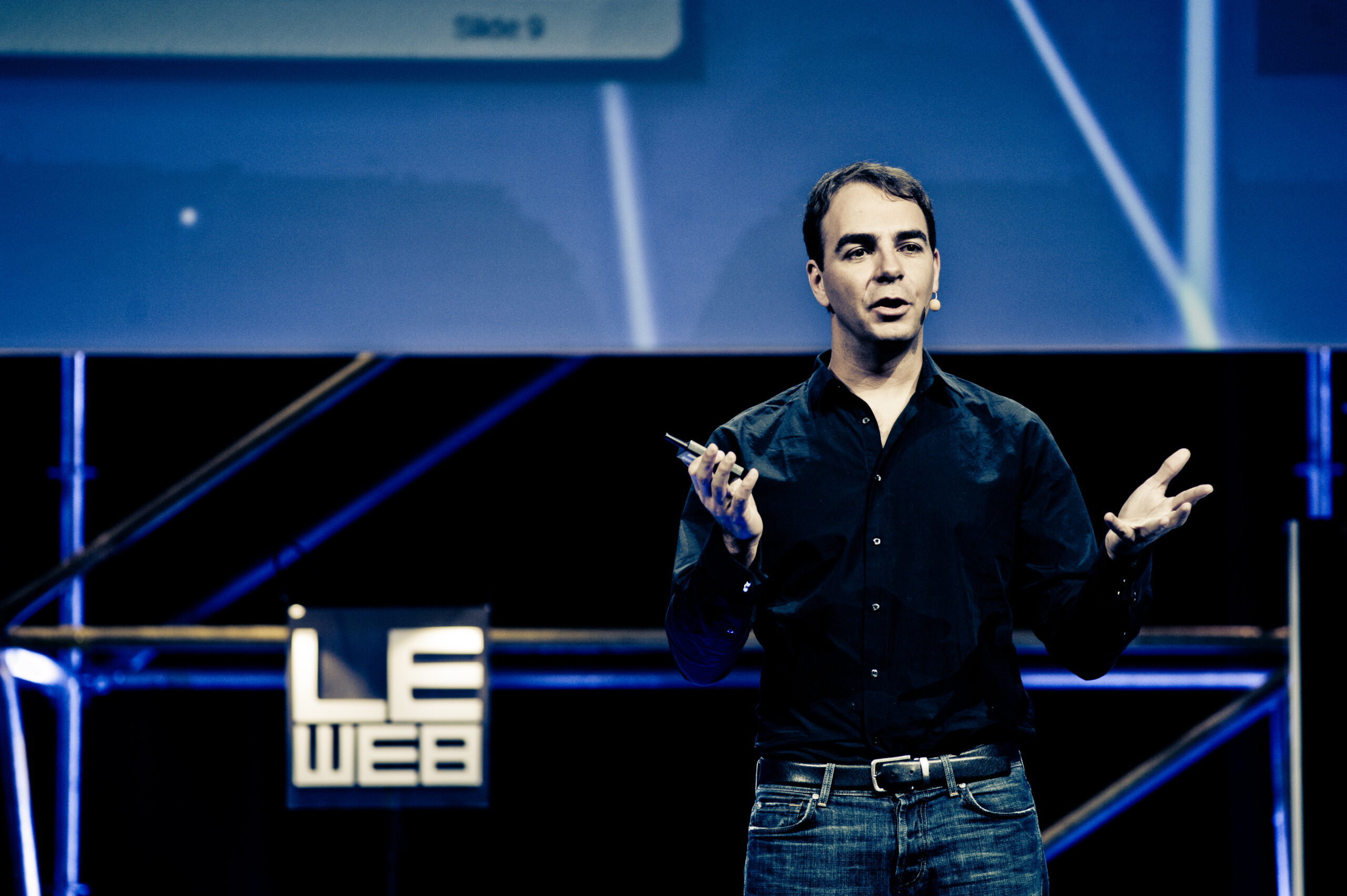
Net worth at a glance
| Metric | Estimate |
|---|---|
| Estimated net worth (2026) | $400M – $900M |
| Notable companies founded | Aucland (1998), Zingy (2001), OLX (2006), FJ Labs (2016) |
| Zingy sale price | ~$80M (2004, to Japanese conglomerate For-Side) |
| OLX peak valuation | $3B+ (acquired by Naspers across multiple tranches 2010-2018) |
| Total angel investments (lifetime) | 1,100+ |
| Total realized exits | 350+ |
| Forbes ranking | #1 Angel Investor (2024, 2025) |
| Education | Princeton University, Economics, Summa Cum Laude (1996) |
| Residence | New York City; Turks & Caicos; Revelstoke (BC, Canada) |
Note: this article is independent editorial research. We are not affiliated with Fabrice Grinda or FJ Labs. Net worth ranges are best-effort estimates derived from publicly disclosed exit values, FJ Labs annual reports, and reasonable assumptions about portfolio mark-to-market values; only Fabrice and his family know the exact figure.
How Fabrice Grinda built his net worth
Grinda is one of the rare figures in tech who has built wealth through three distinct mechanisms — operating, investing, and managing capital — and done all three at scale. Most entrepreneurs become investors after one big exit; Grinda built three companies, two of them to nine-figure outcomes, before pivoting to angel investing as his primary occupation. Then he scaled angel investing into a fund management business that itself generates carry. The arc has four major phases.
Phase 1: Aucland and the dot-com crash (1998–2000)
Born in Nice, France in 1974 and educated at Princeton (graduating Summa Cum Laude in Economics in 1996), Grinda spent his first few years out of college at McKinsey before launching Aucland in 1998 — a European eBay clone. The company grew rapidly during the dot-com boom and at one point was one of the largest online auction platforms in Europe. The 2000 crash and a difficult relationship with the controlling shareholder ended the venture without a meaningful exit for Grinda personally. He has called this his “tuition payment” to entrepreneurship.
Phase 2: Zingy (2001–2004)
Grinda’s second company, Zingy, was launched in New York in 2001 — almost exactly when the dot-com bust made raising venture capital nearly impossible. Zingy sold ringtones to mobile phone users in the United States, riding the brief but enormously profitable wave of polyphonic and downloadable ringtones in the pre-iPhone era. By 2004, Zingy was profitable and was generating tens of millions in annual revenue. Grinda sold the company that year to Japanese mobile content conglomerate For-Side for approximately $80 million, retaining a substantial founder’s stake.
The Zingy exit was Grinda’s first wealth-creation event. After taxes, lawyers, and shareholder distributions, his personal proceeds were in the range of $30M–$50M — enough to make him a wealthy man at age 30 and to fund the next venture without external capital pressure.
Phase 3: OLX (2006–2018)
Co-founded with Alec Oxenford in 2006, OLX (Online Exchange) was an online classifieds platform initially focused on emerging markets where Craigslist had no presence and eBay was poorly localized — Brazil, India, Pakistan, Argentina, Romania, Bulgaria, the Philippines, and dozens of others. The model was straightforward: free listings for buyers and sellers, monetized later through promoted listings, premium placements, and (in some markets) real estate and auto vertical fees.
OLX scaled rapidly. By 2010, it was operating in 90+ countries. Naspers, the South African media-and-internet conglomerate (now Prosus) that also held the famously profitable early stake in Tencent, began acquiring OLX in tranches starting in 2010. By 2018, Naspers had taken full ownership and OLX was a core component of its $20B+ classifieds portfolio (alongside Avito in Russia and other assets). Cumulative OLX-related transaction values across the multiple Naspers acquisitions are estimated at $3 billion or more, making it one of the largest internet exits ever for a non-US founder.
Grinda’s personal proceeds from the OLX exit have not been individually disclosed, but as co-founder and longtime CEO he is widely estimated to have received between $200M and $400M in realized after-tax cash from the various tranches. This is the largest single component of his current net worth.
Phase 4: FJ Labs (2016–present)
After stepping back from OLX operations in 2013 to focus on investing, Grinda formalized his angel activity into a fund structure with longtime business partner José Marín. FJ Labs (named for Fabrice and José) launched in 2016 as a venture firm focused on marketplaces — a thesis Grinda is uniquely positioned to evaluate given that he has built three of the largest marketplaces in the world himself.
FJ Labs’ published statistics are remarkable for any venture firm:
- 1,100+ active and historical portfolio companies (as of 2025)
- 350+ realized exits
- Investment cadence: 200-300 new investments per year, with first calls typically lasting under an hour and decisions made within a week
- Check sizes: historically $50K–$500K in seed and Series A rounds; selected pro-rata follow-ons in winners
- Notable historical hits: Alibaba (pre-IPO secondary), Airbnb (early), Flexport, Delivery Hero, Coupang, Vinted, BlaBlaCar, Betterment, FanDuel, Brightroll, Palantir (very early)
Grinda has published detailed FJ Labs performance reports on his blog. The fund reports IRRs in the high 20% to mid 40% range across various vintages — substantially above typical venture benchmarks. As a fund manager, Grinda earns both management fees (typically 2% on committed capital) and carry (typically 20% of profits above a hurdle rate). On a multi-billion-dollar portfolio with strong realized returns, the carry stream alone can be a nine-figure asset over the life of the funds.
Career timeline
| Year | Milestone |
|---|---|
| 1974 | Born in Nice, France |
| 1996 | Graduates Princeton University, BA Economics, Summa Cum Laude |
| 1996–1998 | Consultant at McKinsey & Company |
| 1998 | Founds Aucland (European online auction site) |
| 2000 | Aucland venture ends without a personal exit; dot-com crash |
| 2001 | Founds Zingy (mobile ringtones, New York) |
| 2004 | Sells Zingy to For-Side for ~$80M |
| 2006 | Co-founds OLX with Alec Oxenford |
| 2010 | Naspers begins acquiring stakes in OLX |
| 2013 | Steps back from OLX operations to focus on angel investing |
| 2016 | Co-founds FJ Labs with José Marín; first formal fund vintage |
| 2018 | Naspers completes full OLX acquisition; cumulative deal values exceed $3B |
| 2020s | FJ Labs scales to 200-300 new investments per year |
| 2024 | Forbes names Grinda the #1 Angel Investor in the world |
| 2025 | FJ Labs reports 1,100+ portfolio companies and 350+ exits |
Net worth estimate breakdown
Grinda’s wealth has multiple distinct sources, each large enough on its own to make him wealthy. Stacking them produces the $400M–$900M range.
Realized cash from operating exits
Zingy ($80M sale, 2004) and OLX ($3B+ cumulative Naspers transactions, 2010-2018) are the two anchor exits. Estimated personal after-tax proceeds across both: $230M–$450M. This capital has had 8-21 years to compound, depending on which tranche we’re considering.
FJ Labs portfolio value
The FJ Labs portfolio includes both Grinda and Marín’s personal capital and external LP capital. Grinda’s personal stake plus accumulated carry from realized exits is plausibly $150M–$350M as of 2026. The portfolio’s mark-to-market value depends heavily on how aggressively unrealized positions like Vinted, Flexport, and various private growth-stage marketplaces are valued, but multiple high-profile holdings have IPO’d or been acquired in recent years.
Real estate and personal assets
Grinda owns properties in Manhattan, Turks & Caicos (where he has built a significant primary residence), and Revelstoke, British Columbia (a ski-and-mountain property). Cumulative real estate equity is plausibly $30M–$80M.
Liquid investments and cash
After two-plus decades of high-net-worth wealth management, Grinda almost certainly maintains substantial diversified liquid investments outside the FJ Labs portfolio — public equities, fixed income, possibly private equity LP positions in other firms. A reasonable allocation is $50M–$150M in liquid non-FJ-Labs assets.
Adding the buckets and applying realistic discounts for portfolio illiquidity and concentration risk yields the $400M–$900M range. The wide spread reflects two genuine unknowns: (1) the current mark-to-market value of the unrealized FJ Labs portfolio, which is meaningfully sensitive to the late-stage venture environment, and (2) the precise after-tax proceeds Grinda received from the staggered Naspers OLX acquisitions, which were never disclosed individually.
The FJ Labs investment philosophy
Grinda has been unusually open about how FJ Labs evaluates investments, partly through long blog posts on his personal site and partly through podcast appearances. The framework is well-suited to high-volume angel investing:
- Marketplace specialization. FJ Labs concentrates roughly 70% of its investments in marketplaces (two-sided platforms connecting buyers and sellers). This is Grinda’s domain expertise from OLX, and the team has developed a structured framework for evaluating marketplace metrics — take rate, frequency, GMV growth, supply/demand balance, defensibility, and unit economics.
- One-hour decisions. Most pitches are evaluated in a single 60-minute call. Decisions to invest are typically made within a week. This is the opposite of the multi-month due diligence cycle that characterizes traditional VC.
- Volume over selection. By making 200-300 investments per year at moderate check sizes, FJ Labs accepts that most individual bets will fail or return cost, but the portfolio approach captures a power-law distribution where a handful of winners (Airbnb, Alibaba, Flexport, Delivery Hero, etc.) drive most of the returns.
- Founder-friendly terms. Grinda has explicitly positioned FJ Labs as a “founder-friendly” investor — accepting standard SAFE or convertible terms, taking minimal board seats, and following on selectively rather than aggressively pushing for ownership concentration. This is partly philosophical and partly pragmatic: with hundreds of portfolio companies, FJ Labs cannot meaningfully add value through governance and instead competes on speed and brand.
The model has produced reported IRRs above traditional venture benchmarks, but it requires a specific investor profile — high-net-worth founders who have already made their initial money and are now systematically deploying capital — that very few people in the world fit.
Common misconceptions
“He must be a billionaire from OLX”
Even at the upper bound of the OLX deal-value range and assuming favorable founder-stake economics, Grinda’s individual realized proceeds are very unlikely to have exceeded $400M after taxes and shareholder dilution. The OLX exit was extraordinary, but it was split among co-founders, employees, and investors. Combined with everything else, Grinda is firmly in the upper mid-nine-figure to low-ten-figure range — wealthy enough to be a Forbes-tracked figure but not yet a publicly confirmed billionaire.
“He just got lucky with Alibaba”
Grinda has been clear in interviews that the Alibaba investment was a small early position, not the kind of life-changing single bet that characterizes some other angel investors’ careers. The bigger compounding effects in his portfolio came from concentrated marketplace investments where he had genuine domain expertise (Vinted, Flexport, Delivery Hero, Coupang, BlaBlaCar) rather than from one-off lucky picks.
“FJ Labs is just a personal vehicle for his own money”
Initially, yes — the early FJ Labs vintages were primarily Grinda and Marín’s personal capital. But subsequent funds have included external LPs and institutional money, which is part of why the firm now operates with formal fund structures, GP economics, and published reporting. FJ Labs functions as a real fund management business, not just a family office.
“He lives in tax exile”
Grinda spends substantial time in Turks & Caicos (which has no income tax) and in his Revelstoke property, but he is also a New York City resident and tax-paying entity for much of the year. The Caribbean property is at least as much about lifestyle (kitesurfing, climate) as it is about tax optimization.
Comparison to similar entrepreneur-investors
| Investor | Estimated Net Worth | Profile |
|---|---|---|
| Fabrice Grinda | $400M – $900M | OLX founder, FJ Labs angel, marketplace specialist |
| Naval Ravikant | $400M – $1B | AngelList founder, prolific angel |
| Jason Calacanis | $200M – $400M | This Week in Startups host, prolific angel via syndicates |
| Ron Conway | $1B+ | SV Angel founder, Google/Facebook/Twitter early |
| Esther Dyson | $300M – $600M | Long-time angel; EDventure Holdings |
| Reid Hoffman | $3B+ | LinkedIn co-founder, Greylock partner |
Grinda sits comfortably within the upper tier of professional angel investors but below the small group of figures who combine angel investing with operating equity in extraordinarily large companies (Reid Hoffman with LinkedIn, Peter Thiel with Founders Fund and Palantir). His net worth most closely resembles Naval Ravikant’s — both built a primary operating company exit, then scaled an investing platform with personal brand attached.
Frequently asked questions
What is Fabrice Grinda’s net worth in 2026?
Combining his realized exits from Zingy and OLX with the estimated value of his FJ Labs portfolio and personal investments, Fabrice Grinda’s net worth is estimated at $400 million to $900 million as of 2026.
How much did Fabrice Grinda make from selling OLX?
The OLX cumulative deal value with Naspers exceeded $3 billion across multiple tranches between 2010 and 2018. Grinda’s individual after-tax proceeds have not been publicly disclosed but are widely estimated at $200M–$400M based on typical co-founder ownership economics at exit.
What is FJ Labs?
FJ Labs is the venture firm Grinda co-founded with José Marín in 2016. It specializes in marketplace investments and has invested in over 1,100 companies with more than 350 realized exits as of 2025. The firm is named after the founders’ first names: Fabrice and José.
How many startups has Fabrice Grinda invested in?
More than 1,100 companies across his angel-investing career, making him one of the most prolific angel investors in the world. Forbes named him the #1 angel investor globally in 2026 and 2025.
Was Fabrice Grinda an early investor in Alibaba?
Yes. He invested in Alibaba in the pre-IPO years, though the position was relatively small compared to his later investments. His broader portfolio has included Airbnb, Flexport, Delivery Hero, Coupang, Vinted, BlaBlaCar, Betterment, Brightroll, FanDuel, and Palantir.
Where does Fabrice Grinda live?
He splits his time between New York City, Turks & Caicos (where he has built a primary residence), and Revelstoke, British Columbia (a ski/mountain property). He is an active kitesurfer and skier and structures his time across the three locations seasonally.
What companies has Fabrice Grinda founded?
Aucland (1998, European online auction), Zingy (2001, mobile ringtones; sold for ~$80M in 2004), OLX (2006, online classifieds; sold to Naspers in tranches 2010-2018 for $3B+ cumulatively), and FJ Labs (2016, venture firm).
What is Fabrice Grinda’s investment thesis?
He focuses primarily on marketplaces — two-sided platforms connecting buyers and sellers — and applies a high-velocity, high-volume angel investing model with one-hour pitches, week-long decisions, founder-friendly terms, and 200-300 new investments per year. The framework is designed to capture the power-law distribution of venture returns through sheer portfolio breadth.
Is Fabrice Grinda a billionaire?
Not based on publicly disclosed information. He is firmly in the upper mid-nine-figure range and Forbes has not yet listed him on its World’s Billionaires ranking. Whether he crosses the threshold depends meaningfully on how the unrealized portion of the FJ Labs portfolio is marked.
Who is Fabrice Grinda’s business partner?
José Marín. The two have been business partners since the OLX era and co-founded FJ Labs together in 2016. Marín is the “J” in the firm’s name.
Sources & references
- Wikipedia — Fabrice Grinda
- Fabrice Grinda official website — About Me
- OpenVC — Fabrice Grinda: Built $3B+ OLX, $200M+ Zingy, and Angel Investor
- FJ Labs official site — fjlabs.com
- FundersClub — FJ Labs (Fabrice Grinda and José Marín)
- Forbes — Top Angel Investors lists, 2024 and 2025
- Naspers/Prosus annual reports — disclosures on OLX acquisitions (2010-2018)
- FJ Labs Annual Performance Reports — published on fabricegrinda.com
Last updated: April 2026. Net worth estimates are based on publicly disclosed exit values, FJ Labs portfolio statistics, and reasonable assumptions about portfolio mark-to-market values and personal asset holdings. Figures will be revised when new disclosures or exit events occur.
Responses