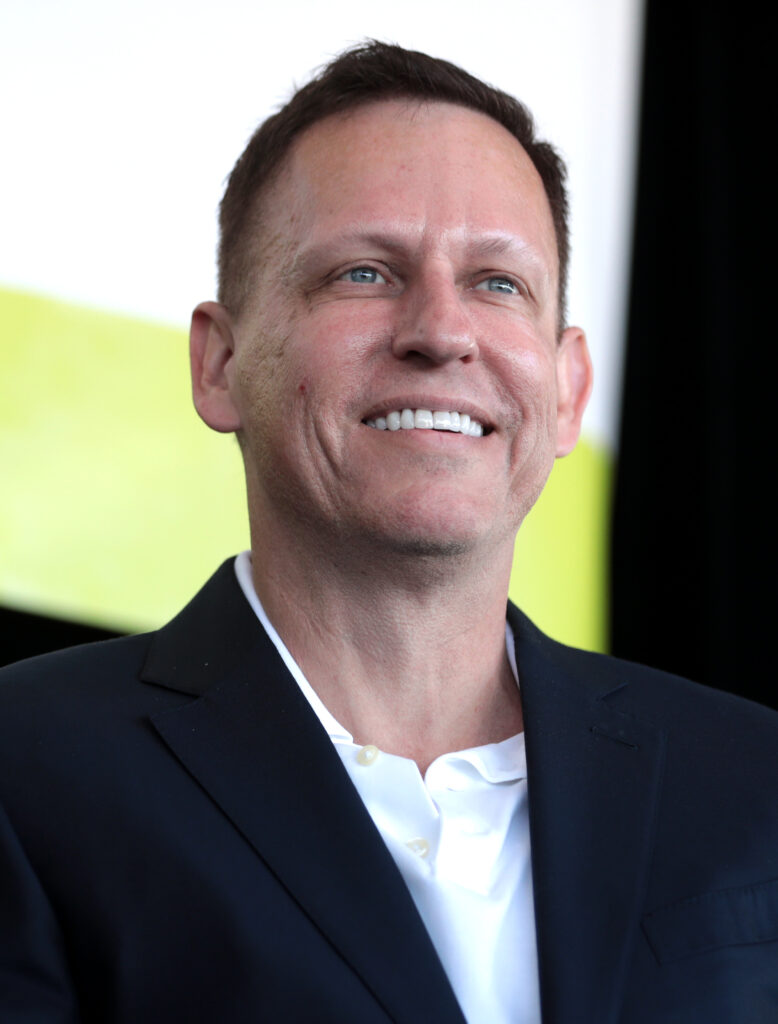
Peter Thiel Net Worth: How the PayPal and Palantir Co-Founder Built a 8 Billion Empire

Investing · PayPal · Palantir
Key Takeaways
- Estimated net worth of approximately $28.8 billion as of April 2026 according to Forbes’ Real-Time Billionaires List, anchored primarily by his Palantir Technologies equity, ongoing Founders Fund returns, and the cumulative Facebook early-investor position
- Co-founder of PayPal in 1998 (sold to eBay for approximately $1.5 billion in 2002), co-founder of Palantir Technologies in 2003 (NYSE-listed), and founder of Founders Fund (2005), the venture capital firm with substantial early-stage technology positions across SpaceX, Stripe, Airbnb, and dozens of other consequential companies
- Born 11 October 1967 in Frankfurt, West Germany; emigrated to the United States with his family at age one; earned a BA in Philosophy from Stanford University (1989) and a JD from Stanford Law School (1992) before transitioning into finance and entrepreneurship
- First outside investor in Facebook in August 2004 at $500,000 — a position that subsequently produced returns reportedly in excess of $1 billion when Thiel partially divested across the post-IPO period
- Author of The Diversity Myth (1995, with David O. Sacks) and Zero to One: Notes on Startups, or How to Build the Future (2014, with Blake Masters); founder of the Thiel Fellowship that pays young entrepreneurs $100,000 to skip or leave college

Who Is Peter Thiel?
Peter Thiel is one of the most economically and culturally consequential individual investors and entrepreneurs of the modern technology era. Through his co-founding of PayPal in 1998 (subsequently sold to eBay for approximately $1.5 billion in 2002), his co-founding of Palantir Technologies in 2003 (subsequently NYSE-listed and scaled into a multi-tens-of-billions-of-dollars-market-capitalization company), and his founding of Founders Fund in 2005 (the venture capital firm whose substantial early-stage technology positions include SpaceX, Stripe, Airbnb, Lyft, and dozens of other consequential companies), alongside his foundational early-investor position in Facebook (from August 2004), he has built one of the more substantively-built contemporary worked examples of how a single founder-and-investor can scale into a multi-decade empire across multiple consequential operating businesses and substantive venture capital work. His broader career — Frankfurt-born German-American immigrant turned Stanford philosophy and law graduate turned PayPal co-founder turned Palantir co-founder turned Founders Fund founder — has scaled into one of the most distinctive contemporary careers in the broader technology and venture capital category.
Born on 11 October 1967 in Frankfurt, West Germany, Thiel emigrated to the United States with his family at age one. He earned a BA in Philosophy from Stanford University in 1989 and a JD from Stanford Law School in 1992 before transitioning into finance and entrepreneurship. The combination of substantive German-immigrant family background, the disciplined Stanford academic foundation across both undergraduate and law school, and the early-career legal-and-finance work provided the foundational credentials that subsequently underpinned both the PayPal founding and the broader career.
What distinguishes Thiel is the combination of substantive multi-business operating credentials accumulated across PayPal, Palantir, and Founders Fund, distinctive long-form intellectual voice articulated through Zero to One and substantial public commentary across multiple platforms, and the operational discipline of building substantial operating businesses, venture capital work, and the substantive Thiel Fellowship alongside the underlying investing work. Most successful technology founders at his economic tier either remain pure operators or pivot into single-discipline investing roles. Thiel has consistently combined direct operating, substantive venture capital, substantial intellectual-and-political commentary, and the kind of substantive philanthropic work that few other contemporary technology founders have replicated at comparable depth.
Today, Thiel continues to lead Founders Fund, contribute to broader political-and-cultural commentary, and operate the Thiel Fellowship alongside the continued investing work. He has been transparent about both the operating mechanics of running multiple substantive businesses alongside substantial public commentary, while navigating substantial public scrutiny around his political donations and broader cultural positioning.
Career and Rise to Fame
Thiel’s professional career began with substantive legal work at Sullivan & Cromwell as a corporate attorney following his 1992 Stanford Law School graduation. The early-career legal work — which Thiel subsequently characterized as substantively dissatisfying — provided foundational legal credentials that subsequently informed his transition into finance and entrepreneurship.
The transition into finance work at Credit Suisse Group as a derivatives trader was the chapter that defined the next phase of Thiel’s career. The combination of substantive legal training and the early-career derivatives-trading work produced the foundational financial credentials that subsequently anchored both the Thiel Capital Management hedge fund and the broader entrepreneurship work.
The 1996 founding of Thiel Capital Management was the chapter that formalized Thiel’s transition into independent investment work. The hedge fund — which Thiel founded with $1 million in initial capital from friends and family — provided the foundational investing credentials that subsequently informed the broader Founders Fund and angel-investing operations.
The 1998 co-founding of Confinity (subsequently merged with Elon Musk’s X.com to become PayPal) alongside Max Levchin and Luke Nosek was the chapter that defined the rest of Thiel’s career as a substantive operator. PayPal — initially focused on payments-and-cryptography work — subsequently scaled rapidly across the late-1990s and early-2000s e-commerce era. The 2002 sale to eBay for approximately $1.5 billion produced substantial wealth-creation effects for Thiel as the founding CEO and substantial shareholder.
The 2003 co-founding of Palantir Technologies alongside Alex Karp, Joe Lonsdale, and adjacent co-founders was the chapter that defined the rest of Thiel’s career as a substantive operating-and-investing builder. Palantir — initially focused on counter-terrorism intelligence-and-analysis software — subsequently scaled across multiple operating cycles into a substantial NYSE-listed company with multi-tens-of-billions market capitalization. Thiel has remained chairman of Palantir alongside the broader Founders Fund work.
The August 2004 Facebook investment — at $500,000 for approximately 10.2% of the company — was the chapter that scaled Thiel’s broader cultural visibility substantially. As the first outside investor in Facebook, Thiel’s position subsequently appreciated to reportedly more than $1 billion across the post-IPO period. The Facebook position formalized Thiel’s reputation as one of the more economically successful individual angel investors in the modern technology category.
The 2005 founding of Founders Fund was the chapter that defined the rest of Thiel’s career as a substantive venture investor. The firm — which has scaled across multiple successive fund vintages into one of the most economically influential venture capital firms of the modern era — has produced returns from a portfolio that includes SpaceX, Stripe, Airbnb, Lyft, Spotify, Stemcentrx, and dozens of other consequential technology companies.
The 2010 launch of the Thiel Fellowship — which pays young entrepreneurs $100,000 to skip or leave college and pursue independent entrepreneurship work — represented Thiel’s substantive contribution to alternative-education entrepreneurship work. The fellowship has produced substantial successful outcomes including Vitalik Buterin (Ethereum co-founder), Austin Russell (Luminar Technologies founder), and dozens of other consequential entrepreneurs.
The 2014 publication of Zero to One: Notes on Startups, or How to Build the Future (co-written with Blake Masters) formalized Thiel’s transition into substantive author work. The book — based on his Stanford lectures and his cumulative entrepreneurship-and-investing experience — became one of the most-read contemporary entrepreneurship books and has subsequently sold millions of copies across multiple international editions.
The substantive political-and-cultural commentary across multiple platforms has been the more recent operational chapter of Thiel’s career. His substantial political donations and broader cultural positioning have produced both substantial cultural visibility and substantive public scrutiny across multiple political cycles.
How Peter Thiel Makes Money
Thiel’s wealth flows from five primary categories: Palantir Technologies equity (which represents a substantial portion of the underlying wealth profile), cumulative Founders Fund management economics and carried-interest distributions, the cumulative Facebook investment proceeds, the original PayPal sale proceeds and subsequent investment returns, and the broader Mithril Capital and adjacent investment positions.
Palantir Technologies equity: The largest single component of Thiel’s wealth derives from his Palantir Technologies equity position. As a co-founder and substantial early shareholder, Thiel holds substantial Palantir equity that has compounded substantially across the post-IPO period. With Palantir’s substantial NYSE market capitalization and continued growth, the underlying equity position represents the foundational asset base of Thiel’s substantial billionaire-tier wealth profile.
Founders Fund cumulative carried interest: The cumulative carried-interest distributions from Founders Fund vintages across more than two decades represent another substantial component of Thiel’s wealth. With portfolio investments in SpaceX, Stripe, Airbnb, Lyft, Spotify, Stemcentrx, and dozens of other consequential technology companies, the cumulative carried-interest position across multiple Founders Fund vintages produces substantial recurring returns.
Facebook investment proceeds: The August 2004 Facebook investment at $500,000 for approximately 10.2% of the company subsequently appreciated to reportedly more than $1 billion across the post-IPO period. While Thiel has substantially divested across the post-IPO period, any retained Meta positions and the cumulative reinvestment proceeds represent another meaningful component of the broader wealth profile.
PayPal sale proceeds: The 2002 sale of PayPal to eBay for approximately $1.5 billion produced substantial after-tax proceeds for Thiel as the founding CEO and substantial shareholder. The cumulative reinvestment of the PayPal proceeds across the broader investment portfolio has subsequently produced substantial compounding returns.
Mithril Capital and adjacent investments: Across the broader career, Thiel has built substantial investment positions across Mithril Capital (the growth-stage technology fund he co-founded), real estate, and adjacent asset classes. The cumulative diversification across multiple substantive investment positions represents another meaningful component of the broader wealth profile.
Peter Thiel’s Net Worth
Estimating Thiel’s net worth involves substantially less methodology disagreement than is typical for private investor profiles, because Forbes’ Real-Time Billionaires List provides a substantively-validated estimate based on the public Palantir equity position and adjacent visible assets. Forbes places Thiel’s net worth at approximately $28.8 billion as of April 2026, with Bloomberg’s Billionaires Index placing the figure at approximately $23.1 billion as of August 2025.
The variation across the broader range of net-worth estimates typically reflects different assumptions about Palantir’s market capitalization at the date of estimation, ongoing share grants and disposals, and the broader assumptions about Thiel’s adjacent investment positions. The substantial range of estimates from approximately $20 billion to $30 billion across recent reporting periods reflects Palantir’s substantial market-capitalization volatility across the broader market environment.
The lower end of credible recent estimates — around $20 billion — likely reflects a calculation that focuses primarily on Palantir equity at conservative market-capitalization assumptions, with relatively conservative valuations of the Founders Fund cumulative economics, Facebook proceeds, and adjacent investment positions.
Mid-range estimates — around $25 billion — reflect a more balanced calculation that incorporates Palantir equity at moderate market-capitalization assumptions, the cumulative Founders Fund carried-interest economics, Facebook proceeds, PayPal-derived investment returns, and adjacent investment positions. This level is consistent with what billionaire-tier technology founder-investor profiles at Thiel’s cumulative tenure typically retain.
The upper end — $28.8 billion or higher — reflects estimates that more aggressively incorporate Palantir equity at substantial market-capitalization assumptions during periods of strong Palantir share-price performance, the standalone enterprise value of Founders Fund, and any meaningful retained income from adjacent ventures. Forbes’ designation of Thiel at $28.8 billion validates the upper-end framing during the relevant market environment.
The honest answer is that Thiel’s net worth tracks reasonably tightly with Palantir’s market capitalization, with adjacent investment positions producing meaningful but secondary variation against the larger public-equity foundation. What can be said with confidence is that his career has produced one of the more substantive individual technology-founder-investor wealth positions in the modern history of venture capital, with cumulative wealth comfortably into the multi-tens-of-billions and a structural position that continues to compound across the ongoing Palantir and Founders Fund operations.
Investments and Business Philosophy
Thiel’s business philosophy is informed by his combination of substantive Stanford philosophy and law credentials, the disciplined PayPal operating experience, and the multi-decade venture capital work that has anchored the broader career across Founders Fund. He has emphasized publicly the importance of substantive monopoly-style business positions (articulated most fully in Zero to One), durable contrarian investing, and the long-horizon orientation required to compound a multi-business technology empire across multiple decades.
Inside Founders Fund, the philosophy emphasizes substantive contrarian positions on early-stage technology investments, durable founder relationships, and the kind of patient capital deployment that compounds across multiple market cycles. The combination of substantive operator credentials and the disciplined contrarian approach produces one of the more substantive contemporary worked examples of how technology founders can scale into substantial venture capital operations.
The deeper professional philosophy is the case for combining authentic technology-founder credentials with substantive venture capital work and the kind of substantive author-and-cultural-commentary work that produces both economic-and-cultural outcomes. Thiel’s career — Frankfurt-born German-American immigrant turned Stanford philosophy and law graduate turned PayPal co-founder turned Palantir co-founder turned Founders Fund founder — represents one of the cleaner contemporary worked examples of how patient credentials-and-multi-business building scales into substantial cultural-and-economic position.
Lifestyle and Spending
Thiel’s lifestyle, by his own description and substantial public reporting, has been deliberately substantive relative to investors at his cumulative-wealth tier. He has substantial real estate (including substantial properties across California, New Zealand, and adjacent locations), the broader family commitments through his marriage to Matt Danzeisen, and the substantive philanthropic work he has supported across multiple categories.
Where he spends meaningfully is on substantial real estate, on substantive philanthropic disbursements (including the Thiel Fellowship, longevity research, and adjacent causes), on substantial political donations across multiple election cycles, and on the kinds of long-horizon experiences he has explicitly identified as producing satisfaction. The implicit operating philosophy is consistent with the rest of the work: optimize for what compounds across the long arc of substantive investing-and-philanthropic work, deploy capital deliberately into experiences and operating positions that reinforce the underlying career position.
His public commentary on lifestyle has been deliberately measured. The pattern across his content is consistent with someone who treats wealth as a long-term family-and-philanthropy compounding game alongside the substantive political-and-cultural commentary that has anchored his more recent public position.
What Can We Learn from Peter Thiel?
- Build operating businesses adjacent to investing. The combination of PayPal, Palantir, Founders Fund, the Facebook investment, and the Thiel Fellowship represents substantive worked example of how individual operators can build substantial operating-and-investing portfolios alongside their underlying entrepreneurship work.
- Substantive contrarian investing compounds. Thiel’s substantial early-stage Facebook investment at $500,000 in August 2004 represents substantive worked example of how contrarian early-stage investing produces substantial returns when conviction is correct. Most angel investors fail to take comparable contrarian positions; Thiel’s worked example provides one of the more substantive contemporary cases.
- Articulate substantive frameworks. The 2014 publication of Zero to One formalized the broader monopoly-style business framework that anchors Thiel’s investing philosophy. Articulating substantive frameworks compounds cumulative cultural impact in ways that purely tactical investing typically cannot match.
- Long-tenure operating compounds. Thiel’s continued chairmanship of Palantir alongside the more-than-two-decade Founders Fund tenure represents substantive worked example of how long-tenure operating produces durable returns.
- Build alternative-education programs. The 2010 launch of the Thiel Fellowship — paying young entrepreneurs $100,000 to skip or leave college — represents substantive worked example of how individual operators can build substantive alternative-education programs alongside their commercial work.
- Substantive immigrant background compounds. Thiel’s career arc — from Frankfurt-born German-American immigrant family to substantive multi-business operator and substantial billionaire investor — represents substantive worked example of how patient immigrant-entrepreneurship compounds across multiple decades.
Frequently Asked Questions
What is Peter Thiel’s estimated net worth?
Peter Thiel’s net worth is estimated at approximately $28.8 billion as of April 2026 according to Forbes’ Real-Time Billionaires List, anchored primarily by his Palantir Technologies equity, ongoing Founders Fund returns, and the cumulative Facebook early-investor position. Bloomberg’s Billionaires Index placed the figure at approximately $23.1 billion as of August 2025.
What companies has Peter Thiel founded?
Peter Thiel co-founded PayPal in 1998 (sold to eBay for approximately $1.5 billion in 2002), co-founded Palantir Technologies in 2003 (subsequently NYSE-listed), and founded Founders Fund in 2005 (the venture capital firm with substantial early-stage technology positions across SpaceX, Stripe, Airbnb, and dozens of other consequential companies). He also co-founded Mithril Capital and Thiel Capital Management.
What is Founders Fund?
Founders Fund is the venture capital firm Peter Thiel founded in 2005. The firm — which has scaled across multiple successive fund vintages into one of the most economically influential venture capital firms of the modern era — has produced returns from a portfolio that includes SpaceX, Stripe, Airbnb, Lyft, Spotify, Stemcentrx, and dozens of other consequential technology companies.
How much did Peter Thiel make from Facebook?
Peter Thiel was the first outside investor in Facebook in August 2004 at $500,000 for approximately 10.2% of the company. The position subsequently appreciated to reportedly more than $1 billion across the post-IPO period as Thiel partially divested. The Facebook investment is one of the most economically successful individual angel-investments in the modern technology category.
Where is Peter Thiel from?
Peter Thiel was born on 11 October 1967 in Frankfurt, West Germany. He emigrated to the United States with his family at age one. He earned a BA in Philosophy from Stanford University in 1989 and a JD from Stanford Law School in 1992 before transitioning into finance and entrepreneurship.
The Impact of Multi-Business Technology Empires
The argument that contemporary technology entrepreneurship benefits from substantive multi-business operating-and-investing portfolios — combined with substantive author work and substantial public-cultural commentary — has been advanced by relatively few founders at Thiel’s level of consistency and operational depth. The cumulative effect of his work, across PayPal, Palantir, Founders Fund, the Thiel Fellowship, Zero to One, and the broader political-and-cultural commentary, has been to redefine what serious multi-business technology empire-building can produce both economically and culturally at multi-tens-of-billions-of-dollars scale.
The downstream effect on the broader technology and venture capital industry is visible. The number of substantial technology founders who have explicitly built parallel venture capital operations alongside their underlying operating businesses has continued to grow across recent years, and many of the most operationally serious contemporary technology founders cite Thiel’s career as part of their early thinking about the relationship between substantive operator credentials, contrarian investing, and durable multi-business empire construction.
What makes the impact durable is that the underlying economics of multi-business technology empires continue to favor founders who can sustain disciplined leadership across multiple operating businesses simultaneously. As technology markets continue to evolve and as the underlying competitive dynamics in venture capital and operating businesses continue to favor substantive contrarian work, the relative position of multi-business technology founders tends to compound rather than decay. Thiel’s career — Frankfurt-born German-American immigrant turned Stanford philosophy and law graduate turned PayPal co-founder turned Palantir co-founder turned Founders Fund founder — is one of the cleaner contemporary worked examples of how patient credentials-and-multi-business building scales into category-defining position.
Responses