The U.S. Is Shifting Focus: Is Europe and NATO Next?


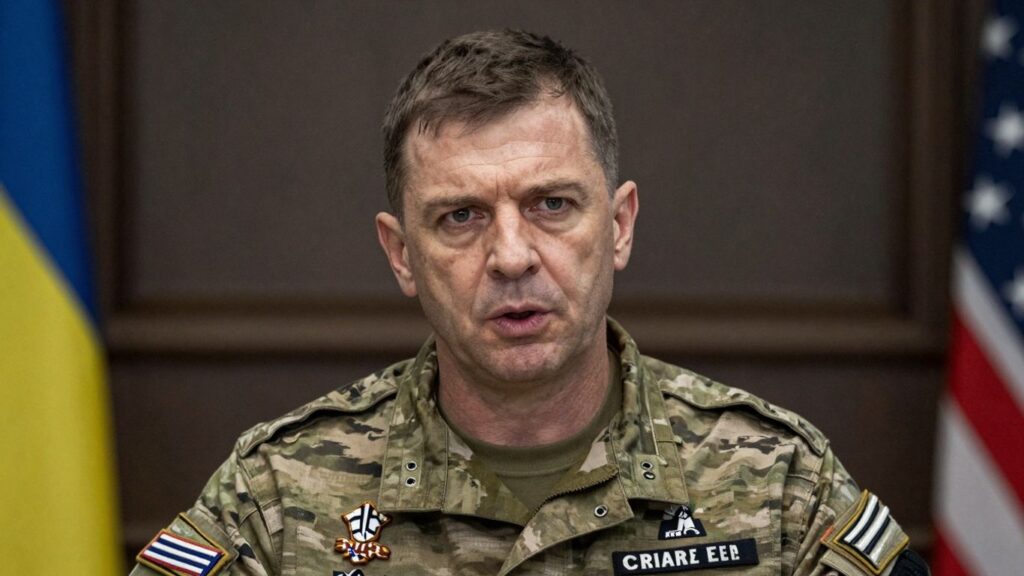
Douglas Macgregor, a retired Colonel and former advisor to the Secretary of Defense, suggests that a new National Security Strategy signals a significant pivot for the U.S. away from its long-standing commitments in Ukraine, Europe, and NATO. This shift comes as the conflict in Ukraine appears to be reaching a critical, and perhaps final, stage.
Key Takeaways
- The U.S. National Security Strategy indicates a move away from perpetual involvement in Europe.
- NATO and the European Union are facing significant internal challenges and potential decline.
- The war in Ukraine is described as nearing a tragic and predictable end, with significant Ukrainian losses.
- The U.S. is facing severe financial constraints, making continued large-scale foreign commitments unsustainable.
- There’s a perceived lack of a coherent U.S. strategy, with a focus shifting towards the Western Hemisphere.
The Endgame in Ukraine
The situation in Ukraine is described as reaching its endgame, with questions lingering about whether it will conclude through diplomacy or on the battlefield. Reports suggest that diplomatic efforts, including a potential peace agreement, have been hindered by certain European leaders. On the ground, the situation for Ukrainian forces is dire, with reports of poorly trained and inadequately equipped soldiers being sent into combat, and some attempting to evade service. The Russian forces, meanwhile, are reportedly operating with relative ease in certain areas, taking advantage of infrastructure issues.
Europe's Crumbling Alliances
Beyond Ukraine, Macgregor argues that NATO and the European Union are also at a critical juncture. Governments in major European capitals are reportedly facing low approval ratings, indicating a potential loss of public confidence. The idea of a unified Europe acting as a cohesive bloc is questioned, with suggestions that internal divisions make collective action difficult. The current approach, he implies, is unsustainable and may lead to new security arrangements on the continent where Russia will inevitably play a role.
A New U.S. National Security Stance
The recently released National Security Strategy is highlighted as a key indicator of this shift. Macgregor interprets it not as a detailed strategy, but as a series of assertions, the most significant being the U.S.’s intention to withdraw its forces from Europe eventually. This comes despite the financial pressures on the U.S., where Congress might be inclined to increase defense spending for various reasons, including donor interests and constituent jobs. The financial reality is stark: the U.S. is described as "financially ruined" and "broke," with a staggering amount of money printed in a short period, signaling deep economic trouble.
The Lost Opportunity for Peace
Macgregor points to a missed opportunity in 2022, when an agreement was reportedly reached in Turkey but subsequently rejected. He criticizes the prevailing narrative in the West that Russia was on the verge of collapse and that its leadership was universally opposed. This, he suggests, led to a prolonged conflict and significant casualties, particularly on the Ukrainian side. The current situation is characterized as a "funk" or "twilight zone" where reality is about to hit hard.
A Strategy or Just Preferences?
The National Security document is critiqued for lacking a coherent strategy. While it mentions a focus on the Western Hemisphere, the specifics are vague. The document also suggests a move away from preparing for war with China and a desire to avoid conflict with Russia. However, Macgregor argues this is merely an expression of preferences, not a strategic plan. The absence of a clear framework for disengaging from Ukraine or for Europeanizing NATO is noted. The financial implications of maintaining global military commitments are also largely ignored.
Europe's Role and Future
There’s a growing sentiment that Europe needs to take more responsibility for its own security. The idea that the U.S. has been propping up NATO for its own interests is discussed, with the suggestion that European leaders have become overly reliant on American leadership. The potential for Europe to develop its own security arrangements, with Russia playing a part, is considered. The current European leadership is criticized for being out of touch with their populations and for prioritizing the Ukraine conflict over domestic issues.
The Financial Reckoning
A significant concern raised is the U.S.’s financial situation, driven by decades of printing fiat currency. This has led to a reliance on subsidies and a potential collapse of the financial system, possibly leading to a situation similar to the Weimar Republic. The discussion touches on the future of currency, including digital currencies and Bitcoin, as potential alternatives. The core problem, Macgregor states, is that the U.S. can no longer afford its global commitments, regardless of how many military assets it possesses.
The End of NATO?
Macgregor firmly believes that NATO is disintegrating. He argues that the alliance missed opportunities to adapt after the Cold War and that the Ukraine conflict, while intended to revitalize NATO, may have hastened its demise. The lack of willingness among European nations to commit their own forces to a direct confrontation with Russia is highlighted. The U.S. presence in Europe, he contends, prevents Europeans from making their own strategic decisions and reaching their own conclusions about their security needs. The financial burden of maintaining forces abroad is also a key factor, with domestic military presence being more cost-effective.
A Shift Towards Independence
The sentiment is that it’s time for Europe to stand on its own and for the U.S. to step back. The idea of a European general leading NATO was apparently dismissed by Washington in the past, as U.S. military leadership preferred to maintain control. Now, however, the financial realities and the changing geopolitical landscape suggest that a withdrawal is inevitable. The conflict in Ukraine is predicted to end not with a decisive victory, but with a whimper, much like the U.S. withdrawal from Vietnam. Russia is expected to advance, potentially taking key cities, while waiting for political changes in Europe and the U.S. to facilitate an end to the conflict.

Responses