Trump’s Peace Plan: A Bold Move to Reshape European Security

![[Trump] and Europe handshake graphic, European security.](https://www.peopleandmedia.com/wp-content/uploads/2025/12/b6ce45e0thumbnail-1024x576.jpeg)
A new 28-point peace plan, reportedly backed by Donald Trump, is making waves, aiming to end the conflict in Ukraine and potentially reshape the security landscape of Europe. While details are still emerging and some aspects are open to interpretation, the plan is seen by some as a much-needed starting point for diplomacy.
Key Takeaways
- The plan’s timing is influenced by Europe’s financial struggles and recent corruption scandals involving Ukrainian leadership.
- It aims to sideline European leaders and establish a new security architecture.
- The plan includes provisions for reconstruction, potentially involving significant American business interests.
- While some see it as a capitulation, others view it as a comprehensive roadmap for peace.
A New Diplomatic Path Emerges
The emergence of this 28-point peace plan signals a potential shift towards diplomacy, especially given the current military situation. While some find the plan’s ambiguity concerning, others argue that such flexibility is necessary to bridge vastly different positions and create a departure point for negotiations. The timing of this initiative seems deliberate, driven by more than just military considerations on the ground.
European Disarray and Financial Strain
One significant factor behind the plan’s timing appears to be the disarray within Europe. Many European nations are facing financial difficulties and may not have the means to continue providing substantial assistance to Ukraine in the coming year. This comes at a time when the European Council is set to discuss further aid, with some members previously blocking proposals like confiscating Russian assets to fund loans to Ukraine.
Corruption Scandals and Political Uncertainty
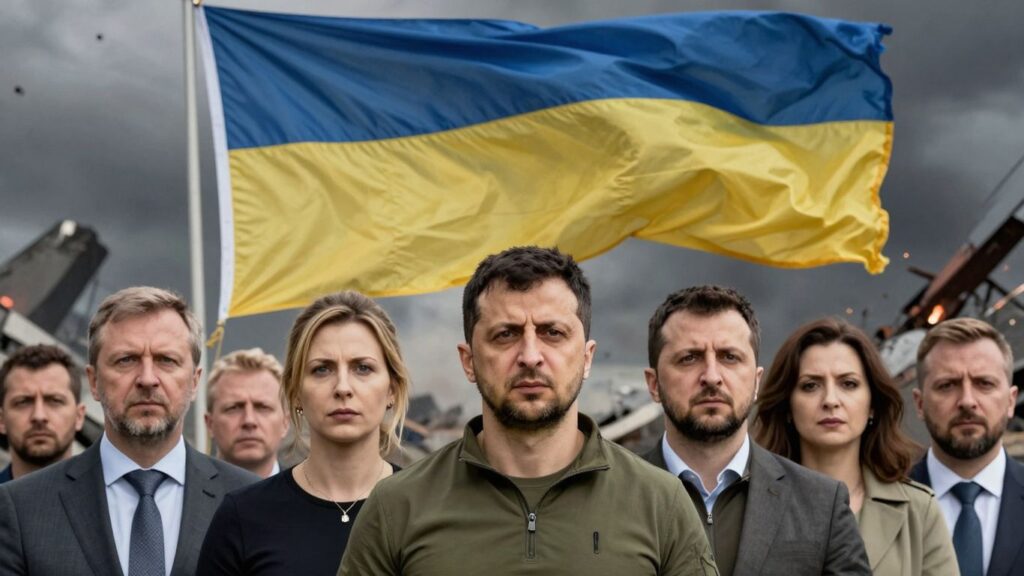
Adding to the pressure, recent revelations of corruption within President Zelenskyy’s inner circle, and potentially involving Zelenskyy himself, have significantly impacted his public support within Ukraine. This has cast a shadow over his tenure and further complicated the situation, making the timing of a new peace proposal particularly impactful.
Trump’s Strategy: Neutralizing European Leaders
This peace plan is seen by some analysts as a strategic move by Donald Trump’s team to neutralize European leaders and establish a new security framework for Europe. The plan’s acceptance by Ukraine, despite initial reluctance, is viewed as a critical step that effectively takes Europe out of the picture and sidelines domestic critics. The focus shifts to a US-led reconstruction effort, potentially benefiting American businesses.
Reconstruction and American Business Interests
A notable aspect of the plan involves the United States taking a leading role in overseeing the reinvestment of funds for Ukraine’s reconstruction. This includes potentially using frozen assets and encouraging European investment. The involvement of American corporations in this process is seen as a significant leverage point for Trump against his domestic critics, as it promises substantial contract work.
European Opposition and a New Security Architecture
While some European leaders have voiced strong opposition, labeling the plan as a capitulation by Ukraine, others argue this view focuses too narrowly on territorial provisions. The plan is presented as a broader strategy for reordering security across Europe, including non-aggression pacts between Russia, Europe, and the United States, and de-escalation talks between NATO and Russia. The opposition from some European leaders is seen by some as a defense of their own political power rather than the interests of the European continent.
The Path Forward: A New Era for Europe?
The plan’s rapid timeline, with a deadline set around Thanksgiving, suggests a push for swift action. The inclusion of elements like the New START treaty and the potential reintegration of Russia into the G8 indicates a move towards resolving long-standing US-Russia issues and re-establishing a dialogue. While some remain skeptical, viewing it as a ploy to restore US dominance, others see it as a genuine attempt to address the underlying causes of the conflict and create a more stable, multipolar world. The potential for regime change in Western Europe, driven by the plan’s success, is also a significant consideration.
Addressing Underlying Causes
For Russia, a key concern has been the post-Cold War security architecture that has, in their view, excluded them. This plan, by acknowledging Russian security concerns and potentially halting NATO expansion, is seen by some as a recognition of this flaw and a step towards fixing it. The emphasis on addressing the "underlying causes" of the war suggests a more hopeful outlook than simply freezing front lines or repeating past agreements like Minsk.

Responses