2025: The Year India Faces a Geostrategic Reckoning

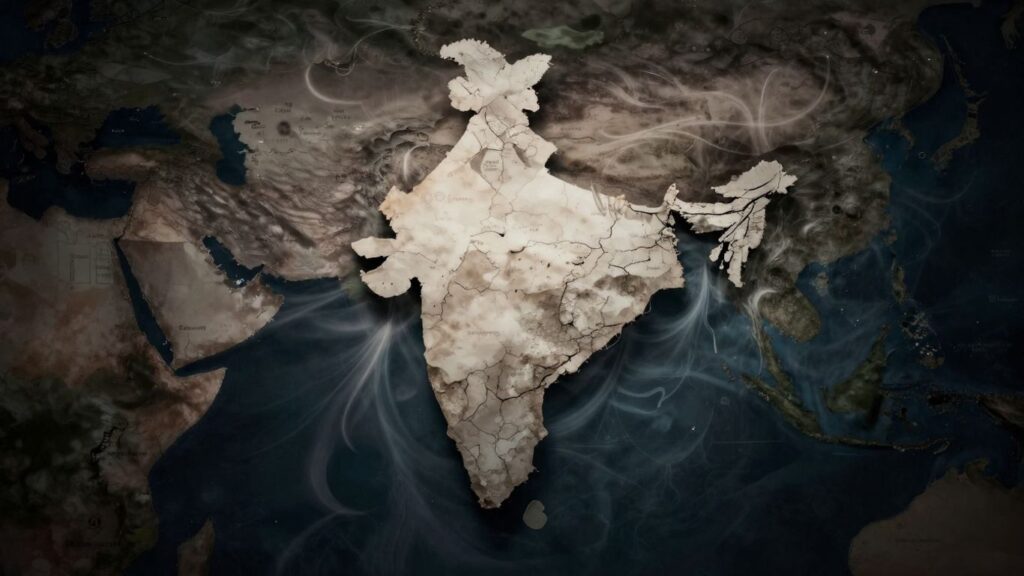
The year 2025 has been a significant turning point in international affairs, marked by a shifting global power dynamic. While much attention has focused on the US’s adaptation to a multipolar world, the EU’s policies, the ongoing conflict in Ukraine, and Russia’s pivot eastward, the rise of China, and its pursuit of self-sufficiency, one major power has been less discussed: India. This year has put India under immense pressure to define its path in this new global landscape, forcing it to confront its alliances and its place in a post-Western world.
Key Takeaways
- US Policy Shifts: Donald Trump’s return to the US presidency significantly altered India’s strategic calculus, moving away from the previous administration’s focus on containing China.
- Geopolitical Pressures: India faced direct US actions like trade tariffs and accusations of supporting Russia, alongside concerns about US interference in neighboring countries.
- India’s Strategic Dilemma: The country is caught between aligning with the US, attempting to balance powers, or charting an independent course, potentially through BRICS and the Global South.
- Economic Realities: Despite geopolitical tensions, India’s economic performance has remained relatively stable, though it faces internal challenges and the need to develop its own value-added industries.
- BRICS and Global South Potential: India has an opportunity to lead in reshaping global governance and economics by strengthening ties within BRICS and with other Global South nations.
The Trump Effect: A Shock to India's System
At the start of 2025, India anticipated a continuation of its role as a key player in US policy aimed at countering China. They saw themselves as a fulcrum, balancing relationships with various powers, including a growing trade partnership with China. However, Donald Trump’s inauguration changed everything. Relations soured as the US initiated actions that deeply unsettled India.
One major concern was the perceived US interference in India’s general election, which some believed prevented Prime Minister Modi’s party from securing an outright majority. This was followed by "color revolutions" in Bangladesh and Nepal, where India felt US entities, like the National Endowment for Democracy, were actively involved. The sight of organized protests with uniform materials and funding raised suspicions of US fingerprints all over these events.
Adding to the tension, the US imposed a 50% trade tariff on India, citing concerns over India’s purchase of Russian oil. This move, coupled with critical statements from US administration officials blaming India for the Ukraine war and funding Russia, created a crisis of confidence. India recalled that under the Biden administration, they were encouraged to continue buying Russian oil to prevent sharp price hikes. Now, under Trump, the rules had changed dramatically.
The situation was further complicated by a short war between India and Pakistan. Trump’s claim to have personally settled the conflict and prevented a nuclear catastrophe did not sit well with Modi’s image as a strongman leader whose nation’s affairs were entirely independent. This perceived external interference deeply bothered India, which felt shocked and unsure of the US’s intentions.
India's Awkward Balancing Act
India found itself in an uncomfortable position. After placing significant reliance on the US, they now had to re-evaluate their strategy. While Modi made overtures to Russia and met with leaders from China and Russia, signaling India’s options, a complete break from the US was not immediate.
India faced three main paths: continue to align with the US and accept its policies, attempt to balance between the US and China, or chart an independent course, possibly by leading the Global South through BRICS. Each path had its own set of risks and rewards.
Economically, the news wasn’t entirely dire. Despite US demands, such as opening up dairy and agriculture sectors – which would be political suicide for Modi given the millions of farmers – India managed to maintain some stability. The US’s economic demands were often seen as politically untenable for India, threatening the livelihoods of its citizens and potentially leading to a change in government.
The BRICS Alternative and Global South Aspirations
Donald Trump’s apparent dislike for BRICS and his imposition of tariffs on countries like Brazil and South Africa highlighted his strategy of weakening such blocs. His rhetoric, suggesting that South America belonged to the US and that other nations should not interfere, signaled a return to an older, more assertive US foreign policy.
From China’s perspective, India’s predicament presented an opportunity. While India had been cautious within BRICS, often avoiding direct confrontation with the US in joint statements and hesitant on alternative currencies, a shift in US policy could push India towards a more assertive stance. The treatment of South Africa and Brazil by the US could foster a consensus within BRICS to push back against Washington.
India’s internal challenges, such as the power disparity with China and lingering border disputes, remain significant. However, the current geopolitical climate offers a chance for India to assert itself. The US’s pressure for loyalty could inadvertently push countries like India, which do not want to be anti-American but also resist hegemonic control, towards multipolar solutions.
Navigating the China-India Relationship
The relationship between India and China is complex. While India seeks to work with China within BRICS, it also has its own concerns about China’s growing power. India has historically been hesitant to challenge the US directly within BRICS, often opting for a more moderate approach.
However, the treatment India has received from the US could push it to reconsider its stance. China, meanwhile, is adopting a wait-and-see approach, continuing trade relations and direct flights, while also signaling that India needs to make a choice. Despite some irritants, such as border disputes and trade imbalances, there’s a recognition that a stronger BRICS, with India’s active participation, could present a significant counterweight to US influence.
India’s economic potential is vast, with a young population and a growing number of STEM graduates. However, it faces internal hurdles, including infrastructure issues and a need to move beyond being a supplier of raw materials to developing its own value-added products. The country also grapples with internal issues like crony capitalism and the influence of dominant family conglomerates, which can hinder its progress.
The Path Forward for India
As 2025 unfolds, India stands at a crossroads. The year has been a wake-up call, highlighting the volatility of international relations and the need for a clear, independent strategy. India’s decision on how to navigate this new multipolar world will have significant implications not only for its own future but for the global order as a whole. The opportunity to lead the Global South and reshape global governance is present, but it requires bold choices and a willingness to forge new alliances.


Responses