A Complete Guide to Creating a Stunning Vase With Flowers

Creating a beautiful arrangement is an art, but it's one that starts with a simple, thoughtful partnership: the vase and the flowers. The real secret to a stunning display isn’t some complex technique—it’s about making the right choices for your vessel and blooms before a single stem gets trimmed. This groundwork is what turns a few flowers in a jar into a genuine focal point.
Choosing the Right Vase and Flowers
The journey to a captivating floral design begins long before you start snipping stems. It’s all about pairing the right container with the perfect blooms, letting each element amplify the other. Your vase is never just a container; it's the architectural base that sets the mood, dictates the structure, and shapes the entire feel of your creation.
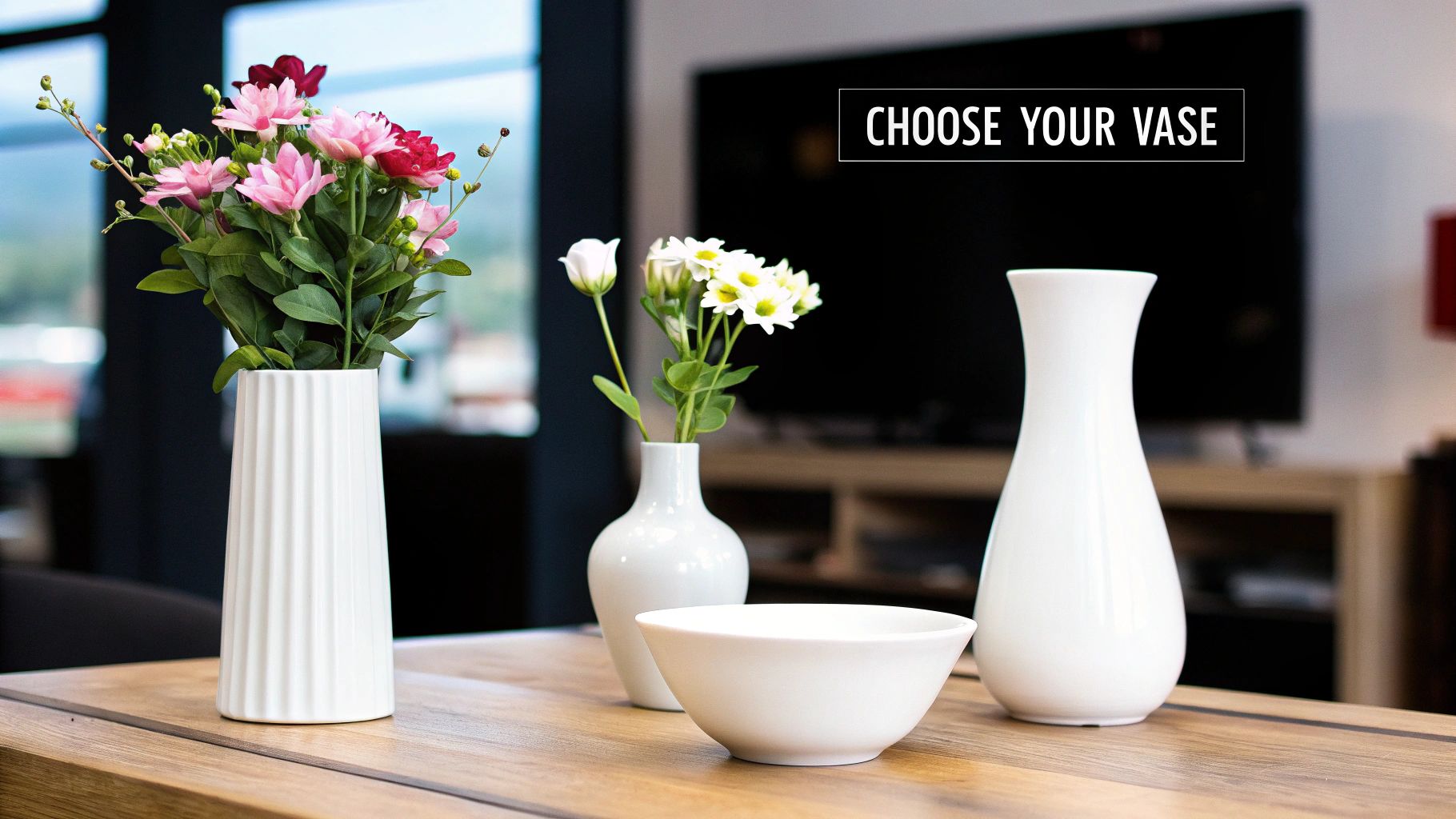
Think about how different vase shapes completely change the final look. A tall, slender cylinder vase is a natural fit for long-stemmed flowers like irises or gladioli, creating an elegant, vertical statement. On the flip side, a low, wide bowl encourages a more organic, sprawling arrangement—perfect for delicate blossoms like ranunculus or sweet peas. The shape truly dictates the flow.
Matching Vases to Your Decor
The material and colour of your vase are just as crucial as its shape. A clear glass vase offers a clean, modern aesthetic that puts the focus squarely on the stems and water, celebrating the flowers in their entirety. Ceramic or porcelain vases, however, bring their own texture and personality to the table. Their opaque nature hides the stems, allowing the blooms to command all the attention.
For a cohesive look, take a cue from your existing home decor.
- For minimalist spaces: A simple, sculptural vase in a neutral tone like white, grey, or black can make a powerful, understated impact.
- For rustic or bohemian interiors: Look for textured materials. Terracotta, stoneware, or even a woven basket with a liner can add warmth and character.
- For classic or traditional homes: An ornate ceramic piece or a cut-crystal vase can introduce a touch of timeless elegance.
The goal is to choose a vase that feels like a natural extension of your home's style. It should complement the room, not compete with it. For a little extra inspiration, you can explore some fresh ideas for vases that can really elevate your space.
This quick visual guide sums up the key elements—shape, material, and flower choice—that form the foundation of any great arrangement.
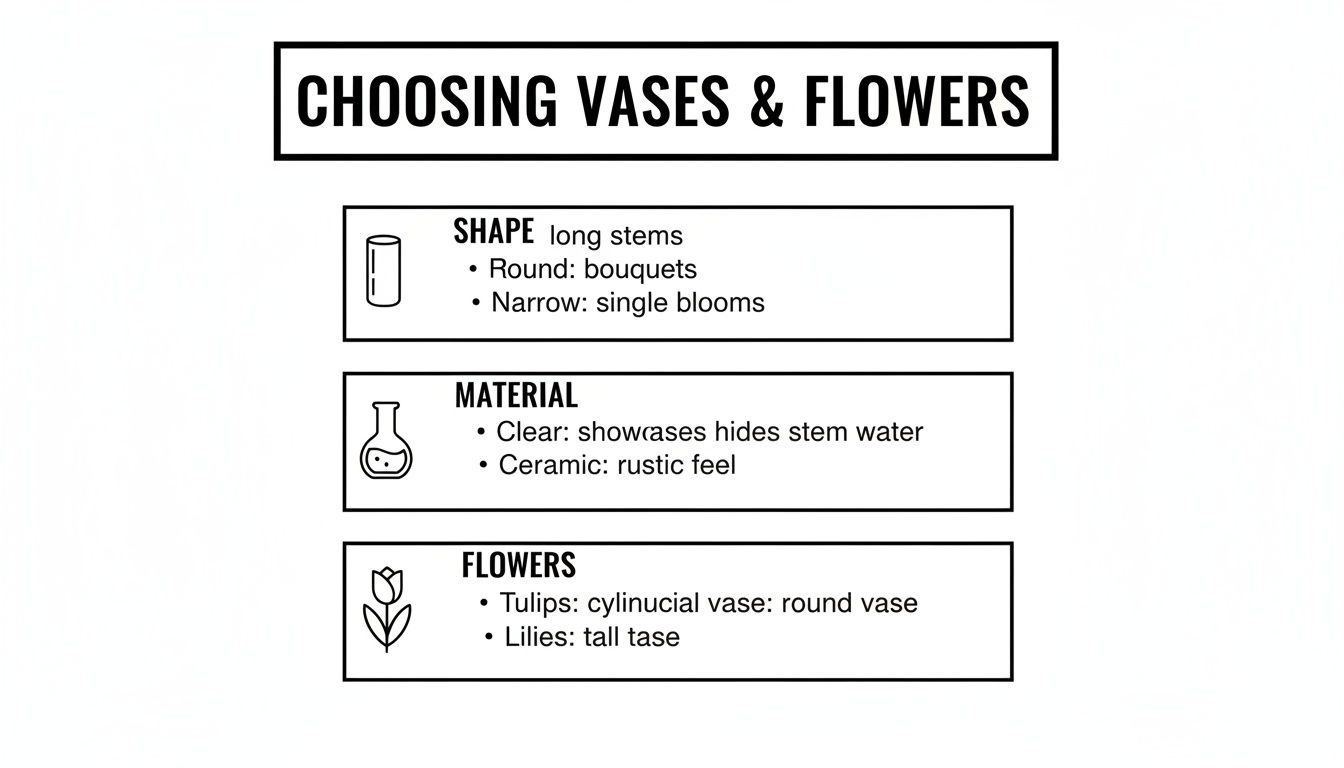
It really reinforces how the interplay between these three components is what brings a floral design to life.
Selecting the Perfect Blooms
Once you have a vase in mind, it’s time to turn your attention to the flowers. Think beyond just colour and consider texture, shape, and what’s in season. Combining different textures—like the velvety petals of a rose with the fuzzy spikes of celosia or the delicate fronds of a fern—creates a rich depth that’s impossible to ignore.
Seasonality also plays a massive role in what’s available and looking its best. Spring offers up cheerful tulips and daffodils, summer brings lush peonies and zinnias, while autumn is perfect for dramatic dahlias and chrysanthemums. Working with the seasons ensures your arrangement is fresh, more affordable, and beautifully in sync with the time of year.
The global flower market, with the Dutch floriculture industry at its heart, gives us an incredible array of choices. The Netherlands is essentially Europe's floral engine, where a vase with flowers represents true leadership in cut-flower innovation. The country dominates with 44% of the European cut flower market, producing over 4.5 billion stems each year. And with 80% of its farms being green-certified, this commitment to sustainability often means longer vase life for us—a huge plus for anyone who loves fresh flowers at home.
Vase Shape and Flower Pairing Guide
To make the pairing process even easier, here’s a quick-reference table. It’s designed to help you match common vase shapes with the flowers that suit them best, ensuring a balanced and beautiful result every time.
| Vase Shape | Best For | Arrangement Style Tip |
|---|---|---|
| Cylinder | Long-stemmed flowers like lilies, gladioli, sunflowers | Creates a strong vertical line. Keep it simple and let the height of the stems shine. |
| Bud Vase | A single stem or a few delicate sprigs (e.g., ranunculus) | Perfect for showcasing one unique, beautiful bloom. Ideal for a minimalist look. |
| Round or Bowl | Soft, voluminous flowers like peonies, hydrangeas, roses | Encourages a lush, rounded shape. Group flowers tightly for a dense, cloud-like effect. |
| Bottle-Neck | Top-heavy flowers or branches like cherry blossoms, delphiniums | The narrow neck provides excellent support for just a few statement stems. |
| Fluted or Trumpet | A full, mixed bouquet of varying stem lengths and sizes | The flared top allows the arrangement to open up and cascade naturally. |
This guide is a great starting point, but don't be afraid to experiment! The best arrangements often come from a bit of creative play.
Preparing Blooms for a Long and Vibrant Life
What's the difference between an arrangement that looks stunning for a week and one that wilts in a couple of days? It all comes down to what you do the moment those flowers cross your threshold. Think of this initial prep as your secret weapon for a long-lasting display, giving every stem the best possible start.
It's easy to forget that many of the flowers in our homes have travelled incredible distances. Their journey is a modern marvel of logistics, especially from global hubs like the Netherlands. Every day, vibrant Dutch auctions set worldwide trends, part of a floriculture market valued at an estimated USD 4.92 billion in 2025.
That figure is projected to hit USD 6.48 billion by 2031, powered by innovations that keep popular flowers like roses—which command a huge 30.65% market share—fresher for longer. This dedication to longevity starts in high-tech greenhouses and, believe it or not, ends right in your kitchen. You can dive deeper into the impressive Dutch floriculture market on mordorintelligence.com.
This is where commercial science meets home care, and your role becomes absolutely vital.
The First Crucial Cut
When your flowers arrive, they’re thirsty. The ends of the stems have probably dried out and sealed up during their trip, which stops them from drinking properly. The single most important thing you can do right away is give them a fresh cut.
Always use a sharp, clean knife or proper floral snips. Dull scissors will just crush the stem’s delicate vascular system, making it even harder for water to get through. Trim at least an inch off the bottom of each stem, making sure to cut at a sharp 45-degree angle.
This angled cut is a classic floral trick for a very practical reason: it massively increases the surface area for the stem to absorb water. A flat cut can sit flush against the bottom of the vase and essentially block itself off.
As soon as you’ve cut them, get those stems into a clean vase filled with lukewarm water. Flowers can absorb warmer water much more easily than cold, which helps them rehydrate much faster after their journey.
Groom Your Stems for Success
Next, take a moment to groom the stems before arranging them. You'll want to strip off any leaves that will end up below the waterline in your vase. This isn't just about looks; it's a critical step for keeping your flowers healthy.
- Prevent Bacteria: Leaves sitting in water start to decay almost immediately, turning the vase into a breeding ground for bacteria. This murky water will clog the stems and dramatically shorten the life of your entire arrangement.
- Improve Hydration: By removing extra foliage, you’re helping the plant direct all its energy and water straight to the bloom itself, instead of wasting resources on leaves that are just going to rot anyway.
This simple cleanup keeps the water fresh and sends nutrients where they’re needed most. If you enjoy seeing things grow right from the start, you might like our guide on alternatives to traditional gardening supply stores for growing your own.
The Power of Flower Food
Don't toss that little sachet of flower food that comes with your bouquet! It’s not a gimmick; it’s a scientifically formulated meal designed to keep your flowers thriving. It generally contains a trio of key ingredients that work together.
- Sugar (Carbohydrates): This is the energy source. Since the flowers are no longer attached to the plant, they need this food to survive.
- Acidifier: This lowers the water’s pH, which makes it easier for the stems to drink up both water and nutrients.
- Biocide (Bleach): This is the most important part. It kills off bacteria and other nasties in the water, keeping it clean and the stems clear.
No packet? No problem. You can whip up a simple DIY version. A go-to recipe is one litre of water mixed with one teaspoon of sugar, one teaspoon of household bleach, and two teaspoons of lemon or lime juice. This homemade mix mimics the effects of the commercial stuff, giving your flowers the nourishment and protection they need to stay beautiful.
Mastering the Art of Floral Composition
This is where all your practical prep work blossoms into pure creative expression. Arranging flowers is a beautiful dance between structured technique and your own personal flair.
While a wild, hand-picked bouquet has an undeniable charm, learning a few core design principles can take your arrangements from simply pretty to truly captivating. Think of these not as rigid rules, but as friendly guides to help you build a composition that feels balanced, dynamic, and intentional.
The best part? You absolutely don’t need formal training. Many of the most stunning arrangements you see online are made by home gardeners and enthusiasts who just love bringing a piece of nature indoors. It’s all about finding your own rhythm and discovering what pleases your eye.
The Thriller, Filler, and Spiller Framework
One of the easiest and most effective ways to think about building a balanced arrangement is the "thriller, filler, and spiller" method. This simple trio helps you assign a role to each element, ensuring your design has height, volume, and a lovely sense of movement.
- Thrillers: These are your stars. They're the tall, dramatic blooms that establish the arrangement's main shape and height. Think of elegant irises, bold delphiniums, or a few striking gladioli.
- Fillers: This group is the supporting cast. They are the mid-sized, often multi-bloomed stems that add fullness and bridge the visual gap between your tall thrillers and the edge of the vase. Fluffy hydrangeas, chrysanthemums, or delicate alstroemeria are perfect for this job.
- Spillers: These are the graceful elements that drape over the side of the vase. They soften the hard edges and connect your arrangement to the surface it sits on. Trailing ivy, eucalyptus, or flowing amaranthus work beautifully here.
I always start by placing my thrillers to get the basic shape down. Then, I move on to the fillers, building out the body of the arrangement. The final touch is tucking in the spillers around the rim to create that soft, cascading effect.
Creating an Invisible Structure
Have you ever wondered how florists get every single stem to stay exactly where they put it? The secret is often an invisible support structure hidden inside the vase. A wide-mouthed vase can be a real challenge, as stems love to flop over to the sides.
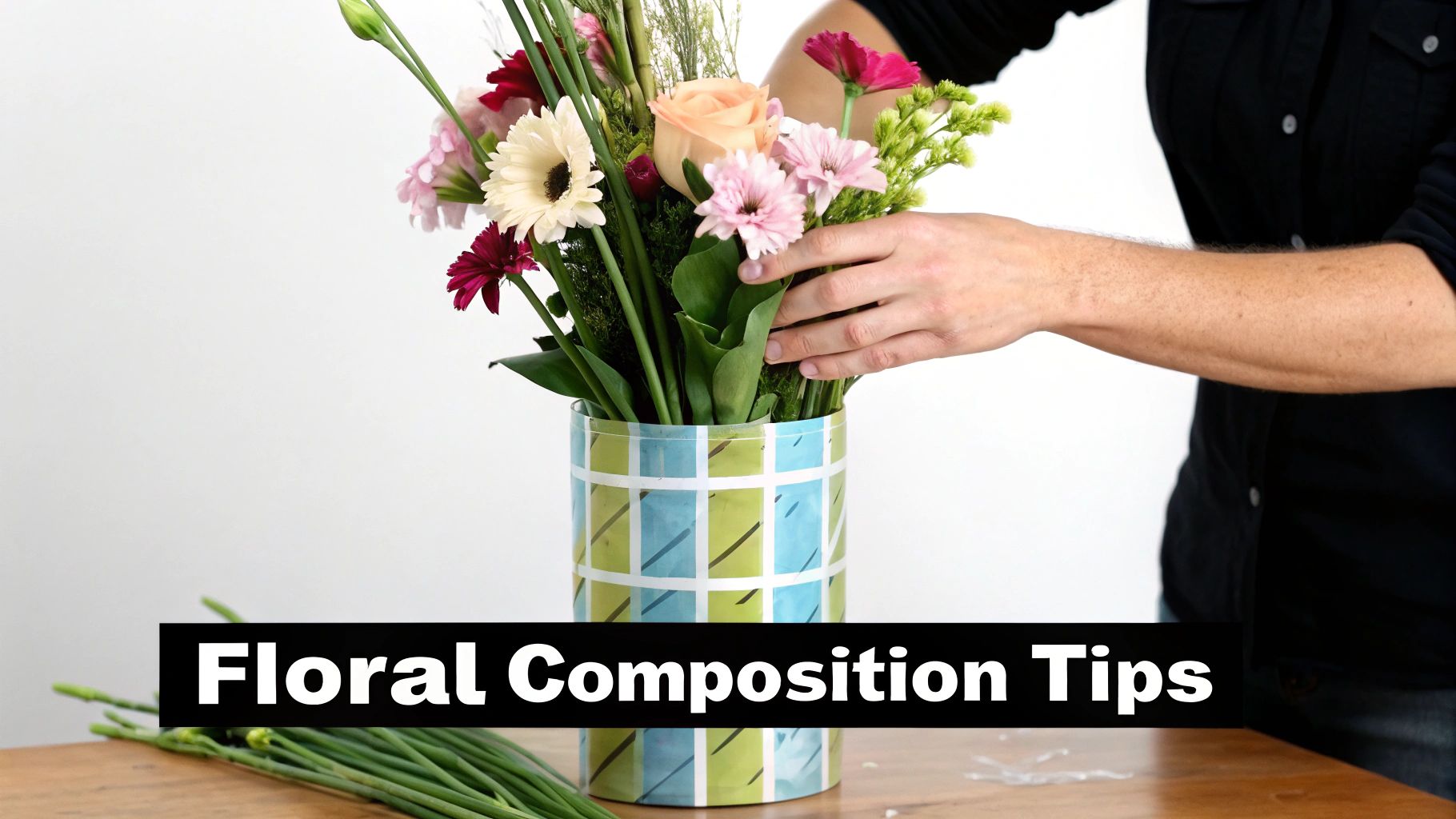
The easiest trick in the book is to create a grid. Just take some clear floral tape (or even regular clear office tape in a pinch) and create a simple checkerboard pattern across the opening of your vase. This grid creates small pockets that hold stems securely, giving you complete control over their placement and angle. It's a game-changer.
For a more organic approach, you can create what’s known as a "foliage frog." Before adding any flowers, place a nest of sturdy greenery, like salal leaves or ruscus, at the bottom. The interlocking stems form a natural mesh that helps anchor your more delicate flower stems.
This foundational support is what allows you to build airy, dynamic shapes without everything collapsing into a heap.
A Practical Approach to Colour and Texture
Colour theory can sound a bit academic, but honestly, you can create stunning palettes just by trusting your instincts. What sort of mood are you trying to create? A monochromatic scheme, using different shades and tints of a single colour, is effortlessly sophisticated. An analogous scheme, which uses colours that sit next to each other on the colour wheel (like yellow, orange, and red), feels harmonious and warm.
Don't forget that contrast is your best friend for creating visual interest. This isn't just about colour; it’s about the texture and form of your blooms. Try pairing the velvety softness of a rose with the fuzzy texture of a celosia plume. Combine the large, round head of a hydrangea with the spiky, architectural form of an eryngium (sea holly). This kind of variety is what gives a vase with flowers real depth and a professional, multi-layered feel.
Balance is the final piece of the puzzle, not just in colour but in form. These principles of balance and proportion are everywhere in the natural world. For those interested in the deeper patterns of natural design, exploring the golden ratio provides fascinating insights into why certain arrangements just feel right to us. Tapping into this innate sense of natural balance is what makes a composition feel truly complete.
Styling Your Arrangement for Maximum Impact
You’ve created something beautiful. But a stunning floral arrangement deserves more than just being plonked on the nearest surface. Where you place your creation is the final touch—the step that turns a lovely bunch of flowers into a genuine design feature that brings a room to life. It's about creating a moment.
It’s easy to forget the incredible journey these flowers have taken. Many begin their life thousands of miles away, navigating a complex global supply chain. The Netherlands, Europe's floral hub, is a perfect example of this massive operation. Between January and August 2025 alone, the country imported an astonishing US$862.43 million in fresh and dried ornamental flowers. This intricate network, with partners like Ecuador playing a huge role, ensures we have a vibrant palette to work with all year round, making every vase a small connection to a worldwide craft.
Getting the Scale and Proportion Right
Before you decide on a spot, stand back and really look at your arrangement. How does its size relate to the furniture around it? An enormous, dramatic bouquet will completely swallow a tiny side table, just as a single delicate bud vase will feel utterly lost on a grand dining table. The aim here is harmony.
A good rule of thumb I always follow is to keep the floral arrangement no more than 1.5 times the height of the vase. Also, think about its visual weight. A dense bouquet packed with dark colours will feel much heavier and more substantial than an airy arrangement filled with light, delicate blooms.
- For larger spaces: A dining table or kitchen island needs something with presence. I often find a low, sprawling design works better than a tall one, as it won't block sightlines and interrupt conversation.
- For smaller nooks: Don't underestimate the power of simplicity. A single, elegant stem in a bud vase on a bookshelf or bedside table can make a quiet but incredibly powerful statement.
The Magic of Lighting
Light can completely transform the look of your flowers, playing with their colours and textures in surprising ways. It’s worth taking a moment to notice how both natural and artificial light hits your chosen spot throughout the day.
A place near a window with soft, diffused sunlight is ideal—it makes colours pop and look their most true. Be wary of harsh, direct sun, though, as it can scorch delicate petals and cause the colours to fade prematurely. In the evening, the warm glow from a nearby lamp can be magical, casting dramatic shadows that highlight the textures within the arrangement and create a cosy, inviting atmosphere.
Creating a Compelling Vignette
Your vase doesn’t have to go it alone. You can amplify its impact by creating a small, curated scene—what designers call a vignette—around it. This is all about grouping your arrangement with other decorative objects to tell a little story.
Think in layers. Position your vase on a stack of beautiful books, place it next to a favourite scented candle, or pair it with a small piece of art. The secret is to choose items that have something in common, whether it’s a complementary colour, a similar material, or a shared aesthetic.
This thoughtful grouping creates a focal point that naturally draws the eye in, making the whole setup feel intentional and beautifully integrated. For a deeper dive into making your displays look professionally styled, exploring some expert vases styling tips can offer a wealth of creative ideas. By carefully considering placement, light, and context, you’re not just displaying flowers; you’re giving your creation the perfect stage to truly shine.
Get Creative: Variations and Seasonal Ideas
Once you've got the basics down, this is where the real fun starts. It's your invitation to play, experiment, and discover what your personal floral style truly is. A vase with flowers can be so much more than a standard bouquet; think of it as a canvas for seasonal stories, minimalist art, or even wild, textured sculptures.
A great way to begin is by thinking seasonally. Every time of year offers a unique palette of colours, textures, and moods that are just waiting to be captured in a vase. This approach naturally encourages you to work with what's fresh and readily available, creating arrangements that feel deeply connected to the world just outside your window.
Making a regular practice of gathering and arranging what's in season is a fantastic way to keep your creative spirit alive. In fact, there's a whole community of gardeners online who share their weekly creations, finding incredible joy in the simple act of putting flowers in a vase. If you're looking for more ways to nurture that side of yourself, you can explore plenty of other engaging creative hobbies that bring a little extra inspiration into daily life.
Embracing the Spirit of the Seasons
Let your arrangements be a mirror to the changing landscape. Don't feel limited to just flowers—sometimes branches, berries, and interesting foliage can tell the seasonal story even more powerfully.
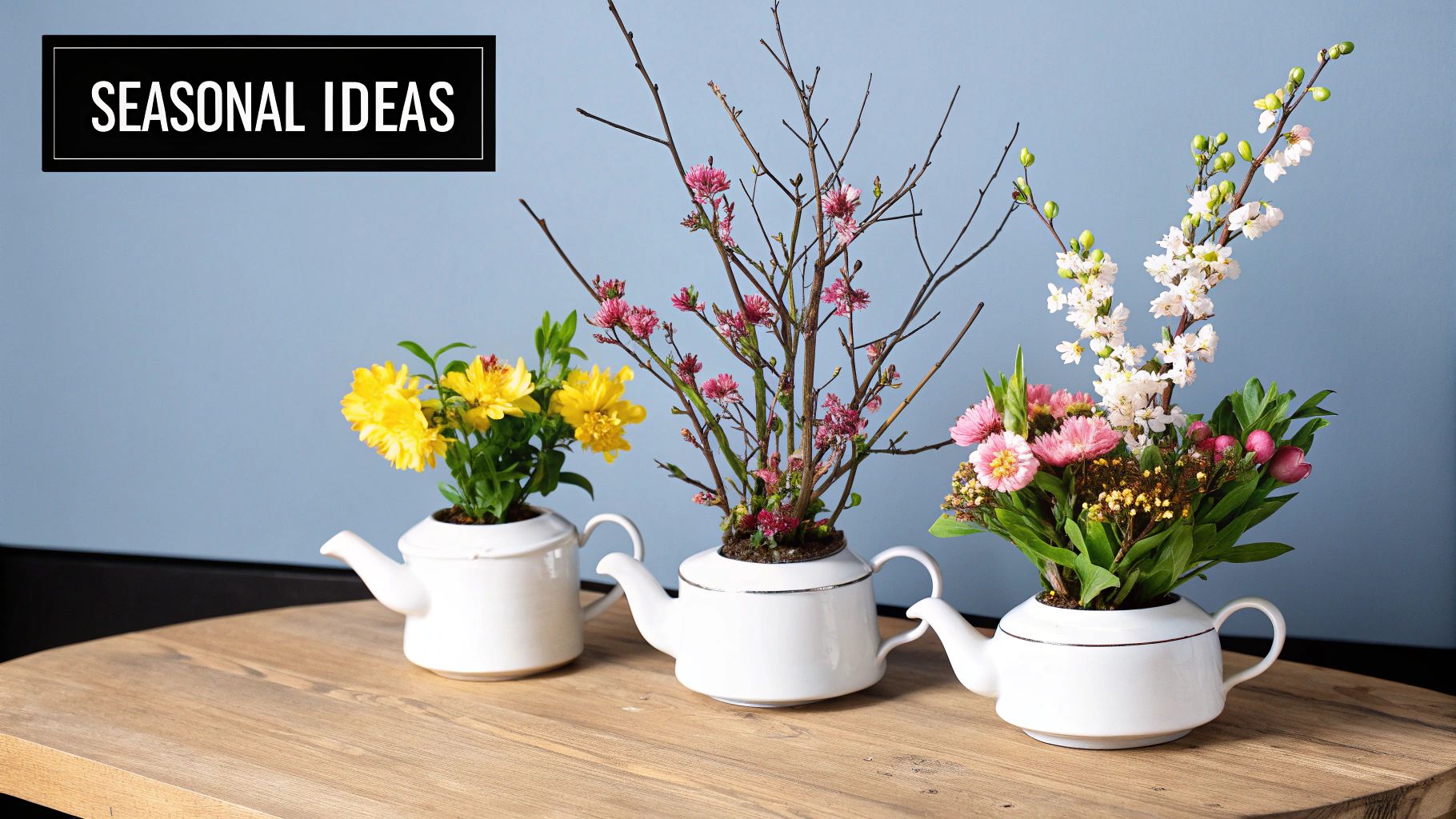
- Spring Freshness: Capture that feeling of new life with delicate branches of cherry blossom or forsythia. You can pair them with classic spring bulbs like tulips, daffodils, and hyacinths for a real burst of vibrant colour and incredible fragrance.
- Summer Abundance: This is the time to go for lush, overflowing arrangements. Think big garden roses, fluffy peonies, and hydrangeas mixed with unexpected touches like wispy cosmos or feathery astilbe. Don't be afraid to let it all feel a little wild and beautifully overgrown.
- Autumnal Warmth: As the days get shorter, it's time to shift to a richer, warmer palette. Bring in branches with colourful autumn leaves, clusters of deep-hued berries, or even tuck a few small decorative gourds at the base of your vase. Dahlias, chrysanthemums, and sunflowers are perfect stars for this season.
- Winter Structure: Winter is all about celebrating striking forms and textures. Use elegant branches of holly, twisted willow, or red-twig dogwood for visual interest. Add evergreen foliage like pine and cedar for that unmistakable scent, and then tuck in a few hardy hellebores or forced amaryllis bulbs for a welcome touch of life.
Here's a personal tip: always look beyond the flower shop. A walk through your own garden or a local park (where foraging is allowed, of course) can yield the most interesting and authentic seasonal materials that you simply can't buy.
From Minimalism to Extravagance
Your personal taste will also guide how simple or complex your arrangements become. There’s absolutely no right or wrong way to do it; it’s all about what speaks to you. Some days might call for quiet simplicity, while others demand a bit of drama.
The minimalist approach is all about the power of a single, thoughtfully chosen element. This style, which often draws inspiration from the Japanese art of Ikebana, celebrates space, line, and form. A single, dramatic iris stem in a tall, slender vase can honestly be more impactful than a dozen roses. The secret is to pick a bloom with an interesting shape and just let it have its own moment.
On the complete other end of the spectrum is the extravagant, textured bouquet. This is where you can truly let loose and have fun. The goal is to create a rich tapestry of different shapes, sizes, and textures that really draws the eye in and makes you want to look closer.
How to build a textured arrangement:
- Start with a strong foliage base. Use different kinds of greenery, like feathery eucalyptus and glossy leatherleaf fern, to create a lush foundation to build upon.
- Add your focal flowers. Next, introduce your main blooms, like those large-headed roses or spectacular dahlias.
- Weave in textural elements. This is the secret ingredient! Tuck in spiky eryngium, fuzzy celosia, delicate grasses, or even dried bits like poppy seed heads or bunny tail grass.
- Finish with something unexpected. A few sprigs of fresh mint or rosemary can add a surprising scent, while something like trailing amaranthus can add graceful, cascading movement.
Thinking Outside the Vase
And who says a vase even has to be a vase? Some of the most charming and personal arrangements I've ever seen have come from using unconventional containers. Just raiding your kitchen cupboards can provide a surprising amount of inspiration.
A vintage teapot can make a whimsical holder for a small, cheerful posy of wildflowers. A classic ceramic pitcher is absolutely perfect for a rustic, farm-to-table style bouquet. You could even line up a collection of old glass jars or bottles, each holding a single stem, to create a beautiful, deconstructed centrepiece. Using something unexpected adds a layer of personality and story to your display, making it uniquely yours.
Common Questions About Creating the Perfect Vase With Flowers
Even with the best instructions, you’ll always have questions when you’re working with something as beautifully unpredictable as nature. I've gathered some of the most common queries I hear, with straightforward answers to help you troubleshoot and build your confidence. The whole point is to make sure your floral creations are a source of joy, not stress.
How Can I Make My Flowers Last Longer in the Vase?
This is the number one question for a very good reason! The secret to keeping your blooms looking fresh isn't a single trick but a few consistent habits. It all starts with a spotless vase—any lingering bacteria will spell disaster for your flowers almost immediately.
Before they even touch water, give every stem a fresh cut at a sharp 45-degree angle. This maximises the surface area for drinking. And that little sachet of flower food? Use it. It’s a scientifically formulated mix of sugar for energy, an acidifier to help water absorption, and a biocide to keep nasty bacteria from growing.
Here's the most important part: ongoing care. You absolutely must change the water every two days—not just top it up, but replace it completely. Give the stems a little trim each time, too. Finally, think about location. Keep your arrangement out of direct sun, away from radiators, and definitely separate from your fruit bowl. Ripening fruit releases ethylene gas, which is a fast track to wilting.
What Are the Best Flowers for Beginners to Arrange?
When you're just starting, you want to work with flowers that are sturdy, forgiving, and have a good vase life. It takes the pressure off, letting you practise your technique without worrying about fragile, short-lived blooms.
Some of my go-to recommendations include:
- Carnations: They're incredibly hardy, come in just about every colour imaginable, and can easily last for two weeks or more.
- Alstroemeria (Peruvian Lilies): Each stem has multiple blooms, making them a fantastic choice for filling out an arrangement quickly and affordably.
- Chrysanthemums: From big, showy 'spider' mums to tiny button varieties, they are exceptionally long-lasting and robust.
- Roses: Don't be intimidated! Modern roses are bred for durability and have strong, straight stems that are surprisingly easy to work with.
A simple but effective starting point is to pick one main "focal" flower, like a beautiful rose, and then surround it with simpler filler flowers like baby's breath or solidago. Another great tip for a polished look is to stick to a single colour palette (a monochromatic scheme). It looks incredibly chic and professional without needing to get deep into colour theory.
My Arrangement Looks Unbalanced and Droopy. What Am I Doing Wrong?
I see this all the time, and it's usually not your fault—it's the vase's. A wide-mouthed vase gives stems nothing to lean on, so they naturally flop to the sides, leaving a sad, empty-looking middle.
Here’s an industry secret that changes everything: create a grid across the top of the vase opening with clear floral tape. This makes little supportive sections that hold each stem upright and exactly where you place it. It's a total game-changer for controlling your design.
Stem length is the other key to balance. You need variety. Put your tallest stems in first to establish the overall shape and height, usually toward the centre. Then, bring in shorter stems to fill out the base and hide the tape grid. And please, remember to rotate your vase as you work! It's so easy to create a perfect front and a completely forgotten back. A little spin now and then ensures a beautiful view from every single angle.
Can I Mix Different Types of Flowers in One Vase?
Absolutely! In fact, mixing different flower types is how you create wonderful texture, depth, and personality in your vase with flowers. You just need to be mindful of a couple of things to keep the bouquet harmonious and healthy.
Be aware that some flowers, most famously daffodils, release a slimy sap into the water that is toxic to other blooms. If you want to include daffodils, condition them first. Just let them sit in their own separate container of water for a few hours after cutting. This allows most of the sap to drain out. When you're ready to add them to your main arrangement, just pop them in without re-cutting the stems.
It's also a good idea to group flowers with similar water needs and a comparable vase life. The "thriller, filler, spiller" method we talked about earlier is your best friend here: a big focal flower (thriller), smaller complementary blooms (filler), and some trailing greenery (spiller) to soften the edges.
At People & Media B.V., we believe that creativity and learning are intertwined. Our platform is designed for curious minds eager to explore new skills, from the art of floral design to the science of personal growth. Discover a world of multidisciplinary perspectives and practical wisdom at People & Media B.V. and continue your journey of lifelong learning.






Responses