The Rise of Chinese Cars: How China Became the World’s Leading Auto Exporter

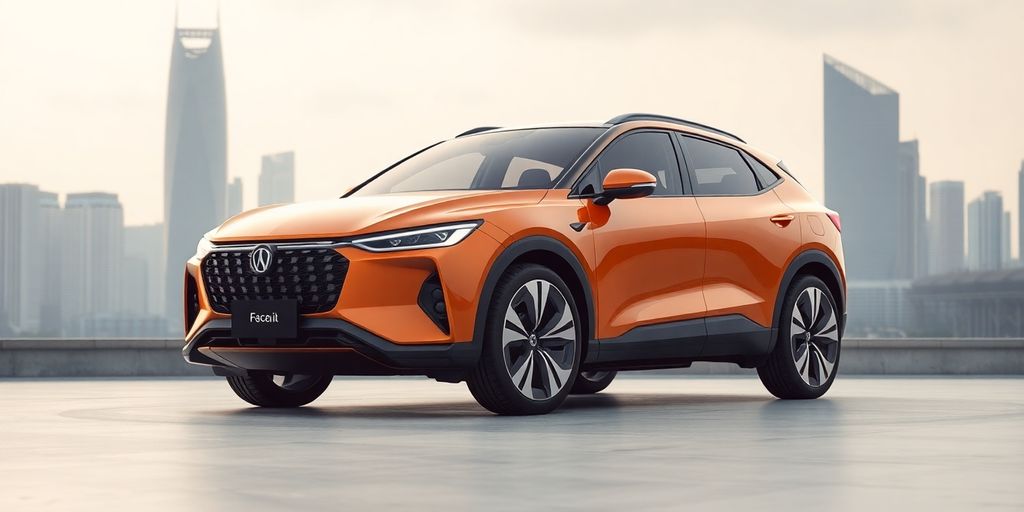
Chinese automakers have shifted from imitation to innovation, and the global automotive industry has not fully adjusted to what that means. In less than a decade, China went from producing low-cost copies of Western and Japanese models to leading the world in electric vehicle sales, battery technology, and in-car AI integration. By 2025, Chinese brands are not just competing in emerging markets — they are in European showrooms, challenging legacy manufacturers on design, technology, and price simultaneously. Understanding what is actually driving this shift, and what it means for the competitive landscape, requires looking past the surface-level narratives in both directions.
- → China is the world’s largest EV market and its manufacturers — BYD, NIO, Li Auto, SAIC — are now legitimate technology leaders, not just cost competitors
- → Chinese EV battery technology, particularly BYD’s LFP blade battery architecture, has set new standards for energy density, safety, and cost
- → Western markets are responding with tariffs — the EU imposed duties of up to 38% on Chinese EV imports in 2024 — which will reshape competitive dynamics
- → In-car AI and software-defined vehicle architecture is a structural advantage for Chinese manufacturers who built software-first from the ground up
- → The geopolitical dimension — data sovereignty, supply chain concentration, and technology transfer — makes this a strategic issue beyond market competition
The Battery Advantage
The foundation of China’s automotive rise is not manufacturing scale — it is battery technology. China controls approximately 75% of global lithium-ion battery cell production capacity and is home to CATL and BYD, the world’s two largest EV battery manufacturers. This is not a coincidence of geography or cheap labour; it is the result of a decade of deliberate industrial policy, research investment, and vertical integration.
BYD’s blade battery technology — a lithium iron phosphate (LFP) design that dramatically improves energy density and reduces thermal runaway risk — represents a genuine engineering advance over the competing NMC chemistries used by most Western and Korean manufacturers. LFP batteries were long considered inferior for their lower energy density, but BYD’s cell-to-pack architecture closed that gap while delivering structural advantages in safety and longevity. Tesla adopted LFP for its standard range vehicles; the technology is no longer a concession, it is a preference.
CATL and BYD are both deep in solid-state battery development, targeting commercialisation in the 2027–2030 window. Solid-state batteries offer higher energy density, faster charging, and improved safety over liquid electrolyte designs. If Chinese manufacturers commercialise solid-state technology ahead of Toyota, Samsung SDI, or QuantumScape, the battery advantage will extend significantly into the next generation of vehicles.
Software-Defined Vehicles and AI Integration
The second structural advantage is software. Chinese automakers — particularly the newer entrants like NIO, Li Auto, and Xpeng — built their vehicles as software-defined platforms from inception. This means the car’s functionality is defined and updated through software rather than hardware, enabling over-the-air updates that can add features, fix bugs, and improve performance post-purchase. Legacy Western manufacturers are retrofitting this capability onto architectures that were not designed for it; Chinese manufacturers started there.
The AI integration goes beyond marketing. NIO’s NOMI in-car assistant, Xpeng’s XNGP advanced driver assistance system, and Huawei’s HarmonyOS automotive platform (integrated into the Aito and Seres brands) represent genuine advances in human-machine interface design and driver assistance capability. The data advantage is also real: Chinese manufacturers have access to driving data from one of the world’s most complex traffic environments at a scale that accelerates machine learning training.
The rise of Chinese cars is not just about market competition — it is a strategic challenge to Western technological leadership in one of the most capital-intensive industries on earth. The response in Brussels and Washington reflects an understanding that this is not a normal trade dispute.
Global Expansion and the Tariff Response
Chinese automakers have been systematically building export positions across Southeast Asia, the Middle East, Latin America, and — most consequentially — Europe. BYD, SAIC’s MG brand, and Chery have established meaningful sales presence in several European markets, competing directly against Volkswagen, Renault, and Stellantis brands on price while matching or exceeding them on technology specification.
The EU’s response was a provisional tariff investigation launched in 2023, which concluded in 2024 with duties ranging from 17% (BYD) to 38% (SAIC) on top of the existing 10% baseline. The US has gone further, with tariffs on Chinese EVs reaching 100%. These measures will slow but not stop Chinese expansion in these markets. BYD has announced manufacturing investments in Hungary and Turkey to produce vehicles inside the EU tariff boundary. Geely — which owns Volvo, Polestar, and Lotus — has even more complex relationships with European industrial policy.
Design: From Derivative to Distinctive
Chinese automotive design was, for a long time, a legitimate weakness — derivative styling that borrowed liberally from European and Japanese originals without the underlying engineering credibility to carry it off. This has changed. The design language of the NIO ET9, the BYD Seal, and the Xpeng X9 reflects genuine investment in original aesthetic identity, with strong aerodynamic competence and interiors that rival — and in some cases exceed — European luxury benchmarks in technology integration if not in material finish quality.
The interior specifically is where Chinese manufacturers have moved fastest. Large central screens, ambient lighting systems, zero-gravity seat configurations, and integrated entertainment and climate management systems have become standard in mid-range Chinese EVs at price points where equivalent European vehicles offer much less. This is a consumer preference signal that the industry is absorbing, reluctantly, as Western manufacturers scramble to close the infotainment and UX gap.
The Geopolitical Dimension
The rise of Chinese automotive exports is not purely a commercial story. Connected vehicles generate and transmit large volumes of data — location, behaviour, occupant patterns — that have obvious implications for national security if the manufacturer, and therefore potentially the state, has access to it. This concern is explicit in the Biden and Trump administrations’ approach to Chinese automotive technology and drives the consideration of software-level restrictions that go beyond tariffs.
The supply chain dimension is equally significant. Western automakers’ dependence on Chinese battery cells, rare earth magnets, and semiconductor packaging creates strategic vulnerabilities that have become visible post-COVID. The IRA in the US and the Net-Zero Industry Act in the EU are explicitly designed to reduce this dependence by incentivising domestic and allied supply chain development — but the timelines are long and the cost disadvantage of non-Chinese supply chains is real.
Chinese automakers have achieved something that most Western industry observers considered unlikely a decade ago: genuine technological leadership in the segment that will define the next generation of transportation. Their advantage in battery technology, software architecture, and AI integration is real and deepening. Tariffs will complicate their market access in the EU and US but will not eliminate the underlying competitive pressure — and in markets that are not implementing protective measures, Chinese brands will continue to gain share rapidly. For Western manufacturers, the response window is narrowing. The question is no longer whether Chinese cars are competitive. It is whether the legacy industry has the structural capacity to respond quickly enough to protect its position in the markets that still have some insulation from the full force of that competition.


Responses