The Geographical Pivot of History and Heartland Theory: Understanding Global Power Dynamics

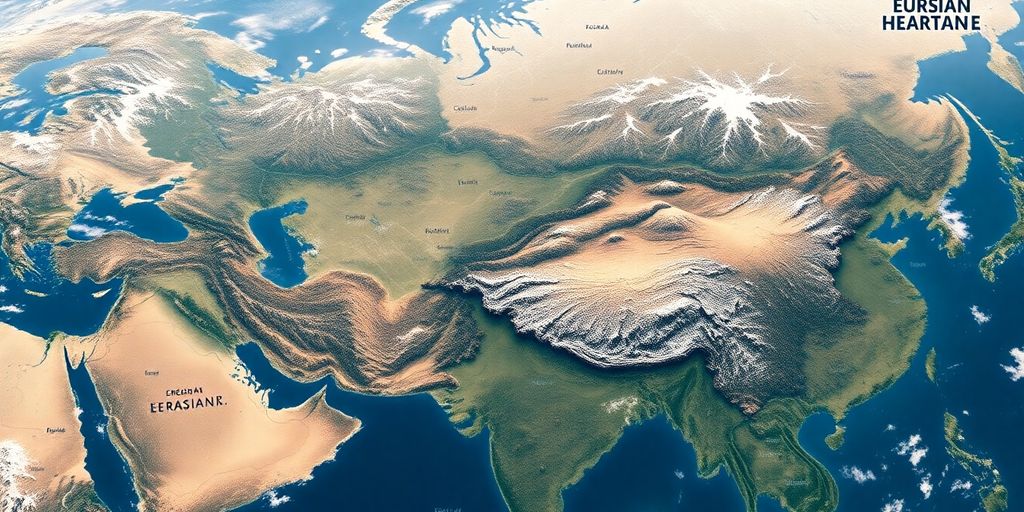
The Geographical Pivot of History, introduced by Halford Mackinder in 1904, is one of the most consequential ideas in geopolitical theory. Mackinder argued that control of a central landmass in Eurasia — the Heartland — is the key to global dominance. More than a century later, his framework continues to illuminate the strategic logic behind Russia’s posture in Eastern Europe, China’s Belt and Road Initiative, and NATO’s expansion eastward.
The Origins of the Heartland Theory
Halford Mackinder’s Vision
Halford Mackinder, a British geographer, presented “The Geographical Pivot of History” to the Royal Geographical Society in 1904. His central thesis: geography is destiny, and the destiny of global power runs through the Eurasian landmass. The era of maritime exploration — which had allowed Europe’s ocean-facing powers to dominate trade and empire — was drawing to a close. Railways and overland mobility were now opening up the interior of Asia, making land power newly decisive.
Historical Context and Influences
Mackinder wrote at the height of imperial rivalry among European powers and the scramble for global resources. His observation was that whoever could organize the Heartland’s vast resources — grain, coal, iron, and later oil — into a coherent military and industrial machine would have a structural advantage over any maritime challenger. The British Empire’s own vulnerability to an overland Eurasian power was an explicit subtext of his argument.
Initial Reception and Criticism
The theory generated immediate interest and persistent controversy. Admirers saw it as a masterwork of strategic synthesis. Critics — including Alfred Mahan, the theorist of sea power — argued that ocean control remained supreme. Others questioned whether geography was truly determinative in an age of technological change. These debates continue, but Mackinder’s core insight about the strategic centrality of Eurasia has never been fully displaced.
“Who rules East Europe commands the Heartland; who rules the Heartland commands the World Island; who rules the World Island commands the World.” — Halford Mackinder, 1919
Key Concepts of the Geographical Pivot of History
Defining the Heartland
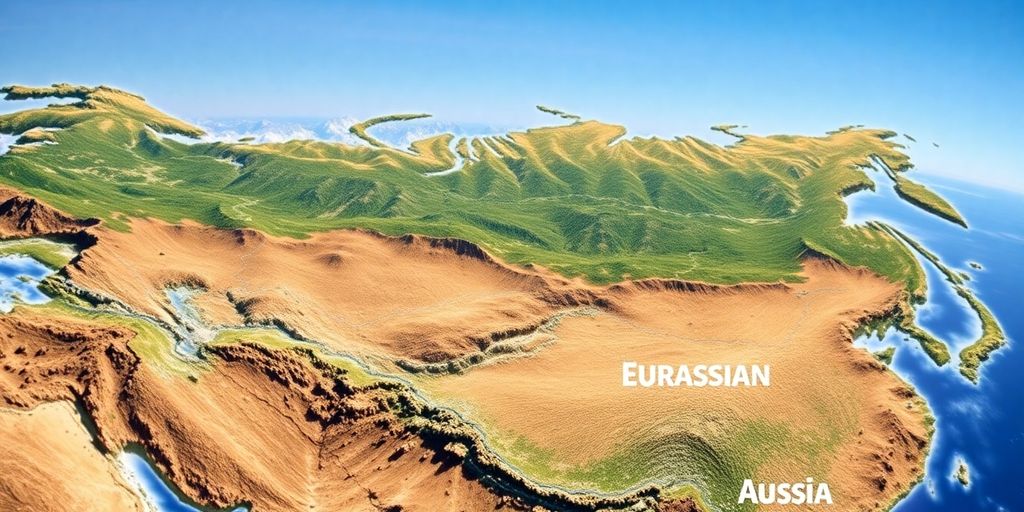
Mackinder defined the Heartland as the inner core of Eurasia — stretching roughly from Eastern Europe across Central Asia into parts of Siberia. The region is landlocked and thus inaccessible to naval power, making it uniquely defensible. It is also extraordinarily rich in natural resources: fossil fuels, fresh water, arable land, and rare minerals.
Strategic Importance of Central Asia
Central Asia sits at the intersection of multiple civilizational fault lines and contains some of the largest untapped reserves of oil, gas, and rare earth minerals on Earth. It acts as a geopolitical bridge between Europe and the Pacific rim, making it contested territory for every major power in the region — Russia, China, Turkey, Iran, and the United States have all competed for influence there since the Cold War’s end.
Impact on Geopolitical Thought
Mackinder’s framework generated a direct lineage of strategic thought. Nicholas Spykman developed the “Rimland” counter-theory, arguing that the coastal periphery of Eurasia mattered more than the interior. Cold War US strategy, articulated by George Kennan as “containment,” was implicitly Mackinderian — preventing a single power from dominating the Eurasian landmass became the organizing principle of American foreign policy for forty years.
The Heartland Theory in the 20th Century
World Wars and the Heartland
Both World Wars can be partially read through a Mackinderian lens. Germany’s drive eastward in both conflicts sought control of Eastern European grain and Russian resources — a direct attempt at Heartland dominance. Operation Barbarossa in 1941 was, in geopolitical terms, the most ambitious attempt in history to seize the Heartland by force. It failed at enormous cost.
Cold War Strategies
The Cold War was, in structural terms, a contest over the Heartland. Soviet control of Eastern Europe and Central Asia gave it the interior position Mackinder described. US policy — NATO, Korean War intervention, the Truman Doctrine — was organized around denying Soviet expansion to the Rimland periphery. The theorists debated whether land power or sea power would ultimately prevail; the contest ended with neither side militarily defeating the other.
Adaptations and Critiques
Nuclear weapons fundamentally changed the cost calculus of Heartland conquest. Air power projected force from the sea with range and precision that land geography could not block. These technological shifts led many strategists to argue Mackinder had been superseded. Yet the strategic logic never disappeared entirely — geography remained a structural constraint even in the nuclear age.
Modern Interpretations and Relevance
21st Century Geopolitical Landscape
The post-Cold War period initially seemed to vindicate those who said geography was becoming irrelevant — globalization, the internet, and economic interdependence appeared to dissolve borders. The events of the 2000s and 2010s corrected this optimism sharply. Russia’s 2008 intervention in Georgia, its 2014 annexation of Crimea, and the full-scale invasion of Ukraine in 2022 are all comprehensible within a Mackinderian frame: a great power defending its claim to the Heartland’s buffer zone.
Technological Advancements and Their Impact
Long-range missiles, drone warfare, cyber operations, and satellite surveillance have added new dimensions to strategic competition without abolishing geographic logic. Control of territory still confers resources, positioning, and depth. Space and cyber may add new domains, but the contest over Eurasian land has not been rendered obsolete by technology — it has been supplemented by it.
Criticism and Controversies
Debates Among Scholars
The most persistent critique is that the Heartland Theory is monocausal — it reduces complex international relations to geographic determinism. Culture, institutions, technology, economic systems, and human agency all shape outcomes in ways geography does not predict. The Soviet Union controlled the Heartland and lost the Cold War; the United States dominated from the maritime periphery and won it. Simple geography cannot explain that outcome.
Ethical Implications
There is also a legitimate concern that Heartland Theory encourages a Eurocentric, zero-sum view of international relations — one that treats the populations of Central Asia and Eastern Europe as pawns in a great power game rather than as peoples with their own legitimate interests and agency. This has real policy consequences when strategists adopt the framework uncritically.
Relevance in a Globalized World
In today’s interconnected world, economic interdependence, multilateral institutions, and shared environmental challenges create interests that cut across geographic blocs. The Heartland framework captures one dimension of strategic reality but misses others. It remains most useful as a starting point for analysis rather than a complete theory of power.
Case Studies in Global Power Dynamics
Russia’s Geopolitical Strategies
Russian strategic doctrine explicitly references Heartland logic — the country’s military doctrine speaks of maintaining strategic depth and preventing hostile powers from controlling neighboring states. The wars in Georgia, Ukraine, and the military presence in Syria and Central Asia all reflect a coherent, if aggressive, Mackinderian posture: secure the Heartland’s buffer and deny access to rivals.
China’s Belt and Road Initiative
China’s Belt and Road Initiative is arguably the most ambitious Heartland strategy in history — not through military conquest but through infrastructure, debt, and economic integration. By building railways, ports, and pipelines across Central Asia, the Middle East, and Africa, China is creating the connectivity that Mackinder identified as the key to Heartland exploitation, this time through economic rather than military means.
NATO’s Influence in Eastern Europe
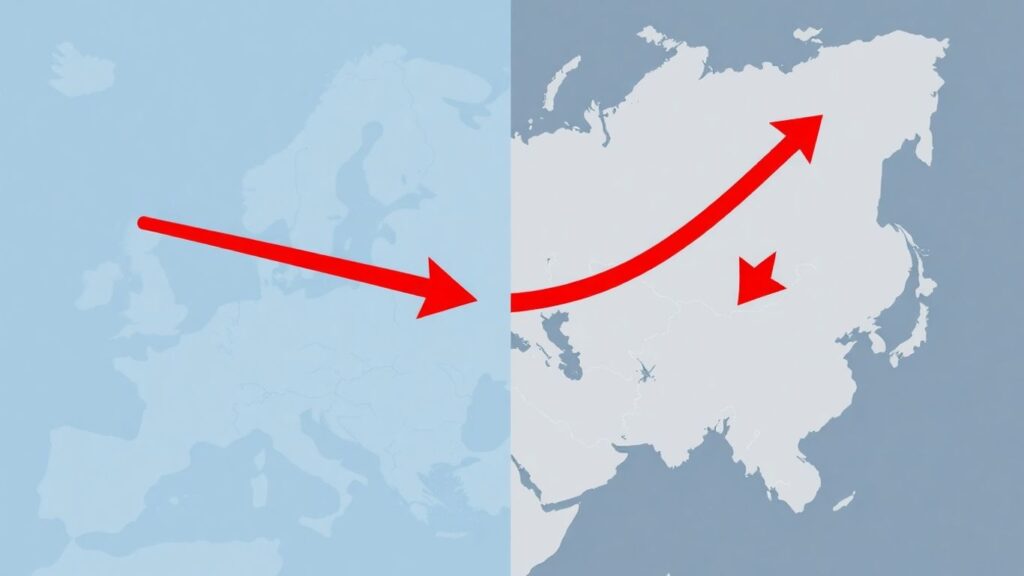
NATO’s post-Cold War expansion into Eastern Europe was, from a Mackinderian perspective, a systematic effort to detach the Heartland’s western buffer from Russian control. The current war in Ukraine is in part a violent contest over where the Heartland’s western frontier will be drawn — a question Mackinder identified as central 120 years ago.
Future Prospects of the Heartland Theory

As China rises and Russia reorients its strategic posture, the competition for Eurasian influence is intensifying. Climate change adds a new variable: Arctic melting opens new northern sea routes and makes previously inaccessible Siberian and Central Asian resources extractable — reshaping the Heartland’s resource calculus dramatically. New alliances are forming around these interests, and Mackinder’s core insight about the strategic centrality of the Eurasian interior remains as structurally relevant as it was in 1904, even if the tools of competition have changed beyond recognition.
Frequently Asked Questions
What is the Heartland Theory?
The Heartland Theory is Halford Mackinder’s argument that control of the central Eurasian landmass — the Heartland — confers a decisive strategic advantage in global power competition.
Why is the Heartland important?
It combines vast natural resources, geographic depth, and invulnerability to naval power into a position of structural strategic strength. Whoever organizes these advantages into effective military and economic power gains leverage over the rest of the world.
How did the Heartland Theory influence Cold War strategy?
US containment policy — NATO, the Korean War intervention, support for anti-Soviet regimes globally — was organized around preventing a single power from dominating the Eurasian Heartland, directly applying Mackinderian logic.
What are the main criticisms?
The theory is criticized for geographic determinism (overemphasizing location at the expense of economics, culture, and technology), Eurocentrism, and failing to account for the role of nuclear weapons, air power, and economic interdependence in reshaping strategic equations.
The war in Ukraine, China’s Belt and Road, and the contest for Central Asian resources are all playing out on the terrain Mackinder identified in 1904. His theory doesn’t explain everything, and its Eurocentric assumptions deserve scrutiny — but as a framework for understanding why great powers behave as they do in Eurasia, it remains essential reading. Geography hasn’t stopped mattering; it has just been joined by many other factors that Mackinder couldn’t anticipate.


Responses