Syria’s Shifting Sands: From Assad to Al-Jolani and the Global Chessboard

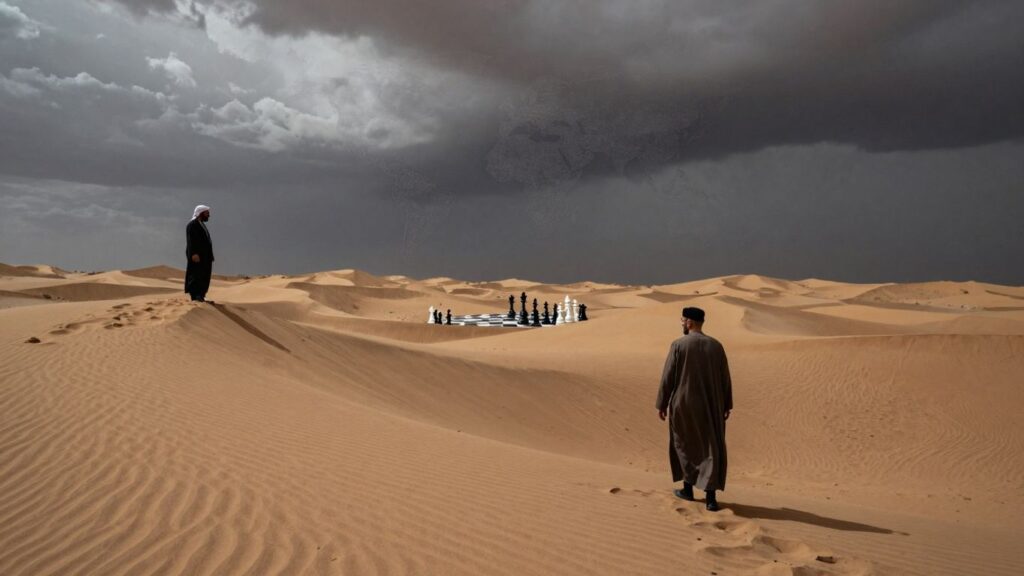
This discussion delves into the complex and often contradictory events shaping Syria today, focusing on the rise of Abu Muhammad Jolani and the international forces influencing the country’s future. It questions the narrative presented by Western powers and highlights the potential for further division and instability.
Key Takeaways
- The current Syrian leadership, under Abu Muhammad Jolani, has roots in extremist groups previously supported by external powers.
- There’s a strong suggestion of a "double game" played by various international actors, including the US and Israel, with conflicting interests in Syria.
- The rise of Jolani is seen by some as a deliberate move to fragment Syria, aligning with Israeli strategic goals.
- Minority groups in Syria face significant challenges and are being pushed towards separatism due to the current political climate.
- The economic future of Syria is tied to foreign investment, but this comes with the risk of increased foreign control and higher costs for citizens.
The Rise of Abu Muhammad Jolani
The current situation in Syria traces back to 2011, with the release of Abu Muhammad Jolani and Abu Bakr al-Baghdadi from an Iraqi prison. While al-Baghdadi went on to form ISIS, Jolani established Jabhat al-Nusra, an al-Qaeda affiliate. Despite the US designating this group as terrorist, Jolani’s organization was never directly targeted. In fact, it’s suggested that the US, under the Obama administration, funneled significant resources through groups like the "Free Syrian Army" to support Jolani’s forces, presenting them as moderate rebels.
This operation, reportedly a CIA-covered effort known as "Operation Timber Sycamore," involved around $1 billion annually for arming and training. By 2024, Jolani’s group had become a dominant force. Following a regional and international deal, President Assad was ousted, and Jolani presented himself as the alternative, declaring himself president and abolishing the constitution.
A Complex Web of International Interests
Jolani has been described as a long-term asset for the CIA, with former US officials like Jeffrey Feltman and Robert Ford suggesting he was groomed for a political role. However, the State Department also placed a $10 million bounty on his head, highlighting the contradictory stance. This "double game" is particularly evident in how the US supported groups that were, in reality, aligned with al-Qaeda.
Israel also appears to have a vested interest in Jolani’s rise. While publicly opposing him, it’s alleged that Israel provided tangible support to his group, especially when they occupied borders near the Golan Heights. Injured fighters were reportedly treated in Israeli field hospitals. The rationale behind this support is believed to be Israel’s strategy of fragmenting Syria. By backing a leader like Jolani, who is seen as divisive, Israel aims to break Syria into smaller, weaker states, a strategy aligned with the "Yinon plan."
The Impact on Syria’s Minorities
The rise of a jihadist leader like Jolani has created deep divisions within Syria. Indigenous minority groups, including Christians, Druze, Alawites, Shia, and Kurds, are reportedly rejecting rule by an al-Qaeda-affiliated leader. This has led to calls for federal systems or outright separatism, with various groups forming their own militias and governing their own affairs with external support – the Druze with Israel, and the Kurds with the US.
Christians, in particular, are in a precarious position. Many have fled the country, and those remaining face harassment. Without organized political or military strength, they are left with difficult choices: live under Jolani’s rule or fight without adequate support. This situation is seen as a deliberate tactic to "balkanize" the country, weakening it and making it more susceptible to external influence.
Economic Future and Foreign Influence
For foreign investors to pour money into Syria, a stable environment is needed. This has led some, like the Americans, to advocate for Jolani to centralize power and stabilize the country for investment. However, this clashes with Israel’s desire to keep Syria divided. Jolani’s government lacks the means to rebuild the country’s infrastructure. Instead, it relies on foreign sources for essentials like gas and electricity, leading to significantly higher costs for citizens.
Is Jolani Still a CIA Asset?
There’s a strong belief among some analysts that Jolani remains a CIA asset, possibly recruited alongside al-Baghdadi. The timeline of his release and subsequent actions in Syria fuels this theory. Former CIA agent John Kiriakou has publicly stated his belief that Jolani is still an asset. This perspective suggests that Jolani’s rise and the subsequent "destruction" of Syria serve the interests of certain global powers, creating a power vacuum ripe for expansion and investment.
Furthermore, it’s suggested that Jolani is coordinating with multiple secret services, including the CIA and MI6, through intermediaries. His legitimacy, rather than stemming from the Syrian people, appears to depend on the approval of these foreign governments. This has led to Syria transitioning from an independent nation to what is described as a vassal state of the United States and Israel.
The Uncertain Future of Syria
The current trajectory points towards a Syria that is fragmented and heavily influenced by external powers. The "balkanization" is seen as already happening, not just geographically, but in the minds of the people, who increasingly identify with sectarian or religious groups rather than a unified Syrian identity. The hope for a true regime change that benefits the Syrian people remains slim, with powerful forces pushing for a Syria that serves as a strategic asset for the US and its allies. The alternative, a Syria led by an "al-Qaeda amir" who allegedly murders his own people, is a grim prospect for one of the world’s oldest civilizations.









Responses