Syria: Not a Civil War, But a Battle for Routes


This discussion delves into the complex geopolitical landscape of Syria, arguing that the conflict is not a simple civil war but a strategic battleground for control over vital trade and energy routes. Colonel Douglas Macgregor, a decorated combat veteran and former senior adviser to the Secretary of Defense, shares his insights on the hidden agendas and external influences shaping the region.
Key Takeaways
- The division of the Middle East after World War I was artificial, imposed by British and French imperial powers for their convenience, not based on the region’s historical or ethnic realities.
- Israel has significant regional aspirations, often referred to as the "Greater Israel project," which is heavily supported by the United States military.
- Turkey is also asserting itself as a regional power, seeking to establish trade corridors that bypass existing routes and challenge established powers.
- The conflict in Syria is deeply intertwined with these larger strategic goals, making it a battle for infrastructure and control of trade and energy.
- The Israeli lobby in Washington wields significant influence over US foreign policy, often dictating the nation’s involvement in regional conflicts.
The Artificial Borders of the Middle East
Colonel Macgregor begins by highlighting that many Americans have a limited understanding of Syria’s historical significance. He explains that Syria has always been a central hub in the region, a "civilizational hub" that was a great center of learning and trade even after the Islamic conquests. The current infrastructure projects are essentially modern applications of ancient trade routes, and the fighting over these routes has been catastrophic for Syria.
The borders of many Middle Eastern countries, including Syria, are not based on historical facts or the will of the people. Instead, they were drawn by British and French imperial powers after World War I for their own convenience. These artificial constructs have persisted for over a century, leading to ongoing instability.
Competing Regional Ambitions: Turkey and Israel
Two major powers, Turkey and Israel, have significant ambitions in the region. Turkey, despite facing economic challenges like high inflation, aims to assert itself as a great power. It envisions development roads and trade corridors, like the one starting from Basra and going through Iraq to Europe via Turkey. This project seeks to control oil, gas, and trade flow.
On the other hand, Israel has its own "Greater Israel project," which includes aspirations to control large parts of Lebanon, Syria, Jordan, and even parts of Egypt. This project is backed by the United States military, which provides unconditional support to Israel. The "peace line" corridor proposed by Israel aims to connect the UAE, Saudi Arabia, Jordan, and Israel, linking to initiatives like the India-Middle East-Europe corridor. This route bypasses Syria and Egypt, rerouting trade to Israeli ports like Haifa.
The Syrian Conflict as a Proxy Battleground
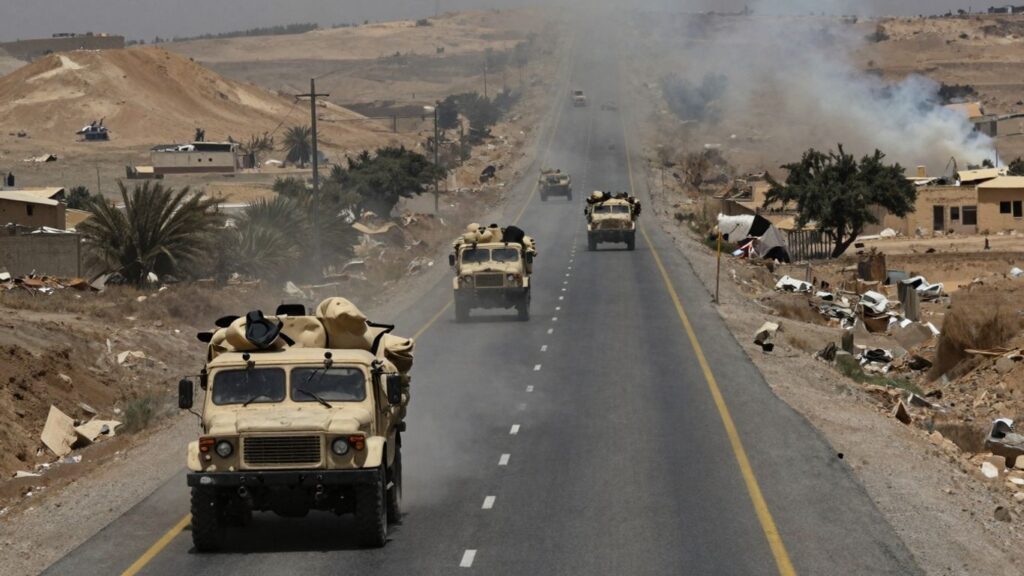
Macgregor argues that the Syrian "civil war" is a misnomer. It’s a strategic battle over infrastructure and control of trade and energy routes, with external powers playing a significant role. The CIA, Mossad, and MI6 are accused of working to destroy Syria’s national integrity. The current leadership in parts of Syria, like Mr. Golani, is described as having a terrible track record and committing atrocities against minorities.
There’s a collision happening between Turkey, which controls the north, and other forces in the south, including the Druze population, who are currently more aligned with Israel. Israel is also interested in controlling water resources in the south, which it considers vital to its national interest.
The Influence of the Israeli Lobby
A significant point raised is the overwhelming influence of the Israeli lobby in Washington. Macgregor states that this lobby is the "all-powerful influence" when it comes to US foreign policy decisions in the region. He suggests that the US is often dragged into conflicts not by accident, but by design, primarily due to this lobby’s power. Many Americans are unaware of the extent to which this lobby shapes policy, as they are often disengaged from foreign affairs.
He points to instances like politicians openly pledging loyalty to Israel and the presence of Israeli-linked appointments within US national security agencies. The American-Israeli Political Action Committee (AIPAC) is highlighted as a foreign lobby that operates as a domestic entity due to its funding sources within the US. This influence, Macgregor suggests, has led to a situation where US taxpayer-funded officials are not prioritizing American interests but rather those of Israel.
The Risk of Wider Conflict
The discussion also touches upon the potential for a wider conflict, particularly involving Iran. Macgregor warns that a resumption of conflict between Israel, the United States, and Iran is likely inevitable, though the trigger is uncertain. He notes that while President Trump may not personally desire war, his rhetoric and support for Israel can lead the US into such conflicts.
He also mentions the potential for escalation involving Cyprus, where Turkey has warned of action if its airfields are used by Israel or its allies. The complex relationship between Greece and Turkey adds another layer of risk. The region is described as unstable, and the current conflicts have only exacerbated this instability.
An Awakening Public?
While there are signs of an awakening among the American public, particularly within the MAGA base and on the left, who are questioning the "America First" promise and the nation’s foreign policy, Macgregor expresses skepticism about whether it’s too late to change course. He argues that significant change will only occur after a major strategic setback that cannot be concealed from the public, similar to the impact of the Vietnam War.
He concludes that the US is like a "giant battleship whose steering mechanism is stuck." The lobby and other powerful interests are controlling the rudder, pushing the nation in a direction that may not be in its best interest. Without a significant shock or a fundamental shift in public awareness and political organization, the current trajectory is likely to continue.







Responses