Seyed M. Marandi: Legitimizing Occupation & Preparing for War

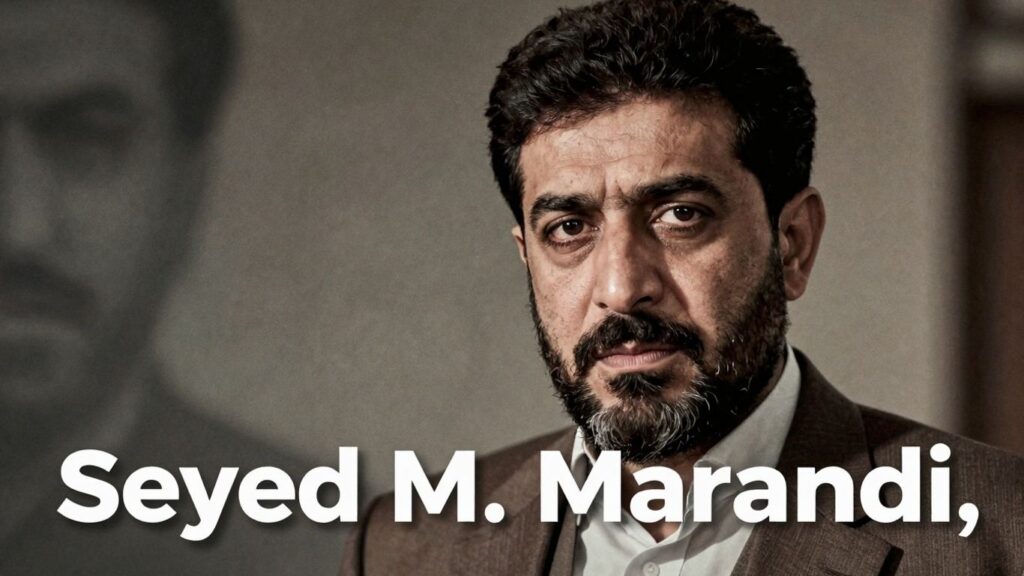
This discussion features Seyed Mohammad Marandi, a professor at Tehran University and former advisor to Iran’s Nuclear Negotiation Team, sharing his views on the international stabilization force in Palestine. He argues that this force is not a peacekeeping mission but rather an extension and internationalization of the occupation, granting legitimacy to the US’s role in what he describes as a genocide.
Key Takeaways
- The international stabilization force is seen as legitimizing and extending the occupation.
- Regional leaders are criticized for supporting plans that betray Palestinian interests.
- The Palestinian Authority is viewed as enforcing Israeli domination, not representing Palestinian will.
- Resistance groups’ armed status is seen as a deterrent against further Israeli actions.
- Western media and political discourse are criticized for dehumanizing resistance and providing cover for Israeli actions.
- The conflict with Iran is viewed as having little to do with its nuclear program, but rather with broader geopolitical aims.
- Europe’s role as a US proxy is highlighted, diminishing its independent influence.
- Iran’s strategic autonomy is maintained through cautious alliances and a strong independent political culture.
An Internationalization of Occupation
Professor Marandi expresses strong criticism of the newly formed international stabilization force, calling it an "extension of the occupation" and an "internationalizing of the occupation." He believes it enhances the US’s role and provides a false sense of legitimacy, especially given the US’s alleged partnership in what he terms a "genocide." According to Marandi, the plan, authored by the United States, does not offer independence or a country for Palestinians. He notes that Palestinian groups have opposed it, and its passage was predictable once regional countries, like Turkey, Egypt, and the Emirates, showed their allegiance to the US plan.
He points out that if regional powers accept this "betrayal," it becomes difficult for countries like Russia and China to challenge it in the UN Security Council, especially when they might perceive regional states as unwilling to defy the US. While he believes Russia and China should have vetoed the resolution, he places blame on leaders like Erdogan, President Sisi, and Mohammed bin Zayed for giving the US a green light.
Regional Leaders’ Role and Palestinian Authority’s Position
Marandi criticizes the willingness of various participants to contribute to this force, suggesting that even Arab leaders who signed on might not genuinely want to be part of an occupation that is unpopular with their own populations. He states that when the Palestinian Authority, King Abdullah of Jordan, and others accepted the plan, it wasn’t seen as the true Palestinian position. He describes the Palestinian Authority as "Netanyahu’s jailer," enforcing Israeli domination over the West Bank while ethnic cleansing and murders occur without prevention.
He argues that as long as Hamas, Palestinian Islamic Jihad, and other resistance groups remain armed, any stabilization force will lack real power. If these groups disarm, the force would be unable to resist Israeli actions in Gaza, where, he claims, mass murder has been ongoing for two years. The resistance’s armed status and underground network have been key in preventing a complete Israeli takeover. He fears the stabilization force, without the resistance’s arms, would be ineffective against potential Israeli incursions.
A Broader Geopolitical Project
Marandi views the current situation as a continuation of a broader project, with regional countries acting as US proxies. He mentions Syria, where he claims a "dirty war" began in 2011-2012, carried out by US proxies and regional regimes like Qatar, Jordan, Turkey, and Israel, all working together. He suggests these leaders pursue US policy hoping for personal gain, such as Erdogan’s ambition for a "mini Ottoman Empire" and Qatar’s desire to maintain its ruling status.
He asserts that nothing is surprising, and the UN Security Council’s resolution was expected given the inaction of governments over the past two years. He notes that these countries did not cut business or diplomatic ties, nor did they stop exporting or importing oil and gas, effectively assisting Israel. Even those pretending to support Palestine, like Qatar and Turkey, were seen as pursuing US policy.
The Shifting Global Landscape
Marandi believes the Israeli regime’s main problem is that the world has changed. He points to growing opposition within the United States, with figures like Marjorie Taylor Greene and Tucker Carlson gaining popularity, indicating a shift in public opinion. He feels that the daily killings in Lebanon, the West Bank, and Gaza only reinforce the belief that Israel is not a regime that can be peaceful, abide by laws, or be anything but racist. He draws parallels to historical resistance movements, suggesting that despite the long struggle and loss of life, oppressors eventually surrender. He is optimistic that in today’s world, with increasing global awareness, the Israeli regime’s fate is sealed.
The Illusion of Control and Western Exceptionalism
He criticizes the idea that human rights can take a backseat to establish new realities on the ground, calling it a profound miscalculation that will not lead to stabilization. The notion that Israel, backed by the West, has escalation control is seen as an illusion, similar to the situation in Ukraine. He argues that Western media and politicians ignore the realities of the conflict, providing political cover that will have significant costs. He recounts a conversation with a Western journalist who justified Israeli actions by claiming they were targeting Hezbollah and Hamas, even during a ceasefire. Marandi attributes this to the dehumanization of resistance in Western media, making journalists accept any narrative provided.
This, he explains, is a manifestation of Western exceptionalism and Eurocentrism, where Israelis are seen as "one of their own." He notes that if Hezbollah fired a single missile into Israel, there would be widespread Western condemnation, but the reverse is not true. This double standard, he argues, makes working with the West impossible, similar to the issues surrounding Iran’s nuclear program where Western commitments are often violated while Iran is condemned for its responses.
The Iran Question: Nuclear Program vs. Geopolitics
Marandi dismisses the idea that the conflict with Iran is primarily about its nuclear program, suggesting that if the program were the real issue, an agreement could be reached. He believes the insistence on further conditions, like limitations on ballistic missiles and regional cooperation, points to an aim for economic and military capitulation. He states that Iran’s improved ties with Russia and China are within a framework of respecting sovereignty, not seeking an umbrella. He credits Western antagonism for encouraging Iran to explore opportunities with non-Western countries, strengthening its position.
He asserts that Iran is now more confident militarily and its soft power has grown. While Western media once portrayed Iran as the most evil country, people now see the Israeli regime as evil and the US and Europeans as complicit. Iran, standing for the Palestinian people, is now viewed more favorably. He highlights the awakening of people in Europe and the US, noting that even within Jewish communities, there’s a growing opposition to Zionism, indicating that the narrative is shifting.
Europe’s Diminished Role and Iran’s Strategic Autonomy
Marandi believes the era of European influence in Iran is over, as they have acted as proxies for Washington. He points to the Iranians signing a deal with the IAEA weeks ago, with Europeans promising to push things forward, a promise they couldn’t keep due to US influence. He concludes that Europeans are neither sincere nor capable, making negotiations with them pointless as all decisions come from Washington. He sees Europe’s role in global politics as diminished, and Iran will not trust them again. Iran’s priority is now consolidating relationships with countries in the global majority, like BRICS and SCO nations, without undermining its strategic autonomy. This independence is rooted in Iran’s political culture post-revolution, constitutionally preventing foreign bases and maintaining defiance against Western hegemony.
He notes that Iran’s improved ties with Russia and China are within this framework of respecting sovereignty. The West’s antagonism has paradoxically encouraged Iran to explore new opportunities, strengthening its position. Iran’s current strength is such that Russia and China also need Iran, as a weak Iran would be dangerous for them. The global perception has shifted, with the Israeli regime and its Western allies facing increasing contempt, while Iran is seen as a force standing for the Palestinian people. This shift bodes ill for the Israeli regime and the US, offering good news as the world wakes up to the realities of the situation.








Responses