Propaganda 101: The Science of Political Manipulation

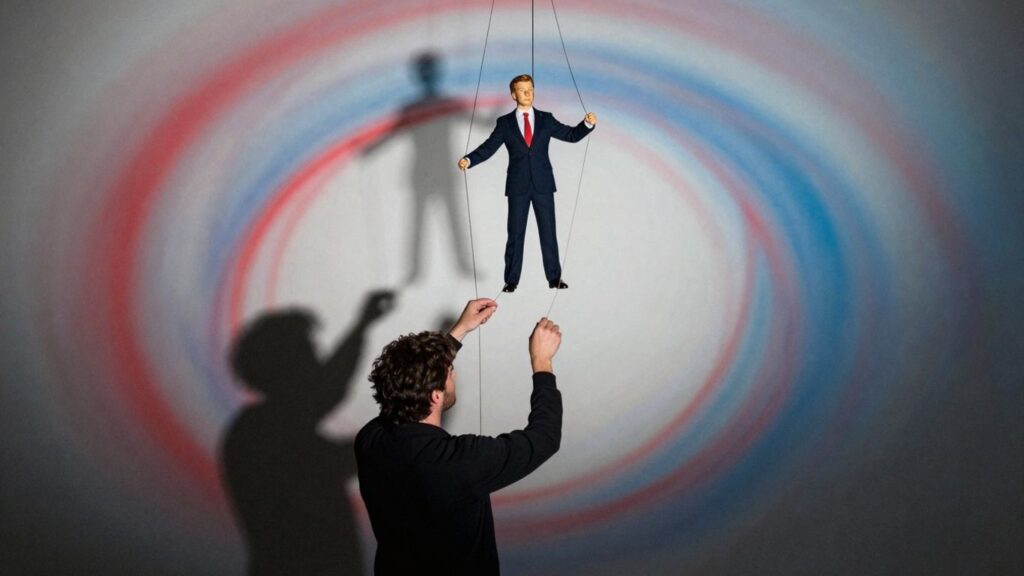
This video breaks down the science behind political propaganda, explaining how it works by appealing to our irrational instincts rather than our reason. It traces the roots of this manipulation from Freud’s group psychology theories to modern-day tactics used by various global powers.
Key Takeaways
- Propaganda manipulates by appealing to the subconscious and group instincts, not logic.
- Sigmund Freud’s work on group psychology laid the groundwork for understanding how individuals lose rationality in groups.
- Edward Bernays, Freud’s nephew, pioneered modern propaganda techniques, linking them to marketing.
- Joseph Goebbels adapted Bernays’ methods for Nazi Germany, and similar tactics are used today.
- Propaganda simplifies complex issues into "good vs. evil" narratives, making rational discussion difficult.
- The rebranding of propaganda as "public relations" is a key tactic to maintain a positive image.
Understanding Propaganda’s Core
Propaganda is often misunderstood as simply lying or spreading disinformation. However, its true nature is more subtle and powerful. It’s the science of manipulating people by tapping into their irrational side – their subconscious, their instincts, and their deep-seated need to belong to a group. We humans are rational beings, sure, but we’re also driven by instincts, and the need to fit in with our group is a really strong one. This is why we naturally form groups like families, nations, or religious communities. It’s a core part of our nature, and it pushes us to conform to the group around us. This instinct can often override rational thought.
Sigmund Freud, the famous psychoanalyst, actually introduced the idea of group psychology. He noticed that when people are in a group, they tend to lose their sense of individuality. They become more easily influenced, more emotional, and more impulsive. Rational thinking and moral limits can get pushed aside. This is what happens to a rational individual within a group setting. This group consciousness, or herd instinct, can be manipulated. When the need to adapt to the group takes over, rational considerations often go out the window. What an individual might never do on their own, they might readily do if the whole group is doing it, driven by emotion rather than reason.
The Pioneers of Propaganda
So, how do you manipulate this group psychology without appealing to reason at all? The foundation for this was laid over a century ago by Edward Bernays, who, interestingly, was Sigmund Freud’s nephew. Bernays took his uncle’s ideas about group psychology and applied them to political propaganda. He figured out how to tap into those irrational aspects of human nature.
Bernays was instrumental in convincing the American public to join World War I, using slogans like "the war to end all wars" and "the war to make the world safe for democracy." This sounds a lot like marketing, doesn’t it? And that’s because, to a large extent, political propaganda is the marketing of politics. Just like selling a car isn’t just about its features but also about status and sex appeal, political propaganda sells ideas and feelings to groups. For instance, freedom is often used to sell war. You appeal to the best in human nature – freedom, democracy, liberty – to get people to engage in conflict.
Bernays also applied these marketing principles to politics. He famously worked for the United Fruit Company when Guatemala introduced new labor laws that hurt their profits. Bernays managed to convince the American public that Guatemala’s president, Jacobo Arbenz, was a communist threat to freedom, even though Arbenz was actually a liberal capitalist. After swaying public opinion, the U.S. intervened, toppling the government under the guise of fighting communism. It wasn’t about controlling resources; it was about "helping" people gain freedom. This shows how propaganda effectively markets political agendas.
It’s also worth noting that Joseph Goebbels, Hitler’s propaganda minister, admitted that much of his approach came directly from Edward Bernays. So, propaganda didn’t just appear out of nowhere; it filled a need. As the world became more complex at the turn of the century, it became unrealistic for everyone, even informed politicians, to grasp every detail of global events. People needed mental shortcuts, or heuristics.
The "Good vs. Evil" Narrative
This is how propaganda still works today. Think about current events. We often know who’s on the "right side" and who’s on the "wrong side" without knowing the details. Why? Because we’re told the "in-group" – liberal democracies – are good, fighting for freedom and human rights. The opponents are labeled "terrorists" who "hate us." If you accept this simple good-vs-evil premise, objective reality often fades away. Who attacked first? What did each side actually say or do? This gets lost because group psychology is so powerful. We divide people into "us" and "them." This instinct to conform to the in-group is a survival mechanism. When stereotypes of the in-group and out-group are manipulated, objective reality becomes less important. Our actions are framed as advancing freedom, while our opponents’ actions are framed as destroying it.
Whenever political rhetoric is framed purely as good versus evil, you know propaganda is at play. For the West, this narrative is often framed as liberal democracies versus autocracies. This wasn’t always the case; it’s shifted over time – from civilized vs. barbarians, to capitalism vs. communism, and now to liberal democracy vs. autocracies. It’s a placeholder for "goodies vs. baddies." While there might be some truth to it, the idea that this explains all global conflicts is an oversimplification designed to make one side seem inherently good and the other inherently evil.
When political leaders only talk about "our values" and the "belligerent intentions of our adversaries," propaganda is likely involved. We rarely hear discussions about competing security concerns, which are a normal part of international relations. Promoting peace involves mutual understanding of each other’s worries and finding common solutions. But instead, we often only hear why other countries are "bad" and conflict with "our good values."
Tactics and Rebranding
Minor tactics are also used. For example, in the Ukraine war, repeated themes like "unprovoked invasion" and "full-scale invasion" are easily disproven with rational discussion. But that’s not the point. The human mind often confuses familiarity with reality. If a narrative is repeated constantly by news and politicians, it starts to sound true simply because it’s familiar.
Interestingly, propaganda itself has been propagandized. Early scholars recognized that democracies, with their expanded voting rights and transfer of sovereignty to the people, are actually more dependent on propaganda to manage public opinion than autocracies. Yet, it’s now almost an accepted truth that liberal democracies don’t do propaganda; only authoritarian states do.
This shift happened because the Germans’ use of propaganda during World War I created too many negative associations. So, language was manipulated. Edward Bernays played a key role in rebranding propaganda as "public relations." The in-group, the "good guys," do public relations, while the out-group, the "other side," does propaganda. Similarly, when we influence other countries’ civil societies, it’s called "engaging in democracy." But if our opponents do the same, it’s labeled "hybrid warfare." This creates two sets of language to prevent direct comparison.
Walter Lippmann, another key figure in early propaganda literature, eventually changed his mind. He recognized that propaganda is great for mobilizing public support for war by framing it as a struggle between good and evil. It’s easier to get people to support a war if they believe they’re fighting for freedom or to end all wars. However, Lippmann argued that propaganda is terrible for making peace. Once a workable peace is attainable, it becomes impossible because how can you compromise with "evil"? If your public is convinced they’ve been fighting pure evil, a peaceful compromise becomes unthinkable. This is why propaganda is effective for starting wars but hinders ending them peacefully.







Responses