Is Attacking Venezuela A War Crime? Colonel Douglas Macgregor Weighs In

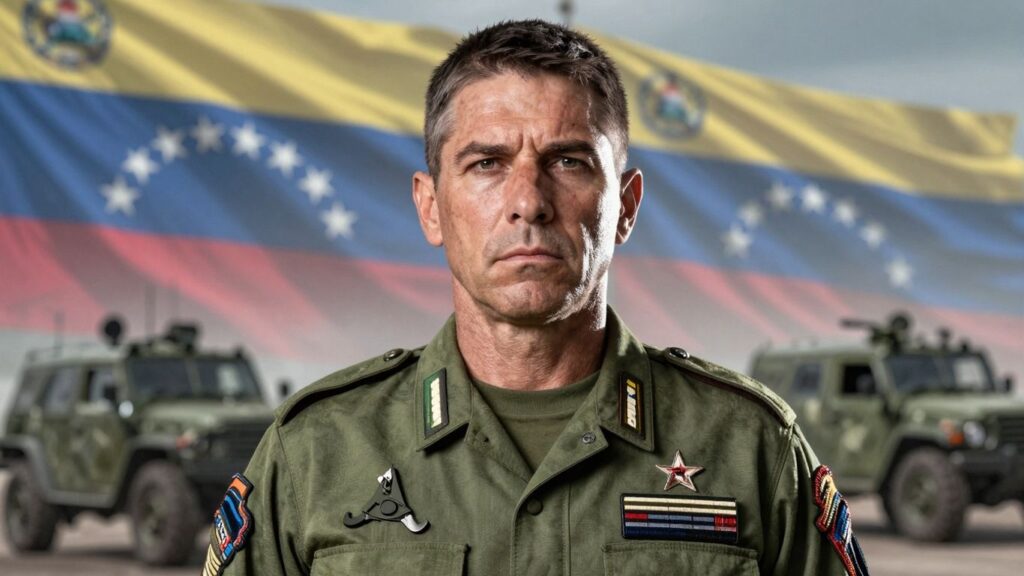
This discussion explores the legality and morality of military action against Venezuela, questioning whether an attack without a legitimate military purpose would constitute a war crime. Colonel Douglas Macgregor shares his insights on international law, military conduct, and the strategic implications of such a conflict.
Key Takeaways
- Attacking non-combatant civilians without clear evidence of hostile intent is a crime.
- Rescuing survivors of an attack is a legal and moral imperative under the laws of war.
- Taking prisoners is strategically beneficial for gathering intelligence.
- Killing defenseless individuals is an act of terrorism.
- Military leaders have a responsibility to refuse unlawful orders.
- Empires often become debtor nations, leading to unsustainable foreign policies.
- There appears to be no strategic military rationale for an assault on Venezuela.
- Wars initiated without just cause can be considered war crimes.
- Europe is not currently equipped for a large-scale conflict with Russia.
- Russia has effectively won the conflict in Ukraine.
The Morality Of Military Action
Colonel Douglas Macgregor joined Judge Andrew Napolitano to discuss a pressing question: would an attack on Venezuela, without a valid military reason, be considered a war crime? The conversation began by touching on a recent incident involving Secretary of Defense Pete Hegsth. The core issue was whether it’s a crime to attack or order the attack of unarmed civilians on a boat. Macgregor stated clearly, "Yes," unless there’s concrete evidence of their intent to commit violence against one’s country or forces. He pointed out that agencies like the U.S. Coast Guard are meant to handle such ambiguous situations.
He emphasized that the law of war and the Uniform Code of Military Justice clearly address these matters. Historically, wars have seen atrocities and mistakes. Macgregor recalled the Imperial Japanese Navy’s practice of interrogating and then killing captured American sailors during World War II, and the U.S. Navy’s retaliatory actions against Japanese sailors in the water. He stressed that after World War II and the Korean War, these issues were revisited, and the principles of what is right and wrong became clearer.
Seeing survivors clinging to wreckage after a strike on a boat, he argued, means they are not deserving of annihilation. They could have been rescued. Furthermore, Macgregor highlighted the strategic value of taking prisoners, as they are a source of information about networks, intentions, and future actions. Killing defenseless individuals, he stated, is an act of terror. He called the act of killing survivors from the boat, even if it was allegedly carrying drugs, "stupid."
Responsibility And Unlawful Orders
Prosecutors often advise bringing individuals in for charges and negotiation, which can lead to learning about trafficking networks. When asked about Admiral Bradley potentially following an order from the Secretary of Defense to kill everyone, Macgregor suggested that if the report is true, the Admiral had options. He could have refused the order, stating it was illegal, or chosen to disregard it. If he simply passed the order down without question, he would be guilty of a war crime, as would the Secretary of Defense.
Macgregor expressed concern for those at the lowest military levels – the sergeants and corporals – who are tasked with carrying out orders. He acknowledged the difficulty for them, as obedience is critical in a disciplined military, and disobeying an order could lead to a court-martial. However, he maintained that the responsibility ultimately lies at the top, stating, "the fish rots from the head."
He noted that the decision likely originated with the President or the Secretary of Defense. Macgregor believes there must be consequences for war crimes, and the military has a standard that they are above certain actions others might take. He mentioned that some individuals at Leavenworth made bad choices, and there must be accountability for unlawful and ruthless actions.
The Strategic Rationale (Or Lack Thereof)
When discussing the potential attack on Venezuela, Macgregor found no strategic rationale that would justify a military assault. He pointed to the Drug Enforcement Agency’s data, which doesn’t indicate that anything originating from Venezuela warrants the scale of military force assembled in the Caribbean. He argued that invading Venezuela without a national security or military justification could indeed be considered a war crime, citing historical examples where states went to war for reasons of honor, wealth, or perceived threats, often without considering the consequences for those at the bottom.
He also touched upon the idea of Japan potentially going to war over Taiwan against China, calling it "completely insane." He explained that both Beijing and Moscow have made it clear to Venezuela that they would be on their own if attacked by the U.S. Similarly, he stated it would be lunacy for the U.S. to challenge China over Taiwan. He drew a parallel to the situation in Ukraine, calling the decision to engage militarily on Russia’s doorstep "pretty damn dumb."
Macgregor believes Russia has effectively won in Ukraine and that continuing the conflict is nonsensical. He suggested that Russia might eventually take Odessa, turning Ukraine into a landlocked country, to prevent it from being a source of support for attacks. He urged for an end to the conflict through an agreement with the Russians, noting that President Trump understands this need.
Empires And Debt
Shifting gears, the conversation explored whether a country can exist as both an empire and a debtor. Macgregor explained that empires are meant to enrich the home country. If they cease to do so, they become a drain. He used the example of the British Empire after World War I, where the diminishing profits from colonies made them a financial burden. Empires, he noted, often become "mortgaged to vanity," with leaders prioritizing the display of national power over financial sense. This leads to empires becoming debtor nations. By the end of World War II, Great Britain’s debt-to-GDP ratio was 240%, forcing them to shed responsibilities, like granting independence to India.
Putin’s Perspective On Europe
Finally, the discussion touched on President Putin’s statements about Europe. Macgregor interpreted Putin’s comments about not planning to go to war with Europe, but being ready if Europe starts one, as a serious warning. He highlighted Putin’s view of Ukrainians as a kindred people, which is why the operation in Ukraine is described as "surgical." However, he stated that if Europe were to initiate a war, Russia would wage "total war." He pointed out that Russia is prepared for full mobilization, while Europe is not, and its economic strength cannot be quickly translated into military power. Macgregor concluded that Russia has no aspirations to conquer Europe but acts out of perceived necessity, and that the war in Ukraine is effectively over, with Russia having won.








Responses