Prague packs a thousand years of kings, emperors and brewers into a centre you can cross on foot in under an hour. The hard part isn’t finding things to do, it’s choosing: the famous sights sit a few minutes apart, and all of them are crowded between late morning and late afternoon. This guide lists what’s genuinely worth your time, how long each stop takes and where a ticket or tour actually helps.
Disclosure: this page contains links to GetYourGuide. If you book through them, People & Media may earn a small commission at no extra cost to you.
Our honest attraction reviews
Before you pay for a ticket, read our no-nonsense verdicts on Prague’s big-ticket sights and day trips.
13 best things to do in Prague
1. Prague Castle
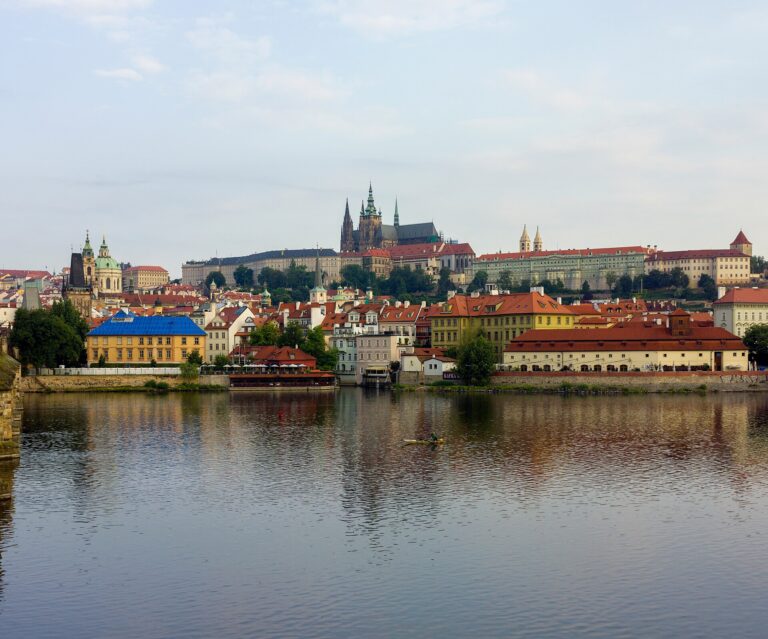
Not a single castle but a walled hilltop complex of palaces, churches, courtyards and gardens that has been the seat of Czech rulers for over a thousand years. The courtyards, the views and the front part of St Vitus Cathedral are free; the paid main circuit adds the full cathedral, the Old Royal Palace with Vladislav Hall, St George’s Basilica and Golden Lane (450 CZK for adults at the time of writing, per the official price list). Allow three to four hours if you go inside. Tip: arrive before 9:00, because by late morning the courtyards fill with tour groups. Read Is Prague Castle worth it? for which parts to skip, or see the stories behind the buildings on a small-group Prague Castle tour.
2. Charles Bridge
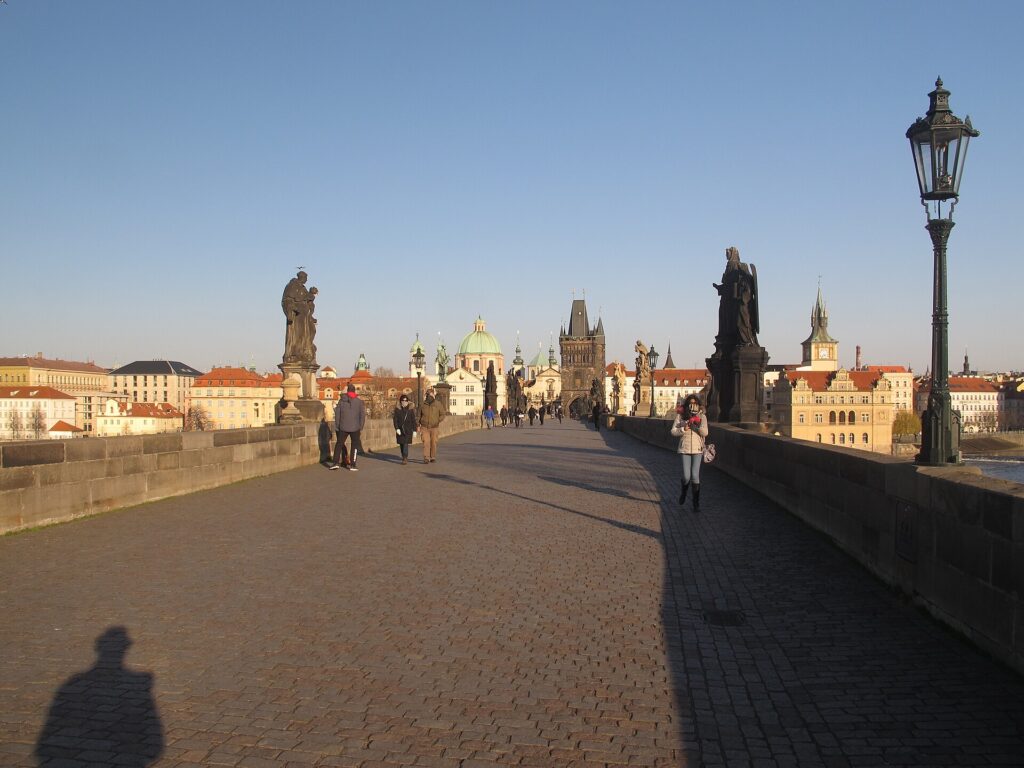
The 14th-century stone bridge between the Old Town and Malá Strana, lined with 30 Baroque statues and towers at both ends. It’s free, open all the time, and at midday it’s a slow shuffle past portrait painters and souvenir sellers. At sunrise it’s one of the most beautiful places in Central Europe. You need 20 minutes to cross it, longer if you stop for photos. Tip: go before 8:00, or late in the evening when the castle is lit up behind you.
3. Old Town Square
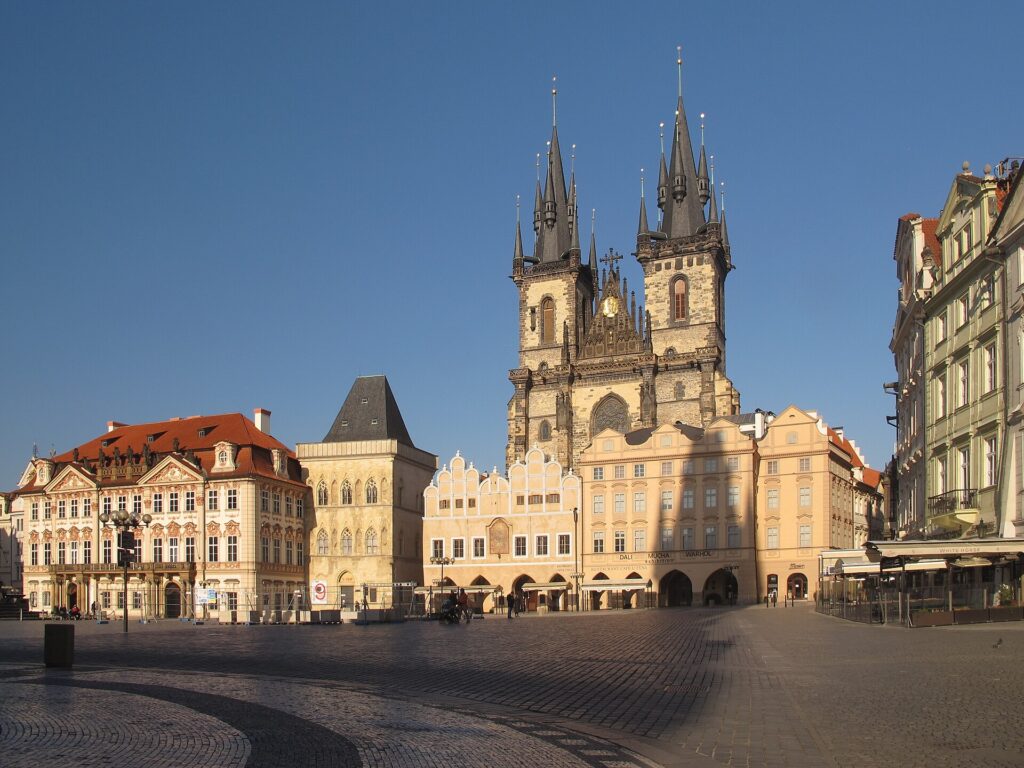
Prague’s main square is ringed by pastel Baroque houses, the twin black spires of the Týn Church and the Jan Hus memorial in the middle. Walking around is free and takes as long as you like. The restaurants with terraces facing the square charge for the view, so eat a few streets away. Tip: the square is at its best early in the morning or in the blue hour after sunset, when the Týn spires are floodlit.
4. The Astronomical Clock and Old Town Hall tower
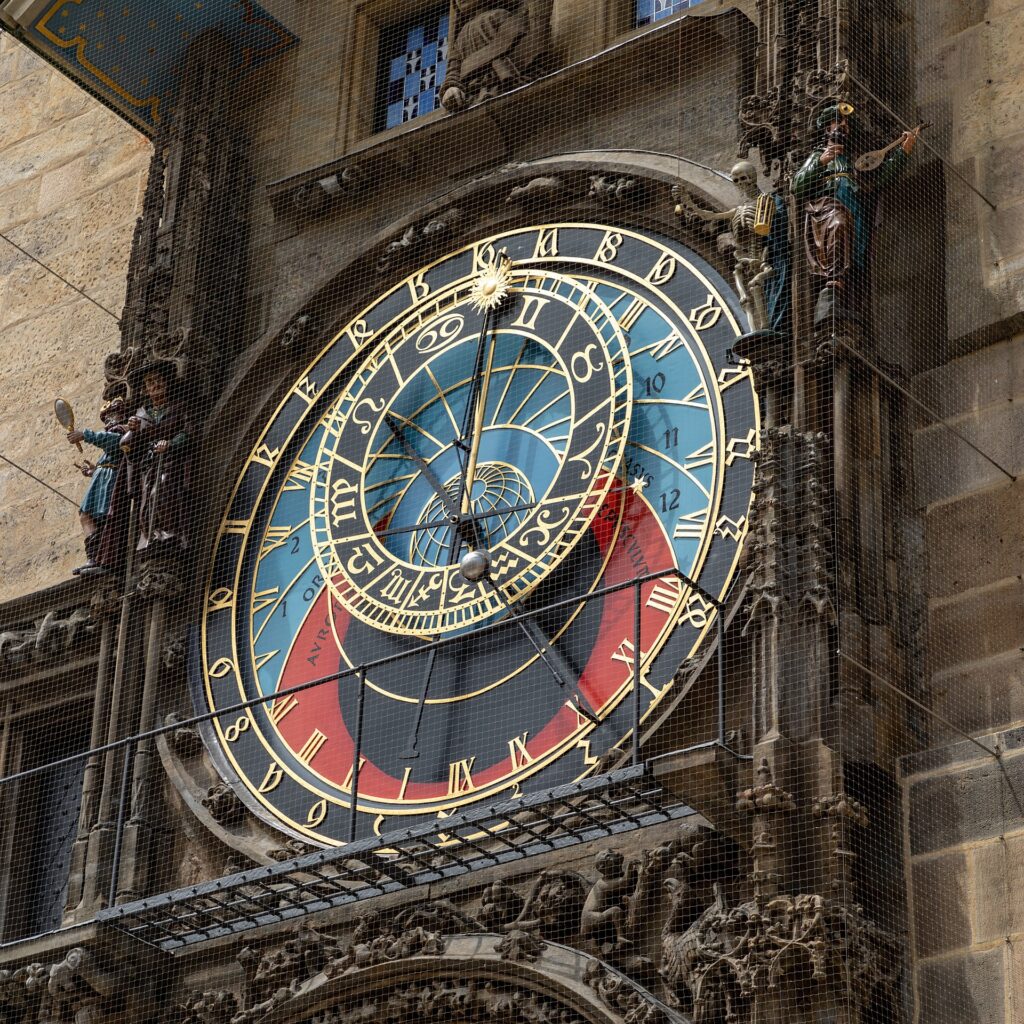
The medieval Astronomical Clock on the Old Town Hall still shows the position of the sun and moon, and every hour during the day the twelve apostles appear in its little windows. The show is free but short (under a minute), and many people find it underwhelming after the wait in the crowd. The better part is inside: the Old Town Hall route includes the tower with a 360-degree view over the rooftops. Official admission is 350 CZK for adults, and Prague City Tourism gives 50% off during the first hour after opening. Allow an hour. Tip: Prague City Tourism says it’s the only official seller, through its own ticket offices and the ColosseumTicket network, or book a Old Town Hall tower ticket if you want to arrange it ahead.
5. The Jewish Quarter (Josefov)
Josefov is one of the most moving places in the city. The Jewish Museum in Prague isn’t one building but a group of synagogues and the Old Jewish Cemetery, with its layers of tilted gravestones. One ticket covers all the museum’s open venues (600 CZK for adults, per the museum), is valid for three opening days, and a full visit takes two to three hours. The Pinkas Synagogue, with the handwritten names of Czech Holocaust victims covering its walls, stays with most visitors long after they leave. Tip: the museum is closed on Saturdays and Jewish holidays, so plan around that. The Old-New Synagogue is run by the Jewish community rather than the museum, so check which ticket it needs.
6. Malá Strana (Lesser Town) and St Nicholas Church
The neighbourhood below the castle is Prague’s prettiest: Baroque palaces, steep cobbled lanes and quiet walled gardens. Its centrepiece is the green-domed St Nicholas Church, one of the finest Baroque interiors in Central Europe (paid entry). Give the area half a day and combine it with the castle. Tip: walk up to the castle via Nerudova street and come back down through the Old Castle Steps, rather than the other way round.
7. Petřín Hill
A wooded hill with orchards, rose gardens and a lookout tower that looks like a mini Eiffel Tower. It’s the best place for a picnic with a view of the castle and the Old Town. The walk up takes 30 to 45 minutes. Tip: the funicular from Újezd has been closed for a two-year reconstruction; according to the transport company DPP, service resumes on 22 September 2026. It’s covered by 24-hour and 72-hour public transport tickets, but not by the 30- or 90-minute ones.
8. Vyšehrad
Prague’s “other castle” sits on a rock above the river, south of the centre. It’s more a fortified park than a castle, with ramparts you can walk along for free, the neo-Gothic Basilica of Sts Peter and Paul and Vyšehrad Cemetery, where Dvořák and Mucha are buried. Allow two hours. It’s where Prague locals go on a Sunday, and you’ll see a fraction of the crowds of Prague Castle. Tip: walk the ramparts in the late afternoon for the view downriver towards the castle.
9. A cruise on the Vltava
Seeing Charles Bridge, the castle and the riverside façades from the water is a relaxing break between sightseeing on foot, especially for tired legs or kids. Standard sightseeing cruises last around an hour; there are also longer lunch and dinner cruises. It’s not essential, but it’s a pleasant hour at the end of a long day. Tip: an evening sailing gives you the lit-up castle; compare options such as this panoramic Vltava river cruise. Paddle boats from the islands near the National Theatre are the cheaper DIY alternative in summer.
10. Strahov Monastery Library
Just above the castle, Strahov Monastery holds two of the most beautiful historic library halls in Europe: the Baroque Theological Hall and the soaring Philosophical Hall with its painted ceiling. Visitors look in from the doorway rather than walking through the halls, so the visit itself is short (30 to 45 minutes including the cabinet of curiosities). Paid entry. Tip: combine it with Prague Castle by starting at Strahov and walking downhill, and stop at the monastery brewery afterwards.
11. Letná Park and its beer garden
Letná is a plateau on the north bank with the most famous view of Prague’s bridges stacked one behind the other, plus a big, unpretentious beer garden under the chestnut trees. Entry is free, and you pay local prices for beer. Plan an hour or two on a warm evening. Tip: the viewpoint near the giant metronome is where the photographers go at sunset.
12. Czech beer and food in a traditional pub
Czech beer culture is a sight in itself: unpasteurised tank beer, waiters who keep bringing a fresh glass until you put a beer mat on top, and hearty dishes like svíčková (beef in cream sauce with dumplings) and roast pork. Budget an evening. Tip: the pubs on and around the main tourist routes are the most expensive and least authentic; walk ten minutes into Vinohrady, Žižkov or Karlín for the real thing.
13. Day trip to Kutná Hora
About an hour by train from Prague, this former silver-mining town has the famous Sedlec Ossuary, decorated with the bones of tens of thousands of people, plus two UNESCO-listed cathedrals and a quiet medieval centre. The ossuary visit is short and needs a timed slot, so the town is what makes it a full day. Go independently by train or join a tour to skip the ticket and transfer logistics. Tip: book the ossuary slot before you go. Our verdict: Is Kutná Hora worth it?, or compare a half-day tour to Kutná Hora from Prague.
- Hour-by-hour itinerary for 3 days
- Google Maps list with every stop
- What to book in advance (and when)
- Works offline on your phone
Planning your trip to Prague
Best time to visit
April to early June and September to October are the sweet spot: comfortable walking weather and fewer people than July and August, when the Old Town is at its busiest. December is popular for the Christmas markets on Old Town Square, but expect crowds and short, cold days. January to March is the quietest and cheapest time, and the city looks beautiful under frost, but gardens such as those at Prague Castle are generally only open in the warmer months.
How many days do you need?
Three full days is ideal. Spend day one on the castle, Strahov and Malá Strana; day two on Charles Bridge, the Old Town and the Jewish Quarter; and day three on Vyšehrad, Petřín or Letná and a river cruise. Add a fourth day for Kutná Hora. With just two days, skip the paid interiors and focus on walking the historic centre early and late.
Getting around
The historic centre is walkable, but hills and cobblestones add up; trams are the best way to save your legs. According to DPP’s official price list, a 30-minute ticket costs 39 CZK, a 90-minute ticket 50 CZK, a 24-hour ticket 150 CZK and a 72-hour ticket 350 CZK (slightly cheaper in the PID Lítačka app). Validate paper tickets when you first use them, because inspectors are common.
The official Prague Visitor Pass combines unlimited public transport, including the airport connection, with free or discounted entry to more than 70 attractions. It comes in 48, 72 and 120-hour versions; the official site lists 2,700 CZK, 3,300 CZK and 3,900 CZK for adults. It only pays off if you plan to visit several paid sights a day, such as the Prague Castle circuit, the Old Town Hall and the Jewish Museum. If you mostly want to walk and look, a transport ticket is enough.
Where to stay
- Old Town (Staré Město): everything on your doorstep, but noisy at night and the most expensive.
- Malá Strana: romantic and quiet after dark, close to the castle; hilly and fewer budget options.
- New Town (Nové Město): central and good value, with plenty of tram and metro connections.
- Vinohrady and Karlín: residential, leafy and full of good cafés and restaurants, 10 to 15 minutes by tram from the centre.
Frequently asked questions
What is the number one thing to do in Prague?
For most first-time visitors, Prague Castle combined with a walk across Charles Bridge and through Malá Strana. You can do the whole route for free; paying for the castle interiors is worth it mainly for St Vitus Cathedral and the Old Royal Palace.
Is 2 days enough for Prague?
Two days is enough to see the highlights of the castle district and the Old Town at a brisk pace. You’ll have to skip day trips and most museums, so three days is more relaxed.
What can you do in Prague for free?
A lot: Charles Bridge, Old Town Square and the Astronomical Clock show, the Prague Castle courtyards, the Vyšehrad ramparts, Letná Park and the walk up Petřín Hill are all free.
Is the Prague Visitor Pass worth it?
Only if you plan a sightseeing-heavy trip with several paid entries a day. For a relaxed trip with one or two paid sights, a 24- or 72-hour public transport ticket plus individual tickets is usually cheaper.
Do I need to book Prague attractions in advance?
For most sights you can buy tickets on the day, but queues at Prague Castle build quickly from late morning. The Sedlec Ossuary in Kutná Hora is the exception: timed slots are limited, so book that ahead.
Can you pay in euros in Prague?
The Czech Republic uses the koruna (CZK). Some tourist businesses accept euros, but at a poor rate. Cards are widely accepted; if you do withdraw cash, use a bank ATM and decline the machine’s own currency conversion.
Featured image: Photo: DXR, CC BY-SA 4.0, via Wikimedia Commons