Munich is where Bavaria shows off: royal palaces, world-class art museums and beer gardens under chestnut trees, all within a compact, easy-going city centre. It’s also the gateway to the Alps, with Neuschwanstein Castle and Salzburg within day-trip reach. This guide picks the sights that are genuinely worth your time and tells you which ones you can see for free.
Disclosure: this page contains links to GetYourGuide. If you book through them, People & Media may earn a small commission at no extra cost to you.
Our honest attraction reviews
Planning a big day out from Munich? Our in-depth reviews tell you what’s great, what’s overrated and how to plan your visit.
15 best things to do in Munich
1. Watch the Glockenspiel on Marienplatz
Munich’s central square is framed by the neo-Gothic New Town Hall, whose tower holds one of the largest carillons in Germany, with 43 bells. Every day, life-size figures re-enact a 16th-century royal wedding with a jousting tournament and the traditional coopers’ dance.
Time needed: 15 minutes for the show. Cost: free. Tip: the Glockenspiel plays daily at 11:00 and 12:00, with an extra show at 17:00 from March to October. The square gets packed, so stand towards the back for a better view of the tower, or watch from a café terrace opposite.
2. Go up the New Town Hall tower
A lift takes you up the tower of the Neues Rathaus to a viewing platform right above Marienplatz, with the twin domes of the Frauenkirche in front of you and, on clear days, the Alps on the horizon.
Time needed: 30 minutes. Cost: paid; according to muenchen.de, tickets start at €7 for a 20-minute time slot. Tip: the tower is open daily from 10:00 to 20:00 (last lift 19:40). The evening slots give you the best light over the rooftops.
3. Climb St. Peter’s Church tower (Alter Peter)
Munich’s oldest parish church stands just off Marienplatz, and its tower is the classic alternative to the Town Hall viewpoint. There’s no lift, just a long, narrow staircase, but the reward is a view that includes the New Town Hall itself.
Time needed: 45 minutes. Cost: small fee for the tower. Tip: the stairway up and down is shared and narrow, so avoid it if you don’t like tight spaces. On a Föhn day (a warm, dry wind from the south), the Alps look close enough to touch.
4. Step into the Frauenkirche
The brick cathedral with its two onion-domed towers is Munich’s best-known landmark. The interior is surprisingly plain and bright, but look for the “Devil’s Footstep” in the entrance hall, a footprint in the floor tied to a local legend.
Time needed: 20 minutes. Cost: free. Tip: after a 2004 referendum, Munich limited new high-rises in the inner city, which is why the Frauenkirche still dominates the skyline. Frame the towers from the top of St. Peter’s.
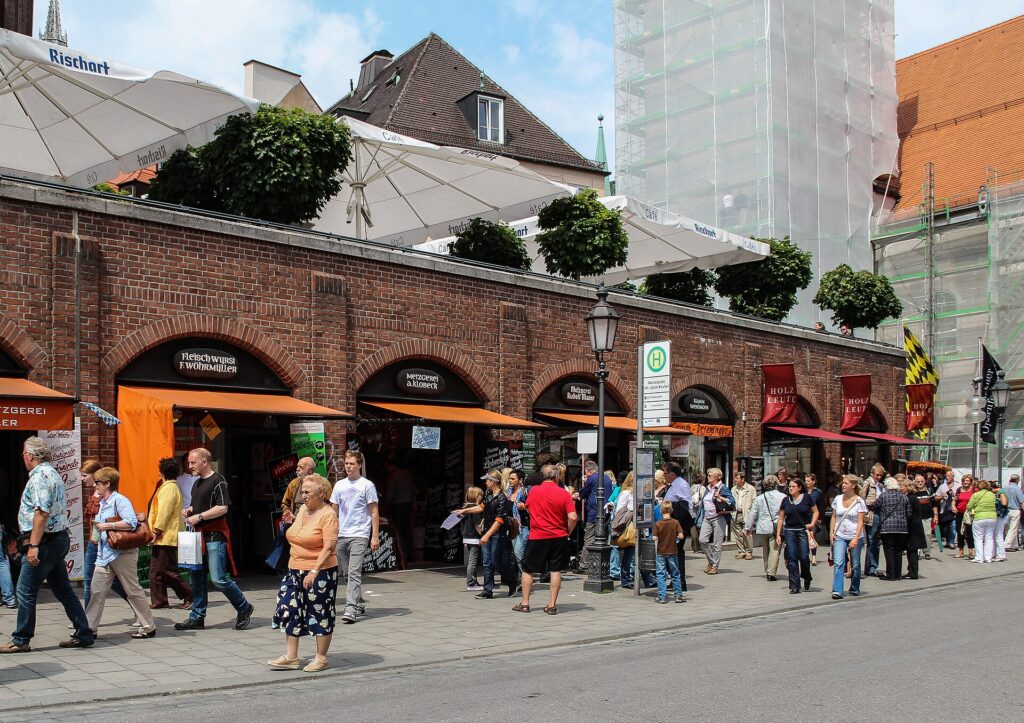
5. Graze at the Viktualienmarkt
Munich’s food market has been trading since the early 19th century: fruit and vegetable stalls, butchers, cheese counters, a fish hall and a beer garden under the maypole. It’s the place for a Leberkäse roll or a Weisswurst breakfast.
Time needed: 1 hour. Cost: free to browse. Tip: the market is closed on Sundays and public holidays. If you want to taste more than you can order yourself, a Viktualienmarkt food tour takes you past the best stalls with tastings included.
6. Explore the Munich Residenz
The former city palace of the Wittelsbach rulers is one of the largest palace museums in Europe: the Renaissance Antiquarium hall, elaborate state rooms, the Treasury with its crowns and jewels, and the Rococo Cuvilliés Theatre. It’s far less crowded than Neuschwanstein and, room for room, more impressive.
Time needed: 2 to 3 hours for the Residenz Museum and Treasury. Cost: paid, with combination tickets for the museum, Treasury and theatre. Tip: backpacks and bags larger than 35 x 30 x 12 cm aren’t allowed inside, but there’s a free supervised cloakroom. The Court Garden (Hofgarten) next door is free and lovely.
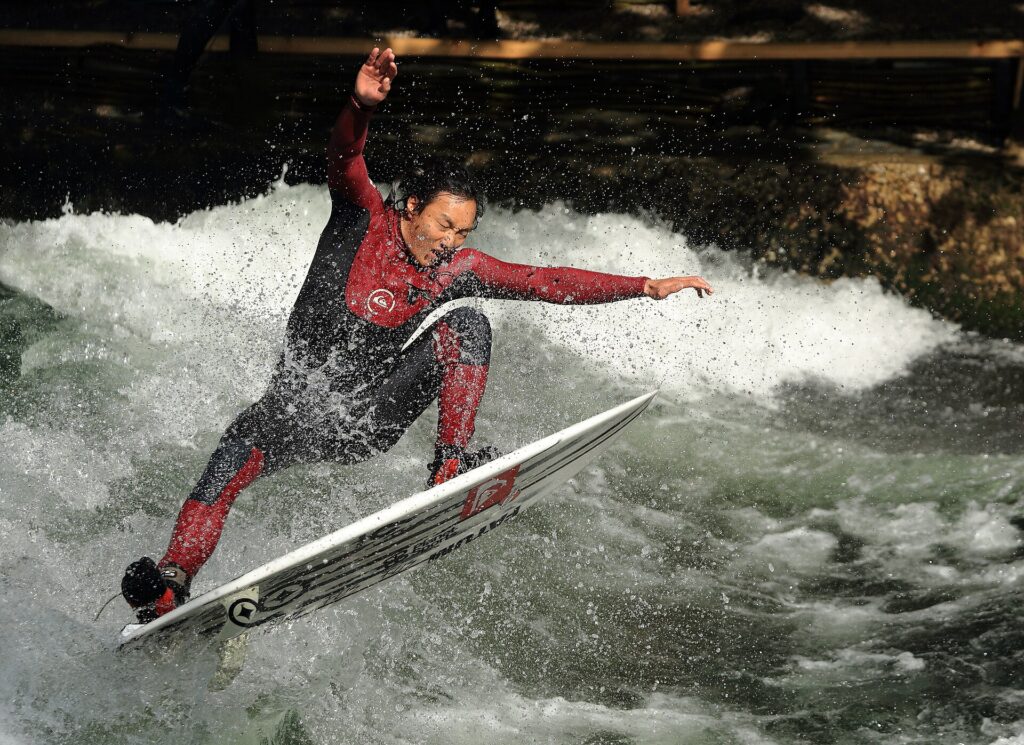
7. Walk the English Garden and watch the Eisbach surfers
The Englischer Garten is one of the largest city parks in the world, bigger than New York’s Central Park. At its southern edge, surfers ride a standing wave on the Eisbach stream, even in winter, whenever the water level allows. Further in, you’ll find meadows, the Monopteros temple with its view of the skyline and the Chinese Tower beer garden.
Time needed: 2 hours to half a day. Cost: free. Tip: the Eisbach wave is right next to the Haus der Kunst. Swimming in the Eisbach is dangerous because of the strong current, so leave that to the locals who know it.
8. Drink a Mass in a beer hall or beer garden
The Hofbräuhaus is loud, touristy and still worth seeing once for its painted vaults and oompah band. For a more local experience, head to a beer garden: the Augustiner-Keller, the Hirschgarten or the Chinesischer Turm. Beer comes by the litre (a Mass).
Time needed: an afternoon or evening. Cost: pay for what you eat and drink. Tip: in traditional beer gardens you’re allowed to bring your own food to the tables without tablecloths; only drinks have to be bought on site.
9. See the old masters at the Alte Pinakothek
The Alte Pinakothek is one of the world’s great old-master galleries, with Dürer, Rubens, Rembrandt and Leonardo da Vinci. It anchors the Kunstareal, Munich’s museum quarter, which also includes the Pinakothek der Moderne and Museum Brandhorst.
Time needed: 2 hours. Cost: paid, but only €1 for the permanent collections on Sundays. Tip: the Alte Pinakothek is closed on Mondays; the Neue Pinakothek is closed for renovation until 2029, but a selection of its 19th-century highlights is on display in the Alte Pinakothek.
10. Spend a rainy day at the Deutsches Museum
One of the largest science and technology museums in the world, on an island in the Isar. Expect aircraft, ships, historic instruments and lots of hands-on experiments. It’s in the middle of a long modernisation, but the museum is open.
Time needed: half a day at least. Cost: paid. Tip: the museum is open daily from 9:00 to 17:00. Buy your ticket online and pick two or three sections instead of trying to see it all.
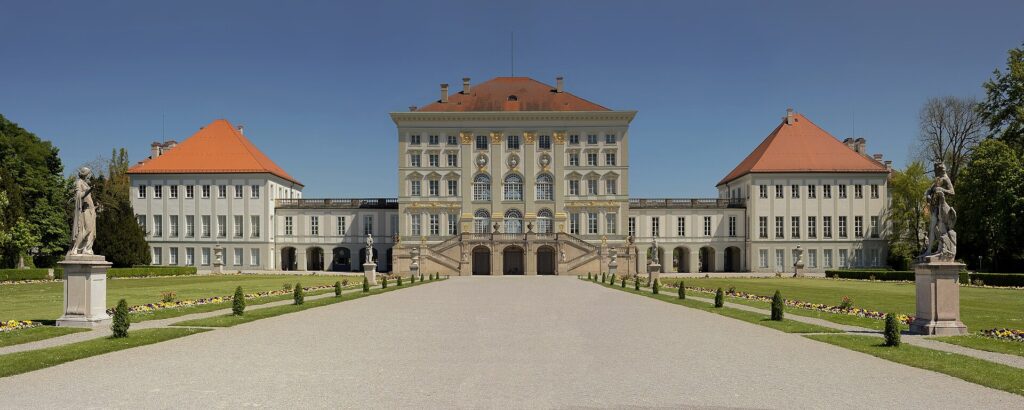
11. Visit Nymphenburg Palace
The Baroque summer residence of the Bavarian rulers is where King Ludwig II was born. Inside, the highlights are the Stone Hall and the Gallery of Beauties; outside, a huge park with canals, pavilions and the Marstallmuseum with its royal coaches.
Time needed: half a day. Cost: the palace, Marstallmuseum and park pavilions are paid; walking in the park is free. Tip: the palace works with timed tickets, while the Marstallmuseum and pavilions don’t need a time slot. Gondola rides on the central canal run from April to October.
12. Visit BMW Welt and the Olympic Park
BMW Welt, the brand’s showroom and delivery centre, is free to enter and fun even if you’re not a car fan. The BMW Museum next door covers a century of cars and motorbikes. Across the road, the 1972 Olympic Park has its famous tent-like roofs, a hill with a skyline view and the Olympic Tower.
Time needed: half a day. Cost: BMW Welt and the park are free; the museum and tower are paid. Tip: the BMW Museum is closed on Mondays and doesn’t accept cash. Take the U3 to Olympiazentrum.
13. Go to Oktoberfest (if your dates match)
The world’s biggest folk festival fills the Theresienwiese with beer tents, rides and people in Tracht. In 2026 it runs from 19 September to 4 October. Outside Oktoberfest season, the smaller spring festival and the city’s Christmas markets offer a similar atmosphere with fewer crowds.
Time needed: half a day or an evening. Cost: free to enter the grounds; food, beer and rides are paid. Tip: come on a weekday before 11:00 to find a seat in a tent without a reservation, and book accommodation months in advance, as prices rise sharply during the festival.
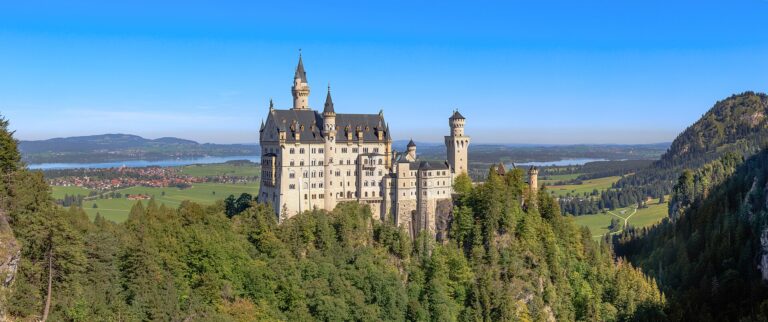
14. Take a day trip to Neuschwanstein Castle
King Ludwig II’s fairy-tale castle above the Pöllat Gorge is the most famous day trip from Munich. The setting and the view from Mary’s Bridge are spectacular; the guided tour of the interior is short. Our full verdict is in Is Neuschwanstein Castle worth it?
Time needed: a full day, typically 10 to 12 hours by train and bus. Cost: paid for the castle tour. Tip: you can only go inside on a timed tour, and same-day tickets are limited, so book ahead. If you’d rather not juggle trains, buses and a fixed tour slot, a guided Neuschwanstein day trip from Munich handles the logistics, or compare all Neuschwanstein tours and tickets.
15. Visit the Dachau Concentration Camp Memorial Site
Dachau, opened in March 1933, was the first regular concentration camp set up by the Nazis and a model for those that followed. More than 200,000 people were imprisoned here, and 41,500 were murdered. The memorial site in the town of Dachau includes the former roll-call square, reconstructed barracks and the main exhibition.
Time needed: half a day including travel from Munich. Cost: admission is free; audio guides and guided tours are available. Tip: the site is open daily from 9:00 to 17:00 and can be reached by S-Bahn and bus from Munich. English-language tours run daily at 11:00 and 13:00.
- Hour-by-hour itinerary for 3 days
- Google Maps list with every stop
- What to book in advance (and when)
- Works offline on your phone
Practical tips for visiting Munich
Best time to visit
May to early July and September are the best months, with long evenings in the beer gardens. Late September and early October mean Oktoberfest: a great atmosphere, but very busy and expensive. December brings Christmas markets on Marienplatz and elsewhere. January to March is cold and quiet, a good time for museums and the Alps in snow.
How many days do you need?
Plan three days for the city: one for the Old Town (Marienplatz, Frauenkirche, Viktualienmarkt, Residenz), one for the English Garden and the museums, and one for Nymphenburg or the Olympic Park. Add a full day for Neuschwanstein, and another if you want to see Salzburg or the Zugspitze.
Getting around
The Old Town is compact and walkable. For everything else, the MVV network of U-Bahn, S-Bahn, trams and buses is fast and reliable; buy tickets in the MVV app or at machines, and note that day tickets for the city zone don’t automatically cover the airport. If you’re spending a few weeks in Germany, the monthly Deutschlandticket subscription also covers local public transport in Munich and regional trains across the country. Munich also has official city passes that combine transport with free or discounted entries; they only pay off if you plan a lot of paid sights in a short time.
Where to stay
- Altstadt (Old Town): closest to the main sights, but the most expensive.
- Maxvorstadt: the museum and university district, with cafés and good transport links.
- Schwabing: leafy, near the English Garden, with a relaxed neighbourhood feel.
- Glockenbachviertel and Isarvorstadt: trendy bars and restaurants, close to the river and the Old Town.
- Around the Hauptbahnhof: practical for day trips by train, but the area itself isn’t very pleasant.
Frequently asked questions
How many days do you need in Munich?
Three days is enough for the city’s highlights at a relaxed pace. Add a day for each day trip, such as Neuschwanstein Castle or Salzburg.
What can you do for free in Munich?
Watch the Glockenspiel, visit the Frauenkirche, browse the Viktualienmarkt, walk the English Garden and watch the Eisbach surfers, stroll the Hofgarten and the Nymphenburg park, explore BMW Welt and the Olympic Park, and visit the Dachau Memorial Site. On Sundays, the Pinakothek museums cost only €1.
Is Neuschwanstein worth a day trip from Munich?
Yes, for most visitors, but expect a long day of 10 to 12 hours by public transport. The setting is the highlight; the interior tour is short. Book your tour time in advance, or join an organised day trip.
Is Munich expensive?
Munich is one of Germany’s most expensive cities, especially for accommodation, and prices peak during Oktoberfest and trade fairs. You can keep costs down by eating at markets and beer gardens and by using the many free sights.
When is Oktoberfest 2026?
Oktoberfest 2026 runs from 19 September to 4 October on the Theresienwiese. Entry to the grounds is free, and you can find a seat in many tents without a reservation if you come early on a weekday.
Featured image: Photo: Martin Falbisoner, CC BY-SA 3.0, via Wikimedia Commons