London is expensive, but its best museums are free: the British Museum, the National Gallery, Tate Modern and the Natural History Museum don’t charge for their permanent collections. That changes how you plan a trip. Spend your money on the few paid sights that really earn it, such as the Tower of London or a West End show, and fill the gaps with free galleries, markets and riverside walks. This guide picks out what’s worth your time, how long each stop takes and where a ticket or tour genuinely helps.
Disclosure: this page contains links to GetYourGuide. If you book through them, People & Media may earn a small commission at no extra cost to you.
Our honest attraction reviews
London’s paid attractions add up fast, so we’ve tested whether the big names are worth the money. Start with these verdicts.
14 best things to do in London
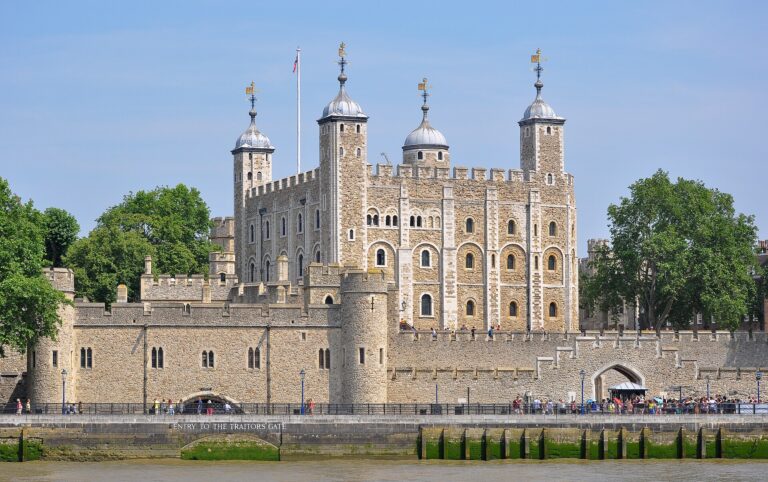
1. The Tower of London
A medieval fortress, royal palace and prison on the Thames, home to the Crown Jewels and the Yeoman Warders. It’s one of London’s pricier tickets, but it fills three to four hours: the Jewel House, the White Tower, the wall walks and a Yeoman Warder tour that’s included in the ticket. Tip: go straight to the Crown Jewels when the gates open, because the queue is at its worst from about noon to 3pm. Read Is the Tower of London worth it? or compare Tower of London tickets and early-access tours.
2. The British Museum
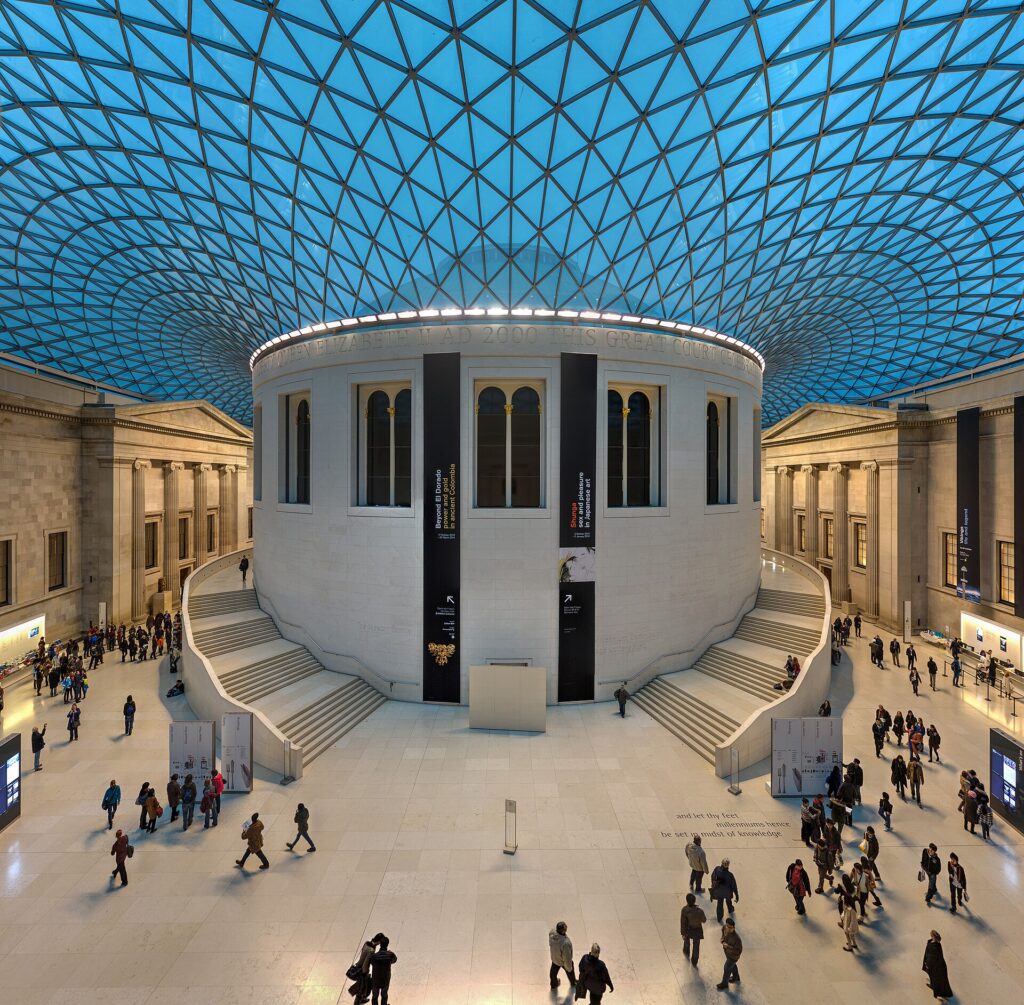
Two million years of human history under one roof, from the Rosetta Stone and the Parthenon sculptures to Egyptian mummies and the Sutton Hoo treasure. General admission is free, so you don’t have to see it all in one go. Two to three hours covers the highlights. Tip: pick three or four galleries before you go and head there first; the glass-roofed Great Court is impressive, but it’s a hall, not the collection, and the most famous rooms are busiest from late morning.
3. Westminster Abbey
The church where English and British monarchs have been crowned for almost a thousand years, packed with royal tombs, Poets’ Corner and some of the finest medieval architecture in the country. Paid for sightseeing, allow about two hours. Tip: on Sundays the Abbey is open for worship only, not for sightseeing, and it can close at short notice for services and events. Attending a service is free if you just want to see the interior and hear the choir. Tickets for sightseeing are on the official site or via Westminster Abbey entry tickets and guided tours.
4. Westminster, Buckingham Palace and the Changing of the Guard
Walk from Big Ben and the Houses of Parliament past Horse Guards Parade and through St James’s Park to Buckingham Palace. It’s the classic London postcard route, and it’s free. Allow two hours, more if you want to watch the Changing of the Guard. Tip: the ceremony doesn’t take place every day, so check the official schedule the day before, and get to the palace railings early or watch the band march along The Mall instead, where the crowds are thinner.
5. The London Eye
The giant wheel on the South Bank takes about 30 minutes to turn, with the Houses of Parliament right below your capsule. It’s an easy, relaxing experience for all ages but not the best-value view in London. Paid. Tip: book online (it costs more at the box office), pick a clear day, and remember the time on your ticket is when you join the queue, not when you board. Read Is the London Eye worth it? or see London Eye tickets.
6. The South Bank and Tate Modern
The riverside path from the London Eye to Tower Bridge is the best free walk in the city: street performers, the book market under Waterloo Bridge, Shakespeare’s Globe and Tate Modern in a former power station. Tate Modern’s collection, with works by Picasso, Matisse and Yayoi Kusama, is free; some exhibitions are paid. Half a day at a relaxed pace. Tip: go up to the viewing level of Tate Modern’s Blavatnik Building for a free view over the Thames and St Paul’s.
7. St Paul’s Cathedral
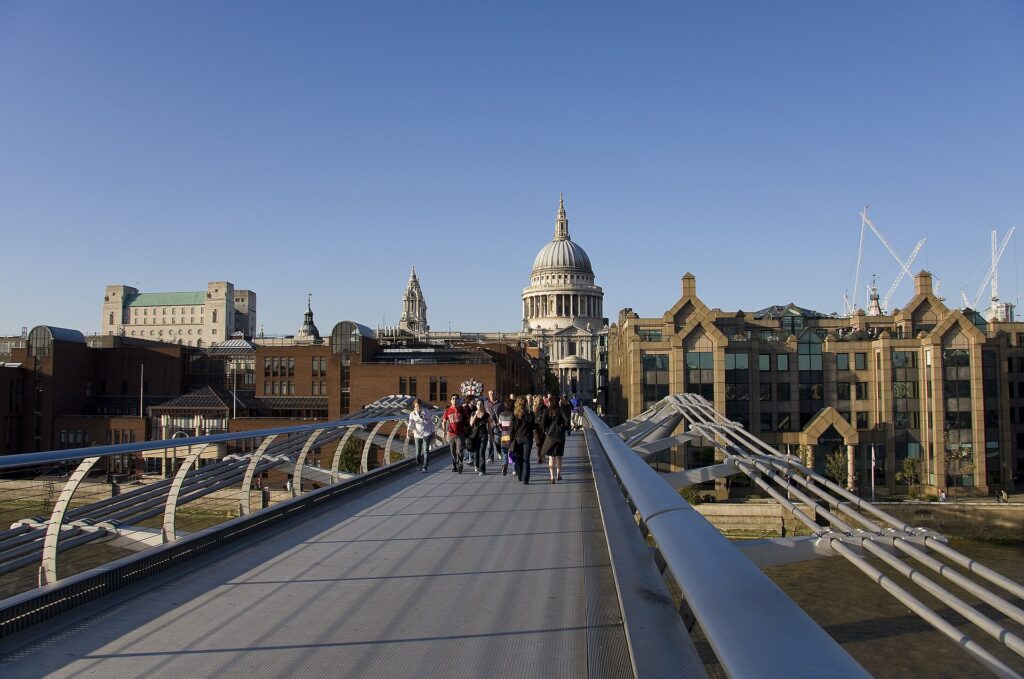
Christopher Wren’s baroque masterpiece, rebuilt after the Great Fire of 1666, with a dome you can climb to galleries inside and outside. Paid for sightseeing, allow about two hours including the climb. Tip: walk to St Paul’s across the Millennium Bridge from Tate Modern for the best approach, and book online, where tickets are cheaper than at the door at the time of writing.
8. The National Gallery and Trafalgar Square
One of the world’s great collections of European painting, from Van Eyck and Leonardo to Turner, Constable and Van Gogh’s Sunflowers, right on Trafalgar Square. Free general admission, with some paid exhibitions. Two hours for the highlights. Tip: the gallery is open late on Fridays, and you can book a free timed ticket online for fast-track entry, though walk-up entry is also possible. Some rooms are closed for building work at the time of writing.
9. Borough Market
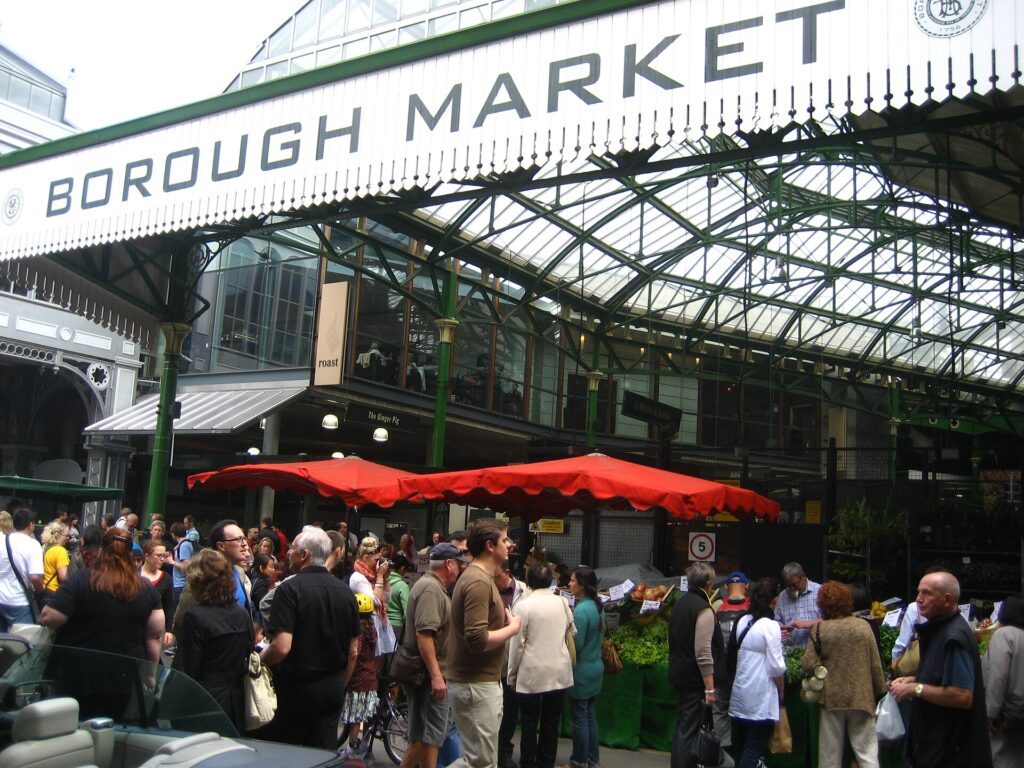
London’s best-known food market sits under the railway arches next to London Bridge. It’s a good place for lunch: cheese, oysters, Ethiopian stews, salt beef sandwiches and some of the city’s best pastries. Free to enter. An hour or so. Tip: Saturday lunchtime is a crush; go on a weekday morning, and combine it with Southwark Cathedral next door and the South Bank walk.
10. The Natural History Museum and South Kensington
The dinosaur skeletons, the blue whale in Hintze Hall and the Romanesque building itself make this the best museum in London for families. The Victoria and Albert Museum and the Science Museum are on the same street. The galleries are free, with paid exhibitions. Half a day for one museum, a full day if you combine two. Tip: book a free entry ticket online; in school holidays and on rainy weekends the queue outside can be long.
11. A West End show
London’s theatre district around Leicester Square and Covent Garden stages long-running musicals and new plays on most nights of the week, with matinees on some afternoons. It’s one of the few things you can only really do in London (or New York). Paid, around two and a half to three hours. Tip: midweek performances and matinees are usually easier to get than Friday and Saturday nights. Compare seats for the big musicals on West End show tickets.
12. Greenwich
A riverside town within London with a UNESCO-listed maritime heritage: the Old Royal Naval College, the Cutty Sark, the Royal Observatory on the Prime Meridian and a big park with a view back to Canary Wharf. The National Maritime Museum and the Queen’s House are free; the Cutty Sark and the Royal Observatory are paid. Half a day to a full day. Tip: go there by river boat from central London and come back on the DLR, and walk up the hill in Greenwich Park for the skyline view even if you skip the Observatory.
13. Camden Market and Regent’s Canal
Camden’s sprawling markets mix street food, vintage clothes and alternative fashion, and the towpath along Regent’s Canal leads west past Little Venice or east towards King’s Cross. Free to wander. Two to three hours. Tip: walk the towpath from Camden to Little Venice (or the other way) for a quieter side of London, and go in the morning before the market gets crowded.
14. Day trip to Stonehenge
The prehistoric stone circle on Salisbury Plain is more impressive in person than most people expect, but you see it from a path around the stones and the trip takes a full day: the drive from London is roughly two hours each way. Paid. Tip: combine it with Bath, Salisbury or Windsor so the journey pays off, and book online the day before at the latest for the advance discount on the English Heritage site. See Is Stonehenge worth it? or a Windsor, Stonehenge and Bath day tour from London.
- Hour-by-hour itinerary for 3 days
- Google Maps list with every stop
- What to book in advance (and when)
- Works offline on your phone
Planning a London trip
Best time to visit
May, June and September are the most pleasant months: long days, mild weather and parks at their best. July and August bring school-holiday crowds at the museums and the Tower. London rarely gets very cold, and winter has shorter queues and Christmas lights, but daylight is gone by mid-afternoon. It can rain in any month, which is one reason the free museums are so useful.
How many days do you need?
Four days is a good first visit: one for Westminster and the South Bank, one for the Tower, St Paul’s and Borough Market, one for the British Museum, the National Gallery and a West End show, and one for South Kensington or Greenwich. Add a fifth day for Stonehenge or another day trip.
Getting around
You don’t need a paper ticket or a special tourist card for public transport. Tap in and out with a contactless bank card, a phone or an Oyster card on the Tube, buses, the Elizabeth line, the DLR and most trains in London. Pay-as-you-go fares are capped, so a day of heavy travel never costs more than the cap for the zones you use. Use the same card or device all day, because the cap only works per card. Buses don’t accept cash. Walking is often quicker than the Tube for short hops in the centre, for example between Covent Garden and Leicester Square.
Before you go: visitors from the EU and many other countries now need a UK Electronic Travel Authorisation (ETA) before travelling. It costs £20 on the official gov.uk website at the time of writing; other websites charge more.
City passes: because so many of London’s best museums are free, a sightseeing pass only pays off if you plan to visit several paid attractions in a short time. Add up the official ticket prices of what you’ll actually see before you buy one.
Where to stay
- South Bank and Southwark: riverside, walkable to Westminster, Tate Modern and Borough Market.
- Covent Garden and Soho: right in the West End for theatres and restaurants, but lively and pricey.
- Bloomsbury: quieter streets near the British Museum, with good Tube links.
- King’s Cross and St Pancras: handy if you arrive by Eurostar, with a much-improved canal-side area.
- South Kensington: elegant and safe, next to the big museums and Hyde Park.
- Shoreditch: younger, with bars, street art and markets; good value on the edge of the City.
Frequently asked questions
What is the number one thing to do in London?
For most first-time visitors it’s the Tower of London, with the Crown Jewels and the Yeoman Warder tour. If you’d rather not pay, the British Museum and a walk along the South Bank from the London Eye to Tower Bridge give you a similar sense of the city for free.
How many days in London is enough?
Four days covers the main sights without rushing. With two or three days, focus on Westminster, the South Bank, the Tower and one big museum.
What can you do in London for free?
A lot: the British Museum, the National Gallery, Tate Modern, the Natural History Museum and the V&A, the National Maritime Museum in Greenwich, the parks, Borough Market and Camden Market, and the Changing of the Guard. Attending a service at Westminster Abbey or St Paul’s is also free.
Do I need to book London attractions in advance?
For the paid headliners, yes: the Tower of London, the London Eye and Westminster Abbey are all cheaper or quicker when booked online, and popular West End shows sell out on weekends. For the free museums, a free timed ticket is optional at most but helps in school holidays.
Do EU citizens need an ETA to visit London?
Yes, most EU visitors now need a UK Electronic Travel Authorisation before travelling. Apply on the official gov.uk website or app; it costs £20 at the time of writing. Check the government’s visa checker for your nationality.
Is Stonehenge worth a day trip from London?
It is if you combine it with Bath, Salisbury or Windsor. The stones alone are a short visit after a long drive, so a combined tour gives much better value for the day.
Featured image: Photo: Christian David, CC BY-SA 4.0, via Wikimedia Commons