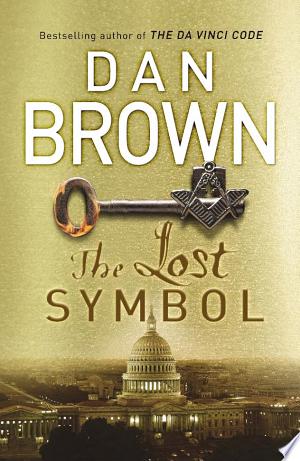
The Lost Symbol: (Robert Langdon Book 3)

8.99

-
+

Specs

Categories: ,

Description

Robert Langdon returns in Dan Brown’s brilliant new thriller, THE SECRET OF SECRETS, available now. The bestselling continuation of global phenomenon THE DA VINCI CODE, featuring symbologist Robert Langdon. The Capitol Building, Washington DC: Harvard symbologist Robert Langdon believes he is here to give a lecture. He is wrong. Within minutes of his arrival, a shocking object is discovered. It is a gruesome invitation into an ancient world of hidden wisdom. When Langdon’s mentor, Peter Solomon – prominent mason and philanthropist – is kidnapped, Langdon realizes that his only hope of saving his friend’s life is to accept this mysterious summons. It is to take him on a breathless chase through Washington’s dark history. All that was familiar is changed into a shadowy, mythical world in which Masonic secrets and never-before-seen revelations seem to be leading him to a single impossible and inconceivable truth…

  • Author: Dan Brown
  • Publisher: Random House
  • Published: 2009-09-15
  • Pages: 524
  • ISBN-13: 9781409091486

Additional information

Author

Dan Brown

Reviews

There are no reviews yet.

Be the first to review “The Lost Symbol: (Robert Langdon Book 3)”

Your email address will not be published. Required fields are marked *

Summary

What the internet says

Aggregated insights from reviews and discussions across the web.

Overall reception: Mixed reception

The Lost Symbol receives decidedly mixed reception from readers, with many expressing disappointment compared to Dan Brown's earlier Robert Langdon novels. While some readers enjoyed the book and found it suspenseful, a significant portion of reviewers criticize it for following the same formula as previous books without the same level of intrigue. The consensus suggests that readers who loved The Da Vinci Code and Angels & Demons found this installment weaker, with particular criticism directed at the characterization of Robert Langdon, who many felt was 'dumbed down' and appeared 'clueless' compared to his portrayal in earlier novels. The book's pacing, writing style, and especially its ending drew substantial criticism.

Common complaints include the book's excessive length, with readers noting it could have been 100-200 pages shorter, and Brown's writing style featuring extremely short sentences and an overabundance of chapters (nearly every 4 pages or less). The climax is frequently described as a 'letdown' and 'too abstract,' with the central 'secret' failing to deliver the historical revelations readers expected from Brown's work. Multiple reviewers noted the book felt 'thrown together' despite the long wait between publications, and the villain was criticized as 'unbelievable and over the top.' However, some readers still found value in the book's information about Washington D.C., Masonic history, and the Smithsonian archives, even if the overall narrative disappointed.

What readers loved

  • Interesting exploration of Masonic symbols and Washington D.C. landmarks and architecture
  • Educational content about the Smithsonian archives and hidden aspects of the capital
  • Fast-paced action sequences and suspenseful moments throughout the narrative
  • Engaging for readers new to Dan Brown who haven't experienced his formula before
  • Encourages readers to think about religion and spirituality in a light-hearted, non-judgmental way
  • Well-written secondary characters, particularly the CIA character Sato
  • Accessible writing style that flows well for readers who prefer straightforward prose

Common critiques

  • Robert Langdon characterized as 'clueless' and 'dumbed down' compared to previous books, appearing dependent on others for answers
  • Extremely short sentences and excessive chapter breaks (new chapter every 4 pages or less) disrupt reading flow
  • Disappointing and anticlimactic ending that fails to deliver a meaningful 'secret' or revelation
  • Overly long and padded, with readers suggesting 100-200 pages could be cut without losing substance
  • Repetitive 'Dan Brown formula' becomes tiresome with formulaic mini-cliffhangers at every chapter end
  • Villain described as unbelievable, over-the-top, and lacking human emotion
  • Too much exposition through dialogue and 'lecture sequences' that violate 'show don't tell' principles
  • Weak conspiracy plot with stakes that don't justify CIA involvement or feel genuinely threatening
  • Excessive repetition of descriptions and information already provided earlier in the book

Based on reviews from

  • Goodreads - Main Book Page
  • Goodreads - Langdon Discussion
  • Goodreads - Great Book Discussion
Last updated May 18, 2026 Summary based on publicly available reviews. May not reflect every reader's experience.