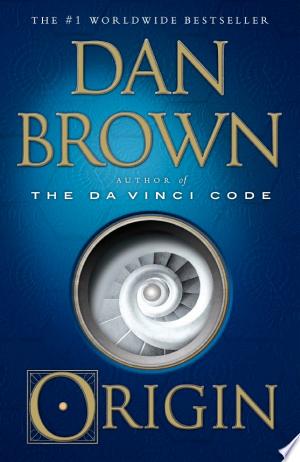
Origin: A Novel

20.95

-
+

Specs

Categories: ,

Description

THE #1 WORLDWIDE BESTSELLER FROM THE ICONIC AUTHOR OF THE DA VINCI CODE AND THE NEW ROBERT LANGDON THRILLER, THE SECRET OF SECRETS “Fans of The Da Vinci Code rejoice! Professor Robert Langdon is again solving the mysteries of the universe.” —People “A life-or-death adventure.” —Entertainment Weekly Robert Langdon, Harvard professor of symbology, arrives at the ultramodern Guggenheim Museum Bilbao to attend the unveiling of a discovery that “will change the face of science forever.” The evening’s host is Edmond Kirsch, a forty-year-old billionaire and futurist, and one of Langdon’s first students. But the meticulously orchestrated evening suddenly erupts into chaos, and Kirsch’s precious discovery teeters on the brink of being lost forever. Facing an imminent threat, Langdon is forced to flee. With him is Ambra Vidal, the elegant museum director who worked with Kirsch. They travel to Barcelona on a perilous quest to locate a cryptic password that will unlock Kirsch’s secret. Navigating the dark corridors of hidden history and extreme re­ligion, Langdon and Vidal must evade an enemy whose all-knowing power seems to emanate from Spain’s Royal Palace. They uncover clues that ultimately bring them face-to-face with Kirsch’s shocking discovery . . . and the breathtaking truth that has long eluded us. Look for more Robert Langdon novels: The Da Vinci Code The Lost Symbol Inferno The Secret of Secrets

  • Author: Dan Brown
  • Publisher: Vintage
  • Published: 2017-10-03
  • Pages: 520
  • ISBN-13: 9780385542692

Additional information

Author

Dan Brown

Reviews

There are no reviews yet.

Be the first to review “Origin: A Novel”

Your email address will not be published. Required fields are marked *

Summary

What the internet says

Aggregated insights from reviews and discussions across the web.

Overall reception: Mixed reception

Dan Brown's 'Origin' receives decidedly mixed reception from readers and critics. The novel, which explores fundamental questions about humanity's origins and future through the lens of science versus religion, demonstrates Brown's signature strengths and weaknesses in equal measure. Commercial success has been substantial, with the book debuting at number one on The New York Times bestseller list and remaining there for 23 weeks, indicating strong popular appeal. However, critical reception reveals significant polarization. The New York Times praised its focus on 'serious ideas' about religion and atheism, while The Washington Post dismissed it as 'worn-out' ideas and writing style. Reader reviews on Goodreads show ratings clustering around 3-4 stars, with many describing it as 'entertaining' but not Brown's best work.

The book's treatment of complex scientific and religious themes generates particular debate. Supporters appreciate Brown's ability to make sophisticated concepts accessible and create page-turning narratives that prompt readers to question their beliefs. The incorporation of real art, architecture, and historical facts—which readers can verify—adds educational value that many find appealing. Critics, however, argue that Brown oversimplifies complex theories and takes considerable artistic liberties that could mislead less informed readers. The Guardian noted the book was 'enjoyable in its own galumphing way,' while the Daily Telegraph called Brown a good communicator but a 'lousy' storyteller. A recurring complaint involves the anticlimactic reveal, with multiple readers reporting disappointment that the mystery's resolution didn't match the substantial build-up throughout the narrative.

Characterization and writing style remain consistent points of contention. Brown's short chapters with cliffhanger endings effectively maintain pace and keep readers engaged, contributing to the book's commercial appeal. However, critics note that characters serve primarily as vehicles for ideas rather than fully developed individuals, with character development sacrificed to plot momentum. The prose itself is described as 'straightforward' and 'fast-paced' but lacking depth. Despite these criticisms, the book succeeds in sparking conversations about the intersection of science and religion, making it culturally significant even among readers who find fault with its execution.

What readers loved

  • Highly entertaining and impossible to put down, with short chapters ending in cliffhangers that maintain intense pacing throughout
  • Incorporates real art, architecture, historical facts, and organizations that readers can research and verify, adding educational value
  • Explores thought-provoking questions about humanity's origins and future, prompting readers to examine their beliefs about science and religion
  • Features fascinating ideas and concepts, particularly the AI character Winston, which readers found original and exciting
  • Makes complex scientific and religious discussions accessible to a wide audience through fast-paced narrative
  • Provides rich descriptions of Spanish locations, particularly Barcelona, that inspire readers to want to visit and explore
  • Successfully creates mystery and suspense that keeps readers guessing and desperate to discover what happens next

Common critiques

  • The final reveal and mystery resolution is anticlimactic and disappointing, failing to match the substantial build-up throughout the book
  • Characters lack depth and development, serving primarily as vehicles for ideas rather than fully realized individuals
  • Oversimplifies complex scientific and religious theories, with factual inaccuracies and artistic liberties that could mislead readers
  • Contains excessive description and 'touristy tidbits' that slow the narrative, with some calling it 'all idle-talk'
  • Writing style lacks literary quality and depth, described as 'worn-out' and formulaic compared to Brown's earlier works

Based on reviews from

  • Goodreads
  • All About Dan Brown
  • Bookreporter
Last updated May 18, 2026 Summary based on publicly available reviews. May not reflect every reader's experience.