Justin Sun Net Worth 2026: Tron Founder, HTX Owner & WLFI’s Biggest Whale



Key Takeaways
- Justin Sun’s net worth in 2026 is estimated between $8 billion and $12 billion, anchored by his TRX (Tron) holdings, his ~75% stake in Huobi/HTX exchange, and his 2024–2025 World Liberty Financial advisory position tied to the Trump-affiliated WLFI token launch.
- Tron’s TRX market capitalization swelled past $25 billion in early 2026, and Sun is widely reported to control between 30% and 45% of circulating supply through founder allocations and treasury wallets.
- He bought 75% of Huobi in October 2022, rebranded it to HTX in 2026, and the exchange now generates an estimated $400 million to $700 million in annual revenue, of which Sun captures the majority share.
- His $30 million purchase of WLFI tokens in November 2024 made him the largest publicly disclosed early backer of the Trump family’s DeFi venture, securing him a board-adjacent advisory seat.
- The 2024 reversal of his SEC fraud case under the new administration removed the largest single overhang on his net worth and cleared the path for renewed U.S. business activity.
Justin Sun Net Worth: $8B–$12B Tron Founder, HTX Owner & WLFI’s Biggest Whale
Justin Sun’s net worth is estimated at between $8 billion and $12 billion in 2026, making him one of the wealthiest figures in cryptocurrency and one of the most politically connected operators in the entire Web3 industry. The 35-year-old Chinese-born entrepreneur built his fortune through three reinforcing pillars: founding the Tron blockchain in 2017, acquiring controlling interest in Huobi (now rebranded HTX) in 2026, and emerging in late 2024 as the single largest disclosed buyer of World Liberty Financial’s WLFI token tied to the Trump family. Sun’s wealth is unusually opaque even by crypto standards because most of it sits in self-custodied wallets, offshore exchange equity, and tokens whose float he himself helps manage — but the on-chain footprint and public filings consistently point to a ten-figure fortune.
Unlike Vitalik Buterin, who has been a vocal critic of token concentration, Sun has spent nearly a decade building a vertically integrated empire that combines Layer-1 blockchain infrastructure (Tron), centralized exchange volume (HTX), stablecoin distribution (USDT on Tron carries the largest stablecoin volume in the world), and now political access in Washington through his WLFI position. Each pillar reinforces the next, and that compounding effect — rather than any single windfall — explains why his net worth has roughly tripled since 2022 even through two crypto bear markets.
Tron and TRX: The Foundation of the Sun Fortune
Justin Sun launched the Tron Foundation in September 2017 with a $70 million ICO, and the project has never stopped being the financial center of his world. Tron’s TRX token entered 2026 with a market capitalization of roughly $25 billion and a circulating supply of 95 billion tokens. Public on-chain analysis from Arkham Intelligence and Nansen consistently identifies wallet clusters tied to Sun, the Tron Foundation, and BitTorrent (which Sun acquired in 2018 for $140 million) controlling somewhere between 30% and 45% of the circulating float. At a TRX price of $0.27, even a conservative 30% holding equals roughly $7.5 billion in TRX exposure alone.
Tron’s success is no longer speculative. The network has become the de facto global rails for USDT (Tether), processing more stablecoin volume than Ethereum on most days and generating reliable burn-and-fee revenue that flows into the Tron treasury. In 2025 alone, Tron-based USDT settled more than $4 trillion in transfer volume, much of it from emerging markets where users prefer Tron’s lower fees over Ethereum or Solana. While exact founder revenue from the Tron treasury isn’t disclosed, industry estimates suggest Sun controls or directs treasury inflows of $200 million to $400 million per year through TRX burns, fee captures, and ecosystem grants that he personally signs off on.
Buying Huobi and Building HTX
In October 2022, Justin Sun acquired 75% of Huobi Global, then one of the world’s top-five crypto exchanges, in a deal valued at roughly $1 billion. He rebranded the exchange to HTX in September 2023 (the H is for Huobi, the X for the tenth anniversary), moved its headquarters to the Caribbean, and aggressively repositioned it around derivatives trading, stablecoin pairs, and Asian-market liquidity. By early 2026, HTX consistently ranks among the global top 10 exchanges by spot volume and top 5 by perpetual futures volume.
HTX does not publish audited revenue figures, but exchange analytics firms estimate that Sun’s 75% stake throws off between $300 million and $525 million in annual cash flow in good years. During the 2025 bull run, when daily HTX volumes regularly topped $5 billion, that figure was likely on the higher end. The HTX equity stake alone — even at conservative 4x revenue multiple applied to crypto exchange peers — implies a private valuation of $1.2 billion to $2.1 billion attributable to Sun.
The WLFI Bet: Sun’s Pivot to Washington
The single most consequential 2024 decision in Justin Sun’s life was his $30 million purchase of WLFI tokens issued by World Liberty Financial, the DeFi project backed by Donald Trump and his sons. Sun made the public commitment in November 2024 — just weeks after the U.S. presidential election — and was promptly named an advisor to the project. He followed up with an additional $45 million purchase in early 2025, bringing his total disclosed WLFI exposure to roughly $75 million, making him the largest single named buyer of the token.
The strategic value of the WLFI position dramatically exceeds its dollar value. Within weeks of Sun’s purchases, the SEC dropped its civil fraud case against him — a case originally filed in March 2023 alleging market manipulation and unregistered securities violations involving TRX and BTT. In 2025, U.S. courts approved the SEC’s request to pause and ultimately dismiss the case. Industry analysts widely interpret the dismissal as the most expensive piece of regulatory relief any crypto founder has ever purchased, and it allows Sun to operate freely with U.S. counterparties for the first time in nearly four years.
Where the $8B–$12B Range Comes From
Building Sun’s net worth from documented components produces this rough breakdown. TRX holdings (estimated 30–40% of circulating supply at $0.27): $7.5 billion to $10 billion. Huobi/HTX 75% equity stake: $1.2 billion to $2.1 billion. BitTorrent and BTT token holdings: $400 million to $700 million. WLFI token position (~$75 million invested, marked up 3–5x in early secondary markets): $225 million to $375 million. Real estate, art (including the famous $6.2 million Maurizio Cattelan banana), and venture investments: $300 million to $500 million. Stablecoin and USD reserves estimated from on-chain analysis: $200 million to $400 million.
The lower bound assumes TRX trades down 25% from current levels and HTX revenue contracts in a bear market. The upper bound assumes Sun’s TRX holding is actually closer to 45% (which several Nansen analyses suggest) and that HTX growth continues. Most reputable trackers settle the consensus number around $9 billion to $10 billion for early 2026.
The $6.2 Million Banana and Justin Sun’s Public Persona
In November 2024 Justin Sun bought Maurizio Cattelan’s “Comedian” — a banana duct-taped to a wall — at Sotheby’s for $6.2 million, then ate the banana on camera at a press event in Hong Kong. The stunt delivered an estimated $50 million in earned media value and crystallized Sun’s brand as crypto’s most theatrical billionaire. He has used this playbook repeatedly: the $4.6 million lunch with Warren Buffett that he postponed three times, the unsuccessful $28 million bid for a seat on Jeff Bezos’s Blue Origin spaceflight, and the constant Twitter (now X) presence calling for TRX adoption.
Critics argue the showmanship distracts from substance, but it works. Sun’s Twitter following exceeds 4 million accounts, and every public stunt drives measurable TRX volume on HTX. From a pure shareholder-value perspective, the marketing spend has paid for itself many times over.
Justin Sun vs. Other Crypto Billionaires
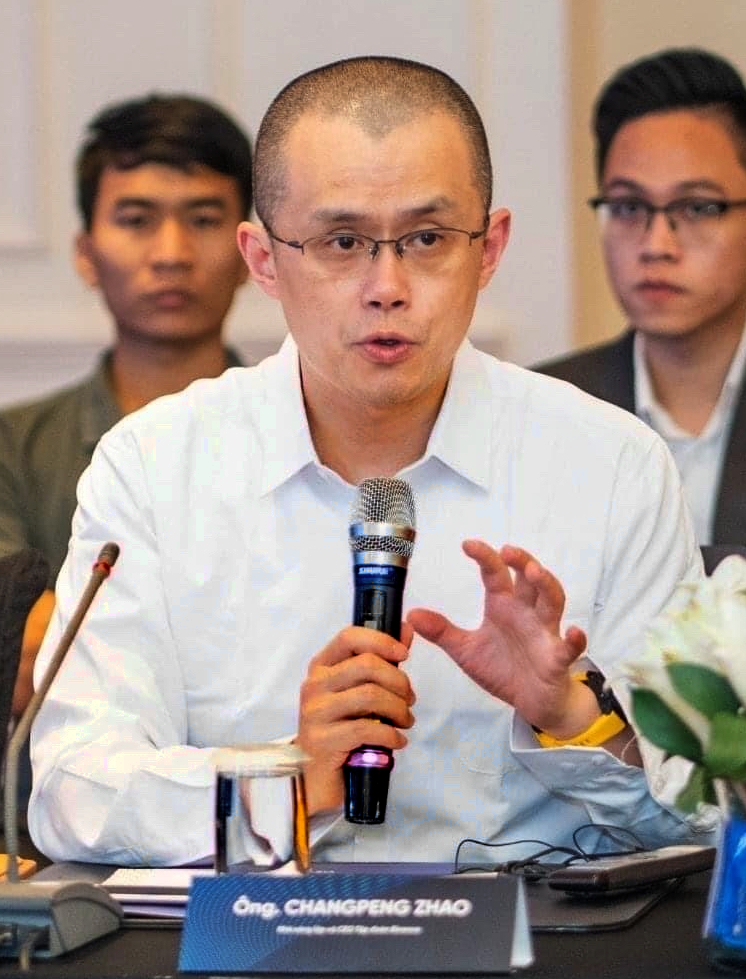
Justin Sun’s $8B–$12B net worth places him in the second tier of crypto billionaires — well behind Changpeng Zhao’s $110 billion Binance fortune, comfortably ahead of Vitalik Buterin’s roughly $467 million on-chain ETH, and in the same range as Coinbase founder Brian Armstrong’s $13 billion. What distinguishes Sun from peers is the unusual breadth of his control: he is simultaneously a Layer-1 founder, a major exchange owner, a stablecoin distribution kingpin, and now a politically connected DeFi backer. Few crypto figures hold all four cards at once.
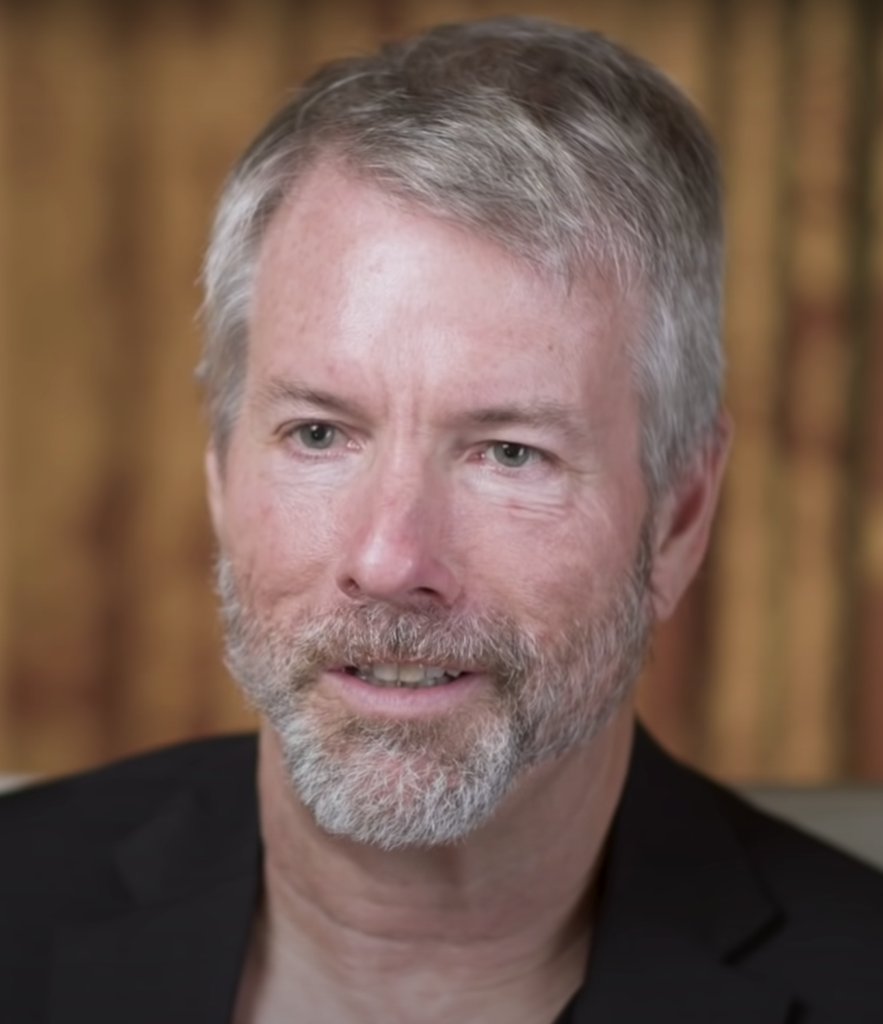
His contrast with Michael Saylor’s $4.7 billion Bitcoin treasury approach is especially instructive. Saylor concentrated wealth in a single asset (BTC) with full transparency through a public company. Sun built diversified, opaque exposure across his own ecosystem, where he controls both the supply and the trading venue. Both strategies have produced billion-dollar returns, but they reflect fundamentally different philosophies about how to build crypto wealth.
Looking Forward
Two factors will likely determine whether Sun’s net worth pushes past $15 billion or settles back to $5 billion by 2027. The first is whether Tron retains its dominance over USDT settlement volume — a status under threat from Solana’s faster, cheaper rails and Ethereum’s Layer-2 explosion. The second is the trajectory of WLFI and Sun’s relationship with the Trump-aligned crypto policy apparatus. If WLFI launches a successful stablecoin (USD1) that captures meaningful market share, Sun’s early position would mark up dramatically. If WLFI fails to gain adoption, the political access remains valuable but the token investment underperforms.
Either way, Sun has now positioned himself with structural advantages — regulatory cover in the U.S., majority control of one of the world’s largest exchanges, and equity in the second-largest stablecoin distribution network — that will be very hard for new entrants to dislodge. His net worth has rarely moved in straight lines, but the long-term trend since 2017 has been overwhelmingly upward, and the moats he has built in 2026–2025 should sustain that trajectory through 2026.
Frequently Asked Questions
What is Justin Sun’s net worth in 2026?
Estimates range from $8 billion to $12 billion, with consensus around $9–10 billion. The bulk comes from his TRX holdings (estimated 30–40% of circulating supply), his 75% stake in HTX exchange, and ancillary holdings in BitTorrent, WLFI, real estate, and stablecoin reserves.
How much TRX does Justin Sun own?
On-chain analysis from Arkham Intelligence and Nansen suggests Sun and entities he controls hold between 30% and 45% of TRX’s circulating supply through founder allocations and Tron Foundation treasury wallets. At early 2026 prices that’s roughly $7.5–10 billion in TRX alone.
Did Justin Sun really eat a $6.2 million banana?
Yes. In November 2024 he bought Maurizio Cattelan’s “Comedian” — a banana duct-taped to a wall — at Sotheby’s for $6.2 million, then ate the banana on camera at a press event in Hong Kong. The stunt generated an estimated $50 million in earned media value.
How much did Justin Sun pay for Huobi?
Sun acquired 75% of Huobi Global in October 2022 in a deal valued at roughly $1 billion. He rebranded the exchange to HTX in September 2023 and moved operations to the Caribbean.
What happened to the SEC case against Justin Sun?
The SEC filed civil fraud charges against Sun in March 2023 over alleged market manipulation and unregistered securities sales of TRX and BTT. After Sun’s $30 million WLFI purchase in November 2024, the case was paused and subsequently dismissed in 2026 — widely interpreted as a politically influenced reversal.
How much WLFI does Justin Sun own?
Sun publicly committed $30 million in November 2024 and added approximately $45 million in early 2025, bringing his disclosed total to roughly $75 million. This makes him the largest publicly identified early backer of the Trump-affiliated DeFi project.
How does Justin Sun make money from Tron?
Multiple channels: TRX token appreciation on holdings, ecosystem grants and treasury management at the Tron Foundation, USDT settlement fees on the Tron network (the largest stablecoin distribution rail globally), and BTT (BitTorrent token) holdings. Estimated treasury and fee inflows are $200 million to $400 million annually.
Where does Justin Sun live?
Sun has been peripatetic since leaving China and now splits time between Singapore, Hong Kong, the Caribbean (where HTX is headquartered), and Geneva, Switzerland, where he has had diplomatic status as Grenada’s WTO representative since 2021.
Is Justin Sun a citizen of any country besides China?
Sun holds citizenship of Saint Kitts and Nevis (since 2017) and was appointed Grenada’s permanent representative to the WTO in 2021, giving him diplomatic status. He has not been a Chinese resident for tax or regulatory purposes since the late 2010s.
Why is Justin Sun so controversial?
A combination of theatrical PR stunts, the SEC case, governance opacity at Tron, the politically charged WLFI investment, and persistent allegations of TRX market manipulation have made him polarizing. Supporters point to Tron’s adoption metrics and HTX’s growth as proof of substance behind the showmanship.
What’s the most surprising thing about Justin Sun’s commercial profile?
That he is simultaneously a Layer-1 blockchain founder (Tron), a controlling exchange owner (HTX), a stablecoin distribution kingpin (USDT on Tron), a major DeFi political backer (WLFI), and a diplomatic representative (Grenada’s WTO ambassador) — a stack of overlapping power positions that no other crypto founder currently holds.
How did Justin Sun get started in crypto?
Sun was an early student of Jack Ma’s Hupan University in China and worked as the Greater China representative for Ripple in 2014–2016 before launching the Tron Foundation in September 2017. The $70 million Tron ICO was completed just before China banned ICOs, giving Sun the war chest that funded the rest of his empire including the 2018 BitTorrent acquisition.
What is Justin Sun’s relationship with Tether (USDT)?
Tron is the single largest distribution network for USDT globally, with more than half of all USDT in circulation existing as TRC-20 tokens on Tron. Sun has cultivated a deep working relationship with Tether’s leadership, and the symbiotic flow of USDT volume on Tron generates substantial fee revenue and reinforces TRX as the network’s gas token.
Has Justin Sun ever been arrested or charged criminally?
No criminal charges have been brought against Sun. The 2023 SEC action was a civil case alleging unregistered securities sales and market manipulation, and it was dismissed in 2026 without any admission of wrongdoing. He has also been the subject of regulatory scrutiny in China and the UK at various points but has avoided criminal prosecution in any jurisdiction.

Responses