Adam Curry Net Worth 2026: Inside The Podfather, No Agenda & Podcasting 2.0

Key Takeaways
- Estimated net worth of $15–$40 million as of 2026
- Known as “the Podfather” — co-developed the original podcasting RSS framework around 2003-2004 with Dave Winer
- Co-hosts No Agenda with John C. Dvorak since 2007 — listener-supported model with no advertising
- MTV VJ from 1987 to 1994 — one of the original generation of music television personalities
- Co-founder of Podshow / Mevio (early podcast network); co-developed Podcasting 2.0 with Dave Jones
- Earlier dot-com fortunes from On The Air Networks IPO and other late-1990s ventures
Adam Curry — American podcaster, broadcaster, internet entrepreneur, MTV VJ from 1987 to 1994, widely credited as “the Podfather” for his role in co-developing the original podcasting RSS framework with Dave Winer around 2003-2004, co-host of the long-running independent listener-supported No Agenda podcast with John C. Dvorak since 2007, co-developer of Podcasting 2.0 (the open-protocol podcast extension framework) with Dave Jones, co-founder of the original Podshow / Mevio podcast network, and one of the earliest celebrities to personally create and administer websites in the mid-1990s — has built an unusual career arc spanning music television, internet entrepreneurship, podcasting pioneering, and now decentralized media advocacy. Combining accumulated savings from his MTV-era and dot-com-era income, the listener-supported No Agenda revenue, his Podshow/Mevio equity, accumulated investments, and Bitcoin holdings (he has been an outspoken Bitcoin proponent for many years), Adam Curry’s net worth is estimated at $15 million to $40 million as of 2026.
Curry’s case is unusual because his historical importance to podcasting (the RSS framework that enabled the entire podcasting medium) substantially exceeds his current commercial scale. Where his peers in modern podcasting (Joe Rogan, Howard Stern, Joe Budden) operate at much larger commercial scale, Curry has chosen to operate the listener-supported, ad-free No Agenda model that is intentionally smaller-scale than mainstream podcasting commercial economics would support.
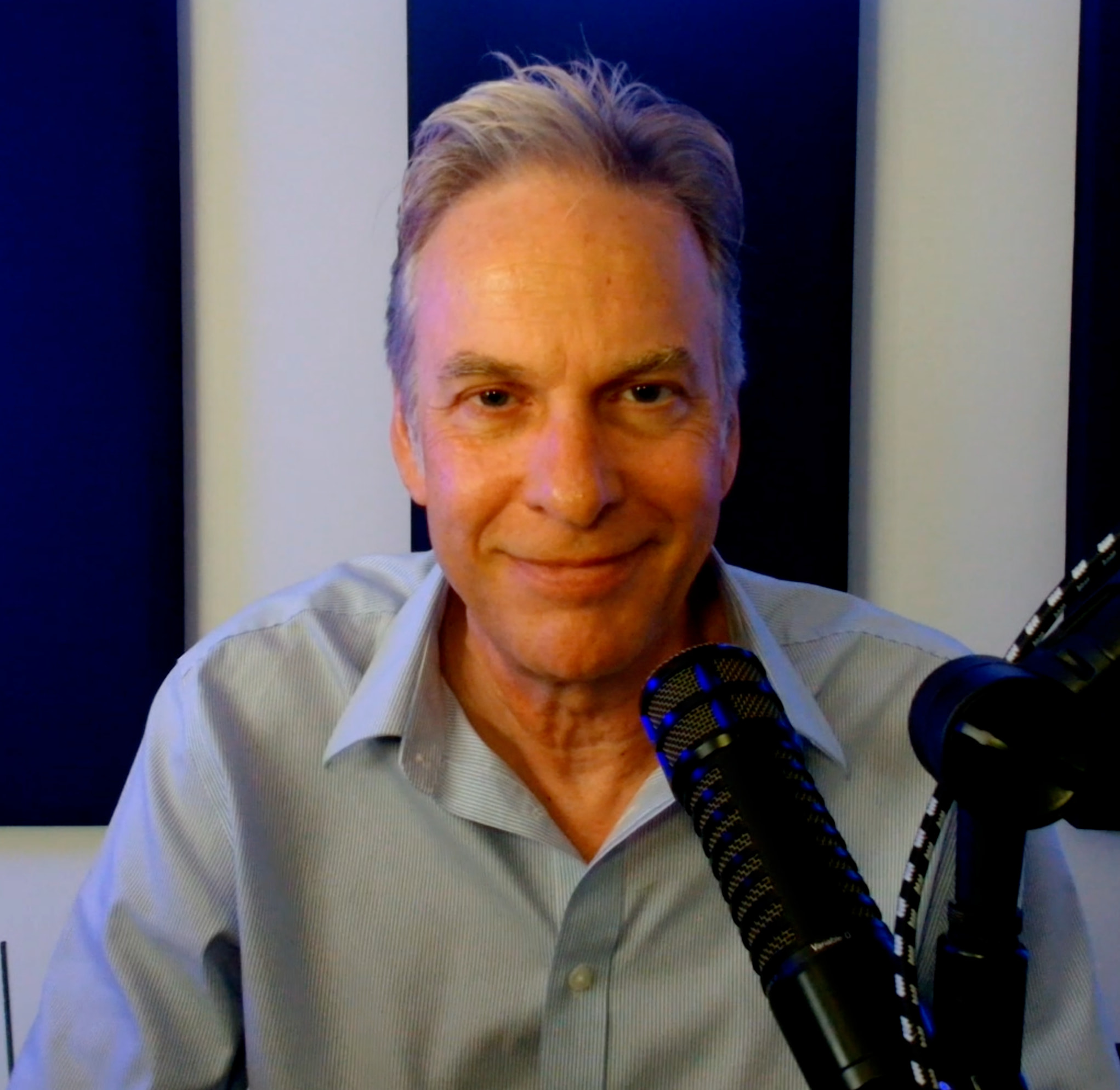
Net worth at a glance
| Metric | Estimate |
|---|---|
| Estimated net worth (2026) | $15M – $40M |
| Primary podcast | No Agenda (with John C. Dvorak, since October 2007) |
| MTV VJ tenure | 1987-1994 (7 years on Headbangers Ball, Top 20 Video Countdown) |
| Podcast development credit | “The Podfather” — co-developed RSS podcast framework with Dave Winer ~2003-2004 |
| Co-founded | Podshow / Mevio (2005); also co-developed Podcasting 2.0 with Dave Jones |
| Other notable ventures | OnRamp / On The Air (1990s internet startup with IPO) |
| Hometown | Born in Washington DC; raised in Netherlands and California |
| Headquarters | Texas (relocated from Northern California; previously London and Belgium) |
Note: this article is independent editorial research. We are not affiliated with Adam Curry, No Agenda, or Podcasting 2.0. Net worth ranges are best-effort estimates derived from prior MTV and dot-com era compensation history, listener-supported podcast revenue benchmarks, and reasonable assumptions about Bitcoin holdings and accumulated investments; only Adam and his accountant know the exact figure.
How Adam Curry built his net worth
Curry’s wealth is the product of multiple distinct career chapters across MTV, internet entrepreneurship, podcasting pioneering, and Bitcoin investing. The arc has four phases.
Phase 1: MTV VJ years (1987–1994)
Born in Washington DC in September 1964 and raised partly in the Netherlands and California, Curry became an MTV VJ in 1987 — one of the original generation of music television personalities. He hosted Headbangers Ball, Top 20 Video Countdown, and various other MTV shows across his seven-year tenure. The MTV era provided meaningful but bounded income — typical VJ compensation was in the high six figures by the early 1990s for top-tier hosts.
Phase 2: Internet entrepreneurship and dot-com era (1994–2003)
Curry was unusually early to internet entrepreneurship for an entertainment-industry figure. In 1995, he co-founded On The Air / Cyber Sight (one of the first internet-content company spaces) and was one of the first celebrities to personally administer his own website (mtv.com — a domain he initially registered). The dot-com era produced meaningful exit-style proceeds though exact figures from this period have not been publicly disclosed.
Various subsequent internet-content ventures across the late 1990s and early 2000s contributed additional cumulative income, with the dot-com era producing plausibly $5-15 million in cumulative gross income for Curry across his various ventures.
Phase 3: Podcasting pioneering and Podshow (2003–2008)
Around 2003-2004, Curry collaborated with Dave Winer to develop the original RSS-based podcasting framework — the technical infrastructure that enabled syndicated audio distribution to subscribers. The framework subsequently became the universal podcasting protocol and is the reason Curry is widely called “the Podfather.” Neither Curry nor Winer patented the framework or extracted licensing income from it; they made the deliberate choice to keep podcasting as an open, decentralized protocol.
In 2005, Curry co-founded Podshow (later renamed Mevio) with Ron Bloom — one of the first major podcast networks. The company raised significant venture funding from Sequoia Capital and Kleiner Perkins (~$15M total) and grew into one of the early commercial podcast businesses, though it never achieved the commercial scale anticipated by the founders. Curry’s eventual exit from Mevio produced modest but bounded proceeds.
Phase 4: No Agenda and Podcasting 2.0 (2007–present)
In October 2007, Curry launched No Agenda with technology commentator John C. Dvorak. The show is structured as a deliberately ad-free, listener-supported program — listeners contribute donations of any amount to fund the production, with no advertisements or sponsors permitted. The model is intentionally a counter to mainstream commercial podcasting and has run continuously for nearly 20 years (1700+ episodes as of 2026).
Around 2020-2022, Curry and Dave Jones co-developed Podcasting 2.0 — an open-protocol extension framework for podcasting that enables features like value-for-value Bitcoin micropayments to creators, transcripts, chapters, and other modern features. Podcasting 2.0 has been increasingly adopted across the podcasting ecosystem.
Curry has also been one of the longest and most outspoken Bitcoin advocates among major media figures, having recommended Bitcoin to listeners for many years. His personal Bitcoin holdings are not publicly disclosed but are widely understood to be substantial.
Career timeline
| Year | Milestone |
|---|---|
| 1964 (Sept) | Born in Washington DC; raised in Netherlands and California |
| 1987 | Joins MTV as VJ |
| 1994 | Departs MTV after 7-year VJ tenure |
| 1995 | Co-founds OnRamp / Cyber Sight; one of first celebrities to administer his own website |
| ~2003-2004 | Collaborates with Dave Winer on RSS-based podcasting framework |
| 2004 | “The Daily Source Code” launch — one of the first regular podcasts |
| 2005 | Co-founds Podshow (later Mevio) with Ron Bloom; raises VC funding |
| 2007 (Oct) | Launches No Agenda with John C. Dvorak as listener-supported show |
| ~2010-2015 | Becomes increasingly outspoken Bitcoin advocate among media figures |
| ~2020 | Co-develops Podcasting 2.0 with Dave Jones |
| 2024 | Relocates from Northern California to Texas |
| 2025-2026 | Continues No Agenda (1700+ episodes), Podcasting 2.0 development, Bitcoin advocacy |
Net worth estimate breakdown
MTV-era and dot-com era accumulated savings
Cumulative income from the 1987-2003 MTV and dot-com era plausibly produced $5-15 million gross. After-tax retention plus compounding across more than two decades plausibly $5-15 million by 2026.
Podshow / Mevio equity proceeds
The Mevio venture-backed period (2005-2010+) and eventual exit plausibly produced modest after-tax proceeds for Curry — likely $1-5 million range given the company’s bounded commercial outcome relative to the original venture funding ambitions.
No Agenda listener-supported income
The listener-supported No Agenda model has produced steady but bounded income across the 18+ year run. The program has typically maintained a substantial dedicated paying-listener base contributing donations and value-for-value Bitcoin micropayments. Annual income from No Agenda plausibly $300K-$1M for Curry’s share (split with Dvorak).
Bitcoin holdings
Curry’s personal Bitcoin holdings are not publicly disclosed. Given his public advocacy from approximately 2013 onward (when Bitcoin was below $1,000), even modest accumulated holdings could plausibly be worth $5-25 million as of 2026 depending on the actual size and any partial liquidations across the years.
Real estate
Curry has owned property across multiple locations (Northern California, Belgium, London, now Texas). Real estate equity plausibly $2-5 million.
Investments and savings
Beyond Bitcoin, accumulated diversified investments plausibly $2-5 million.
Adding the buckets and applying realistic discounts produces the $15M-$40M range. The wide spread reflects genuine uncertainty about Bitcoin holdings size, which is the largest variable.
Common misconceptions
“He’s worth $200 million from inventing podcasting”
While Curry is widely credited as “the Podfather” for co-developing the original RSS podcasting framework, the deliberate decision (with Dave Winer) to keep podcasting as an open, unpatented protocol meant that neither inventor extracted licensing income from the framework. Realistic estimates land in the $15M-$40M range — meaningful but bounded by the choice to make podcasting a public good rather than a proprietary technology.
“He owns Spotify”
Curry has no ownership stake in Spotify. The original podcasting framework he co-developed with Dave Winer was open-protocol and any company (including Spotify) could build podcast distribution on the framework without licensing payments to Curry or Winer.
“No Agenda is a tiny niche show”
While the listener-supported model has bounded the show’s commercial scale relative to advertiser-supported peers, No Agenda has run continuously for nearly 20 years with a substantial dedicated audience. The 1700+ episode run is one of the longest continuous podcast histories in the medium.
“He’s just an MTV nostalgia figure”
The post-MTV career — internet entrepreneurship, podcasting framework development, No Agenda’s continuous run, and Podcasting 2.0 — has been substantially more historically significant than the MTV-era VJ work. The technical contribution to the podcasting medium in particular places Curry among the most consequential individual figures in the medium’s history regardless of his personal commercial outcome.
Comparison to similar podcasting and broadcasting figures
| Figure | Estimated Net Worth | Profile |
|---|---|---|
| Adam Curry | $15M – $40M | The Podfather, MTV VJ, No Agenda, Podcasting 2.0 |
| Howard Stern | $700M – $1.2B | SiriusXM legend, terrestrial radio pioneer |
| Adam Carolla | $25M – $50M | Daily podcast, Loveline, PodcastOne |
| Joe Rogan | $200M+ | Spotify deal, UFC, decades-long career |
| Dave Winer | $10M+ | RSS co-developer, software entrepreneur |
| Marc Maron | $8M – $15M | WTF with Marc Maron podcast, comedy |
Curry sits in the middle tier of contemporary podcasters by personal wealth. The deliberate choice to operate the listener-supported No Agenda model rather than the advertiser-supported mainstream podcast model has bounded his commercial scale — but the historical importance of his framework contribution to podcasting is meaningfully larger than his commercial scale would suggest.
Frequently asked questions
What is Adam Curry’s net worth in 2026?
Combining accumulated savings from his MTV and dot-com era, Podshow/Mevio equity proceeds, listener-supported No Agenda income, accumulated Bitcoin holdings, real estate, and other investments, Adam Curry’s net worth is estimated at $15 million to $40 million.
Why is Adam Curry called the Podfather?
He is widely credited as “the Podfather” for collaborating with Dave Winer around 2003-2004 to develop the original RSS-based podcasting framework — the technical infrastructure that enabled the entire podcasting medium to exist as a syndicated audio distribution format. Neither Curry nor Winer patented the framework, deliberately choosing to make podcasting an open, decentralized protocol.
What is No Agenda?
No Agenda is the long-running listener-supported, ad-free podcast Adam Curry has co-hosted with technology commentator John C. Dvorak since October 2007. The show has run continuously for nearly 20 years with 1700+ episodes and is funded entirely by listener donations and value-for-value Bitcoin micropayments rather than by advertising.
Was Adam Curry really an MTV VJ?
Yes. He was an MTV VJ from 1987 to 1994, hosting Headbangers Ball, Top 20 Video Countdown, and various other shows across his seven-year tenure on the network. He was one of the original generation of MTV personalities.
What is Podcasting 2.0?
Podcasting 2.0 is the open-protocol extension framework Adam Curry co-developed with Dave Jones around 2020. The framework adds modern features to the original RSS podcast specification, including support for value-for-value Bitcoin micropayments, transcripts, chapters, and various other capabilities. It has been increasingly adopted across the podcasting ecosystem.
Where is Adam Curry from?
He was born in Washington DC and raised partly in the Netherlands and California. Across his career he has lived in multiple locations including Northern California, Belgium, London, and now Texas (where he relocated in 2026).
Did Adam Curry invent podcasting alone?
No. The development of the original RSS-based podcasting framework was a collaboration between Curry and software developer Dave Winer in 2003-2004. Winer’s contribution to the RSS framework itself plus Curry’s contribution to the actual podcast distribution mechanism on top of RSS are both critical to the framework’s existence.
Is Adam Curry rich from Bitcoin?
Curry has been one of the longest and most outspoken Bitcoin advocates among major media figures, having publicly recommended Bitcoin since approximately 2013 (when Bitcoin was below $1,000). His personal Bitcoin holdings are not publicly disclosed but are widely understood to be substantial. The Bitcoin holdings are likely the largest single variable in his current net worth estimate.
How does No Agenda make money?
The show is funded entirely by listener donations and value-for-value Bitcoin micropayments. Listeners contribute amounts of their choice (notably $33.33 and $200.00 are common contribution amounts referenced in the show) and contributors are typically named on-air. The show carries no advertising and no sponsorships — a deliberately counter-cultural model relative to mainstream commercial podcasting.
What was Podshow / Mevio?
Podshow (later renamed Mevio) was the early podcast network Adam Curry co-founded with Ron Bloom in 2005. The company raised approximately $15 million in venture capital from Sequoia Capital and Kleiner Perkins and grew into one of the first commercial podcast businesses, though it never achieved the commercial scale anticipated by the founders before its eventual wind-down.
Sources & references
- Wikipedia — Adam Curry
- No Agenda Show — official site (since October 2007)
- Podcasting 2.0 — official protocol specification (Curry and Dave Jones)
- Wired / Time / The Guardian — coverage of “the Podfather” framework development (2003-2007)
- MTV — Adam Curry VJ archive (1987-1994)
- Sequoia Capital / Kleiner Perkins — Podshow / Mevio funding records
Last updated: April 2026. Net worth estimates are based on prior MTV and dot-com era compensation history, listener-supported podcast revenue benchmarks, and reasonable assumptions about Bitcoin holdings and accumulated investments. Figures will be revised when new disclosures occur.


Responses